
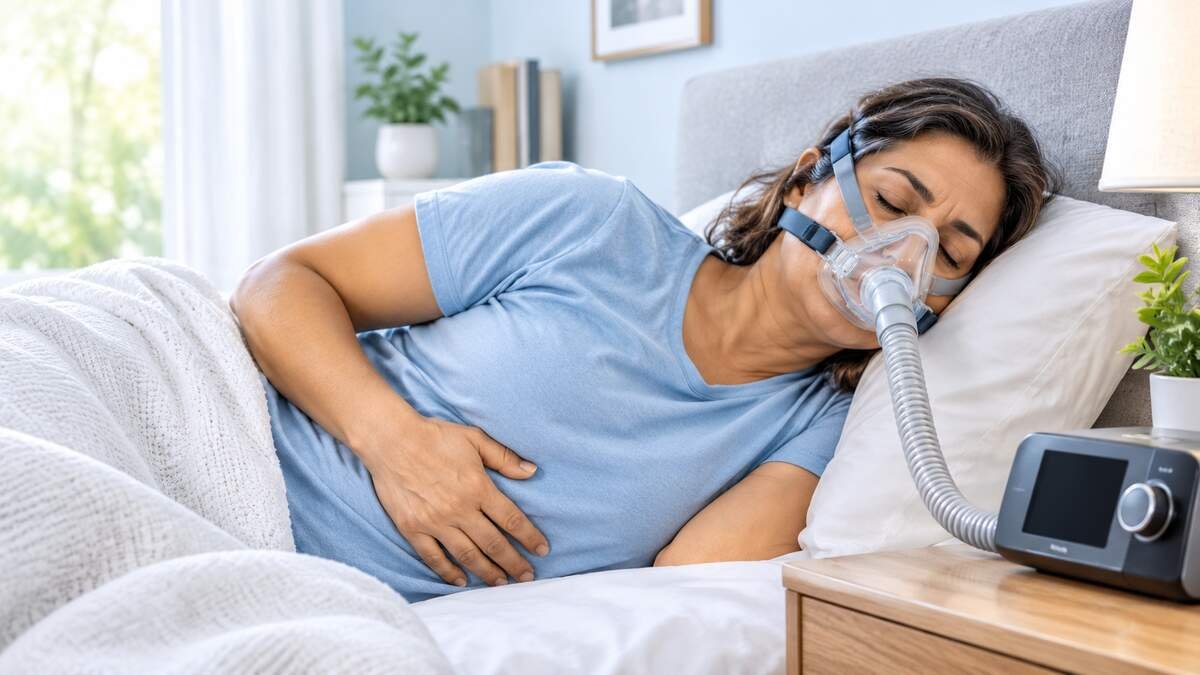

If you live with sleep apnea and have noticed a bloated, gassy, or uncomfortable stomach, you may wonder whether the two are related. It is a fair question. Sleep apnea affects the whole night, and so do many digestive symptoms, so it is easy to connect them in your mind.
The short answer is that abdominal pain is not a typical symptom of sleep apnea itself. Still, there are indirect links worth understanding. Treatment with continuous positive airway pressure (CPAP) can sometimes lead to swallowed air, and acid reflux can occur alongside sleep apnea. Either one may produce stomach discomfort that seems tied to sleep.
This guide explains what the research does and does not show, how to recognize patterns in your symptoms, and what practical steps to discuss with your healthcare provider. It also covers other common causes of abdominal pain, so you do not assume the wrong culprit. Reading it cannot tell you why you hurt, but it can help you ask better questions at your next appointment.
Can Sleep Apnea Cause Abdominal Pain?
Sleep apnea does not usually cause abdominal pain directly. However, some people with sleep apnea may experience digestive discomfort related to acid reflux or CPAP therapy. CPAP-related aerophagia can cause swallowed air to build up in the stomach, leading to bloating, gas, belching, and abdominal discomfort.
Several factors help explain this. CPAP delivers pressurized air to keep the airway open during sleep, and a portion of that air can travel down the esophagus instead of into the lungs. Researchers call this swallowing of air aerophagia. It can make the stomach feel full, tight, or gassy.
Acid reflux, also called gastroesophageal reflux disease (GERD) when it is frequent and bothersome, is another possible contributor. It can occur alongside sleep apnea and may cause burning or discomfort in the upper abdomen, especially at night.
Abdominal pain also has many causes that have nothing to do with sleep. Indigestion, constipation, food intolerance, and irritable bowel syndrome are common examples. For a broader look at what can trigger belly pain, see CollectedMed’s guide to what causes abdominal pain. Having both sleep apnea and stomach discomfort does not mean one is causing the other.
Understanding Sleep Apnea and Its Common Symptoms
Before looking at the digestive connection, it helps to review what sleep apnea is and how it usually shows up.
What Is Sleep Apnea?
Sleep apnea is a common sleep-related breathing disorder in which breathing stops and restarts repeatedly during sleep, according to the National Heart, Lung, and Blood Institute (NHLBI). Obstructive sleep apnea (OSA), the most common type, happens when the upper airway repeatedly narrows or becomes blocked while a person sleeps.
Central sleep apnea is a different condition. It involves a problem with the brain’s signals that control breathing rather than a physical blockage. Mayo Clinic notes that some people have features of both types.
When breathing is interrupted, sleep can be repeatedly disrupted and oxygen levels may drop. Many people do not realize this is happening. If you want a deeper look at what contributes to the condition, read CollectedMed’s overview of what causes sleep apnea.
Common Symptoms of Sleep Apnea
The NHLBI lists these common symptoms, and other trusted sources describe a similar pattern:
- Loud, persistent snoring
- Pauses in breathing during sleep
- Gasping or choking during sleep
- Morning headaches
- Dry mouth upon waking
- Excessive daytime sleepiness
- Difficulty concentrating
- Unrefreshing sleep
Notice what is missing from this list. Abdominal pain is not a defining symptom of sleep apnea. You can read more about early signs of sleep apnea on CollectedMed, but a stomachache on its own is not one of them.
How Sleep Apnea May Be Connected to Abdominal Pain
The relationship is indirect, and the evidence is still developing. Three pathways come up most often.
CPAP Therapy and Swallowed Air
CPAP is the most common treatment for moderate to severe sleep apnea. A mask delivers a steady stream of pressurized air that helps keep the throat open during sleep.
Some of that air can enter the esophagus and stomach rather than the lungs. As air accumulates, it can create pressure, bloating, and discomfort. This does not happen to everyone, but it is a recognized side effect.
Acid Reflux and Digestive Discomfort
Gastroesophageal reflux happens when stomach contents flow back into the esophagus. The National Institute of Diabetes and Digestive and Kidney Diseases (NIDDK) describes GERD as a more severe, long-lasting form of reflux that causes repeated symptoms or complications over time.
Common symptoms include heartburn and regurgitation, and some people notice discomfort in the upper abdomen. Sleep apnea and GERD can occur in the same person. That overlap does not prove that one causes the other.
Sleep Disruption and Digestive Symptoms
Poor sleep can affect how people feel overall, including how they perceive discomfort. Many people with disrupted sleep report feeling worse in general the next day, and that can include how their stomach feels.
Even so, there is no strong basis for saying that poor sleep alone causes abdominal pain. It is better viewed as one factor that may make symptoms feel more noticeable. To support better rest, see these tips on how to improve sleep.
Research note: A 2013 study in the Journal of Clinical Sleep Medicine examined aerophagia symptoms and nighttime reflux among people using CPAP. The details appear in the next section.
Can CPAP Therapy Cause Stomach Pain and Bloating?
For some people, yes. Digestive symptoms after starting CPAP are a recognized issue, though they are far from universal.
What Is CPAP-Related Aerophagia?
Aerophagia means swallowing excess air. The 2025 Sleep and Breathing study describes it as a functional gastrointestinal disorder involving air swallowing, repeated belching, and bothersome symptoms of trapped air in the digestive tract.
With CPAP, pressurized air can slip into the digestive tract during sleep. The stomach and intestines may stretch, which can cause a tight, distended feeling and discomfort. Not everyone who uses CPAP has this problem.
Common Symptoms of CPAP-Related Aerophagia
People who experience it often report:
- Stomach bloating
- Frequent burping
- Excessive gas
- Abdominal pressure
- Feeling unusually full
- Flatulence
- Occasional abdominal discomfort
Why Does CPAP Sometimes Cause These Symptoms?
The exact reasons vary from person to person. Possible contributors include:
- Pressure settings: Higher air pressure may influence how much air is swallowed, although research on this is not consistent.
- Individual susceptibility: Some people may simply be more prone to swallowing air during sleep.
- Existing reflux symptoms: Reflux and aerophagia can overlap and make it hard to tell which is responsible.
- Mask fit and settings: These deserve review by a qualified sleep specialist when problems appear.
What the research shows. In the 2013 study, researchers surveyed 259 people with OSA who were using CPAP. The group with aerophagia symptoms had more frequent reflux symptoms (29% versus 10%) and more nighttime reflux symptoms (9% versus 2%) than the group without aerophagia, according to the published results. This shows an association, not proof of cause and effect.
A 2025 questionnaire study in Sleep and Breathing looked at gastrointestinal symptoms in people starting CPAP at a Helsinki sleep clinic. It found that some symptoms, including flatulence and dry mouth, increased with CPAP, while other symptoms changed differently. Together, these findings suggest that digestive effects of CPAP vary widely between individuals.
There is also a reassuring side. A report on the Icelandic Sleep Apnea Cohort, covered by Healio, found that consistent users of positive airway pressure had less nighttime reflux after two years of treatment. For some people, CPAP may actually ease reflux over time.
The Relationship Between Sleep Apnea and Acid Reflux
Acid reflux is the other major reason digestive symptoms and sleep apnea show up together.
What Is GERD?
Occasional acid reflux is common, and many people experience it now and then. The NIDDK explains that GERD is diagnosed when reflux causes repeated bothersome symptoms or leads to complications over time.
Typical symptoms include heartburn (a burning feeling behind the breastbone), regurgitation, and a sour taste in the mouth. Some people also feel pain or pressure in the upper abdomen. You can learn more about what causes acid reflux on CollectedMed.
Why Do Sleep Apnea and GERD Sometimes Occur Together?
Researchers have identified an association between the two conditions, and several explanations have been proposed. Some involve pressure changes in the chest during obstructive breathing events, and others involve shared risk factors such as excess weight. The NIDDK lists being overweight or having obesity among factors that can contribute to GERD, and weight is also a recognized risk factor for sleep apnea.
The relationship is complex. Sleep apnea does not always cause GERD, and GERD does not always indicate sleep apnea. In fact, as noted above, treating sleep apnea with consistent CPAP use may reduce reflux for some people, while CPAP-related aerophagia may worsen it for others.
Can Acid Reflux Feel Like Stomach Pain?
Yes, it can. Reflux-related discomfort often sits in the upper abdomen or lower chest, and people sometimes describe it as stomach pain, pressure, or burning. Lower abdominal pain is less typical of reflux and usually points elsewhere.
Because symptoms overlap, it can be hard to sort out on your own. CollectedMed explains how acid reflux can cause abdominal pain and when that discomfort may need attention. If symptoms are persistent or unexplained, a medical evaluation is the best next step.
Other Possible Causes of Abdominal Pain in People With Sleep Apnea
Having sleep apnea does not protect you from ordinary digestive problems. Before blaming your sleep disorder or your CPAP machine, consider other possibilities:
- Indigestion: May cause discomfort, fullness, and bloating after meals.
- Constipation: Can contribute to abdominal pressure and cramping. See CollectedMed’s tips on managing constipation at home.
- Food intolerance: Certain foods may trigger gas, bloating, or loose stools in some people.
- Irritable bowel syndrome (IBS): May cause recurring abdominal pain and changes in bowel habits. Learn more about what causes IBS.
- Gastritis: Inflammation of the stomach lining may cause upper abdominal discomfort.
- GERD: May cause burning sensations and upper abdominal symptoms, as described above.
- Other gastrointestinal conditions: Some causes need a medical assessment to identify.
Sleep apnea and abdominal pain may occur at the same time without any direct link between them. Only a healthcare professional can help sort out which explanation fits your situation.
How to Tell Whether Your Abdominal Pain May Be Related to CPAP Therapy
Certain patterns may be worth noting and sharing with your provider. Ask yourself:
- Did the discomfort begin after you started CPAP?
- Is bloating or belching worse when you wake up?
- Do symptoms occur mainly after using the machine?
- Are they accompanied by heartburn or acid reflux?
- Does the discomfort continue even when you are not using CPAP?
A simple symptom diary can help. Record when symptoms occur, what you ate and when, how you slept, and any recent changes to your equipment or settings. A week or two of notes can make an appointment much more productive.
Keep in mind that timing alone cannot confirm the cause. A pattern is a useful clue, not a diagnosis.
How Can You Reduce CPAP-Related Bloating and Stomach Discomfort?
The steps below are general information. Your care team can tailor them to you.
Talk to Your Sleep Specialist About Pressure Settings
A sleep specialist can check whether your pressure settings need adjustment. In appropriate cases, they may consider automatic positive airway pressure (APAP), which adjusts pressure through the night. Please do not change your prescribed settings on your own.
Check Your CPAP Mask Fit
A well-fitted mask matters for comfort and effectiveness. Leaks or an ill-fitting mask can affect how you breathe and swallow during sleep. A sleep clinic or equipment provider can help assess fit and comfort.
Discuss Sleeping Position
Sleeping position can affect both breathing and digestion. The NHLBI notes that sleeping on your side rather than your back may help some people with milder sleep apnea. For people with reflux, MedlinePlus suggests raising the head of the bed if symptoms worsen at night. Ask your provider which approach suits you.
Review Meal Timing and Digestive Triggers
Large or late meals may worsen discomfort for some people. The NIDDK suggests eating meals 2 to 3 hours before lying down as one way to ease reflux symptoms. Pay attention to foods that seem to trigger your symptoms, but avoid cutting out whole food groups without guidance. For general support, see CollectedMed’s article on how to improve gut health.
Continue Prescribed Sleep Apnea Treatment
Do not stop using CPAP without talking to your healthcare provider. Untreated sleep apnea carries its own health risks, and the NHLBI notes that treatment can help reduce the risk of problems such as high blood pressure and heart disease. If side effects are hard to handle, your provider wants to hear about it so they can find a better fit. Our overview of sleep apnea treatment options explains what else may be available.
When Should You See a Doctor for Abdominal Pain?
Persistent, recurring, or unexplained abdominal pain deserves medical evaluation, whether or not you have sleep apnea. See a healthcare provider if you notice:
- Pain that does not improve or keeps returning
- Abdominal pain with persistent vomiting
- Unexplained changes in bowel habits
- Difficulty eating or drinking normally
- Pain that interferes with sleep or daily activities
Seek urgent medical attention for sudden or severe abdominal pain, chest pain, fainting, difficulty breathing, vomiting blood or material that looks like coffee grounds, or bloody or black, tarry stools. The NIDDK lists several of these among the warning signs that need prompt care. CollectedMed also explains when abdominal pain is an emergency.
A doctor may evaluate your digestive symptoms separately from your sleep apnea and recommend tests when needed. That is a normal part of finding the right answer.
Frequently Asked Questions About Sleep Apnea and Abdominal Pain
1. Can sleep apnea cause stomach pain?
Sleep apnea is not generally a direct cause of stomach pain. Related conditions, such as acid reflux, and CPAP side effects, such as swallowed air, may contribute to discomfort in some people. NHLBI symptom lists do not include abdominal pain.
2. Can sleep apnea cause bloating?
Bloating is not a typical symptom of sleep apnea itself. It may occur in some people using CPAP because of aerophagia, which means swallowing excess air. Other digestive issues can also cause bloating, so it is worth discussing with a provider if it persists.
3. Can CPAP therapy cause abdominal pain?
It can for some users. Air swallowed during CPAP therapy may cause bloating, gas, and abdominal discomfort, as described in a 2025 study in Sleep and Breathing. Many people never have this problem.
4. Is there a connection between sleep apnea and acid reflux?
Research shows the two can occur together, though the relationship is complex. In a 2013 study of CPAP users, reflux symptoms were more common in people with aerophagia symptoms. Having one condition does not mean you will develop the other.
5. Can sleep apnea cause stomach pain at night?
Nighttime stomach discomfort is more likely related to reflux, other digestive conditions, or CPAP-related aerophagia than to sleep apnea itself. Because several causes overlap, a provider can help identify yours. For more on this pattern, see abdominal pain at night.
6. Should I stop using CPAP if I experience stomach pain?
No. Please do not stop prescribed CPAP treatment on your own, since untreated sleep apnea has its own health risks. Contact your sleep specialist, who can look into your symptoms and adjust your treatment if needed.
Final Thoughts: Understanding the Connection Between Sleep Apnea and Abdominal Pain
Sleep apnea does not usually cause abdominal pain directly. CPAP-related aerophagia may contribute to bloating and discomfort, and GERD or other digestive conditions can also explain symptoms. Persistent or unexplained abdominal pain should be checked by a healthcare professional, and sleep apnea treatment should continue under medical supervision.
If you are noticing both breathing and digestive symptoms, bring both up with a qualified provider. You deserve answers that address the full picture.
Sources
- National Heart, Lung, and Blood Institute. Sleep Apnea
- National Heart, Lung, and Blood Institute. Sleep Apnea Symptoms
- Mayo Clinic. Sleep apnea
- National Institute of Diabetes and Digestive and Kidney Diseases. Acid Reflux (GER & GERD) in Adults
- National Institute of Diabetes and Digestive and Kidney Diseases. Symptoms & Causes of GER & GERD
- MedlinePlus. Gastroesophageal reflux disease
- Shepherd K, Hillman D, Eastwood P. Symptoms of aerophagia are common in patients on continuous positive airway pressure therapy and are related to the presence of nighttime gastroesophageal reflux. J Clin Sleep Med. 2013;9(1):13-17. PMC full text
- Hillamaa A, Mustonen T, Bachour A. Gastrointestinal symptoms and CPAP-related aerophagia: a questionnaire study. Sleep Breath. 2025;29:197. PMC full text
- Healio. Consistent CPAP use lowers odds for gastroesophageal reflux, wheeze, cough
Medical Disclaimer: This article is for informational and educational purposes only and should not replace professional medical advice, diagnosis, or treatment. Consult a qualified healthcare professional about persistent abdominal pain, digestive symptoms, or concerns related to sleep apnea.