
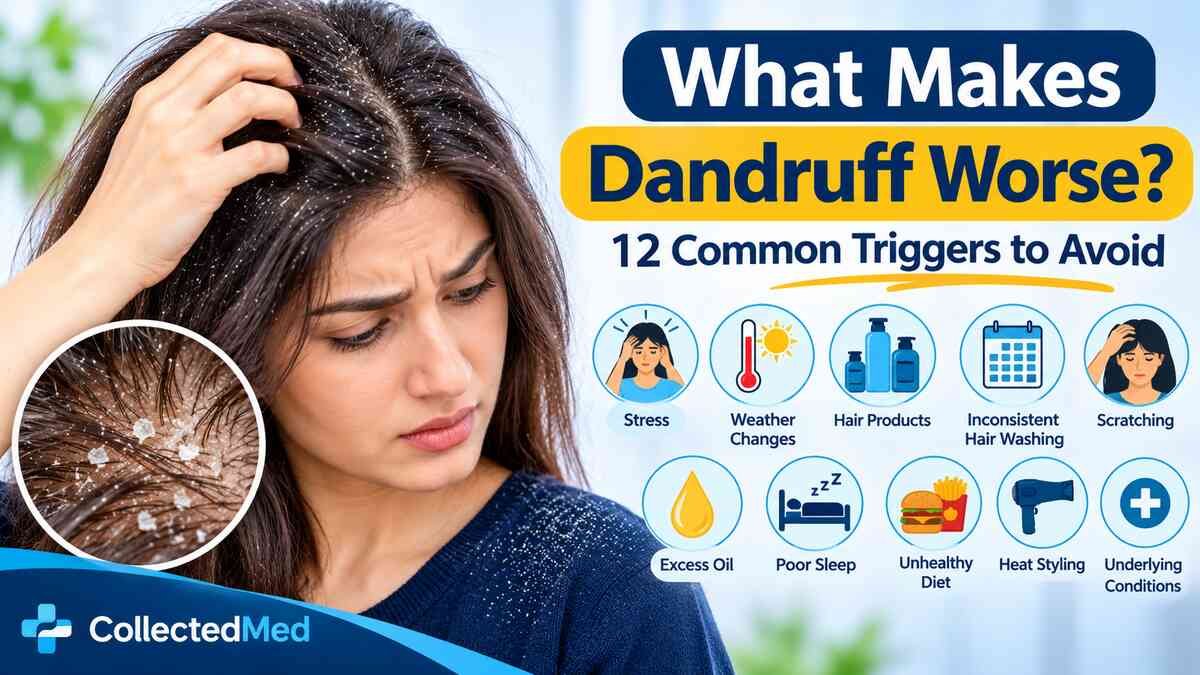

You wash your hair regularly, yet you still notice more flakes on your shoulders than last week. Or the itching seems to flare up out of nowhere, even though your routine has not changed. If this sounds familiar, you are not alone. Dandruff is a common scalp condition, and it rarely stays the same from week to week.
Dandruff often fluctuates. Some days or seasons bring more visible flakes and itching, while others are much calmer. Everyday habits and environmental factors can play a role, including stress, unsuitable hair products, weather changes, and scalp irritation. None of these means you have poor hygiene, since dandruff is not caused by being unclean.
Identifying your personal triggers is an important part of managing dandruff. In this article, you will learn why symptoms flare up, 12 common things that may make dandruff worse, how your hair care routine fits in, and how to spot signs that your scalp needs more help. You will also find prevention strategies, guidance on when to see a dermatologist, and answers to common questions.
Understanding Why Dandruff Gets Worse
To understand what aggravates dandruff, it helps to know what is happening on the scalp. This also explains why the same habit can affect two people very differently.
What Happens to Your Scalp When You Have Dandruff?
Your scalp skin constantly sheds dead cells, usually too small to notice. With dandruff, flaking becomes more visible, and the scalp may feel itchy or slightly inflamed. The Mayo Clinic describes dandruff as a common condition that causes flaking and itching.
Malassezia is a yeast that lives on the scalp of most adults. It feeds on natural scalp oils, and in some people the skin reacts to it, which may lead to irritation and faster shedding. Whether you develop symptoms depends on your individual skin sensitivity, not just on how much yeast is present.
For some people, dandruff is a mild form of seborrheic dermatitis, an inflammatory skin condition. Harvard Health notes that dandruff is chronic and tends to come and go. For a broader overview, see our dandruff guide.
Why Do Dandruff Symptoms Fluctuate?
Symptoms change because many factors interact. Scalp oil levels, weather, stress, products, and your own skin sensitivity can all shift over time. One trigger alone may not cause much trouble, but several together can lead to a flare-up.
Worsening flakes do not mean poor hygiene. The American Academy of Dermatology (AAD) points out that this is a common misconception. Our article on living with dandruff covers everyday management in more detail.
12 Common Things That Make Dandruff Worse
These factors are aggravating triggers, not necessarily underlying causes. Not every item will affect every person, so treat this list as a guide for noticing patterns.
1. Stress and Emotional Pressure
Stress does not directly cause dandruff, but it may worsen inflammatory skin conditions, including seborrheic dermatitis, in some people. Many people notice more itching and flaking during demanding periods.
Helpful habits include regular exercise, relaxation practices, and adequate rest. Our guide on how to reduce stress offers practical ideas.
2. Washing Your Hair Too Infrequently
Excess oil and dead skin cells can build up on the scalp, which may make flakes more visible. This is especially common in people with oily scalps. An inconsistent washing routine can also make symptoms harder to control.
Adjust your washing frequency to your scalp and hair type. If flakes build up between washes, a more regular schedule may help.
3. Using the Wrong Shampoo
Some ordinary cosmetic shampoos may not adequately control dandruff, and some may irritate a sensitive scalp. Medicated shampoos are designed for this purpose. According to the AAD, effective dandruff shampoos typically contain at least one ingredient such as ketoconazole, selenium sulfide, zinc pyrithione, salicylic acid, sulfur, or coal tar.
Choose a product that suits your scalp and hair type. If one product stops working, the AAD suggests trying one with a different active ingredient.
4. Excessive Use of Hair Styling Products
Gels, sprays, waxes, and creams can accumulate on the scalp. Some ingredients may irritate the skin or trigger contact dermatitis in sensitive people, which can look like worsening dandruff.
Avoid applying products directly to the scalp, and cleanse thoroughly to remove buildup. Fewer products often means fewer problems.
5. Hot and Humid Weather
Heat and sweat can make the scalp feel oilier and itchier. Humidity may also encourage product and oil buildup, which can make flakes more noticeable.
Wash after heavy sweating when needed, but avoid overdoing it. The goal is a clean scalp without harsh stripping.
6. Cold and Dry Weather
Cold air and indoor heating can dry out the scalp, and many people notice more flaking in winter. Harvard Health notes that dandruff may ease in warmer months.
It helps to tell dry scalp from dandruff. Our guide to dry skin explains the differences. Use gentle hair care and keep up your anti-dandruff routine if you are unsure.
7. Scratching Your Scalp Too Often
Scratching can feel good for a moment, but repeated scratching can damage the skin barrier and increase irritation. Broken skin may also raise the risk of infection.
Try to treat the itch itself rather than scratching. Keep nails short and use a suitable medicated shampoo as directed. Our guide to itchy scalp causes and treatments may also help.
8. Excessive Heat From Hair Styling Tools
Frequent use of hot hair dryers, straighteners, and curling irons can dry and irritate the scalp. Very hot air aimed at the scalp may make discomfort worse in some people.
Use moderate heat settings, keep tools a comfortable distance from the scalp, and give your hair regular heat-free days.
9. Applying Heavy Oils to the Scalp
Many people use coconut oil, olive oil, or other heavy oils on the scalp. Because Malassezia feeds on certain oils, thick layers may worsen buildup or symptoms in some people. Others tolerate oils well, so responses vary.
Oils do not address the underlying factors linked to dandruff. If a product makes your scalp itchier or flakier, it is reasonable to stop using it. You can read about one common oil in our article on coconut oil health benefits.
10. Skipping Medicated Shampoo Treatments
Using a medicated shampoo only now and then may reduce how well it works. Dandruff often needs ongoing maintenance, even when the scalp looks better.
Follow the schedule on the product label. The AAD notes that some shampoos need to stay on the scalp for about 5 to 10 minutes before rinsing, so check the instructions.
11. Underlying Skin Conditions
Seborrheic dermatitis is a common condition linked with dandruff. Psoriasis, eczema, and contact dermatitis can also cause scaling and itching that looks similar.
Guessing the wrong diagnosis can delay effective treatment. If symptoms are severe or persistent, a medical assessment can help sort out what is going on.
12. Certain Medications and Individual Health Factors
Some medications and health conditions can affect skin function or contribute to seborrheic dermatitis. Individual susceptibility and immune-related factors may also influence symptoms.
Never stop a prescribed medication on your own. If dandruff starts or worsens after you begin a new medicine, mention it to your healthcare professional.
Does Your Hair Care Routine Make Dandruff Worse?
Small everyday choices can influence how your scalp feels. A simple, gentle routine is usually the best approach.
Washing Too Frequently or Too Aggressively
Harsh cleansing and hard scrubbing can irritate the scalp. Washing frequency should depend on your scalp oiliness and hair type, and some people with oily scalps benefit from frequent, gentle washing. Use your fingertips, not your nails.
Not Rinsing Shampoo Properly
Leftover shampoo or conditioner may irritate a sensitive scalp. Rinse thoroughly with lukewarm water until the hair feels clean.
Using Too Many Hair Products
Layering several styling products can increase buildup. Keeping your routine simple makes it easier to spot what bothers your scalp.
Sharing Combs, Brushes, and Hair Accessories
Ordinary dandruff is not contagious. However, sharing unclean tools can spread certain scalp infections, so it is wise to keep your own and clean them regularly.
Foods and Lifestyle Habits That May Influence Dandruff
Research on food and lifestyle in dandruff is limited. These habits are general wellness steps, not proven fixes.
Does an Unbalanced Diet Make Dandruff Worse?
Balanced nutrition supports overall skin health, and nutrients such as zinc, B vitamins, and essential fatty acids play roles in normal skin function. No specific food has been established as a universal dandruff trigger. Supplements are not a proven cure.
A varied diet is a sensible goal. See our overview of what a balanced diet is for ideas.
Lack of Sleep and Poor Daily Habits
Poor sleep may affect overall health and inflammatory responses. It may also make stress harder to manage. Our guide on how to improve sleep can help you build a consistent routine.
Smoking and Alcohol Consumption
Smoking and heavy alcohol use can affect general skin health and inflammation. There is no clear evidence that either directly causes ordinary dandruff. Still, healthy lifestyle choices support your skin and overall well-being.
Signs Your Dandruff Is Getting Worse
The amount of visible flaking is not the only clue. Watch for these changes:
- More white or yellowish flakes than usual.
- More frequent scalp itching.
- Persistent scalp redness.
- Greasy or thick scales.
- Irritated patches around the hairline, eyebrows, ears, or sides of the nose.
- Discomfort that does not improve with appropriate scalp care.
These signs may mean your dandruff is worsening, or that another scalp condition such as seborrheic dermatitis is involved. Pay attention to how symptoms change over time, rather than relying only on how many flakes you see.
How to Prevent Dandruff From Getting Worse
There is no guaranteed way to prevent flare-ups, but these steps can help you stay ahead of them.
Establish a Consistent Hair Washing Routine
Choose a washing frequency that fits your scalp needs. Avoid harsh scrubbing and rinse thoroughly. Consistency matters more than intensity.
Choose Appropriate Anti-Dandruff Shampoo
Ketoconazole is an antifungal ingredient, selenium sulfide helps reduce yeast and flaking, and salicylic acid helps loosen scales. The Mayo Clinic describes how different medicated shampoos work in different ways. Follow the product directions closely. For more options, see our guide to dandruff treatment options.
Avoid Irritating Hair Care Products
Limit products that cause burning, itching, or redness. Avoid unnecessary styling buildup. Consider fragrance-free products if your scalp is sensitive.
Manage Stress and Maintain Healthy Habits
Regular activity, steady sleep, stress-management techniques, and a balanced diet all support overall health. Our guide to healthy habits is a good place to start.
Identify Your Personal Dandruff Triggers
Try keeping a simple log of flare-ups. Note the weather, new products, stress levels, and washing habits, then look for patterns. Change one factor at a time when possible, so you can tell what is helping. Our article on managing dandruff at home has more everyday tips.
When Should You See a Dermatologist?
For most people, dandruff does not require medical attention. Home care is not always enough, though. Consider seeing a dermatologist if you notice:
- Severe or persistent itching.
- Significant redness or swelling.
- Thick, widespread scaling.
- Bleeding, crusting, or possible infection.
- Hair loss along with scalp inflammation.
- No improvement despite using over-the-counter treatments as directed.
Psoriasis, eczema, fungal infections, and allergic contact dermatitis can resemble dandruff. A dermatologist can provide a proper diagnosis and treatment plan, which is often more useful than repeatedly trying new products. If you notice thinning, our guide to hair loss may be useful.
Frequently Asked Questions About What Makes Dandruff Worse
Does Stress Make Dandruff Worse?
Stress may trigger or aggravate flare-ups, especially in people prone to seborrheic dermatitis. It is not the sole cause of dandruff. Managing stress can support your overall health, but you will usually still need a scalp care routine.
Can Washing Your Hair Too Much Cause Dandruff?
Excessive or aggressive washing may irritate the scalp and increase flaking in some people. Frequent, gentle washing can still benefit people with oily scalps. The right balance depends on your scalp and hair type.
Does Oiling Your Hair Make Dandruff Worse?
Heavy oils may aggravate buildup or symptoms in some people, while others notice no problem. Individual responses vary. If oiling seems to make your scalp itchier or flakier, you may want to stop.
Can Weather Changes Increase Dandruff?
Yes, for some people. Cold, dry conditions may lead to dryness and flaking, while hot, humid weather can increase sweat and oiliness. Harvard Health notes that symptoms may ease in warmer months.
Does Sugar Cause Dandruff?
There is no strong evidence that sugar directly causes ordinary dandruff. A balanced diet supports skin health overall, but no single food is known to be a universal trigger.
Why Does My Dandruff Keep Coming Back?
Dandruff is often a recurring condition that needs ongoing maintenance. Stopping treatment as soon as flakes clear can lead to a return of symptoms. The AAD suggests following product directions and switching active ingredients if one stops working.
Can Dandruff Get Worse If Left Untreated?
Symptoms may persist or become more noticeable without appropriate management. Sometimes what looks like dandruff is another scalp condition that needs medical treatment. If symptoms are bothersome or do not improve, see a healthcare professional.
Final Thoughts on Managing Dandruff Triggers
Dandruff can worsen because of several everyday and environmental factors. Stress, unsuitable hair care, weather, and scalp irritation may all contribute to flare-ups, and your triggers may differ from someone else’s.
Identifying your own patterns makes management easier. Consistent scalp care and an appropriate shampoo can help control symptoms. If your symptoms are persistent or severe, a dermatologist can help. Dandruff is common and manageable, so be patient with yourself.
Sources
- American Academy of Dermatology. How to treat dandruff
- Mayo Clinic. Dandruff: Symptoms and causes
- Mayo Clinic. Dandruff: Diagnosis and treatment
- Harvard Health Publishing. Dandruff A to Z
- MedlinePlus. Dandruff, Cradle Cap, and Other Scalp Conditions
- NHS. Dandruff
Medical Disclaimer: This article is for general information and education only. It is not medical advice and does not replace care from a doctor or other qualified healthcare professional. Do not use it to diagnose or treat any condition. If you have severe, persistent, or unusual scalp symptoms, please talk with a dermatologist or your healthcare provider.