

Coconut oil has moved from a tropical pantry staple to a regular wellness headline. It appears in coffee, smoothies, baked goods, and skin care routines, often alongside big promises about weight loss, heart health, and more. Many shoppers now wonder whether coconut oil is actually healthy.
The honest answer is nuanced. Coconut oil can add flavor and useful cooking properties to a meal, but that is different from claims that it prevents disease or melts body fat. Coconut oil health benefits are far less established than popular marketing suggests, and the oil is one of the richest food sources of saturated fat.
This guide explains what coconut oil is, what researchers have measured in people, and where the evidence is limited or mixed. It also compares coconut oil with olive oil and other cooking oils, and it offers practical ways to use coconut oil sensibly within an overall healthy diet.
What Is Coconut Oil?
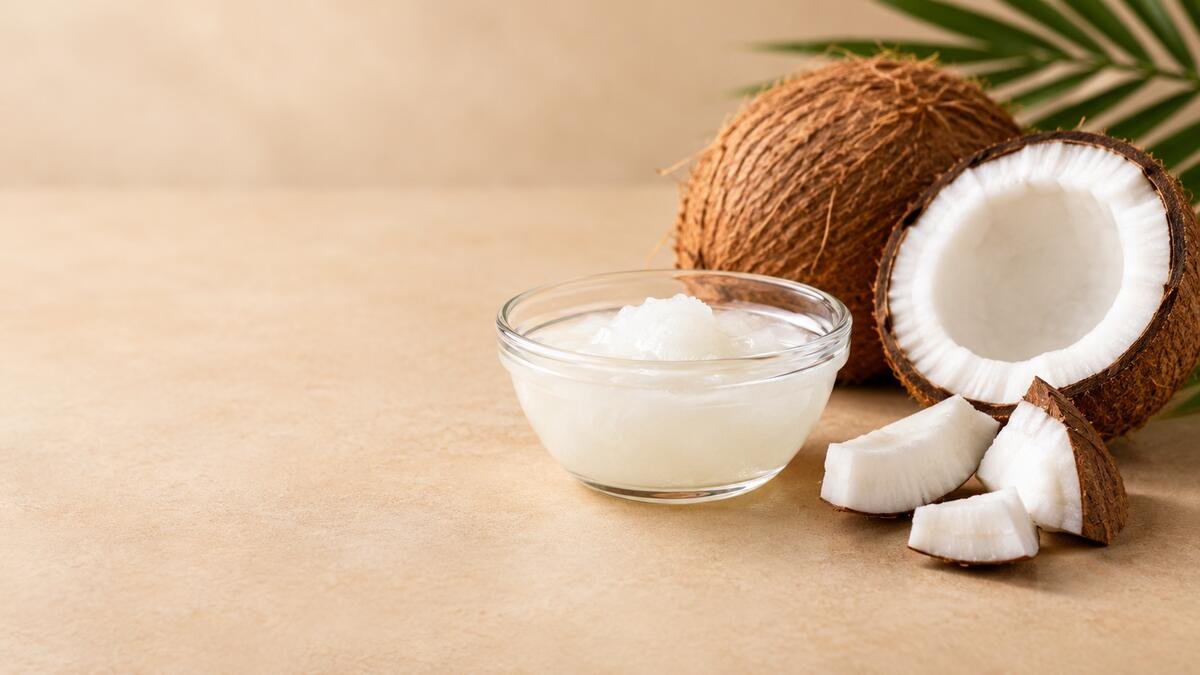
Coconut oil is a fat extracted from the white flesh (the “meat”) of mature coconuts. It is solid and white at cooler room temperatures and melts into a clear liquid when warmed. Because of this texture, some nutrition experts point out that it behaves more like a fat such as butter than like a typical liquid vegetable oil.
Producers extract it in different ways, which is why labels can look so different from one jar to the next. Understanding those differences helps you choose a product for the right purpose, without assuming that one type carries special health powers.
Virgin vs. Refined Coconut Oil
Virgin (or unrefined) coconut oil is made from fresh coconut flesh with minimal processing. It usually keeps a noticeable coconut aroma and flavor, along with small amounts of natural plant compounds. Its smoke point is generally lower, so it suits gentle sautéing and baking better than very high-heat cooking.
Refined coconut oil is processed further, which gives it a neutral taste and a higher smoke point, commonly cited as roughly 400°F or above. That makes it more flexible for everyday cooking. Some small studies hint that virgin coconut oil may affect cholesterol slightly differently, but this is not settled, and a 2020 meta-analysis in Nutrition Reviews noted that the evidence on virgin versus other forms remains limited. Neither type should automatically be considered better for heart health.
Concentrated MCT oil is a different product again. It is a manufactured supplement made mostly of medium-chain fats, so it should not be treated as interchangeable with coconut oil.
Coconut Oil Nutrition Facts
One tablespoon of coconut oil provides about 120 calories and roughly 14 grams of fat, with no meaningful protein, carbohydrate, fiber, or vitamins and minerals. The fat is mostly saturated, at about 11 to 12 grams per tablespoon. Depending on the source, saturated fat makes up roughly 80 to 90 percent of coconut oil, which is higher than butter, according to Harvard’s Nutrition Source.
For context, the American Heart Association advises limiting saturated fat to about 6 percent of daily calories, which is roughly 13 grams on a 2,000-calorie diet. A single tablespoon of coconut oil can use up most of that allowance. For more on reading labels, see our guide to nutrition facts.
What Science Says About Coconut Oil
Not all research carries the same weight. Laboratory studies test compounds in cells or animals, and they can suggest ideas worth exploring. Observational studies look for patterns in groups of people, but they cannot prove cause and effect. Randomized controlled trials (RCTs) are better at showing whether a food changes a measurable outcome, though many nutrition trials are short and small.
A compound with promising properties in a lab does not prove that eating the whole oil produces the same effect in the body. Digestion, dose, and the rest of the diet all change the picture. That is why the most useful coconut oil evidence comes from human trials and systematic reviews that pool them.
Understanding Lauric Acid and Medium-Chain Fats
Lauric acid makes up roughly half of the fat in coconut oil. It is often grouped with medium-chain fatty acids, and it has been studied for antimicrobial activity and effects on cholesterol. However, researchers debate how closely it behaves like a true medium-chain fat in the body, because in many ways it acts more like a long-chain saturated fat. Its saturated nature is the main reason coconut oil is flagged in heart-health guidance.
Why MCT Oil Research Is Not the Same as Coconut Oil Research
Many studies showing metabolic effects used purified MCT oil, which is far richer in medium-chain fats than regular coconut oil. Standard coconut oil contains only a modest share of those fats, so the findings do not transfer directly. Be cautious when a headline about “MCTs” is used to promote a jar of coconut oil.
The comparison oil also matters. Coconut oil may look neutral or even favorable against butter, but less favorable against olive, canola, or soybean oil. Always ask what the oil was compared with before drawing conclusions.
Potential Health Benefits of Coconut Oil
The potential benefits below range from modest and practical to largely unproven. Reading them in order of evidence strength helps keep expectations realistic.
1. Provides Energy and Adds Flavor to Meals
Like any fat, coconut oil supplies energy and helps the body absorb fat-soluble vitamins from other foods. Its flavor and texture are real culinary strengths, especially in curries, baked goods, and plant-based desserts. These are valid reasons to use it, but they are not special health benefits. Olive oil, canola oil, and other fats provide the same calories and can be swapped in many recipes.
2. May Increase HDL (“Good”) Cholesterol
Clinical trials do show that coconut oil can raise HDL cholesterol. A systematic review and meta-analysis of 16 trials found that coconut oil raised HDL by about 4 mg/dL compared with non-tropical vegetable oils, according to a summary from the American College of Cardiology.
That sounds positive, but a higher HDL number alone has not been shown to lower cardiovascular risk. The same analysis found that LDL cholesterol rose too, so the overall effect on heart health is not favorable.
3. May Have Different Effects Depending on the Fat It Replaces
Results vary with the comparison. Compared with unsaturated vegetable oils, coconut oil tends to raise LDL cholesterol. Compared with animal fats such as butter, some studies suggest coconut oil raises LDL less, and the 2020 Nutrition Reviews analysis described a more favorable lipid profile against animal oils.
This does not make coconut oil a heart-healthy choice. It means that swapping butter for coconut oil is a lateral move among saturated fats, while swapping either one for olive or canola oil is the better-supported direction.
4. May Have Some Antimicrobial Activity in Laboratory Research
Certain fatty acids in coconut oil, including lauric acid and its derivatives such as monolaurin, have shown activity against some microbes in laboratory settings. These findings are interesting for science and food preservation research.
They do not show that eating coconut oil prevents or treats infections in people. Lab results often do not carry over to the human body, and no strong clinical evidence supports using coconut oil for that purpose. Anyone with signs of infection should seek medical care rather than rely on a food product.
5. May Be Useful in Certain Cooking Applications
Coconut oil is firm at cool temperatures, which can help create flaky textures in baking and a creamy mouthfeel in dairy-free recipes. Refined versions tolerate moderate to high heat, while virgin versions bring more coconut flavor. For cooks who enjoy these qualities, small amounts can be a reasonable choice. The key is treating it as a flavor ingredient rather than a daily health tonic.
6. Has Been Studied for Weight Management, but Results Are Limited
Coconut oil is often marketed as a fat burner, but the evidence is weak. A 2025 systematic review and dose-response meta-analysis of trials with 620 participants described the evidence on body weight, BMI, and waist circumference as inconclusive, and it found no significant effect on waist size. An earlier 2022 meta-analysis concluded that coconut oil produced no clinically relevant improvement in body composition.
Some reviews report very small average reductions in weight, but these are too minor to matter for most people. Coconut oil is calorie dense, so adding it without cutting back elsewhere can work against weight goals.
Potential Risks and Side Effects of Coconut Oil
For most healthy adults, small amounts of coconut oil in food are unlikely to cause immediate problems. The main concern is the long-term effect of regularly consuming a very high-saturated-fat oil in place of healthier fats. The American Heart Association’s 2017 advisory on dietary fats advised against using coconut oil because it raises LDL cholesterol and has no known offsetting benefits.
May Raise LDL Cholesterol
LDL cholesterol is a well-established cause of atherosclerosis, the buildup of plaque in artery walls. In the 16-trial meta-analysis, coconut oil raised LDL by about 10.47 mg/dL compared with non-tropical vegetable oils. Population-wide, an increase of that size is considered meaningful for cardiovascular risk. Our guide to high cholesterol explains what these numbers mean.
High in Calories Despite Being Plant-Based
A plant origin does not make a food low in calories or low in saturated fat. At about 120 calories per tablespoon, coconut oil adds up quickly, particularly when stirred into coffee, smoothies, or snack bars. Heavy use can crowd out nutrient-dense foods and increase total energy intake without adding fiber or micronutrients.
Why It Should Not Be Considered a Treatment for Heart Disease
No evidence shows that coconut oil treats or reverses heart disease. A narrative review in Current Atherosclerosis Reports noted that no RCTs or prospective cohort studies have directly examined coconut oil and cardiovascular disease events. Some populations who eat whole coconut within traditional diets have not shown higher heart disease rates, but those diets differ in many other ways and do not prove that refined oil supplements are safe.
For an overview of heart-protective eating, see our list of heart-healthy foods.
Who May Need to Pay Particular Attention to Saturated Fat Intake?
People with high LDL cholesterol, existing heart disease, a strong family history of early heart disease, diabetes, or high blood pressure are often advised to be especially careful with saturated fat. The same goes for people taking cholesterol-lowering medicine. If you fall into one of these groups, ask your healthcare provider or a registered dietitian how much saturated fat fits your situation, since individual targets differ.
Coconut Oil vs. Olive Oil and Other Cooking Oils
Oils differ mainly in their mix of saturated, monounsaturated, and polyunsaturated fats. Coconut oil sits at the high-saturated end, while olive, canola, sunflower, soybean, and corn oils are made mostly of unsaturated fats. Olive oil contains roughly 14 percent saturated fat, and canola oil about 7 percent, compared with 80 to 90 percent for coconut oil.
Which Oil Is Better for Heart Health?
Replacing saturated fat with unsaturated fat is generally linked to better cholesterol levels and cardiovascular outcomes, which is why the AHA and Harvard point toward oils such as olive, canola, and sunflower. Olive oil also has a strong research record as part of the Mediterranean eating pattern. You can read more in our articles on the benefits of olive oil and the Mediterranean diet.
How to Choose an Oil for Everyday Cooking
No oil is universally good or bad, so consider three things. First, the cooking method: sautéing, roasting, and baking tolerate different smoke points. Second, flavor: extra virgin olive oil suits dressings, while neutral oils suit frying. Third, the overall dietary pattern, since vegetables, whole grains, legumes, nuts, and fish matter much more than any single oil. If you are unsure whether daily use is appropriate, our article on whether you can eat olive oil every day may help.
How to Use Coconut Oil in a Balanced Diet
If you enjoy coconut oil, you do not need to eliminate it. Practical, non-prescriptive habits can keep it in perspective:
- Use modest amounts when its flavor or texture suits a specific recipe, such as a curry or baked treat.
- Choose unsaturated oils, such as olive or canola, for regular everyday cooking.
- Avoid adding coconut oil solely for weight loss or supposed disease prevention.
- Look at your whole diet rather than one ingredient in isolation.
- Check labels on packaged foods, since coconut oil may be a hidden source of saturated fat.
A balanced diet built around vegetables, fruit, whole grains, lean proteins, and healthy fats is far more influential than any single oil. People with heart conditions, high cholesterol, or other medical concerns should check with a clinician before making major changes.
Final Verdict: Is Coconut Oil Healthy?
Coconut oil can fit into a varied diet in small amounts, especially when flavor or texture matters. However, the evidence does not support treating it as a superior oil for heart health or weight loss. It reliably raises LDL cholesterol compared with unsaturated oils, and its HDL effect has not been shown to improve outcomes. For cardiovascular health, replacing saturated fats with unsaturated fats remains the better-supported choice. Think of coconut oil as an occasional ingredient rather than a health food.
Frequently Asked Questions
Is coconut oil healthy?
Coconut oil can be used in moderation, but it is very high in saturated fat. Because it raises LDL cholesterol compared with unsaturated vegetable oils, it is generally not the first choice for everyday cooking. The American Heart Association advises against using it for heart health.
What are the main health benefits of coconut oil?
Coconut oil provides dietary fat and flavor, and trials show it can raise HDL cholesterol. However, it also raises LDL cholesterol, and many popular claims remain unproven in human studies. Weigh any potential benefits against those cholesterol effects.
Does coconut oil help with weight loss?
Current evidence does not establish coconut oil as an effective weight-loss aid. A 2025 review of clinical trials called the evidence inconclusive. Any small effects reported are unlikely to matter in practice, and the oil is calorie dense.
Is virgin coconut oil better than refined coconut oil?
Virgin coconut oil is less processed and keeps more coconut aroma and flavor, while refined oil is milder and tolerates higher heat. Both are mostly saturated fat. Neither should automatically be considered better for heart health, according to available meta-analyses.
Is coconut oil better than olive oil?
For cardiovascular health, olive oil is generally the better-supported everyday choice because it is rich in unsaturated fats. Coconut oil contains far more saturated fat, which can raise LDL cholesterol. See Harvard’s Nutrition Source for more.
Sources
- Harvard T.H. Chan School of Public Health, The Nutrition Source: Coconut Oil
- Sacks FM, et al. American Heart Association Presidential Advisory, 2017: Dietary Fats and Cardiovascular Disease
- Neelakantan N, Seah JYH, van Dam RM. Circulation, 2020: The Effect of Coconut Oil Consumption on Cardiovascular Risk Factors: A Systematic Review and Meta-Analysis of Clinical Trials
- American College of Cardiology, Journal Scan: Coconut Oil Consumption on Cardiovascular Risk Factors
- Teng M, et al. Nutrition Reviews, 2020: Impact of coconut oil consumption on cardiovascular health: a systematic review and meta-analysis
- World Health Organization, 2024: A rapid overview of systematic reviews on the effects of coconut oil intake compared with intake of other vegetable oils on mortality and cardiovascular health
- Dose-dependent effect of coconut oil supplementation on obesity indices, 2025: Systematic review and dose-response meta-analysis of clinical trials
- Lipids in Health and Disease, 2022: The effects of coconut oil on the cardiometabolic profile: a systematic review and meta-analysis of RCTs
- Coconut oil and cardiovascular health, narrative review: Evidence and meta-analyses
Medical Disclaimer: This article is for general educational purposes only and is not medical advice. It does not diagnose, treat, or prevent any condition, and it cannot replace guidance from a qualified healthcare professional who knows your health history. Talk with your doctor or a registered dietitian before changing your diet, especially if you have high cholesterol, heart disease, diabetes, or take medication. If you think you may be having a medical emergency, call 911 or your local emergency number right away.