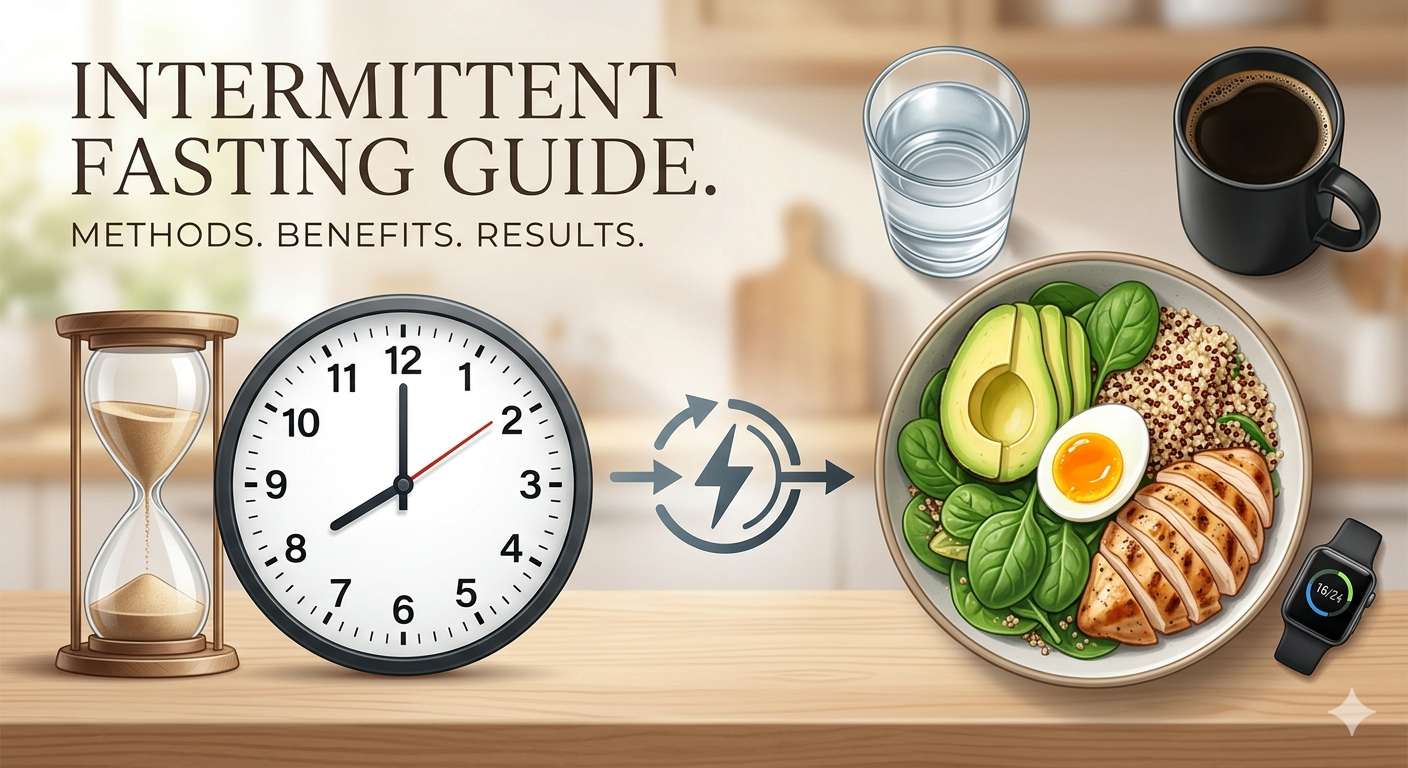
Intermittent fasting (IF) is an eating pattern that cycles between periods of eating and fasting. It works by lowering insulin levels and helping your body burn stored fat instead of sugar for energy. This shift can support weight loss, improve metabolism, and promote basic cellular repair processes.
For years, we’ve been told to eat every few hours to “boost metabolism.” Yet many people still struggle with low energy and poor metabolic health. Constant eating keeps insulin levels high, making it harder for your body to burn stored fat. If you rely on frequent meals just to avoid energy crashes, the issue may not be willpower—it may be your eating pattern.
This is why many people are turning to intermittent fasting to improve their health. Intermittent fasting (IF) is not a traditional diet—it’s a simple way of timing your meals. By giving your body longer breaks between eating, you allow it to switch from burning sugar to using stored fat and to carry out important internal repair processes.
In this beginner-friendly guide, you’ll learn how intermittent fasting works, the most effective methods to start with, and the key benefits for weight, energy, and overall health.
Key Takeaways
- Metabolic Switch: IF triggers a shift from burning sugar to burning stored body fat.
- Insulin Management: It is one of the most effective ways to naturally lower insulin resistance.
- Cellular Cleanup: Fasting initiates autophagy, a process where cells recycle damaged components.
- Brain Support: IF boosts BDNF, a protein that supports neuron growth and cognitive function.
- Personalization: There are multiple intermittent fasting schedules to fit any lifestyle.
How Intermittent Fasting Works (The Science)
The magic of fasting happens within your endocrine system. When you shorten your eating window, several key biological shifts occur that transform your health.
The Insulin Response
Every time you eat, your pancreas releases insulin to shuttle glucose into your cells. If you eat all day, your insulin stays elevated. Chronic high insulin leads to insulin resistance, the root cause of type 2 diabetes and metabolic syndrome. Fasting allows insulin to drop low enough for long enough that your cells become sensitive to it again.
The Metabolic Switch
The “metabolic switch” is the point at which your body finishes burning the glucose from your last meal and begins to mobilize fatty acids from your fat cells. While true ketosis—a state where the liver produces high levels of ketones—usually requires fasts of 24–48 hours or a very low-carb diet, even shorter fasts (16 hours) initiate a significant “shift” toward fat-burning.
Autophagy: The Body’s Recycling System
One of the most cited intermittent fasting benefits is autophagy. Discovered by Nobel Prize winner Yoshinori Ohsumi, autophagy is the body’s way of cleaning out “cellular junk.” When the body isn’t busy digesting, it looks inward for energy, breaking down old, damaged proteins and cellular structures. This process is vital for longevity and disease prevention.
Best Intermittent Fasting Methods and Schedules
To see intermittent fasting results, you must choose a method that fits your social and professional life. Here are the most effective strategies:
1. The 16:8 Method (Time-Restricted Feeding)
This is the gold standard for an intermittent fasting schedule. You fast for 16 hours and eat during an 8-hour window.
- Example: Finish dinner at 8:00 PM and don’t eat again until 12:00 PM the next day.
- Pros: Very easy to maintain long-term; allows you to eat two large, satisfying meals.
Read more>>How to Lose Belly Fat with Intermittent Fasting (16:8 Guide)
2. The 5:2 Method
You eat normally for five days a week and restrict your calories to 500–600 for two non-consecutive days.
- Pros: You don’t have to think about fasting every single day.
3. OMAD (One Meal a Day)
This is a 23:1 schedule. You fast for 23 hours and eat all your daily calories in one 60-minute window.
- Pros: Massive time savings and deep metabolic benefits.
- Cons: Hard for beginners to hit their protein requirements in one sitting.
4. Alternate-Day Fasting (ADF)
You fast every other day. On fasting days, you either eat nothing or a very small 500-calorie meal.
- Pros: Highly effective for rapid weight loss and fixing severe [insulin resistance].
Intermittent Fasting Benefits for Health
The data on IF is staggering. It goes far beyond the “vanity” of weight loss and touches almost every organ system in the body.
- Weight Loss and Fat Loss: By reducing the time you spend in “storage mode,” your body naturally reduces its fat mass, especially the dangerous visceral fat around your organs.
- Heart Health: Studies show that IF can reduce LDL (bad) cholesterol, blood triglycerides, and inflammatory markers associated with heart disease.
- Cognitive Clarity: Many fasters report “brain fog” lifting. This is due to increased BDNF (Brain-Derived Neurotrophic Factor), which acts like “Miracle-Gro” for your brain cells.
- Anti-Aging: By reducing oxidative stress and promoting autophagy, fasting may extend your “healthspan”—the number of years you live in good health.
Who Should Avoid Intermittent Fasting?
While IF is a powerful tool, it is not for everyone. Because it impacts hormones and blood sugar, certain groups must proceed with caution or avoid it entirely:
- Pregnant or Breastfeeding Women: Your body requires a constant stream of nutrients to support growth; fasting can disrupt this.
- People with a History of Eating Disorders: The “windowed” nature of IF can sometimes trigger binge-and-restrict cycles in vulnerable individuals.
- Type 1 Diabetics: Fasting can lead to dangerous hypoglycemia if medication isn’t perfectly adjusted.
- Underweight Individuals: If your BMI is already below 18.5, further weight loss through fasting is contraindicated.
- Children and Teens: Developing bodies need consistent caloric intake for growth.
Always consult your physician before starting an intermittent fasting plan if you are on blood pressure or blood sugar medications.
Intermittent Fasting vs. Traditional Calorie Diets
Why choose fasting over a standard “eat less” diet? The difference lies in hormonal preservation.
| Feature | Intermittent Fasting | Traditional Calorie Counting |
| Primary Focus | When you eat | What/How much you eat |
| Metabolic Impact | Preserves metabolic rate | Often slows metabolism |
| Muscle Retention | High (due to Growth Hormone) | Moderate/Low |
| Simplicity | High (less meal prep) | Low (constant tracking) |
| Sustainability | Very High | Low (constant hunger) |
How to Start Intermittent Fasting (Step-by-Step)
If you’re ready to begin, don’t rush into a 24-hour fast. Follow this ramp-up plan:
- Week 1 (The 12:12): Simply stop eating after 8:00 PM and don’t eat breakfast until 8:00 AM. This gets your body used to not snacking at night.
- Week 2 (The 14:10): Move your breakfast to 10:00 AM.
- Week 3 (The 16:8): Move your first meal to 12:00 PM. Congratulations, you are now an intermittent faster.
- Stay Hydrated: Drink plenty of water, black coffee, or green tea during your fasting window. This helps manage the “hunger waves” as your body adjusts its [metabolism].
- Focus on Whole Foods: When you break your fast, prioritize [healthy fat loss foods] like avocados, eggs, and leafy greens to prevent an insulin spike.
Intermittent Fasting Mistakes to Avoid
- Breaking Fast with Sugar: If you break your fast with a donut, you’ll spike your insulin so hard you’ll crash an hour later. Start with protein and fats.
- Overeating in the Window: Fasting is not an excuse to eat a 4,000-calorie pizza. Quality still matters.
- Ignoring Electrolytes: If you get headaches, you likely need more sodium, magnesium, and potassium. A pinch of sea salt in your water works wonders.
- Too Much Caffeine: Black coffee is great, but five cups on an empty stomach can lead to jitters and increased cortisol.
Related Articles
To further your understanding of metabolic health, explore our related guides:
- Is Intermittent Fasting Still Effective in 2026?
- Natural Remedies for Diabetes Management
- Safest Way to Lose Weight Fast
- 2026 Guide to Metabolic Health
Frequently Asked Questions (FAQ)
1. Does coffee break a fast?
Black coffee (no sugar, no milk) does not break a fast. In fact, it can enhance the benefits of fasting by increasing autophagy and suppressing appetite. However, adding even a “splash” of cream will trigger an insulin response and technically break the fast.
2. Can I gain muscle while intermittent fasting?
Yes. Since fasting boosts Human Growth Hormone (HGH), you can effectively build muscle while fasting. The key is ensuring you hit your total daily protein requirements during your eating window and continue resistance training.
3. Will fasting make me tired?
Initially, you may feel a dip in energy as your body learns to switch fuels. However, once you become “fat-adapted,” most people report significantly higher and more stable energy levels throughout the day compared to when they were eating constantly.
4. How long does it take to see intermittent fasting results?
You will likely feel a reduction in bloating and an increase in energy within 7 days. Significant fat loss results usually appear within 4–6 weeks, provided you are maintaining a slight calorie deficit during your eating window.
5. Can I exercise while fasting?
Absolutely. Many people prefer “fasted cardio” for fat loss. For heavy strength training, you may find you perform best if you time your workout just before your first meal so you can refuel immediately after.
Intermittent fasting is perhaps the most powerful tool we have to combat the modern epidemic of metabolic disease. By simply shifting when you eat, you can lower your insulin, trigger cellular cleanup, and tap into your body’s natural fat-burning potential.
It is a flexible, sustainable, and science-backed approach that simplifies your life while improving your healthspan.
Sources & References
- The New England Journal of Medicine (2019): Effects of Intermittent Fasting on Health, Aging, and Disease.
- Cell Metabolism (2022): Time-restricted eating: a review of the literature.
- Johns Hopkins Medicine: Intermittent Fasting: What is it, and how does it work?
- Harvard Health Publishing: Intermittent fasting
About the Author
Julian Vance, CNS, LDN — Clinical Nutrition Specialist with 15+ years researching metabolic health and fasting protocols.
Reviewed By: Certified Nutritionists & Metabolic Health Researchers
This guide has been rigorously reviewed to ensure all medical and physiological claims align with current peer-reviewed research in endocrinology and nutrition.
Disclaimer: This information is for educational purposes only. Intermittent fasting is not suitable for everyone. Consult with a doctor before making significant dietary changes, especially if you have pre-existing health conditions or are on medication.