
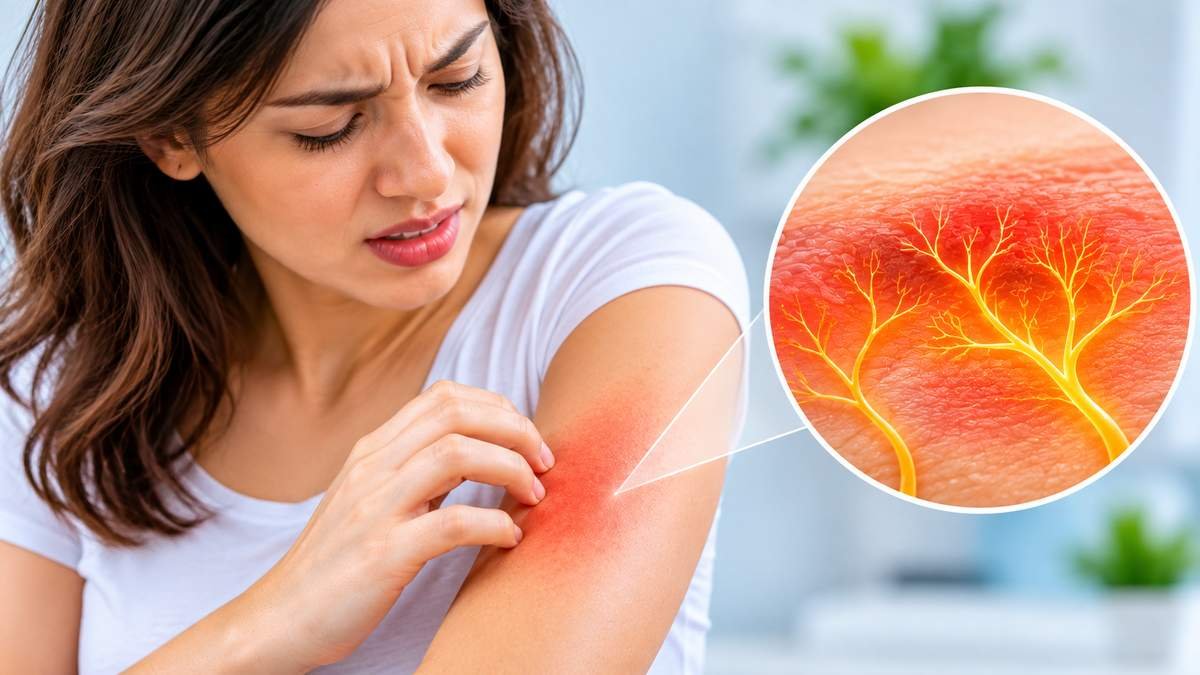
Your skin feels hot, stingy, or oddly sore, as if you were sunburned, but the mirror shows nothing unusual. Burning skin is a common complaint, and it can feel very different from one person to the next. For some it is a warm, tender glow. For others it is prickling, pins and needles, or a sudden electric-like zap.
In simple terms, burning skin is an uncomfortable sensation of heat, stinging, or pain on or just under the skin. It does not always mean the skin has been physically burned. Nerve-related sensations can create the same feeling without any visible tissue damage, and the sensation can appear with or without redness or a rash.
This guide focuses on how burning skin feels, so you can recognize and describe your own experience. It covers ten common sensations, what burning skin may look like, burning without a rash, where on the body it can occur, and what can make it worse. It also explains how to describe it to a doctor and when to seek care.
For a deeper look at the reasons behind it, see our guide on what causes burning skin.
What Does Burning Skin Feel Like?
Burning skin is an uncomfortable sensation that can range from mild warmth or irritation to intense pain. It is a symptom, not a diagnosis, and the feeling alone cannot tell you what is causing it. People commonly describe it in these ways:
- A hot or heated feeling on the skin
- A stinging sensation, like touching something irritating
- A sharp, prickling feeling
- A sensation like mild or severe sunburn
- Tingling or pins and needles
- Pain or discomfort when clothing touches the skin
- A deep burning feeling beneath the surface
The sensation may be temporary, recurring, or persistent. It can stay in one spot, spread along an area, or move around.
Doctors use specific terms for some of these experiences. Cleveland Clinic describes paresthesia as an abnormal sensation on or just under the skin, such as tingling, prickling, burning, itching, or numbness. Dysesthesia is a group of symptoms that distort touch-based sensations and can feel unpleasant, painful, or simply strange. You do not need to remember the terms, but they can help when you talk with a clinician.
10 Different Ways Burning Skin Can Feel
No two people describe burning skin quite the same way. The ten sensations below are common descriptions, and you may recognize more than one. Matching your experience to a description does not diagnose a condition, but it can help you explain it clearly.
1. A Feeling Like Sunburn
Some people feel as if they have a sunburn when they have not been in the sun. The skin may feel hot and tender, hurt when touched, and react to clothing or warm water. It may seem slightly swollen or irritated.
Real sunburn feels this way too. MedlinePlus notes that sunburn skin is red, tender, and warm to the touch, and that the first signs may not show for a few hours. A similar feeling without sun exposure may come from inflammation or from certain nerve-related conditions.
2. A Hot or Warm Feeling Under the Skin
This is an internal warmth that does not match what you can see or feel from the outside. It may be a feeling of heat spreading through one area, or warmth that comes and goes. The skin may look completely normal.
Perceived warmth does not always mean the skin’s actual temperature has risen. The nerves that sense heat can send signals even when no heat is present.
3. A Stinging or Pricking Sensation
Stinging feels like small, sharp sensations across the skin, as though tiny needles are touching the surface. Episodes may be brief. Many people notice stinging after using a skincare product or touching certain substances.
Both skin irritation and abnormal nerve sensations can cause stinging. The setting often offers a clue: stinging right after a new lotion points toward irritation, while stinging with no trigger raises other possibilities.
4. Pins-and-Needles or Tingling
Burning often overlaps with tingling. People describe buzzing, mild electric-like feelings, or prickling beneath the skin. Tingling may come before burning or alongside it.
Most people know the pins-and-needles feeling that follows sitting on a foot. Cleveland Clinic explains that these brief episodes often come from pressure on a nerve, while frequent or persistent tingling is more likely to need evaluation.
5. A Deep Burning Pain
Some burning seems to come from beneath the skin rather than the surface. It can be persistent, spread along an area, and occur without obvious irritation. This kind of discomfort may involve the sensory nerves.
Mayo Clinic notes that people with peripheral neuropathy commonly describe their pain as stabbing, burning, or tingling. Deep burning has other possible causes too, so the description alone is not enough.
6. Pain When Clothing Touches the Skin
Ordinary contact can become uncomfortable. A cotton shirt may feel irritating, bedsheets may bother you, and gentle rubbing may sting or burn.
This is called allodynia, which is pain from something that normally does not hurt. According to Cleveland Clinic, light touch, clothing, and even mild temperature changes can trigger it. It is linked to changes in how the nervous system processes pain signals and has been associated with migraine, fibromyalgia, diabetic neuropathy, and shingles.
7. Burning Combined With Itching
A hot, itchy feeling brings an urge to scratch, yet scratching may sting or make the discomfort worse. Irritated skin can become more sensitive and more uncomfortable.
Inflammatory skin conditions and allergic reactions often produce this overlap. The National Eczema Association reports that about 61% of adults with atopic dermatitis experience skin pain, most often described as burning, though it can also feel like tingling or stinging.
8. An Electric-Shock or Zapping Feeling
Some sensations feel like sudden electrical jolts, sharp bursts of heat, or shooting discomfort that radiates outward. Episodes may be short but intense.
Cleveland Clinic lists electric-like jolts among the sensations people describe with dysesthesia. These descriptions often occur with nerve-related sensations, though they are not exclusive to any one condition.
9. Burning With Numbness
Some people have reduced sensation in one area along with uncomfortable burning in the same or a nearby spot. Tingling and numbness may occur together, sometimes without an obvious skin problem.
Because numbness can make it harder to notice injuries or temperature changes, this combination deserves attention. Mention it to a healthcare professional rather than waiting to see if it passes.
10. Burning That Comes and Goes
Intermittent burning may last seconds or minutes and return throughout the day. It may be triggered by heat, movement, touch, or clothing, or appear with no clear trigger at all.
The pattern alone cannot establish the cause. Keeping a simple note of when it happens can still help you and your clinician spot useful details.
What Does Burning Skin Look Like?
The appearance of burning skin depends on what is causing it. Some people have clear visible changes, while others have none.
Burning Skin With Visible Redness
Skin may look red or flushed, with irritated patches, inflammation, or mild swelling. This can occur with sunburn, irritation, or allergic reactions. Redness that spreads quickly, especially with warmth, swelling, or fever, needs prompt medical attention.
Burning Skin With a Rash or Blisters
Some inflammatory conditions, allergic reactions, infections, and burns produce a rash or blisters. For example, Mayo Clinic lists swelling, burning, or tenderness among the possible symptoms of contact dermatitis, along with itchy, sometimes blistering rashes. In shingles, burning or tingling pain can appear days before a blistering rash.
Burning Skin That Looks Completely Normal
Nerve-related burning may occur with no redness, swelling, or rash at all. Cleveland Clinic notes that dysesthesia often has no visible sign, which can make it hard for others to understand. Normal-looking skin does not mean the sensation is imaginary.
Burning Skin Without a Rash: What Does It Feel Like?
Many people search for answers because their skin feels like it is burning but looks fine. This can show up in several ways:
- A sunburn-like feeling without any redness
- Internal warmth without visible inflammation
- Tingling or prickling beneath the surface
- Burning set off by gentle touch
- Sensations that move between different body areas
- Persistent or intermittent nerve-like discomfort
Some of these experiences are described as dysesthesia, a term for unusual and often unpleasant sensations such as burning, tingling, itching, and electric-like feelings. Cleveland Clinic explains that the brain can produce such sensations even without direct input from nerves, and that anxiety or stress can contribute. The sensations are still real.
Possible contributors include nerve irritation, neuropathy, medication effects, and certain underlying conditions. Not every unexplained burning sensation is neurological, though. If it keeps happening, a medical evaluation is the best way to sort out the reason. Our causes guide covers the possibilities in more depth.
Where on the Body Can You Feel Burning Skin?
Burning can affect one spot or several areas. Location may help a healthcare professional investigate, but it cannot identify the cause on its own.
Burning Skin on the Arms and Hands
People describe burning in the palms, stinging in the forearms, tingling in the fingers, and sensitivity when touching objects. Pressure on a nerve at the wrist or elbow can sometimes play a role.
Burning Skin on the Legs and Feet
Common descriptions include hot or burning soles, tingling toes, burning calves, and discomfort when walking or wearing shoes. Mayo Clinic notes that in diabetic neuropathy, symptoms in the feet and legs are often worse at night. Our overview of type 2 diabetes offers background.
Burning Skin on the Face and Scalp
This may feel like facial warmth, stinging cheeks, burning around the forehead, or scalp tenderness. The face is a sensitive area, so a painful rash near the eye needs urgent care. For scalp-specific discomfort, see our guide to itchy scalp causes and treatments.
Burning Skin on the Back, Chest, and Torso
People report localized burning patches, deep discomfort, sensitivity to clothing, and sensations that follow a particular strip of skin. Burning on one side of the torso can be an early sign of shingles, according to the CDC, which notes that pain, itching, or tingling can appear several days before the rash.
What Other Symptoms Can Occur With Burning Skin?
Other symptoms help describe the full picture. They are useful clues, but they are not enough to diagnose a condition.
Burning and Redness
This may occur with skin inflammation, sunburn, or allergic reactions.
Burning and Itching
This pairing may occur with eczema, dermatitis, and other irritating skin conditions.
Burning and Tingling
This may reflect abnormal sensory nerve activity or neuropathy. Low vitamin B12 can also affect nerves; Harvard Health notes a blood test is needed to confirm it. See our guide to vitamin B12 food sources.
Burning and Numbness
This can occur with certain nerve-related conditions and should be mentioned to a clinician.
Burning and Swelling
This may accompany inflammation, allergic reactions, or infection. Read more in our guides on what causes swelling and when swelling is an emergency.
What Can Make Burning Skin Feel Worse?
Triggers differ from person to person, and they often depend on whether the sensation comes from irritation, inflammation, or nerve sensitivity. Common aggravating factors include:
- Heat and hot showers
- Sweating
- Friction from clothing
- Scratching or rubbing
- Harsh soaps and skincare products
- Direct sunlight
- Temperature changes
- Pressure or gentle touch in sensitive areas
Noticing what makes your symptoms flare can help you avoid triggers and give your clinician useful information. Cleveland Clinic notes that even mild temperature changes can set off allodynia in some people. For general skin care, our guide to dry skin offers gentle habits that may help.
Why Does Burning Skin Happen? Common Explanations
Many different things can cause the same sensation, which is why a proper evaluation matters when it lasts. The overview below is brief; the full discussion is in our burning skin causes article.
Skin-Related Causes
These include contact dermatitis, eczema, allergic reactions, sunburn, and skin infections. Mayo Clinic describes cellulitis as a spreading skin infection with swollen, painful, warm skin, which needs prompt medical care.
Nerve-Related Causes
These include peripheral neuropathy, nerve irritation or compression, shingles-related nerve pain, and other sensory nerve dysfunction. Mayo Clinic reports that diabetes is a common cause of neuropathy.
Other Possible Contributors
Medication side effects, certain nutritional deficiencies, hormonal changes, and stress or anxiety can all play a part. The National Institute of Mental Health describes physical symptoms as common in anxiety disorders. Fibromyalgia, which Mayo Clinic says affects how the brain and spinal cord process pain signals, may also involve heightened sensitivity.
Related reading: what anxiety is and what causes fatigue.
How to Describe Burning Skin to a Doctor
Clear details help a healthcare professional decide whether a skin exam, a neurological assessment, or further testing makes sense. Before your visit, consider noting:
- Exactly what the sensation feels like, in your own words
- Where it occurs and whether it moves
- When it started
- Whether it is constant or comes and goes
- Whether touching the skin makes it worse
- Whether a rash or visible skin change is present
- Whether tingling, numbness, or itching occurs with it
- Any recent changes in medications or skincare products
You do not need medical terms. Plain descriptions such as “like a sunburn under the skin” or “like tiny electric shocks” are useful.
When Should You Worry About Burning Skin?
Most burning skin is not an emergency, but some situations need prompt care. This list is general guidance, and you should trust your instincts if something feels wrong.
When to Schedule a Doctor’s Appointment
- Burning persists or keeps coming back
- Symptoms are getting steadily worse
- Burning affects multiple areas
- Unexplained tingling or numbness develops
- Pain interferes with sleep or daily activities
- A new rash or unusual skin change appears
When to Seek Urgent Medical Care
- Redness, warmth, swelling, or pain that spreads rapidly, especially with fever
- New blistering or a painful rash around the eye
- Significant or sudden neurological symptoms
- A suspected serious burn or skin infection
When to Seek Emergency Help
- Burning with difficulty breathing or swelling of the tongue or throat, which can be signs of anaphylaxis
- Sudden one-sided weakness, facial drooping, or trouble speaking
- Severe chemical, electrical, or deep burns (see Mayo Clinic’s burn guidance)
If you think you are having an emergency, call 911 or your local emergency number.
Frequently Asked Questions About Burning Skin
Does burning skin feel like a sunburn?
It can. Warmth, tenderness, and sensitivity to touch are common to both. However, not every burning sensation comes from sun damage, and sunburn typically follows exposure to UV light, according to Mayo Clinic.
Can your skin feel like it’s burning without being hot?
Yes. Abnormal nerve signaling can produce a burning feeling even when the skin’s temperature is normal. Cleveland Clinic notes that dysesthesia often has no visible sign.
What does nerve-related burning skin feel like?
People describe tingling, electric-like sensations, deep burning, prickling, and increased sensitivity to touch. The feelings may come and go. Similar sensations can have non-nerve causes, so a clinician should evaluate persistent symptoms.
Why does my skin hurt when I touch it lightly?
This may be allodynia, pain from a stimulus that normally does not hurt, such as clothing or light touch. Cleveland Clinic links it with conditions such as migraine, fibromyalgia, diabetic nerve damage, and shingles. Unexplained pain with touch is worth discussing with a provider.
Can burning skin happen without a rash?
Yes. Some nerve-related and other medical conditions can cause burning with no visible skin changes. Early shingles is one example, since pain can come before the rash, per the CDC.
Is burning skin the same as itching?
Not exactly. Itching creates an urge to scratch, while burning is a hot, stinging, or painful sensation. The two can occur together, as they often do in eczema and dermatitis.
Why does my skin feel like it’s burning at night?
Night-time burning may relate to warm bedding, friction, fewer distractions that make you notice sensations more, or nerve-related symptoms. Mayo Clinic notes that diabetic neuropathy symptoms are often worse at night. If it disrupts sleep, see a clinician, and our guide on how to improve sleep may help with rest in the meantime.
Can stress make burning skin worse?
It may. Stress and anxiety can influence how the nervous system processes sensations, and Cleveland Clinic notes they can contribute to dysesthesia. Stress should not be assumed as the only cause, and our guide on how to reduce stress offers general strategies.
How long does burning skin usually last?
It depends on the cause. Irritation from a product may settle within days once the trigger is removed, while nerve-related symptoms can last longer and may need ongoing care. Sensations that keep returning deserve evaluation.
Should I be concerned if my skin feels like it’s burning every day?
Daily or recurring unexplained burning should be evaluated by a healthcare professional. Cleveland Clinic advises seeking care when similar sensations last several days or interfere with daily life. An exam can look for treatable causes.
Final Thoughts
Burning skin can feel like heat, sunburn, stinging, tingling, or deep nerve pain, and different people describe it in different ways. It may occur with or without visible skin changes. Associated symptoms and triggers offer useful clues, though they cannot diagnose a condition on their own.
Understanding what the sensation feels like is a helpful first step toward finding its cause and appropriate relief. If your burning skin persists, worsens, or keeps returning, a healthcare professional can help you work out why. You do not have to put up with it or wonder alone.
Sources
- Cleveland Clinic. Dysesthesia
- Cleveland Clinic. Paresthesia
- Cleveland Clinic. Allodynia
- Mayo Clinic. Burns: Symptoms and causes
- Mayo Clinic. Sunburn: Symptoms and causes
- MedlinePlus. Sunburn
- Mayo Clinic. Contact dermatitis: Symptoms and causes
- Mayo Clinic. Cellulitis: Symptoms and causes
- Mayo Clinic. Peripheral neuropathy: Symptoms and causes
- Mayo Clinic. Diabetic neuropathy: Symptoms and causes
- Mayo Clinic. Fibromyalgia: Symptoms and causes
- Mayo Clinic. Anaphylaxis: Symptoms and causes
- Centers for Disease Control and Prevention. Shingles symptoms and complications
- National Eczema Association. Eczema facts
- Harvard Health Publishing. Vitamin B12 deficiency
- National Institute of Mental Health. Anxiety disorders
Medical Disclaimer: This article is for general educational purposes only and is not medical advice. It cannot diagnose any condition or replace a visit with a doctor or other qualified healthcare professional. Always talk with a healthcare professional about your symptoms, medications, and treatment choices, and never ignore or delay care because of something you read here. If you think you are having a medical emergency, call 911 or your local emergency number right away.
2 thoughts on “What Does Burning Skin Feel Like? Symptoms Explained”
Comments are closed.