
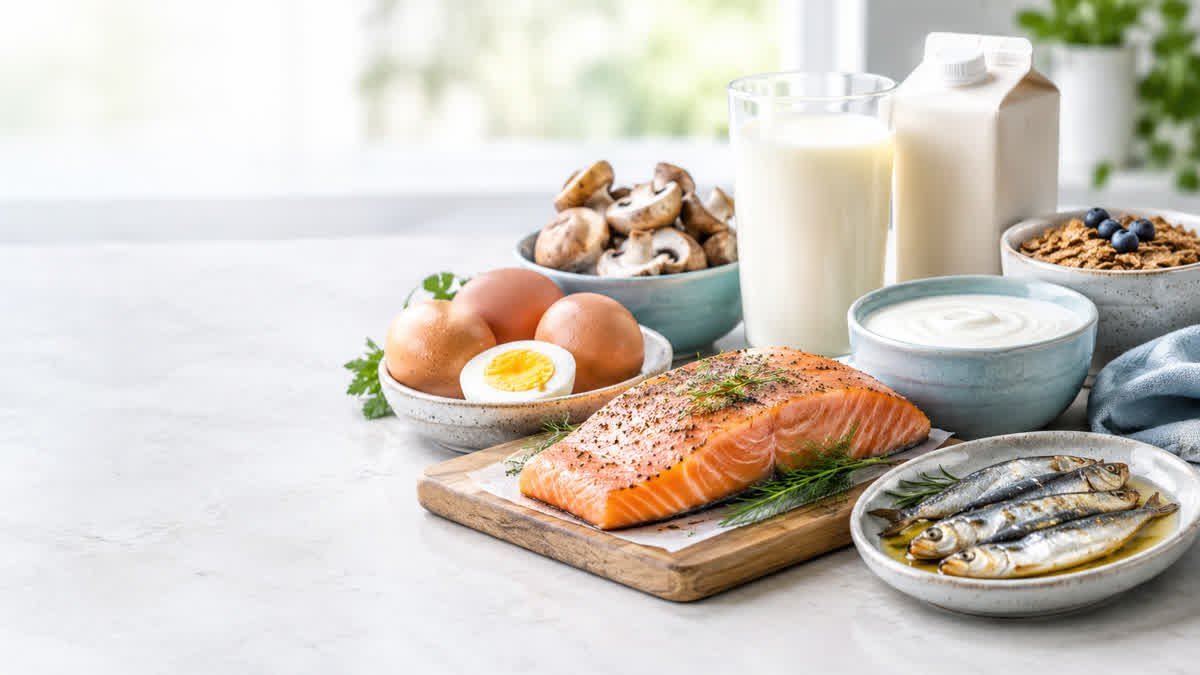

Vitamin D helps your body absorb calcium and supports healthy bones and muscles. Because relatively few foods naturally contain substantial amounts, knowing which foods high in vitamin D to choose can make a real difference to a balanced diet. Fatty fish, egg yolks, UV-exposed mushrooms, and fortified products are among the most useful options.
The amount of vitamin D in a food depends on the food itself, the portion size, the species, how it was prepared, and whether vitamin D was added during fortification. That is why two products that look similar can differ quite a bit, as the NIH Office of Dietary Supplements food-source tables show. Reading labels and comparing serving sizes is part of choosing well.
This guide walks through 10 of the best food sources of vitamin D, with approximate amounts, practical serving ideas, and options for people who avoid fish or dairy. It also explains how much vitamin D adults and children typically need, whether food alone can meet those needs, and which common mistakes to avoid. This article is general information, not personal medical advice.
What Is Vitamin D and Why Does Your Body Need It?
Vitamin D is a fat-soluble vitamin that helps the body absorb calcium and phosphorus. These minerals are needed to build and maintain bones and teeth. Vitamin D also contributes to normal muscle function and to the normal working of the immune system.
There are two main dietary forms. Vitamin D2 (ergocalciferol) is found in some plant and fungal foods, such as UV-exposed mushrooms. Vitamin D3 (cholecalciferol) is found in animal foods such as fish and eggs, and in many supplements. Both can contribute to your intake, although they may affect blood levels differently.
Your skin can also make vitamin D after exposure to ultraviolet B (UVB) sunlight. However, production varies with season, location, skin pigmentation, age, clothing, and sunscreen use. Food is therefore one important part of maintaining adequate vitamin D status, not the only part. For a broader overview, see our guide to vitamin D benefits, food sources, and deficiency signs.
More vitamin D is not automatically better. Getting more than your body needs does not provide extra benefits, and very high supplement doses can be harmful.
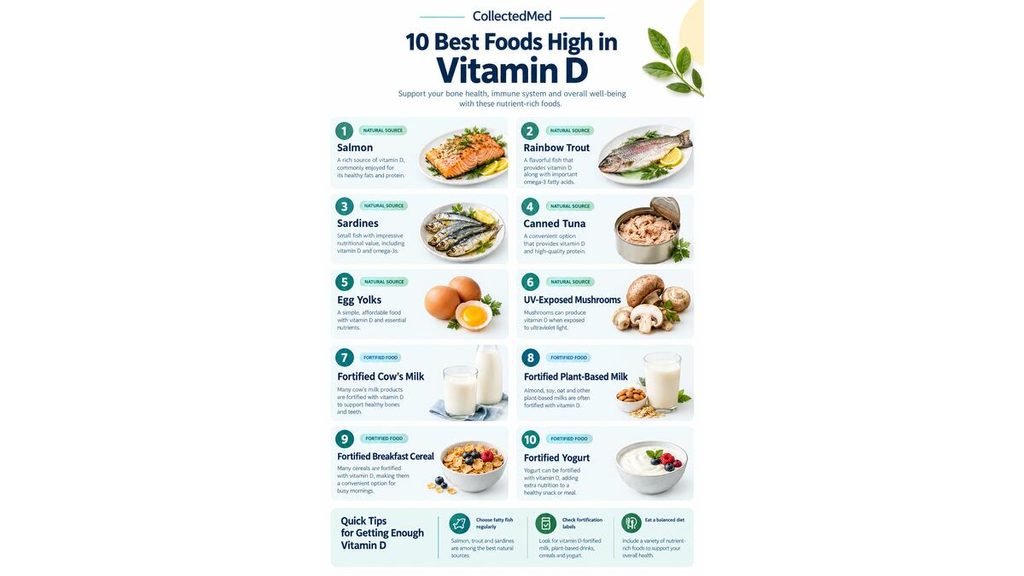
10 Best Foods High in Vitamin D
The amounts below are approximate and come mainly from the NIH Office of Dietary Supplements and nutrient data in USDA FoodData Central. Values can differ substantially by product, species, preparation, and fortification. When a nutrition label is available, it is the best guide to what you are actually eating.
The foods are not ranked strictly by vitamin D content. Some are included because they are widely available or suit vegetarian and dairy-free diets.
1. Salmon
Salmon is a convenient, nutrient-dense source of vitamin D, and a single serving can provide a meaningful share of daily needs. According to the NIH Office of Dietary Supplements, a 3-ounce (85 g) serving of cooked sockeye salmon provides roughly 14 mcg (about 570 IU), although amounts vary. Wild and farmed salmon can differ in vitamin D content, and so can different species.
Salmon also supplies protein and omega-3 fatty acids. It works well baked with vegetables, flaked into a salad, or served with brown rice.
2. Rainbow Trout
Rainbow trout is another fatty fish that can provide substantial vitamin D, and it is a useful alternative to salmon. The NIH food-source table lists about 16 mcg (roughly 645 IU) in a 3-ounce serving of cooked farmed rainbow trout. This is an approximation, and values depend on the fish and how it was raised and cooked.
Trout also provides high-quality protein and other nutrients. Try it grilled with vegetables or baked with herbs and lemon.
3. Sardines
Sardines are widely available in canned form and are often an affordable fish option. The amount of vitamin D varies by product, but canned sardines are a modest to useful source. The NIH food-source table lists roughly 1 mcg (about 46 IU) for two canned Atlantic sardines packed in oil.
Sardines also provide protein and omega-3 fats, and they supply calcium when the soft, edible bones are eaten. Add them to whole-grain toast, salads, or pasta. Check the label for serving size and sodium, particularly in salted products. Our guide to fatty fish offers more ideas.
4. Canned Tuna
Canned tuna is convenient, accessible, and easy to include in everyday meals. Vitamin D content varies by tuna species and product. The NIH food-source table lists about 5.7 mcg (roughly 230 IU) for 3 ounces of canned light tuna packed in water.
Tuna works in sandwiches, salads, and grain bowls. It provides protein, but it does not need to be eaten every day. People who are pregnant, may become pregnant, or are feeding young children should follow guidance on fish choices, because mercury levels differ by species. The FDA’s advice about eating fish explains which choices are lower in mercury.
5. Egg Yolks
Egg yolks provide some vitamin D, and eggs are easy to fit into many eating patterns. The vitamin D is found in the yolk rather than the egg white. The amount depends on the hen’s feed and production conditions, and the NIH food-source table lists about 1 mcg (around 44 IU) in one large scrambled egg.
Eggs also provide protein and other nutrients as part of a healthy diet. Try boiled eggs, a vegetable omelet, or eggs on whole-grain toast. Eggs make a helpful contribution, but they usually cannot replace higher sources when intake needs are substantial.
6. UV-Exposed Mushrooms
Some mushrooms exposed to ultraviolet light provide vitamin D2, which makes them a useful option for vegetarians and vegans. Not all mushrooms contain meaningful vitamin D. Ordinary mushrooms grown in the dark generally contain very little.
The NIH food-source table lists roughly 9 mcg (about 366 IU) in half a cup of raw, sliced white mushrooms exposed to UV light, but amounts vary considerably by product and processing. Look for packaging that states vitamin D content. Sauté them, add them to soups and stir-fries, or roast them as a side dish.
7. Fortified Cow’s Milk
Fortified milk is a familiar source of vitamin D in countries where fortification is common. Vitamin D is usually added to milk rather than being present in large amounts naturally. The NIH food-source table lists about 3 mcg (roughly 120 IU) in one cup of fortified 2% milk.
Fortification practices differ by country and product, so do not assume that all milk is fortified. Check the nutrition label for vitamin D per serving. Milk can be enjoyed on its own or added to oatmeal and smoothies. People with milk allergy or lactose intolerance may need alternatives suited to their needs.
8. Fortified Plant-Based Milk
Fortified soy, almond, oat, and other plant-based drinks can help people who avoid dairy. Vitamin D content depends entirely on the brand and its fortification. The NIH food-source table lists roughly 2.5 to 3.6 mcg (about 100 to 144 IU) per cup for some fortified products, but labels vary.
Compare labels and serving sizes. Fortified soy drinks may also provide protein, while the protein content of other plant drinks varies. Use them in cereal, oatmeal, smoothies, or coffee and tea. Plant-based drinks are not nutritionally identical to cow’s milk, so check calcium and protein as well. Our guide to what a balanced diet looks like can help you judge the bigger picture.
9. Fortified Breakfast Cereals
Some breakfast cereals contain added vitamin D and can make a practical contribution to daily intake. Fortification varies widely between products. The NIH food-source table lists about 2 mcg (roughly 80 IU) for a serving of some fortified cereals, but others contain more or less.
Check the nutrition facts panel for vitamin D per serving, and choose products that fit your overall needs, including reasonable amounts of added sugar and sodium. You can pair cereal with fortified milk or a suitable plant-based drink.
10. Fortified Yogurt and Other Fortified Dairy Products
Some yogurt and other dairy products are fortified with vitamin D, but this is not universal. Dairy foods generally contain little vitamin D naturally unless it has been added. The NIH food-source table lists about 2 mcg (roughly 80 IU) in 6 ounces of yogurt fortified with 20% of the Daily Value.
Check the label rather than assuming that all yogurt contains added vitamin D. Plain or lower-added-sugar options are often a good choice. Yogurt pairs well with fruit, oats, or nuts.
Approximate Vitamin D in Common Foods
| Food and serving | Approximate vitamin D | What to know |
|---|---|---|
| Rainbow trout, farmed, cooked, 3 oz | About 16 mcg (645 IU) | Varies by fish and preparation |
| Sockeye salmon, cooked, 3 oz | About 14 mcg (570 IU) | Varies by species and farming |
| UV-exposed mushrooms, raw, 1/2 cup | About 9 mcg (366 IU) | Provides vitamin D2; check labels |
| Canned light tuna in water, 3 oz | About 5.7 mcg (230 IU) | Varies by species and product |
| Fortified 2% milk, 1 cup | About 3 mcg (120 IU) | Fortification varies by country |
| Fortified plant-based drink, 1 cup | About 2.5 to 3.6 mcg (100 to 144 IU) | Depends on the brand |
| Fortified cereal, one serving | About 2 mcg (80 IU) | Varies by product |
| Fortified yogurt, 6 oz | About 2 mcg (80 IU) | Only if fortified; check labels |
| Canned sardines in oil, 2 fish | About 1 mcg (46 IU) | Also provide calcium with bones |
| Large egg, scrambled | About 1 mcg (44 IU) | Found in the yolk |
These figures are approximate and are not directly comparable across different serving sizes. Verify current values in the NIH and USDA databases, and use the product label when you have one.
How Much Vitamin D Do You Need Each Day?
The table below shows U.S. reference intakes from the NIH Office of Dietary Supplements. These are U.S. guidelines, not universal recommendations.
| Life stage | Recommended daily intake |
|---|---|
| Infants 0 to 12 months | 400 IU (10 mcg) |
| Ages 1 to 70 years, including pregnancy and lactation | 600 IU (15 mcg) |
| Adults over 70 years | 800 IU (20 mcg) |
One microgram (mcg) of vitamin D equals 40 international units (IU). The infant figure is an adequate intake rather than a recommended dietary allowance.
Recommended amounts can vary with national guidance and individual circumstances. These values refer to total daily intake from all sources, so they do not have to come entirely from food. For adults, the NIH sets the daily upper limit at 4,000 IU (100 mcg) from all sources. Infants, older adults, people with limited sun exposure, and some people with absorption problems may need individualized guidance. Avoid taking high-dose supplements without professional advice.
Can You Get Enough Vitamin D From Food Alone?
Some people can, but others may find it difficult. Few foods naturally contain large amounts of vitamin D. Fatty fish can provide substantial amounts, while eggs and unfortified foods generally contribute less.
Fortified foods can make a meaningful difference where they are available. People who eat little fish, avoid animal products, or have limited access to fortified foods may find it harder to meet their needs through diet alone.
Sunlight also contributes, but production varies with season, location, skin pigmentation, and other factors. Deliberate unprotected UV exposure is not a risk-free strategy because it raises skin cancer risk. Some people may need a supplement based on age, diet, health status, or a clinician’s advice.
A blood test may be appropriate when a healthcare professional suspects deficiency, but routine testing is not necessary for everyone. Discussing risk factors with your clinician is a sensible part of preventive health.
Simple Ways to Add More Vitamin D to Your Diet
Small, consistent changes tend to work better than dramatic ones. These steps can help you build vitamin D sources into everyday meals:
- Include fatty fish in meals when it is suitable, affordable, and consistent with your preferences.
- Use eggs as one contributing source rather than the only source.
- Choose UV-exposed mushrooms when they are available.
- Select fortified milk, plant-based drinks, cereals, or yogurt only after checking labels.
- Build meals around a variety of nutrient-dense foods rather than focusing only on vitamin D.
- Pair vitamin D sources with vegetables, fruits, whole grains, and suitable protein sources from our list of the healthiest foods to eat every day.
Local availability, food preferences, allergies, budget, and cultural eating habits all matter, so choose what works for you. A healthy diet is flexible, and a Mediterranean-style eating pattern, described in our Mediterranean diet guide, naturally includes fish, vegetables, and whole grains.
Here is one example of a day of eating. It is only an illustration, not a prescribed diet or a guarantee of meeting daily requirements:
- Breakfast: Fortified milk or a fortified plant-based drink with cereal, if available.
- Lunch: An egg and vegetable meal.
- Dinner: Baked salmon, trout, or sardines with vegetables and whole grains.
- Vegetarian option: UV-exposed mushrooms and appropriately fortified foods.
Common Mistakes to Avoid When Choosing Vitamin D Foods
A few common misunderstandings can lead people astray. Keeping these in mind makes it easier to choose wisely:
- Assuming every product is fortified. Not every mushroom, milk, yogurt, or cereal contains added vitamin D.
- Treating all fish as the same. Species and preparation change the amount.
- Ignoring serving size. A label value applies to one serving, which may be smaller than what you eat.
- Relying on a single food. One vitamin D-rich food does not guarantee adequate vitamin D status.
- Taking high-dose supplements without guidance. More is not always better, and excessive supplemental intake can cause toxicity, which is usually linked to supplements rather than ordinary food.
- Treating fatigue as proof of deficiency. Fatigue and other nonspecific symptoms have many possible causes.
Frequently Asked Questions About Foods High in Vitamin D
What food is highest in vitamin D?
Fatty fish such as certain types of salmon and trout are among the richest common food sources. The exact amount varies by species, farming conditions, serving size, and preparation. You can compare values in the NIH Office of Dietary Supplements fact sheet.
Which fruit is high in vitamin D?
Most fruits contain little or no vitamin D naturally. Some fortified products, such as certain juices, may provide vitamin D, but ordinary fruit is not a major source.
Are eggs a good source of vitamin D?
Egg yolks provide some vitamin D, but the amount is modest and varies. Eggs can contribute to your intake, though they may not provide enough on their own.
Do mushrooms contain vitamin D?
Some mushrooms contain vitamin D2, especially when exposed to ultraviolet light. Ordinary mushrooms may contain much less, so product labels are helpful.
Is vitamin D present in milk?
Some milk is fortified with vitamin D, but fortification differs by country and brand. Check the nutrition label rather than assuming all milk contains added vitamin D.
Can vegetarians get vitamin D from food?
Yes. Depending on their diet and local availability, vegetarians may get vitamin D from eggs, UV-exposed mushrooms, and fortified dairy products or plant-based drinks. Vegans may need to rely on UV-exposed mushrooms, fortified foods, or supplements recommended by a clinician.
Can I get enough vitamin D without supplements?
Some people can meet their needs through food and sunlight-related production, while others cannot. The answer depends on diet, age, location, sun exposure, absorption, and individual health factors. The MedlinePlus overview of vitamin D explains who may be at higher risk of deficiency.
Should I take vitamin D supplements if I do not eat fish?
Not automatically. Consider other dietary sources and fortified products first. A healthcare professional can tell you whether a supplement is appropriate for your individual circumstances.
Final Thoughts on the Best Sources of Vitamin D
Fatty fish are among the most useful natural dietary sources of vitamin D. Eggs, UV-exposed mushrooms, and fortified products can also contribute, and fortification varies, so nutrition labels matter. A balanced diet and individualized advice are more useful than relying on one food or taking excessive supplements.
If you are concerned about deficiency, talk with a qualified healthcare professional about your risk factors. To keep learning, explore CollectedMed’s related guides on vitamin D and balanced nutrition.
Sources
- National Institutes of Health, Office of Dietary Supplements: Vitamin D Fact Sheet for Health Professionals
- National Institutes of Health, Office of Dietary Supplements: Vitamin D Fact Sheet for Consumers
- U.S. Department of Agriculture: FoodData Central
- MedlinePlus: Vitamin D
- U.S. Food and Drug Administration: Advice About Eating Fish
Medical Disclaimer: This article is for educational purposes only and is not a substitute for professional medical advice, diagnosis, or treatment. Always talk with a doctor, registered dietitian, or other qualified healthcare provider before changing your diet, starting a supplement, or if you have questions about your health. If you think you are having a medical emergency, call 911 or your local emergency number right away.