
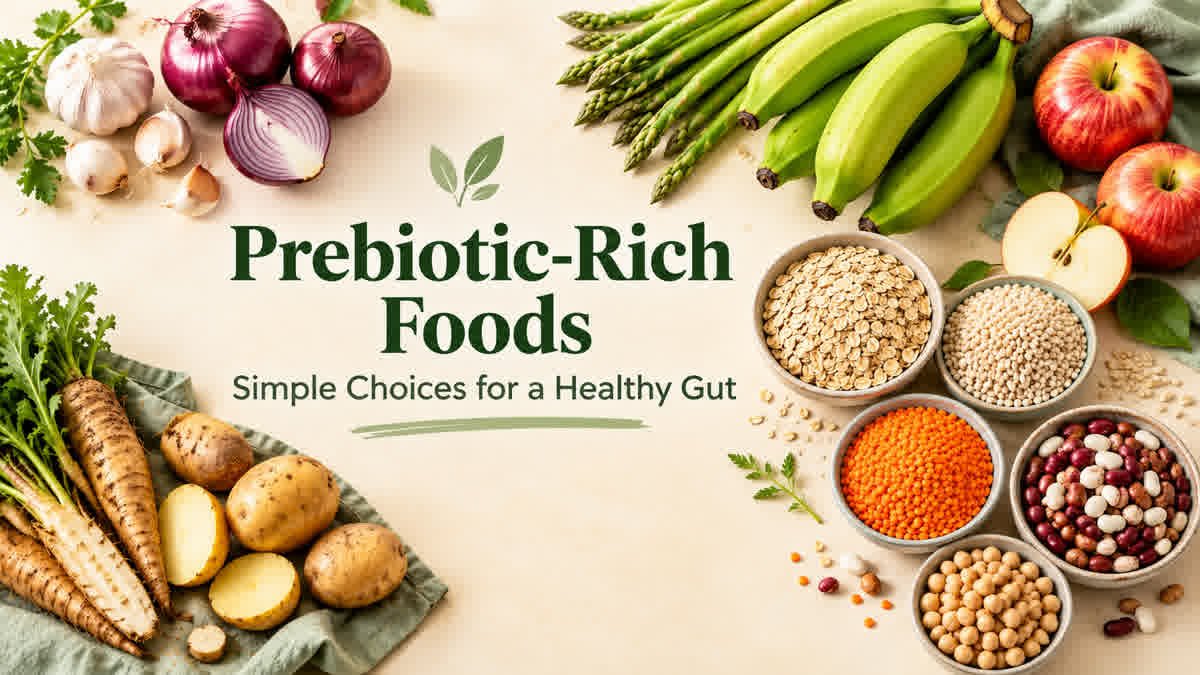

Did you know that some everyday foods help nourish the microorganisms living in your digestive system? Prebiotic foods can be a simple addition to a balanced diet. From garlic and onions to oats and lentils, these ingredients provide fibers and other compounds that certain gut microorganisms can use.
Your gut is home to trillions of microorganisms, collectively known as the gut microbiome. Some types of dietary fiber and other carbohydrates travel through the small intestine undigested and become fuel for these microbes in the large intestine. Well-studied examples include inulin and fructooligosaccharides, along with other fermentable carbohydrates and resistant starch. Not every fiber qualifies as a prebiotic, and responses differ from person to person.
This guide explains what prebiotic foods are, how they may support gut health, and which 15 foods are worth adding to your meals. It also offers practical serving ideas, tips for building up gradually, and notes on side effects.
What Are Prebiotic Foods?
The International Scientific Association for Probiotics and Prebiotics (ISAPP) defines a prebiotic as a substrate that is selectively used by host microorganisms and confers a health benefit. Many recognized prebiotics are specific types of dietary fiber, though not all fiber qualifies. Prebiotic foods are foods that contain these substances.
It helps to separate three related terms:
- Dietary fiber: A broad category of carbohydrates that your body does not fully digest.
- Prebiotic substances: Substances used selectively by microorganisms in a way that provides a health benefit.
- Fermentable fiber: Fiber that gut microorganisms can break down. Being fermentable does not automatically make a substance a prebiotic.
That distinction matters for this list. Some foods below are recognized sources of particular prebiotic fibers, such as inulin. Others are valuable sources of fermentable fiber or resistant starch, which may feed gut microbes but are not all formally established as prebiotics.
How Do Prebiotic Foods Work?
Some fibers travel to the large intestine, where certain microorganisms use them as fuel. This activity can produce substances such as short-chain fatty acids, which contribute to the gut environment and normal intestinal function. The effects vary with the type of fiber and with the person.
Prebiotics vs. Probiotics
Probiotics are live microorganisms that may provide a health benefit when used appropriately. Prebiotics are substances that those or other microorganisms use. You can read more about the difference between probiotics and prebiotics, explore probiotic-rich foods, or learn about probiotics more generally. The National Center for Complementary and Integrative Health also reviews what is known about probiotic use and safety.
How Can Prebiotic Foods Support Gut Health?
The potential benefits depend on the person, the food, and the existing microbiome. No food promises a specific outcome for everyone.
Nourishing Certain Gut Microorganisms
Particular prebiotic substances can support selected microorganisms. Responses vary with the substance, a person’s existing gut microbes, and other individual factors. Science in this area is still developing, so it is best to view prebiotic foods as one part of an overall eating pattern.
Supporting Normal Digestion
Fiber contributes to regular bowel movements, and some fermentable fibers can support digestive function. Raising your fiber intake too quickly may cause gas or bloating, so go gradually. Our guide to high-fiber foods for digestive health offers more options.
Supporting a Varied, Fiber-Rich Diet
Eating a range of plant foods supplies different fibers and nutrients. No single food is required for gut health, and variety is more useful than relying on one “superfood.” You can learn what a balanced diet looks like to see how these foods fit in.
15 Prebiotic-Rich Foods to Add to Your Diet
Each food below includes why it earns a place on the list and a simple way to eat it. Not every item is equally rich in established prebiotics. You do not need to eat all 15, and the best choices are the ones that suit your preferences, access, and digestive tolerance. For more nutritious choices, see our list of healthy foods.
1. Garlic
Garlic contains inulin and fructooligosaccharides, carbohydrates that certain gut microorganisms can use. It is flavorful, so even small amounts add variety.
How to eat it: Add chopped garlic to soups, cooked vegetables, lentils, sauces, or roasted dishes.
2. Onions
Onions provide fructans, including inulin-type carbohydrates, along with other nutrients. Cooking changes their texture and flavor, but onions are not a treatment for digestive problems.
How to eat them: Include onions in curries, stir-fries, salads, soups, and bean dishes.
3. Leeks
Leeks contain fructans and add to your overall fiber intake. They have a milder flavor than onions, which some people prefer, though they are not necessarily better tolerated by everyone.
How to eat them: Add them to vegetable soups, omelets, stews, or roasted vegetable dishes.
4. Asparagus
Asparagus contains inulin-type fructans and provides fiber and micronutrients. Think of it as one part of a varied vegetable intake.
How to eat it: Steam, roast, or sauté asparagus, and serve it with grains, eggs, fish, or legumes.
5. Chicory Root
Chicory root is a well-known source of inulin, a prebiotic fiber used in some foods and supplements. Concentrated chicory-root fiber can cause gas or bloating, especially in larger amounts.
How to eat it: Use suitable chicory-root products or foods containing chicory fiber, and follow the package instructions.
6. Jerusalem Artichokes
These tubers are rich in inulin-type fructans. Their concentrated fermentable carbohydrates can cause digestive discomfort in some people.
How to eat them: Roast them or cook them in soups and vegetable dishes. Start with a modest portion if they are unfamiliar.
7. Green Bananas
Less-ripe bananas contain resistant starch, some of which can reach the large intestine and be used by gut microorganisms. The starch content changes as bananas ripen. Bananas are not probiotics.
How to eat them: Cook green bananas or use them in suitable savory dishes.
8. Oats
Oats provide beta-glucan and other fibers that contribute to a fiber-rich diet, and some oat fibers can be fermented by gut microorganisms. Oat fiber has established nutritional benefits, but that does not mean all oat fiber is a formally recognized prebiotic.
How to eat them: Make oatmeal or overnight oats, or use oats in homemade snacks.
9. Barley
Barley contains beta-glucan and other dietary fibers, which helps raise overall fiber intake. Its value comes from fiber variety, not from every barley fiber meeting the strict definition of a prebiotic.
How to eat it: Add cooked barley to soups, salads, and grain bowls.
10. Lentils
Lentils provide dietary fiber, resistant starch, plant protein, and other nutrients. They are an accessible option for many diets. If you are not used to legumes, increase portions gradually.
How to eat them: Prepare lentil soup, dal, salads, or lentil-based curries.
11. Chickpeas
Chickpeas provide fiber and fermentable carbohydrates, along with plant protein. Preparation and serving size can affect how well you tolerate them.
How to eat them: Add chickpeas to salads, curries, soups, or hummus.
12. Beans
Kidney beans, black beans, and other varieties supply fiber and resistant starch that gut microorganisms can ferment. Prepare beans safely, since some raw or undercooked beans can cause illness, and increase your intake gradually if you notice gas.
How to eat them: Use properly cooked beans in soups, stews, rice dishes, and salads.
13. Apples
Apples provide pectin and other fibers that add to overall fiber intake, and gut microorganisms can ferment pectin. Apples do not contain the same kinds or amounts of prebiotic fibers as chicory root.
How to eat them: Enjoy whole apples as a snack, or add chopped apples to oatmeal and salads.
14. Cooked and Cooled Potatoes
Cooling cooked potatoes increases the amount of resistant starch that remains after cooking, which gut microorganisms can use. Food safety matters here: refrigerate cooked potatoes promptly and do not leave them at room temperature for long periods. The USDA offers guidance on leftovers.
How to eat them: Prepare potatoes, cool them safely in the refrigerator, and use them in potato salads or reheated dishes.
15. Dandelion Greens
Dandelion greens contain fiber and have been studied as a source of inulin-type compounds. Their composition varies, and evidence for specific health outcomes from eating them is limited. Treat them as an optional food, not a required or superior prebiotic source.
How to eat them: Add properly identified, food-safe greens to salads, soups, or cooked vegetable dishes. Our article on the health benefits of leafy green vegetables covers other greens you might enjoy.
How to Add Prebiotic Foods to Your Daily Diet
Small, steady changes are easier to keep than a sudden overhaul. Here is a sample day to show how these foods can fit in. It is an example, not a rigid meal plan.
- Breakfast: Oatmeal topped with apple or banana, alongside another breakfast food you enjoy.
- Lunch: Lentil curry with rice and cooked vegetables, including onions or garlic if you tolerate them.
- Dinner: Chickpeas or beans served with grains and a variety of vegetables.
- Snack: A whole apple or another fruit that fits your needs and preferences.
Simple Tips for Getting Started
- Add one new fiber-rich food at a time.
- Increase portion sizes gradually instead of changing everything at once.
- Drink enough fluids throughout the day.
- Use a mix of vegetables, fruits, legumes, and whole grains.
- Choose foods based on affordability, availability, cultural preferences, and tolerance.
For more guidance on building meals, see our overview of what a healthy diet includes, the Mediterranean diet, and the healthiest foods to eat every day.
Possible Side Effects and Precautions
Increasing fermentable fiber can cause gas, bloating, or changes in bowel habits, especially when intake rises quickly. A gradual increase usually improves tolerance. Drinking enough water also supports comfort as fiber intake grows.
Inulin-rich foods such as chicory root and Jerusalem artichokes may cause symptoms in sensitive people. People with digestive conditions, including irritable bowel syndrome, may need to adjust the type and amount of fiber. The NIDDK provides background on diet and digestive tolerance.
Digestive discomfort does not mean a food is harmful, and not everyone should follow the same high-fiber approach. If you follow a medically prescribed diet, follow your clinician’s advice. Persistent, severe, or unexplained digestive symptoms deserve medical attention. To learn more, read about common digestive problems.
Frequently Asked Questions
What Are the Best Prebiotic Foods?
Garlic, onions, leeks, asparagus, chicory root, and Jerusalem artichokes are notable sources of inulin-type fibers. Oats, legumes, fruits, and other plant foods also contribute useful fibers. The best choices depend on your tolerance and the variety in your overall diet.
Are Bananas Prebiotic?
Less-ripe bananas contain resistant starch that can reach the large intestine and be used by gut microorganisms. The amount changes as bananas ripen, so green and ripe bananas are not identical in starch composition.
Are Eggs Prebiotic?
No. Eggs contain virtually no dietary fiber, so they are not a significant source of prebiotics. They can still fit into a balanced diet alongside fiber-rich plant foods.
How Many Prebiotic Foods Should I Eat Each Day?
There is no set number. Focus on eating a variety of plant foods and increasing fiber gradually, based on your needs and tolerance.
Do Prebiotic Foods Cause Gas?
Some can. Gut microorganisms ferment these fibers, and that process may produce gas. Increasing intake slowly and adjusting portions can help, and persistent or severe symptoms should be discussed with a healthcare professional.
What Is the Difference Between Prebiotics and Probiotics?
Prebiotics are substances selectively used by microorganisms that confer a health benefit. Probiotics are live microorganisms that may provide a health benefit when used appropriately. Not everyone needs a supplement of either, and our guide on the difference between probiotics and prebiotics explains more.
Conclusion
Prebiotic foods can be part of a practical, balanced approach to gut health. Garlic, onions, oats, legumes, fruits, and other plant foods provide different fibers and compounds that support a varied diet. They do not guarantee a particular outcome, and supplements are not necessary for everyone.
Start with prebiotic foods you already enjoy, add new ones gradually, and pay attention to how your body responds. To keep exploring, visit our guide to the best prebiotic foods and our resource on how to improve gut health.
Sources
- Gibson GR, et al. ISAPP consensus statement on the definition and scope of prebiotics. Nat Rev Gastroenterol Hepatol. 2017
- NCCIH: Probiotics, Usefulness and Safety
- NIDDK: Eating, Diet, & Nutrition for Irritable Bowel Syndrome
- USDA Food Safety and Inspection Service: Leftovers and Food Safety
Medical Disclaimer: This article is for general education only and is not a substitute for professional medical or nutrition advice, diagnosis, or treatment. Talk with your doctor or a registered dietitian before making major changes to your diet, especially if you have a digestive condition or follow a prescribed diet. Do not ignore professional advice or delay care because of something you read here. If you think you may be having a medical emergency, call 911 or your local emergency number.