
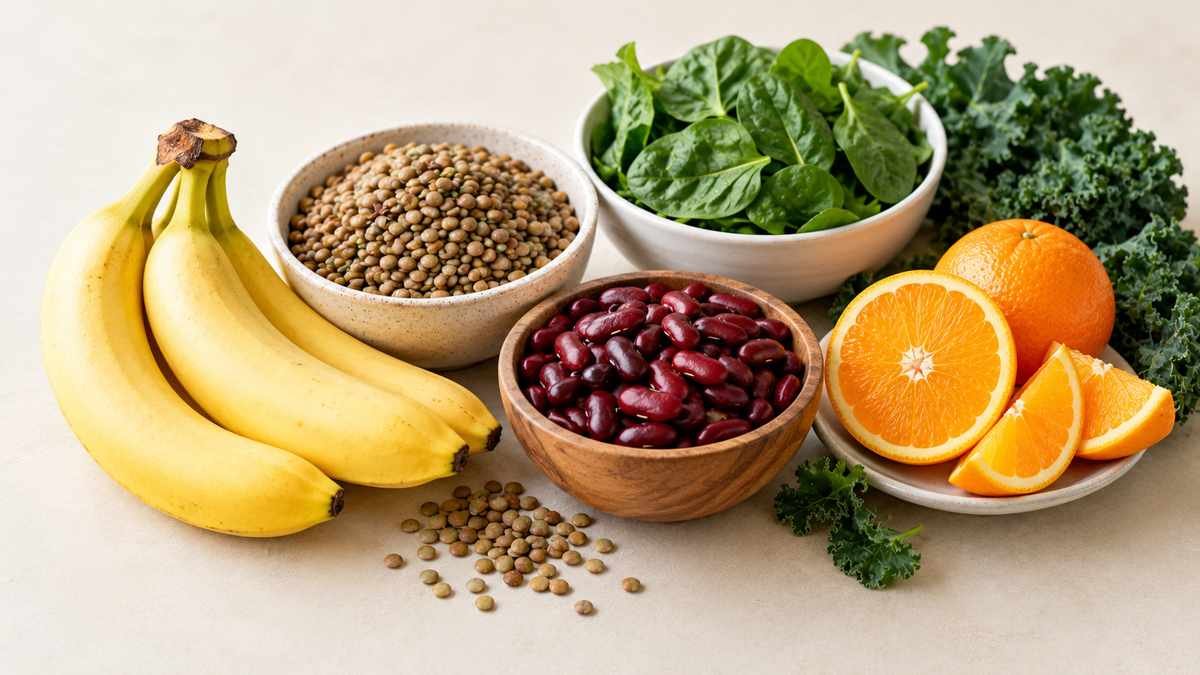

Bananas are a nutritious and convenient fruit, but are they a good choice for iron deficiency? Although bananas contain some iron, they provide relatively little compared with foods such as lentils, beans, meat, and iron-fortified cereals. They can be part of a balanced diet, but eating bananas alone is unlikely to correct an existing deficiency.
A medium banana supplies roughly a third of a milligram of iron, along with potassium, vitamin B6, and fiber. The NIH Office of Dietary Supplements lists daily recommended amounts of 8 mg for adult men and 18 mg for women ages 19 to 50, so the gap is large. Iron deficiency can also result from blood loss or poor absorption, not only from low intake.
This guide explains how much iron bananas contain, which foods provide more, and how vitamin C and everyday food pairings can support absorption. It also separates myths from facts and explains when medical care matters. For a broader food list, see our guide to iron-rich foods.
Are Bananas Good for People With Iron Deficiency?
Bananas can be included in a balanced diet for someone with iron deficiency, but they should not be relied on as a main iron source. They provide only a small amount of iron per serving. Eating them alongside iron-rich foods can still add to an overall nutritious eating pattern.
The NIH iron fact sheet for consumers lists lean meat, seafood, poultry, beans, and iron-fortified breakfast cereals and breads among the foods that supply iron. It also notes that the body absorbs iron from plant sources better when they are eaten with meat, poultry, seafood, or vitamin C-rich foods.
People with diagnosed iron deficiency may need medical assessment and treatment beyond diet. In short, bananas can complement an iron-supportive diet, but they are not a substitute for iron-rich foods or prescribed treatment.
How Much Iron Do Bananas Contain?
Bananas contain only small amounts of iron. The figures below are approximate, because size and variety vary.
Iron in a medium banana
A laboratory analysis in Food & Nutrition Research measured about 0.33 mg of iron per 100 grams of raw banana. A medium banana weighs roughly 118 grams, so it provides about 0.3 to 0.4 mg of iron. That is a small contribution to daily needs.
How does this compare with daily iron needs?
Iron requirements differ by age, sex, and life stage. The NIH Office of Dietary Supplements lists 8 mg per day for adult men ages 19 to 50 and 18 mg per day for adult women ages 19 to 50. Needs are higher during pregnancy and vary for teens and older adults.
Because needs differ, no single number of bananas can be recommended to meet them. Healthy adults also absorb only about 10% to 15% of the iron they eat, according to the NIH.
Why the amount matters
In the same study, women who ate about 480 grams of raw bananas a day (roughly four medium bananas) absorbed an average of under 1 mg of iron daily. The study was small, so it should not be read as proof that bananas can treat deficiency.
A food can be nutritious without being a major source of every nutrient. People trying to raise iron intake should focus on foods that offer more iron per serving.
What Other Nutritional Benefits Do Bananas Provide?
Bananas offer several useful nutrients, even though iron is not one of their strengths. The Harvard Nutrition Source describes them as a nutritious food, and our guide to the health benefits of bananas goes into more detail.
Potassium
Potassium supports normal nerve function, muscle contraction, and fluid balance. A medium banana supplies roughly 420 to 450 mg.
Vitamin B6
Vitamin B6 is involved in protein metabolism and several other normal body processes. Bananas are a convenient source of it.
Carbohydrates and energy
A medium banana provides about 27 grams of carbohydrate, which the body uses for energy. People managing blood sugar can read our article on eating bananas every day for portion context.
Fiber and digestive health
Whole bananas contain about 3 grams of fiber, which contributes to digestive health. Our list of high-fiber foods offers more ideas.
Why these nutrients do not make bananas an iron treatment
A nutritious food does not necessarily provide enough iron to prevent or correct iron deficiency. Bananas are worth eating for what they offer, but those benefits do not replace dietary iron sources or medical care when iron levels are low.
Can Eating Bananas Prevent or Treat Iron Deficiency?
Bananas can contribute to overall nutrition, but they cannot be counted on to prevent or treat iron deficiency. Understanding the difference between a healthy diet and medical treatment matters here.
Bananas as part of a varied diet
Preventing iron deficiency generally requires enough iron from a range of foods, plus good absorption. Bananas can sit alongside those foods, but they should not be the plan itself.
Why bananas alone are unlikely to be enough
Because bananas contain relatively little iron, they are not an effective stand-alone strategy for an established deficiency. Foods such as lentils, beans, tofu, meat, seafood, and fortified cereals provide more iron, and you can choose among them based on your dietary preferences.
What if iron deficiency has already been diagnosed?
The National Heart, Lung, and Blood Institute (NHLBI) explains that iron-deficiency anemia can come from blood loss, too little iron in the diet, or problems absorbing iron. A healthcare professional may look for the cause, which is why persistent tiredness deserves evaluation (see our guide to what causes fatigue).
NHLBI notes that treatment depends on the cause and severity. It may include iron supplements, changes in your eating pattern, or other medical care. Do not start iron supplements on your own, because too much iron can be harmful and some people, such as those with hereditary hemochromatosis, should avoid them, according to the NIH.
No single food, including bananas, can reliably raise iron levels enough to treat diagnosed iron deficiency.
What Are the Best Foods to Eat for Iron Deficiency?
Many foods provide far more iron than bananas. The NIH health professional fact sheet describes two forms: heme iron from animal foods and nonheme iron from plant foods and fortified products. Our guide to iron-rich foods offers a longer list.
Meat and seafood
Lean meat and seafood are the richest sources of heme iron, which the body absorbs more readily than nonheme iron. Examples include lean beef, poultry, fish, and shellfish. You can also build an iron-supportive diet without meat.
Beans, lentils, and peas
Lentils, kidney beans, chickpeas, and peas provide nonheme iron. They work well in soups, stews, curries, and salads.
Iron-fortified cereals and grains
Some breakfast cereals, breads, and other grain products have iron added. The NIH notes that about half of the iron in the American diet comes from bread, cereal, and other grain products. Iron content varies by product, so check the nutrition label.
Tofu, nuts, and seeds
Tofu, pumpkin seeds, and some nuts can add iron to a varied diet. Our article on almonds covers one popular option.
Dark green leafy vegetables
Vegetables such as spinach can contribute to a balanced eating pattern, although the amount of iron absorbed from plant foods varies. See our guide to leafy green vegetables for more.
Bananas can be one part of a varied diet, but more iron-rich foods should do most of the work when the goal is to raise dietary iron.
How Vitamin C Helps the Body Absorb Iron
Pairing plant-based iron sources with vitamin C is one of the most practical ways to support absorption. It does not replace the need for iron-rich foods, but it can help you get more from the iron you eat.
Understanding nonheme iron
Plant foods and fortified products mainly provide nonheme iron, which the body generally absorbs less efficiently than heme iron from animal foods. The NIH explains that other dietary components, such as ascorbic acid (vitamin C), can significantly change how well nonheme iron is absorbed.
Foods rich in vitamin C
The NIH consumer fact sheet names citrus fruits, strawberries, sweet peppers, tomatoes, and broccoli. Guava is another good source. Our list of foods high in vitamin C has more options.
Simple meal combinations
- Lentils with tomatoes
- Beans with bell peppers
- Iron-fortified cereal with strawberries or orange segments
- Chickpeas in a tomato-based salad
Bananas can sit alongside these meals, but they are not a particularly rich source of vitamin C.
What about tea and coffee?
Plant compounds in tea and coffee, such as polyphenols, can reduce the absorption of nonheme iron. If raising iron intake is a priority, consider having them between meals rather than with iron-rich meals. This applies to green tea too; see our guide to green tea health benefits for the wider evidence.
No single meal can correct iron deficiency, so aim for steady habits and follow your clinician’s advice.
How to Include Bananas in an Iron-Supportive Diet
Bananas are a useful food to include, but the rest of the meal matters when the goal is to support iron intake. These ideas keep bananas in a supporting role.
Banana with iron-fortified cereal
Slice a banana over a breakfast cereal that has added iron. Check the label to see how much iron the cereal provides, since products differ.
Banana alongside a balanced breakfast
A banana can accompany a breakfast that includes a meaningful iron source, such as fortified oats or eggs, depending on your preferences. Adding strawberries or a glass of orange juice brings in vitamin C.
Banana and nuts as a snack
Bananas and nuts provide energy and a range of nutrients. This is a satisfying snack, but it should not be viewed as a high-iron treatment.
Add bananas to a varied eating pattern
Bananas can be eaten whole or added to oats, yogurt, or smoothies. The main goal is to build meals around a variety of nutrient-rich foods, including real iron sources. Our guide to a balanced diet can help with planning.
Avoid relying on bananas alone
If you want to raise your iron intake, look at your overall diet rather than eating more bananas in the hope of fixing a deficiency. If your iron is low, work with a healthcare professional on the right approach.
Common Myths About Bananas and Iron Deficiency
Myth 1: Bananas are rich in iron
Fact: Bananas contain some iron, but a typical serving provides a small amount compared with beans, lentils, meat, or fortified cereals.
Myth 2: Eating bananas can cure anemia
Fact: Bananas alone cannot reliably correct iron-deficiency anemia. Treatment depends on the cause and severity, according to NHLBI.
Myth 3: All fruit is useful for increasing iron levels
Fact: Most fruits are not major iron sources. Some, such as oranges and strawberries, are helpful mainly because their vitamin C can aid absorption of nonheme iron from other foods.
Myth 4: Iron deficiency always means someone does not eat enough iron
Fact: Iron deficiency can also result from blood loss or problems with absorption. A healthcare professional may need to investigate the cause.
Myth 5: Diet alone is always enough
Fact: Some people need medical treatment in addition to dietary changes, such as prescribed iron supplements.
Frequently Asked Questions About Bananas and Iron Deficiency
Are bananas high in iron?
No. Bananas contain a small amount of iron, roughly 0.3 to 0.4 mg in a medium fruit, and are not considered a major dietary source. Foods such as lentils, beans, meat, seafood, tofu, and iron-fortified cereals generally provide more.
Can eating bananas increase hemoglobin?
Bananas alone are unlikely to raise hemoglobin meaningfully in someone with iron-deficiency anemia. Hemoglobin depends on several factors, and treatment may involve medical assessment, iron supplementation, or care for an underlying cause.
Which fruit is best for iron deficiency?
No fruit is a universal treatment for iron deficiency. Vitamin C-rich fruits such as oranges, guava, and strawberries can help the body absorb nonheme iron from plant foods eaten at the same meal.
Should people with iron deficiency eat bananas every day?
Bananas can be part of a varied diet, but there is no need to eat them daily to improve iron levels. Your overall diet and your clinician’s advice matter far more.
Can bananas replace iron supplements?
No. Bananas provide too little iron to substitute for prescribed supplements when they are medically necessary. Ask your clinician before starting or stopping any iron supplement.
What should someone eat to improve iron intake?
Iron-rich choices include meat, seafood, beans, lentils, tofu, fortified cereals, and some leafy vegetables. Pairing plant sources with vitamin C-rich foods can improve absorption, per the NIH.
The Bottom Line
Bananas can contribute to a balanced diet, but they are not a particularly rich source of iron. They provide fiber, potassium, and vitamin B6, yet their iron content is too low for them to be the main strategy for correcting iron deficiency.
Include more substantial iron sources and vitamin C-rich foods in your meals. If you suspect or have been diagnosed with iron deficiency, seek medical advice, especially if symptoms persist or no cause has been identified. Bananas can be part of an iron-supportive diet, but a variety of iron-rich foods, and medical treatment when needed, matter more for maintaining or restoring healthy iron levels.
Sources
- National Institutes of Health, Office of Dietary Supplements. Iron: Fact Sheet for Consumers
- National Institutes of Health, Office of Dietary Supplements. Iron: Fact Sheet for Health Professionals
- National Heart, Lung, and Blood Institute. Iron-Deficiency Anemia
- García OP, et al. Iron absorption in raw and cooked bananas: a field study using stable isotopes in women. Food & Nutrition Research. 2015
- Harvard T.H. Chan School of Public Health, The Nutrition Source. Bananas
Medical Disclaimer: This article is for general information and education only. It is not medical advice and does not replace care from a doctor, registered dietitian, or other qualified health professional. Iron needs and treatment depend on your age, health history, and the cause of low iron, so talk with your healthcare team before changing your diet or starting any supplement. If you think you are having a medical emergency, call 911 or your local emergency number.