
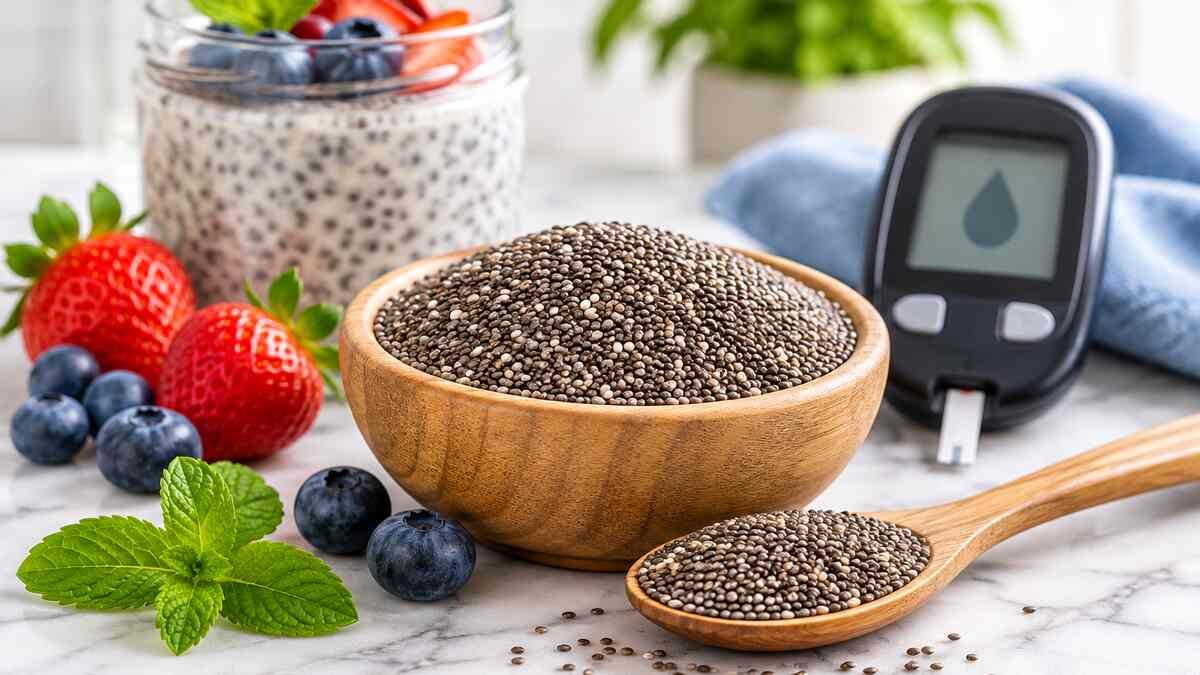

Chia seeds have a reputation as a blood sugar helper, and it is easy to see why. They are rich in fiber, they swell into a thick gel in liquid, and they show up in nearly every “diabetes-friendly” recipe list. Many people with diabetes or prediabetes want to know whether a spoonful a day can make a real difference.
The short answer is that chia seeds do not reliably lower blood sugar. Their fiber may influence digestion and how your body responds to a meal, but clinical trials have not shown a consistent drop in fasting glucose or HbA1c. A food can be nutritious and still not be a proven blood sugar treatment.
This article separates what chia seeds contain from what research has actually shown. You will learn how fiber may affect glucose, what the 2018, 2021, and 2024 studies found, and how to include chia seeds in meals sensibly. For a diabetes-specific view, see our guide to chia seeds for type 2 diabetes.
Do Chia Seeds Actually Lower Blood Sugar?
Short answer: Chia seeds do not reliably lower blood sugar. They are rich in dietary fiber, which may influence digestion and post-meal glucose responses. However, clinical studies have not established significant improvements in fasting blood glucose or HbA1c.
Keep two ideas apart. A food might slow how quickly a meal is absorbed, and that is different from lowering your blood sugar over weeks or months. The evidence is far stronger for the first idea than for the second.
What Happens to Blood Sugar When You Eat Chia Seeds?
Chia seeds contain carbohydrate, but most of it is dietary fiber. Fiber is not digested and absorbed the way starches and sugars are. Soluble fiber also absorbs water and forms a gel, which may slow how fast food moves through the digestive system.
Because they are eaten in small amounts, chia seeds usually add only a few grams of digestible carbohydrate to a meal. They still count toward your total intake, and they do not cancel out other carbohydrate foods.
Can Chia Seeds Reduce Fasting Blood Sugar?
Fasting blood glucose is your blood sugar after several hours without eating, usually measured first thing in the morning. A 2024 meta-analysis found that chia seed consumption had no significant effect on fasting glucose. Another 2025 meta-analysis in Nutrition Reviews reached a similar conclusion.
So there is no good evidence that adding chia seeds to your diet reduces fasting blood sugar.
Can Chia Seeds Prevent Blood Sugar Spikes After Meals?
Post-meal (postprandial) glucose is how high your blood sugar rises after you eat. Fiber may moderate that rise in some situations, which is the reason chia seeds get attention.
Some earlier trials have reported lower after-meal glucose, mostly at higher doses. That is not the same as proof that chia seeds prevent spikes, and it does not show a lasting benefit for long-term control. Results vary by person and by meal.
Chia Seeds Nutrition Facts: Why Are They Good for You?
Chia seeds are nutrient-dense, which is a fair reason to include them even without a proven blood sugar effect. Our pillar guide to chia seeds health benefits covers their nutrition in more depth.
Nutritional Value of Chia Seeds
| Nutrient | Approximate amount (28 g, about 2 tablespoons) |
|---|---|
| Calories | 138 to 140 kcal |
| Total carbohydrates | 12 g |
| Dietary fiber | 10 to 11 g |
| Protein | 4 to 5 g |
| Total fat | 8 to 9 g |
| Omega-3 (ALA) | About 5 g |
| Calcium | About 18% Daily Value |
Values are approximate and vary by product. Total carbohydrates include fiber.
Why Is Fiber Important for Blood Sugar Management?
Chia seeds contain soluble and insoluble fiber. Soluble fiber dissolves in water and forms a gel. Insoluble fiber adds bulk and supports regular bowel movements.
Fiber-rich foods are useful in a balanced diet, and they can make meals more filling. Fiber does not remove the carbohydrate content of a meal, though, and it does not guarantee lower glucose readings.
Other Important Nutrients in Chia Seeds
Chia seeds also supply:
- Plant-based omega-3 fatty acids (ALA)
- Protein
- Magnesium
- Calcium
- Antioxidant plant compounds
These nutrients contribute to overall nutrition. They are not shown to treat diabetes on their own.
How Do Chia Seeds Affect Blood Sugar Levels?
Researchers propose a few ways chia seeds could influence glucose. These are plausible explanations, not proven effects.
Soluble Fiber May Slow Digestion
When chia seeds soak in liquid, soluble fiber forms a gel. Inside the body, that gel may slow digestion and the absorption of nutrients from a meal. A slower process could, in theory, soften the post-meal rise in glucose.
This idea is why fiber-rich foods are often encouraged in diabetes-friendly eating plans.
Fiber and Carbohydrate Absorption
How a meal affects your glucose depends on the whole plate. The amount of carbohydrate, the type of carbohydrate, and the other foods you eat with it all play a role. Your metabolic health, medications, and activity level matter too.
For example, high-fiber carbohydrate foods such as brown rice are also studied for blood sugar effects. See our article on whether brown rice lowers blood sugar for a comparison.
Why Chia Seeds Do Not Automatically Lower Blood Glucose
Three points explain why chia seeds are not a reliable fix:
- Chia seeds still contain carbohydrate.
- The amount you eat changes how much you take in.
- Individual glucose responses vary.
Chia seeds do not block sugar absorption, and they do not prevent blood sugar spikes in everyone.
What Does Scientific Research Say About Chia Seeds and Blood Sugar?
The research is small, short, and mixed. The sections below summarize the main studies and their limits.
Findings From a 2024 Systematic Review and Meta-Analysis
A 2024 systematic review and meta-analysis pooled eight randomized controlled trials with 362 participants. The researchers examined fasting blood glucose, HbA1c, and insulin. Chia seed consumption had no statistically significant effect on any of the three.
The authors noted that the small number of studies and the differences between them limit the conclusions. They called for larger trials. If you want to understand the HbA1c number itself, see our guide to the A1C test.
What Did a 2021 Clinical Trial in People With Type 2 Diabetes Find?
A 2021 randomized controlled trial enrolled 42 adults with type 2 diabetes. The chia group ate 40 grams daily for 12 weeks, and the control group did not take a supplement. Systolic blood pressure improved in the chia group compared with controls.
The researchers did not find significant differences in the other measures they tested, including blood glucose markers and HbA1c. The 40-gram amount was a study intervention, not an established daily dose.
What Did Earlier Research Find About Post-Meal Blood Sugar?
A 2018 systematic review and meta-analysis included 12 randomized trials. Most pooled results showed no significant differences. Some higher-dose subgroup analyses showed lower after-meal glucose, but the quality of the evidence was rated low or very low, and all the trials measured surrogate markers rather than health events like complications.
What Is the Overall Scientific Conclusion?
Taken together, the evidence suggests:
- Chia seeds provide beneficial nutrients.
- Their fiber may influence digestion.
- Some earlier findings hint at benefits for after-meal glucose.
- More recent pooled results do not show meaningful changes in fasting glucose or HbA1c.
- Larger, longer human trials are needed.
Memorial Sloan Kettering summarizes it this way: small studies suggest chia may help some people with diabetes, but reviews of the evidence do not adequately support those claims.
Are Chia Seeds Good for People With Diabetes?
They can be a reasonable part of a balanced diet. They are not a treatment. The National Center for Complementary and Integrative Health advises against using supplements in place of diabetes medicine.
Potential Nutritional Benefits for People With Type 2 Diabetes
For people with type 2 diabetes, chia seeds offer:
- A high fiber content
- Plant-based protein
- Unsaturated fats
- Added minerals
- Convenience as an ingredient in balanced meals
Read more in our dedicated article on chia seeds for type 2 diabetes.
Are Chia Seeds Suitable for Prediabetes?
Chia seeds can contribute to a fiber-rich eating pattern, which is a sensible goal with prediabetes. They do not reverse prediabetes or reliably prevent type 2 diabetes. Healthy habits such as regular activity, good sleep, and balanced meals matter more than any single food.
Can People With Type 1 Diabetes Eat Chia Seeds?
Chia seeds can be included if they fit your carbohydrate and insulin plan. People with type 1 diabetes should discuss new foods with their care team and keep monitoring their glucose as usual. Individualized advice matters here.
How Much Chia Seeds Should You Eat Daily?
No diabetes-specific chia seed dose exists. Serving size should reflect your own dietary needs.
Recommended Serving Size
Recipes commonly use about 1 to 2 tablespoons. That is a practical serving, not a medical dosage. Increase your fiber gradually to reduce digestive discomfort, and drink enough fluids.
Can You Eat Chia Seeds Every Day?
Many people can include chia seeds daily as part of a varied diet. Keep portions moderate, watch how your digestion responds, and stay hydrated. Our guide on eating chia seeds every day covers daily intake and safety in more detail.
Best Ways to Eat Chia Seeds for Blood Sugar Management
Choose unsweetened ingredients and think about the whole meal. The overall meal matters more than adding one ingredient.
1. Chia Seeds With Plain Greek Yogurt
Stir chia seeds into unsweetened Greek yogurt with a small portion of berries.
2. Homemade Chia Seed Pudding
Combine chia seeds with unsweetened milk or fortified plant-based milk and let the mixture thicken. Skip added sugar and top with fruit if you like.
3. Chia Seeds in Oatmeal
Chia seeds add fiber to oatmeal. Remember that oats and toppings also contain carbohydrate.
4. Chia Seeds in Smoothies
Blend chia seeds with unsweetened ingredients, vegetables, and a measured portion of whole fruit.
5. Sprinkle Chia Seeds Over Salads
Chia seeds add texture to salads and bowls. Pair them with vegetables and protein for a balanced plate.
Potential Side Effects and Precautions of Chia Seeds
Digestive Discomfort
A sudden increase in fiber may cause gas, bloating, or abdominal discomfort. Add chia seeds slowly and drink water.
Choking and Swallowing Risks
Chia seeds absorb liquid and expand. Memorial Sloan Kettering advises against eating dry chia seeds on their own and describes a case of seeds expanding in a man’s throat. Mix them into liquid or moist foods, and use extra caution if you have trouble swallowing.
Allergic Reactions
Allergic reactions are possible but uncommon. Stop eating chia seeds and seek care if you notice swelling, hives, or breathing trouble.
People Taking Diabetes Medication
Chia seeds do not replace prescribed medication or professional diabetes care. Memorial Sloan Kettering also lists blood pressure medication as a reason for caution. Talk with your healthcare team before making significant dietary changes, and never adjust medication on your own.
Chia Seeds vs. Other Seeds for Blood Sugar Management
Several seeds can add nutrition to meals.
| Seed | Nutritional highlight |
|---|---|
| Chia seeds | High in fiber and ALA omega-3 |
| Flaxseeds | Fiber and ALA omega-3 |
| Pumpkin seeds | Protein, magnesium, and healthy fats |
| Sunflower seeds | Vitamin E and unsaturated fats |
These foods can all contribute to a nutritious diet. None should be presented as a proven blood sugar-lowering treatment.
Frequently Asked Questions About Chia Seeds and Blood Sugar
Do chia seeds lower blood sugar immediately?
No. There is no reliable evidence that chia seeds quickly lower existing blood glucose. They should never replace the treatment your care team prescribed for high blood sugar.
Can chia seeds reduce HbA1c?
Current systematic review evidence has not shown a statistically significant reduction in HbA1c from chia seeds. A 2024 meta-analysis found no significant effect. Larger, longer trials are needed.
Do chia seeds cause blood sugar spikes?
Chia seeds contain carbohydrate, but most of it is fiber. Their effect depends on the serving size and the meal around them. Sweetened chia products can raise blood sugar more, so read labels.
Are chia seeds good for type 2 diabetes?
They can fit into a balanced eating pattern because they provide fiber, protein, and unsaturated fats. They do not treat diabetes. Learn more in our guide to type 2 diabetes.
Should I soak chia seeds before eating them?
Soaking is a convenient way to prepare them and helps them form a gel. You can also mix them into moist foods like yogurt or oatmeal. Avoid swallowing dry spoonfuls.
Are black or white chia seeds better for blood sugar?
No evidence shows that either variety is better for blood sugar management. Nutritionally, the two are very similar.
Can chia seeds replace diabetes medication?
No. Chia seeds are a food, not a replacement for prescribed medication or professional diabetes care.
Final Verdict: Do Chia Seeds Lower Blood Sugar?
Chia seeds are rich in fiber and other nutrients, and their fiber may influence digestion and after-meal glucose responses. Even so, current clinical evidence does not show a meaningful reduction in fasting blood glucose or HbA1c. They can be part of balanced meals for people with diabetes, but they should not replace medication or established diabetes management.
For better results, focus on overall diet quality, sensible portions, regular physical activity, and guidance from your healthcare team. Our overview of blood sugar is a helpful place to continue.
Sources
- Jamilian P, Asemani S, El Sayed I, et al. The effectiveness of chia seed in improving glycemic status: A systematic review and meta-analysis. Diabetes & Metabolic Syndrome. 2024.
- Alwosais EZM, Al-Ozairi E, Zafar TA, Alkandari S. Chia seed supplementation to the diet of adults with type 2 diabetes improved systolic blood pressure: A randomized controlled trial. Nutrition and Health. 2021.
- Teoh SL, Lai NM, Vanichkulpitak P, et al. Clinical evidence on dietary supplementation with chia seed: a systematic review and meta-analysis. Nutrition Reviews. 2018.
- TaghipourSheshdeh F, Behzadi M, Bashiri S, Mohammadi-Sartang M. The effect of chia seed on blood pressure, body composition, and glycemic control: a GRADE-assessed systematic review and dose-response meta-analysis of randomized controlled trials. Nutrition Reviews. 2025.
- Memorial Sloan Kettering Cancer Center. Chia: Purported Benefits, Side Effects & More.
- National Center for Complementary and Integrative Health. 5 Things To Know About Type 2 Diabetes and Dietary Supplements.
- U.S. Department of Agriculture. FoodData Central: Seeds, chia seeds, dried.
Medical Disclaimer: This article is for general educational purposes only and is not a substitute for professional medical advice, diagnosis, or treatment. Diabetes care is highly individual, and foods can affect blood sugar and medications differently from person to person. Talk with your doctor, diabetes care team, or a registered dietitian before changing your diet, and never stop or change prescribed medication without medical guidance.