
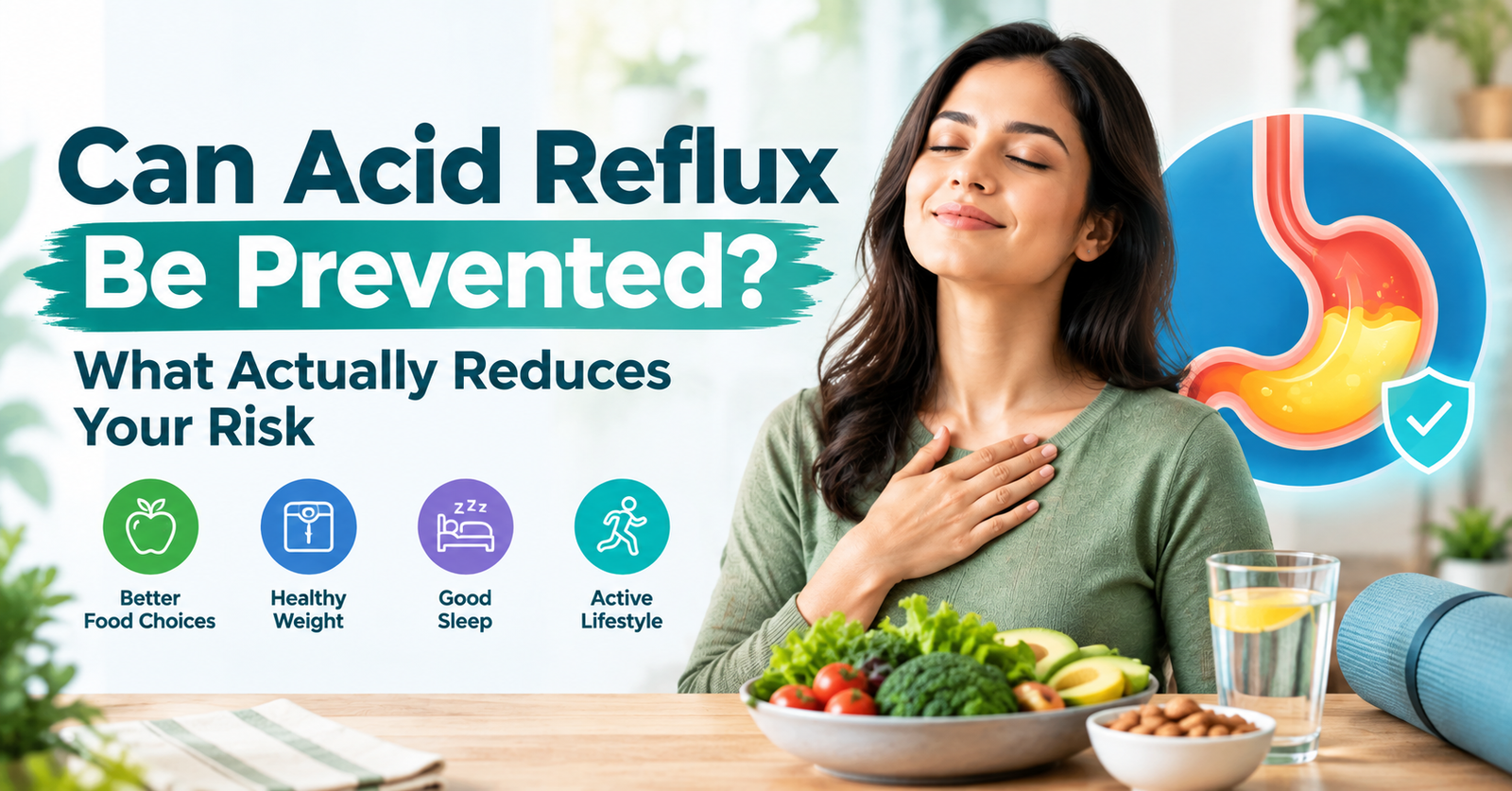

Acid reflux happens when stomach acid flows back into the esophagus. For most people, specific habits and choices make this far less likely to happen. But for some, structural issues or genetics play a role that no lifestyle change can fully override.
This guide breaks down what actually works, based on real research rather than generic advice repeated across the internet. It also covers where prevention has limits, so you know what to expect.
Can Acid Reflux Really Be Prevented?
Prevention isn’t all-or-nothing. It works differently depending on what’s driving your reflux in the first place.
When Prevention Works Well
If your reflux comes mainly from diet, weight, or habits, prevention can make a real difference. One large study followed over 9,000 women with GERD symptoms as part of the Nurses’ Health Study II. Women who followed five specific habits were 40% less likely to report GERD symptoms than women who followed none of them.
Those five habits were:
- Maintaining a normal body weight
- Never smoking
- Getting 30 minutes of moderate to vigorous exercise daily
- Drinking no more than two cups of coffee, tea, or soda per day
- Following a generally healthy diet
That’s a substantial risk reduction from changes most people can actually make.
When Prevention Has Limits
Some causes of reflux don’t respond as well to lifestyle changes alone. A hiatal hernia, for example, is a structural issue where part of the stomach pushes through the diaphragm. It weakens the body’s natural reflux barrier no matter how well you eat.
Age also plays a role you can’t change. The muscle that normally keeps acid down weakens over time in most people. For a full breakdown of which risk factors you can control and which ones you can’t, our guide to acid reflux risk factors covers this in more depth.
Diet Changes That Help Prevent Reflux
Food doesn’t cause reflux directly, but certain foods make it much easier for acid to slip past the valve that’s supposed to hold it in.
Common Trigger Foods to Watch
The most frequently reported dietary triggers include:
- Fatty and fried foods
- Spicy dishes
- Citrus fruits and tomato-based sauces
- Chocolate
- Caffeinated drinks
- Carbonated beverages
- Peppermint and spearmint
Triggers vary a lot from person to person. Keeping a short food log for a week or two often reveals your personal pattern faster than following a generic avoidance list.
Meal Size and Eating Speed
Large meals stretch the stomach and add pressure to the valve between it and the esophagus. Eating smaller, more frequent meals reduces that pressure throughout the day.
Eating slowly matters too. It gives your stomach more time to process food before pressure builds up, and it naturally reduces how much air you swallow along with your meal.
Natural Approaches Worth Understanding
Some people reach for natural remedies like ginger when reflux flares up. Our article on whether ginger helps acid reflux looks at what the evidence actually shows. For a wider view of ginger’s benefits and limits, see is ginger good for health.
Weight Management as Prevention
Body weight is one of the most consistently supported factors in reflux prevention.
Why Extra Weight Increases Risk
Extra weight, especially around the abdomen, pushes upward on the stomach. That added pressure can force acid through the valve that’s meant to hold it back, even when the valve itself works normally.
The Evidence Behind Weight Loss
Weight loss for people who are overweight carries strong supporting evidence in gastroenterology guidelines. It’s one of the few lifestyle recommendations given a high confidence rating for reducing GERD symptoms specifically.
If weight is part of your reflux picture, our roundup of current weight loss trends covers popular approaches people are using now, along with which ones tend to be more sustainable long term.
Lifestyle Habits That Lower Reflux Risk
Beyond diet and weight, daily habits have a measurable effect on how often reflux happens.
Alcohol and Smoking
Alcohol relaxes the valve between your stomach and esophagus. Research reviewing multiple trials found this effect consistently, making alcohol one of the better-documented dietary triggers.
Smoking has a similar effect. It also reduces saliva production, and saliva naturally helps neutralize acid in your throat and esophagus.
Exercise
Regular physical activity supports a healthy weight and better digestion overall. The Nurses’ Health Study II found that 30 minutes of daily moderate exercise was one of the five habits linked to a lower GERD risk.
Clothing and Posture
Tight clothing around the waist adds pressure to your stomach, similar to the effect of extra weight. Loose-fitting clothes, especially after meals, can make a noticeable difference for some people.
Staying upright after eating also helps. Sitting or standing lets gravity keep stomach contents where they belong.
Managing Stress
Stress doesn’t directly increase how much acid your stomach produces. But it does appear to increase how strongly people notice and react to reflux symptoms, and several studies link higher stress levels with more severe GERD symptoms.
Preventing Nighttime Reflux Specifically
Reflux often gets worse at night, since lying flat removes gravity’s help in keeping acid down.
Elevate the Head of Your Bed
Raising the head of your bed by 6 to 8 inches uses gravity to your advantage while you sleep. Use risers under the bed frame or a wedge pillow, rather than just stacking regular pillows under your head, since that can bend your body at the waist and make things worse.
Time Your Last Meal Earlier
Avoid eating within three to four hours of bedtime. This gives your stomach time to empty at least partially before you lie down.
Sleep Position Matters
Sleeping on your left side appears to reduce reflux more than sleeping on your right side or back, likely due to the angle it creates at the junction between your stomach and esophagus.
When Diet and Lifestyle Aren’t Enough
Some people do everything right and still deal with regular reflux. That doesn’t mean prevention failed. It often means an underlying condition needs its own management plan.
Structural and Medical Causes
A hiatal hernia is one of the most common structural reasons reflux persists despite lifestyle changes. Certain medications, including some blood pressure drugs and pain relievers, can also contribute regardless of diet.
If reflux symptoms overlap with other abdominal discomfort, our guides to common digestive problems, abdominal pain that comes and goes, and what abdominal pain feels like can help you figure out what you’re actually dealing with.
Medication Options
When lifestyle changes aren’t enough on their own, several over-the-counter and prescription options can help manage symptoms:
- Antacids neutralize acid quickly for occasional symptoms
- H2 blockers reduce acid production for several hours
- Proton pump inhibitors reduce acid production more strongly and help heal esophagus irritation over time
These options work differently and suit different situations. A doctor or pharmacist can help match the right one to your specific pattern of symptoms, rather than guessing on your own.
Special Situations Worth Knowing About
Certain life stages and factors change how reflux prevention works.
Age-Related Changes
Reflux often shows up or worsens at different points in life. Our guides to acid reflux in your 30s and acid reflux in your 50s cover what changes at each stage and which prevention strategies matter most at that point.
Pregnancy
Pregnancy relaxes the valve between the stomach and esophagus due to hormonal changes, and the growing uterus adds physical pressure too. Many of the same lifestyle strategies still help, but check with your OB before starting any new medication.
How Long Does Prevention Take to Work?
Results vary depending on which changes you make and how consistent you are with them.
Fast Changes
Sleep position and meal timing tend to show results quickly, often within days. Elevating the head of your bed or avoiding late meals can noticeably reduce nighttime symptoms within the first week.
Slower Changes
Weight loss and long-term dietary shifts take longer to show their full effect. The Nurses’ Health Study II data reflects habits sustained over years, not weeks, so give these changes a real trial period rather than judging them after a few days.
Track What’s Working
Keeping a simple symptom log, noting what you ate, when you ate it, and how you felt afterward, helps you see patterns faster than trying to remember everything after the fact. It also gives your doctor more to work with if symptoms don’t improve on their own.
When to See a Doctor
Prevention strategies help most people, but they aren’t a substitute for medical care when symptoms persist.
See a doctor if you have:
- Reflux symptoms two or more times a week despite lifestyle changes
- Difficulty or pain when swallowing
- Reflux that consistently disrupts your sleep
- Symptoms that don’t improve with over-the-counter antacids
- Unintentional weight loss alongside reflux symptoms
These patterns suggest it’s time for an actual evaluation, not more self-management.
Frequently Asked Questions
Can acid reflux be cured permanently?
For many people, consistent lifestyle changes reduce symptoms so much that reflux stops being a regular problem. For others, especially those with a hiatal hernia or genetic predisposition, ongoing management works better than expecting a permanent cure.
What is the fastest way to prevent acid reflux at night?
Elevating the head of your bed and avoiding food for three to four hours before sleep are the two changes with the most consistent evidence behind them. Sleeping on your left side may add extra benefit.
Does drinking water help prevent acid reflux?
Water can help dilute stomach acid temporarily and may ease occasional discomfort. It’s not a primary prevention strategy on its own, but staying hydrated supports normal digestion overall.
Can losing weight actually prevent acid reflux?
Yes, for many people. Weight loss reduces pressure on the stomach and is one of the few lifestyle changes with strong supporting evidence for reducing GERD symptoms specifically.
Are there foods that help prevent acid reflux instead of triggering it?
Some people find that lean proteins, non-citrus fruits, vegetables, and whole grains sit better than fatty or acidic foods. Since triggers vary by person, tracking your own reactions works better than following a universal list.
Can stress cause acid reflux, or does it just make it feel worse?
Stress doesn’t appear to directly increase stomach acid production. It does seem to increase how intensely people notice and experience reflux symptoms, which is why stress management can still meaningfully help.
Is it possible to prevent acid reflux without medication?
Yes, for many people with mild to moderate symptoms. Diet changes, weight management, meal timing, and sleep position address the root causes for a large share of reflux cases without needing daily medication.
Can exercise help prevent acid reflux?
Yes. Regular moderate exercise supports a healthy weight and was one of five habits linked to a 40% lower risk of GERD symptoms in a large study of women. Very intense exercise right after eating can sometimes trigger symptoms, so timing matters.
The Bottom Line
Acid reflux can be meaningfully prevented for most people through a combination of diet, weight, sleep habits, and lifestyle choices. The evidence behind weight management, meal timing, and sleep position is genuinely strong, not just commonly repeated advice.
That said, prevention has real limits for people with structural issues like a hiatal hernia or a strong genetic predisposition. If you’ve made consistent changes and symptoms persist, that’s a signal to get evaluated rather than a sign you’re doing something wrong.
Sources
- Harvard Health Publishing. Five Health Habits May Help Keep Acid Reflux at Bay
- Harvard Health Publishing. What Are Some Healthy Habits to Help Control Acid Reflux?
- American College of Gastroenterology. Guidelines for the Diagnosis and Management of Gastroesophageal Reflux Disease
- Mayo Clinic Care Network. Acid Reflux and GERD Symptoms and Lifestyle Management
Related Reading
- Acid Reflux Risk Factors: What Raises Your GERD Risk
- Common Digestive Problems: Causes and What They Mean
- Acid Reflux in Your 30s: Why It’s Starting Now
- Acid Reflux in Your 50s: What’s Changed and What Helps
- Abdominal Pain That Comes and Goes: Causes and Red Flags
- What Does Abdominal Pain Feel Like?
- Is Ginger Good for Acid Reflux?
- Weight Loss Trends for 2026
Medical Disclaimer
This article is for general information and education. It is not a diagnosis and cannot replace an in-person medical evaluation. If you have persistent, worsening, or concerning symptoms, talk to a healthcare professional.
Read our full Medical Disclaimer.
3 thoughts on “Can Acid Reflux Be Prevented? What Actually Reduces Your Risk”
Comments are closed.