
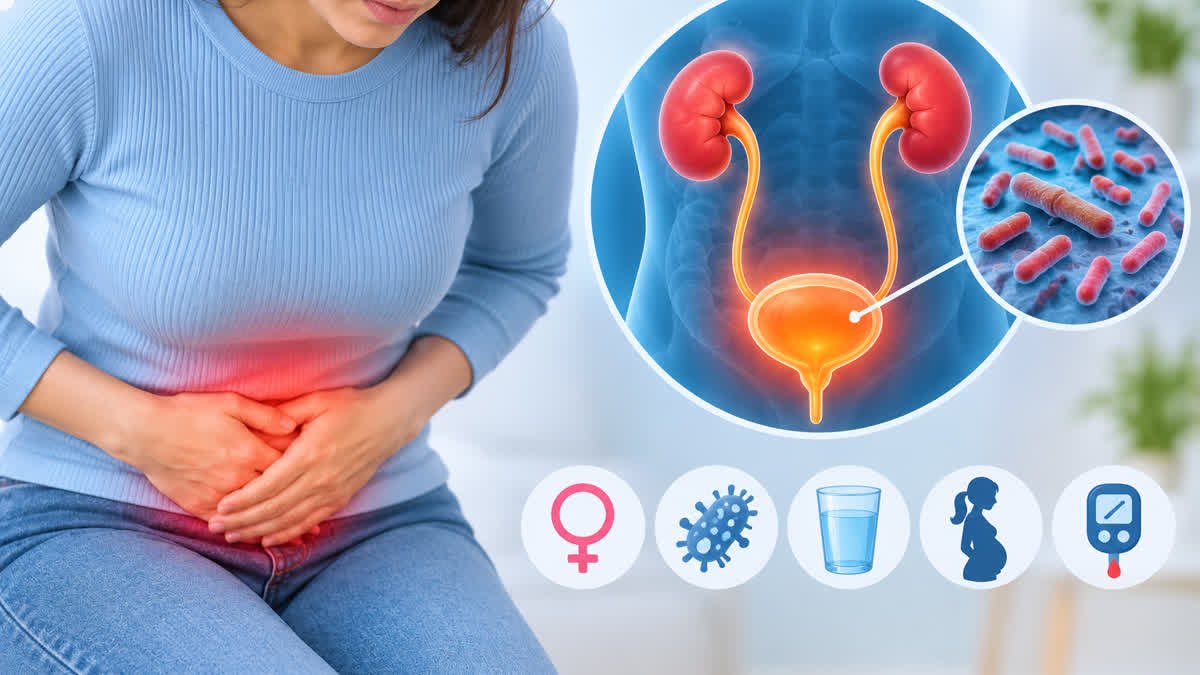

Urinary tract infections (UTIs) are common infections that affect parts of the urinary system, most often the bladder and urethra. Most UTIs start when bacteria enter the urinary tract through the urethra and multiply. The bacterium most often involved is Escherichia coli (E. coli), which normally lives in the intestines.
Anyone can develop a UTI, but some people are more likely to than others. Anatomy, sexual activity, pregnancy, menopause, urinary catheters, kidney stones, diabetes, and difficulty emptying the bladder can all raise the risk. Women get UTIs more often than men, largely because the female urethra is shorter and sits closer to the rectum, according to the Centers for Disease Control and Prevention (CDC). Men, children, and older adults can also develop them.
Knowing what causes UTIs helps you understand why they happen, why some people get them repeatedly, and which prevention steps make sense. This guide covers the causes, risk factors, and prevention. It does not focus on treatment, which is covered in our guide to UTI treatment options.
What Are UTIs?
A UTI is an infection in any part of the urinary system. The NIDDK notes that bladder infections are the most common type, but the urethra, ureters, and kidneys can also become infected.
Understanding the Urinary Tract
The urinary tract is the body’s drainage system for urine. It has four main parts:
- Kidneys: filter waste from the blood and produce urine.
- Ureters: tubes that carry urine from the kidneys to the bladder.
- Bladder: stores urine until you urinate.
- Urethra: carries urine out of the body.
An infection can develop when microorganisms enter this system and overcome its natural defenses.
Different Types of UTIs
UTIs are usually described by where the infection is located:
- Urethritis: inflammation or infection of the urethra.
- Cystitis: infection of the bladder.
- Pyelonephritis: infection of one or both kidneys.
Bladder infections are the most common type. Kidney infections are less common but more serious, according to the CDC. Symptoms such as burning with urination are covered in the NHS overview of UTIs.
Are All UTIs Caused by Bacteria?
Most are. Bacteria are the most common cause, and fungi only rarely infect the urinary tract, per the NIDDK.
Finding bacteria in a urine sample does not always mean there is an infection. The bladder normally contains some microorganisms, and clinical guidelines from the European Association of Urology (EAU) generally advise against treating bacteria in urine when there are no symptoms and no special risk factors.
What Is the Main Cause of UTIs?
The main cause of UTIs is bacteria entering the urinary tract through the urethra and multiplying in the bladder. E. coli, a bacterium that normally lives in the intestines, causes most uncomplicated bacterial UTIs.
Bacteria Entering the Urinary Tract
Bacteria normally live in the digestive tract. Some can reach the skin around the urethral opening, travel up the urethra, and enter the bladder. The Mayo Clinic explains that the urinary system is built to keep bacteria out, but sometimes those defenses fail.
When that happens, bacteria can multiply, irritate the bladder lining, and cause symptoms.
E. coli: The Most Common Cause of UTIs
E. coli is a common bacterium in the human gut. Most strains are harmless there, but certain strains can cause infection once they reach the urinary tract. The CDC’s clinical overview of UTIs states that E. coli causes 80 to 90 percent of cases.
Some strains carry features that help them stick to cells lining the urinary tract. That attachment makes it harder for urine flow to wash them away.
Other Bacteria That Can Cause UTIs
Other bacteria can cause UTIs too, especially in complicated infections. Examples include:
- Klebsiella pneumoniae
- Proteus mirabilis
- Staphylococcus saprophyticus
- Enterococcus species
- Pseudomonas aeruginosa, more often in healthcare-associated or complicated infections
Which bacteria are involved can depend on a person’s health, previous infections, and recent healthcare exposure, as outlined in the EAU guidelines.
Can Viruses or Fungi Cause UTIs?
Typical UTIs are bacterial. Fungal urinary infections can occur but are uncommon, and they may be more likely in people with urinary catheters or certain medical conditions. Viral infections of the urinary tract are less common and tend to occur in specific circumstances.
How Do Bacteria Enter the Urinary Tract?
Most UTIs follow a pattern called an ascending infection. The CDC’s clinical overview lists it among the main ways UTIs develop.
The Ascending Infection Process
- Bacteria are present around the genital or anal area.
- They reach the opening of the urethra.
- They travel up the urethra.
- They enter the bladder.
- They multiply and can cause inflammation and infection.
Less often, bacteria spread from nearby organs or reach the urinary tract through the bloodstream, as noted in the same CDC overview.
How the Body Normally Prevents UTIs
The body has several natural defenses:
- Urinating regularly helps flush microorganisms out.
- The lining of the urinary tract acts as a protective barrier.
- The immune system helps control bacterial growth.
- Normal urine flow limits bacteria from collecting.
The NIDDK describes emptying the bladder as one way the body keeps bacteria in balance.
Why Do Some People Develop Infections More Easily?
Several things can interfere with these defenses:
- Incomplete bladder emptying
- Blockages in the urinary tract
- Catheter use
- Changes in estrogen levels
- Certain immune system conditions
Common UTI Risk Factors
A risk factor makes an infection more likely. It is not the same as a direct cause, and having one does not mean you will get a UTI.
Female Anatomy
Women have a shorter urethra than men, so bacteria have less distance to travel to reach the bladder. The urethral opening is also closer to the anus. Both points are noted by the Mayo Clinic.
Sexual Activity
Sexual activity can move bacteria toward the urethra, and some people notice UTIs after intercourse. A new sexual partner may also be linked to higher risk.
The CDC makes clear that sexual activity can raise the risk, but a UTI is not a sexually transmitted infection. Some forms of birth control, such as diaphragms and spermicides, are also linked to higher risk, according to the NHS.
Hormonal Changes and Menopause
Estrogen levels fall during perimenopause and menopause. This can change the bacteria normally found in the vagina and affect urinary tract tissue, which may raise the risk of UTIs, as the CDC and Mayo Clinic explain.
Pregnancy
Hormone changes in pregnancy raise the risk of UTIs, and pregnancy-related UTIs are more likely to spread to the kidneys, according to the Office on Women’s Health. Pressure on the urinary tract and changes in urine flow may also play a role.
Untreated UTIs during pregnancy can be linked to complications such as early delivery (Mayo Clinic). For that reason, anyone who is pregnant and suspects a UTI should contact their prenatal care provider promptly.
Urinary Catheters
A catheter is a tube placed in the bladder to drain urine. Catheters can introduce bacteria directly into the bladder, and longer use means higher risk. Catheter-associated UTIs are an important concern in healthcare settings (CDC).
Urinary Retention and Incomplete Bladder Emptying
When the bladder does not fully empty, urine and bacteria can linger. The Mayo Clinic notes that incomplete bladder emptying lets bacteria persist and grow. Some nerve conditions, an enlarged prostate, and certain medications can interfere with normal emptying.
Kidney Stones and Urinary Tract Abnormalities
Kidney stones or structural problems can block urine flow and let bacteria collect. The Mayo Clinic lists blockages, including kidney stones and an enlarged prostate, as risk factors. Our guide on what causes kidney stones explains how stones form.
Diabetes and Weakened Immune Function
Diabetes and other conditions that weaken the immune system can make infections more likely. The NHS lists poorly controlled diabetes and chemotherapy as examples. You can learn more about what diabetes is and how blood sugar is managed in our related guides.
Why Do Women Get UTIs More Often?
Women get UTIs far more often than men. The Office on Women’s Health states that women get UTIs up to 30 times more often than men. Several factors contribute, and none of them reflect personal fault.
Shorter Urethra and Bacterial Exposure
A shorter urethra close to the anus makes it easier for bacteria to reach the bladder (CDC). This is a matter of anatomy, not cleanliness.
Sexual Activity and UTI Risk
Sexual activity can move bacteria toward the urethra. Some women find it is a trigger for them, though many never notice any link.
Pregnancy-Related Changes
Hormonal shifts and changes in urine flow during pregnancy raise susceptibility, as described above.
Menopause and Recurrent UTIs
Lower estrogen after menopause changes vaginal and urinary tract tissue and the bacteria that live there. For this reason, health professionals often discuss UTI prevention differently for people after menopause.
What Causes UTIs in Men?
UTIs are less common in men, but they do occur. The NIDDK explains that most infections in men result from problems that restrict normal urine flow, such as an enlarged prostate.
Enlarged Prostate
An enlarged prostate can press on the urethra and make it harder to empty the bladder fully. Urine that stays in the bladder gives bacteria more opportunity to grow.
Prostate Infections and Urinary Problems
Prostatitis, an infection or inflammation of the prostate, can cause symptoms similar to a UTI. The CDC notes that for men, evaluation of the prostate may be needed.
Kidney Stones and Catheter Use
Stones can block the flow of urine, and catheters or urinary procedures can introduce bacteria. Both raise the risk in men and women alike.
Underlying Health Conditions
Diabetes, a weakened immune system, and structural problems in the urinary tract can also contribute. Because UTIs in men often point to an underlying issue, they usually deserve a medical evaluation to find the cause.
What Causes UTIs in Children and Older Adults?
Causes of UTIs in Children
Children can develop UTIs even with no obvious risk factor. Known contributors include:
- Vesicoureteral reflux: a condition present at birth in which urine flows backward toward the kidneys (Mayo Clinic).
- Other structural differences in the urinary tract.
- Constipation and incomplete bladder emptying, which the NHS lists as risk factors in children. Our guide on constipation risk factors may be useful for parents.
- Toilet-training challenges, including wiping habits, which the CDC lists under hygiene-related risk.
In infants and toddlers, fever is the most common sign, but most children with a fever do not have a UTI (CDC).
Causes of UTIs in Older Adults
Older adults face several overlapping risks:
- Incomplete bladder emptying
- Enlarged prostate in men
- Menopausal changes in women
- Catheter use
- Other health conditions, reduced mobility, or difficulty managing bladder needs
UTIs can be missed in older adults or mistaken for other conditions (Mayo Clinic). New confusion or changes in behavior can be a sign, according to the NHS.
Bacteria in the urine without symptoms are also common in some older adults. These findings do not automatically need antibiotics, and the CDC explains this idea under asymptomatic bacteriuria.
Why Do Some People Keep Getting UTIs?
Repeated UTIs are frustrating. Understanding the pattern can help you and your clinician look for a cause.
What Is a Recurrent UTI?
A common definition is two or more UTIs within six months, or three or more within 12 months. The Mayo Clinic and NHS both use this definition. Recurrent infections are more common in women.
Common Causes of Recurrent UTIs
Contributing factors can include:
- Repeated exposure to bacteria that cause UTIs
- Sexual activity
- Menopause and lower estrogen
- Urinary retention
- Kidney stones
- Structural abnormalities in the urinary tract
- Catheter use
- Diabetes and other medical conditions
For many people, more than one factor is involved.
Reinfection vs. Persistent Infection
Not every recurrence is the same:
- Reinfection: a new infection after bacteria enter the urinary tract again.
- Persistent infection or relapse: an infection that continues or returns, sometimes with the same bacteria.
Recurring symptoms do not always mean recurring infections. The American Urological Association guideline stresses that urinalysis and urine culture should confirm the diagnosis and that other causes of symptoms should be considered.
Can Lifestyle Habits Cause UTIs?
Many myths surround UTIs. Bacteria cause the infection, but some habits can influence risk.
Can Dehydration Increase UTI Risk?
Low fluid intake can mean less frequent urination, which gives bacteria more time to settle. Drinking plenty of fluids is a common prevention tip, and NHS guidance lists not drinking enough fluids as a risk factor.
Dehydration does not directly cause every UTI. In women with recurrent UTIs who drink little water, the AUA guideline says clinicians may offer increased water intake as a prevention strategy. See our guide to the benefits of hydration for more.
Can Holding Urine Cause UTIs?
Regularly delaying urination is not recommended, and the NHS advises against holding urine in. Holding urine does not guarantee an infection, but healthy bladder emptying supports the body’s natural flushing action.
Can Poor Hygiene Cause UTIs?
Hygiene habits can play a role, but UTIs are not simply caused by being unclean. Here is how the myth compares with the facts:
- Myth: UTIs happen because someone is not clean enough.
- Fact: Anatomy, hormones, and medical conditions often matter more.
- Helpful habit: Wiping front to back and gentle external washing are sensible, as the NHS advises. Harsh or scented products may irritate the area.
Can Tight Clothing Cause UTIs?
Tight clothing is not an established direct cause of bacterial UTIs. Some health sources, including the NIDDK, suggest loose-fitting clothing as a general comfort measure.
Can Certain Foods Cause UTIs?
Ordinary foods do not directly cause bacterial UTIs. The NIDDK says experts do not think diet plays a role in preventing or treating bladder infections. Some drinks, such as coffee and alcohol, may irritate the bladder in people who already have symptoms (NHS).
How Can You Reduce Your Risk of UTIs?
Prevention works best when it fits your own situation.
Everyday Prevention Habits
- Drink enough fluids, especially water.
- Avoid regularly holding urine.
- Take your time to empty your bladder fully.
- Wipe from front to back.
- Urinate after sexual activity, as the CDC recommends.
- Avoid irritating products, such as sprays, powders, or scented washes in the genital area.
- Review your birth control if you use spermicides or a diaphragm and get repeat infections.
For broader habits that support overall wellness, see our pages on preventive health.
Medical Prevention Options
For people with recurrent UTIs, a healthcare professional may discuss:
- Vaginal estrogen for peri- and postmenopausal women when there is no contraindication. The AUA guideline recommends it for this group.
- Methenamine hippurate, which the AUA says clinicians may offer for prophylaxis. NICE also suggests considering it as an alternative to daily antibiotics in certain people.
- Preventive antibiotic strategies, when clinically appropriate.
- Management of underlying issues, such as urinary retention or kidney stones.
These are not right for everyone. Prevention should be individualized, especially if infections keep coming back.
When Should You Seek Medical Advice for a UTI?
Contact a healthcare professional if you have:
- Burning or pain when urinating
- Frequent or urgent urination
- Blood in the urine
- Repeated UTIs
- Symptoms of a UTI while pregnant
Fever, chills, back or side pain, nausea, and vomiting can signal a kidney infection and need prompt assessment (CDC). Learn more about what causes fever, back pain, and nausea in our symptom guides. If pain in the lower belly is severe, see when abdominal pain is an emergency.
Seek emergency care for confusion, drowsiness, fainting, or signs of sepsis. The NHS lists confusion or difficulty speaking as reasons for immediate help.
Frequently Asked Questions About UTIs
What is the main cause of UTIs?
Bacteria entering the urinary tract through the urethra is the main cause. E. coli from the intestines is responsible for most cases (CDC).
Are UTIs always caused by bacteria?
Most are. Fungi rarely cause bladder infections, and viral causes are less common (NIDDK). Bacteria in urine without symptoms may not need treatment.
How do women get UTIs?
Bacteria from the bowel or skin reach the urethra and travel to the bladder. A short urethra close to the anus makes this easier, and sexual activity, pregnancy, and menopause can add to the risk (CDC).
Can men get urinary tract infections?
Yes, though less often than women. In men, UTIs are often linked to problems with urine flow, such as an enlarged prostate (NIDDK). A clinician should evaluate them.
Can dehydration cause UTIs?
Not directly, but low fluid intake can raise risk by reducing how often you urinate. Staying hydrated is a common prevention tip (Mayo Clinic).
Can sexual activity cause UTIs?
It can raise the risk by moving bacteria toward the urethra, but UTIs are not sexually transmitted infections (CDC). Urinating after sex is a commonly recommended habit.
Can poor hygiene cause a UTI?
Hygiene practices can play a part, but UTIs are not simply a sign of being unclean. Anatomy and medical factors often matter more.
Why do I keep getting UTIs?
Common reasons include sexual activity, menopause, incomplete bladder emptying, kidney stones, structural problems, and conditions like diabetes. A clinician can confirm whether symptoms are true infections and look for a cause (AUA).
Are UTIs contagious?
UTIs are not considered contagious in the usual sense. The bacteria involved can be spread during sex, however, as explained by UCHealth.
Can stress cause UTIs?
Stress is not an established direct cause. Bacteria cause the infection, though stress can affect sleep, habits, and overall health. Our guide on how to reduce stress offers general tips.
Conclusion
Most UTIs are caused by bacteria, especially E. coli, entering the urinary tract. Anatomy, hormones, sexual activity, pregnancy, catheters, urinary blockages, and medical conditions can all raise the risk. Understanding these factors helps you take sensible preventive steps.
Recurrent or concerning symptoms should be evaluated by a healthcare professional. To learn what comes next after an infection starts, read our guide to UTI treatment options.
Sources
- CDC: About Urinary Tract Infection
- CDC: Clinical Overview of Urinary Tract Infections
- NIDDK: Bladder Infection (Urinary Tract Infection) in Adults
- NIDDK: Symptoms & Causes of Bladder Infection in Adults
- NHS: Urinary Tract Infections (UTIs)
- NHS: Cystitis Treatment and Prevention
- Mayo Clinic: Urinary Tract Infection (UTI)
- Office on Women’s Health: Urinary Tract Infections Fact Sheet
- American Urological Association: Recurrent Uncomplicated UTIs in Women Guideline
- European Association of Urology: Urological Infections Guidelines
- NICE: Urinary Tract Infection (Recurrent) Guideline NG112
- UCHealth: Urinary Tract Infections
Medical Disclaimer: This article is for general educational purposes only and is not medical advice. It does not diagnose, treat, or replace care from a qualified healthcare professional. If you think you have a UTI, or you have fever, back pain, blood in your urine, or are pregnant, please contact a healthcare provider. In an emergency, call 911 or your local emergency number.
1 thought on “What Causes UTIs? Common Causes, Risk Factors & Prevention”
Comments are closed.