
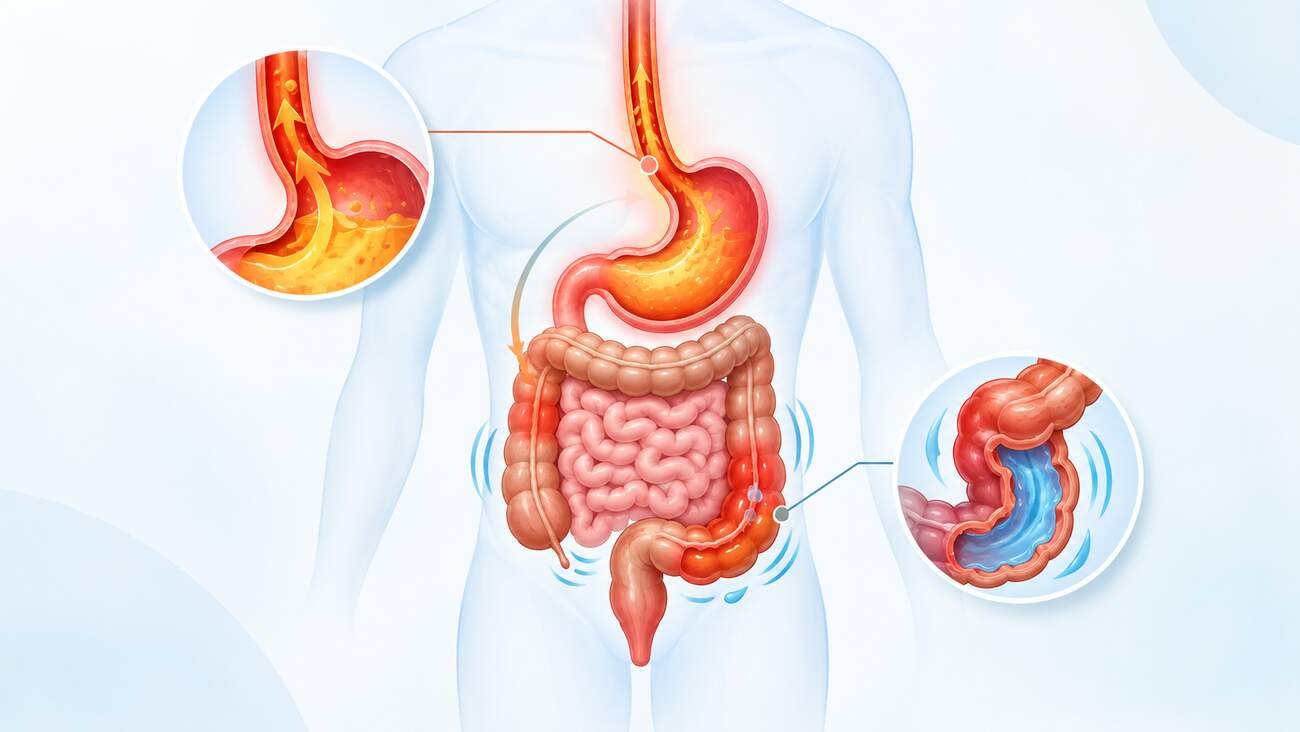

Acid reflux does not usually cause diarrhea directly. Diarrhea is not a typical symptom of reflux, but the two can happen at the same time, and some reflux treatments, especially certain antacids, may contribute to loose stools.
Reflux and diarrhea can also share triggers, such as certain foods, stress, or another digestive condition. Medicines, infections, food intolerances, and irritable bowel syndrome (IBS) can all cause diarrhea in people who also have reflux symptoms. That overlap can make the two problems feel connected even when they are not.
This guide explains how acid reflux and diarrhea may relate, how medicines can play a role, and what may help. It also covers symptoms, diagnosis, and when to see a doctor. For general background, see CollectedMed’s guide to what causes acid reflux.
Can Acid Reflux Cause Diarrhea?
Acid reflux does not usually directly cause diarrhea. However, the two can occur together, and some reflux medicines, especially antacids that contain magnesium, may contribute to loose stools. Food triggers, infections, IBS, and other digestive conditions can also cause diarrhea.
Acid reflux happens when stomach contents flow back up into the esophagus. According to the National Institute of Diabetes and Digestive and Kidney Diseases (NIDDK), the most common symptoms of gastroesophageal reflux disease (GERD) are heartburn and regurgitation.
Diarrhea is different. NIDDK describes diarrhea as loose, watery stools that occur three or more times in a day. Reflux mainly involves the upper digestive tract, while diarrhea involves the intestines and colon.
Because they affect different parts of the digestive system, diarrhea is not considered a typical direct symptom of acid reflux. Still, medicines, diet, stress, and other digestive conditions can explain why some people have both.
7 Things You Should Know About Acid Reflux and Diarrhea
1. Acid Reflux and Diarrhea Are Not Usually Directly Connected
In acid reflux, stomach contents move upward into the esophagus. In diarrhea, stool moves through the intestines too quickly or contains too much water, so it becomes loose.
Having both symptoms does not necessarily mean reflux is causing the diarrhea. They may come from separate causes that happen to overlap. If you are not sure which symptoms belong to which problem, a healthcare professional can help sort them out.
2. Some Acid Reflux Medicines Can Contribute to Diarrhea
This is one of the more practical links between the two. NIDDK lists antacids that contain magnesium among the medicines that can cause diarrhea.
A few points are worth keeping in mind:
- Not every antacid causes diarrhea, and the active ingredients matter.
- Antacids that contain calcium or aluminum are more often linked to constipation instead, so reading the label helps.
- Individual reactions vary. Some people notice no change at all.
- Many other medicines unrelated to reflux, including some antibiotics, can also cause diarrhea.
Do not stop a prescribed medicine on your own. If diarrhea began after you started an antacid or another medicine, talk with a doctor or pharmacist about whether it could be a factor.
3. Acid-Reducing Medicines Have Been Linked to Diarrhea in Some Cases
Other reflux medicines, including H2 blockers and proton pump inhibitors (PPIs), can have digestive side effects that vary from person to person. Diarrhea is listed as a possible side effect on the labels of some of these products.
The U.S. Food and Drug Administration has also noted that PPI use may be associated with Clostridioides difficile-associated diarrhea, a type of infectious diarrhea. This is an association, not a sign that these medicines commonly cause diarrhea. Anyone on a PPI who develops persistent or severe watery diarrhea, especially after recent antibiotic use, should contact a healthcare professional.
Do not stop a prescribed medicine without guidance. For a general overview, see CollectedMed’s guide to acid reflux treatment options.
4. Food Triggers May Affect Both Reflux and Bowel Habits
Some foods and drinks can bother both the upper and lower digestive tract in certain people. Possible examples include:
- Large or high-fat meals
- Alcohol
- Caffeine
- Spicy foods
- Sugar alcohols (such as sorbitol) found in some sugar-free products
- Dairy products in people with lactose intolerance
Triggers differ from person to person, so there is no single list that applies to everyone. NIDDK notes that foods affect people with reflux differently. Keeping a simple food and symptom diary can help you and your clinician spot your own patterns.
For more on reflux triggers, see CollectedMed’s article on what makes acid reflux worse.
5. Stress and Anxiety Can Affect the Whole Digestive System
Stress and anxiety can influence digestion in several ways. Some people notice more heartburn during stressful periods, while others notice loose stools, cramping, or an urgent need to use the bathroom.
This does not mean reflux is causing the diarrhea, or the other way around. Stress may simply affect both. If stress seems to be a pattern for you, CollectedMed offers general ideas in its guides on how to reduce stress and anxiety.
6. Another Digestive Condition May Be Causing Both Symptoms
Several conditions can cause diarrhea, and some also cause upper digestive symptoms. NIDDK lists many possible causes of diarrhea, including:
- Viral, bacterial, or parasitic infections
- Food intolerances, such as lactose intolerance
- Medicines
- Irritable bowel syndrome (IBS)
- Celiac disease
- Inflammatory bowel disease (Crohn’s disease and ulcerative colitis)
- Other digestive disorders
IBS deserves a special mention. People with IBS can have diarrhea, constipation, or both, and NIDDK describes abdominal pain and bowel changes as its main features. Reflux and IBS are also known to occur together in some people.
Rarely, a condition such as Zollinger-Ellison syndrome, in which a tumor causes the stomach to make too much acid, can cause both severe reflux-like symptoms and diarrhea. Persistent symptoms that do not respond to treatment are worth discussing with a doctor.
7. Treating Reflux Does Not Automatically Treat Diarrhea
Controlling reflux may improve your heartburn and regurgitation, and it may help you feel better overall. But reflux treatment should not be presented as a way to stop diarrhea, and diarrhea treatment will not necessarily fix reflux.
The two problems may need separate approaches. Keeping them distinct helps you avoid assuming that one fix will solve both. If you recently had anti-reflux surgery, tell your surgeon about new diarrhea, since bowel changes can sometimes follow stomach or esophageal procedures.
What Does Diarrhea Feel Like?
Diarrhea can look different from person to person. Common symptoms include:
- Loose or watery stools
- Three or more loose stools in a day
- Urgent need to use the bathroom
- Abdominal cramping or pain
- Bloating
- Nausea in some cases
NIDDK explains that diarrhea is often grouped by how long it lasts. Acute diarrhea lasts a few days, persistent diarrhea lasts two to four weeks, and chronic diarrhea lasts at least four weeks. Duration helps clinicians decide how to look for a cause.
Acid Reflux vs. Diarrhea: What’s the Difference?
The table below shows how typical symptoms compare. Overlap does not mean one condition is causing the other.
| Symptom | Acid Reflux | Diarrhea |
|---|---|---|
| Heartburn | Common | Not typical |
| Sour taste or regurgitation | Common | Not typical |
| Loose or watery stools | Not typical | Common |
| Frequent bowel movements | Not typical | Common |
| Urgent need to use the bathroom | Not typical | Common |
| Nausea | May occur | May occur |
| Bloating or fullness | May overlap | May occur |
| Abdominal discomfort | May occur | Common |
| Symptoms after eating | Common | Can occur |
| Medication-related | Possible | Possible |
This table is for general understanding only. It cannot tell you what is causing your symptoms.
Can Acid Reflux Medicine Cause Diarrhea?
Medication is one of the more practical explanations for having both problems, so it helps to look at each type.
Antacids
Some antacids can cause diarrhea, especially those containing magnesium, as NIDDK explains. Many products combine ingredients, such as magnesium with aluminum, partly to balance these effects. Check the active ingredients on the label, or ask a pharmacist if you are unsure.
H2 Blockers and PPIs
Side effects vary by medication and by individual. Some people tolerate these medicines well, while others notice digestive changes. Persistent or severe watery diarrhea while taking a PPI should be reported to a healthcare professional, particularly after antibiotic use.
Other Medicines and Supplements
Medicines that have nothing to do with reflux can also cause diarrhea. Examples include some antibiotics, certain diabetes medicines, and magnesium supplements. If you take several medicines or supplements, a pharmacist can help you review which ones might play a role.
How to Relieve Diarrhea When You Have Acid Reflux
These steps reflect general guidance, not individualized medical advice. Talk with a healthcare professional if you have other health conditions or take regular medications.
Stay Hydrated
Replacing lost fluids is the most important step. NIDDK recommends drinking plenty of liquids, such as water, broths, and oral rehydration solutions. Sip fluids gradually if large amounts at once tend to worsen your reflux.
Choose Gentle Foods While You Recover
Many people find bland, low-fat foods easier to tolerate during diarrhea. Pay attention to your own response, and avoid foods that clearly make either problem worse. Greasy, very spicy, or sugar-alcohol-containing foods are common troublemakers for some people, though reactions vary.
Review Your Medicines
If diarrhea started after you began an antacid or another medicine, discuss it with a doctor or pharmacist. They may suggest a different product or dose. Avoid changing or stopping a prescribed medicine on your own.
Keep a Food and Symptom Diary
Write down what you eat, when symptoms start, and any medicines you take. Patterns often become clear after a week or two, and the diary gives your clinician useful information.
Continue Reflux-Friendly Habits
For nighttime reflux, NIDDK suggests eating meals at least 3 hours before lying down or going to bed. Because triggers vary, focus on the foods and habits that affect you personally. For more ideas, see CollectedMed’s guide to how to manage acid reflux at home.
Ask Before Using Anti-Diarrheal Medicine
Over-the-counter anti-diarrheal products are not right for everyone. They are generally not recommended when there is fever or blood in the stool, so check with a pharmacist or doctor first.
Can Diarrhea Make Acid Reflux Worse?
There is no solid evidence that diarrhea directly causes GERD. However, diarrhea can bring cramping, nausea, and changes in eating habits, which may make digestive discomfort feel worse overall. Skipped meals followed by large meals, or sudden diet changes, can also affect reflux for some people.
If your reflux symptoms consistently flare when you have diarrhea, mention the pattern to a healthcare professional. They can help work out whether the two are linked in your situation or simply happen at the same time.
When Should You See a Doctor?
For diarrhea
Make an appointment if diarrhea keeps returning, does not improve with self-care, or interferes with daily life.
NIDDK advises contacting a healthcare professional promptly if an adult has any of the following:
- Diarrhea lasting more than 2 days
- Signs of dehydration, such as very dark urine, dry mouth, extreme thirst, dizziness, or little or no urination
- Severe abdominal or rectal pain
- Fever of 102°F or higher
- Stools that contain blood or pus
- Stools that are black and tarry
For acid reflux
Seek medical evaluation if you have:
- Persistent symptoms
- Symptoms that do not improve with lifestyle changes or over-the-counter treatment
- Difficulty or pain when swallowing
- Persistent vomiting
- Unexplained weight loss
- Signs of gastrointestinal bleeding, such as black or bloody stools
- Chest pain
Do not automatically assume chest pain is acid reflux. Heartburn can resemble heart-related pain, and new, severe, or unexplained chest pain needs prompt evaluation. If you have sudden or severe chest pain, or chest pain with shortness of breath, sweating, or pain spreading to the arm or jaw, call your local emergency number. CollectedMed’s guide to chest pain explains more.
How Are Acid Reflux and Diarrhea Diagnosed?
A doctor may evaluate each problem separately.
Acid reflux. According to NIDDK, GERD is often diagnosed based on symptoms and medical history, sometimes along with how you respond to treatment. Testing is used when appropriate. CollectedMed explains more in its article on how acid reflux is diagnosed.
Diarrhea. A healthcare professional may ask about how long you have had diarrhea, what your stools look like, your diet, recent travel, and any medicines or supplements you take. They may also perform a physical exam. Stool tests, blood tests, or other testing may be used when diarrhea is persistent or severe.
Treatment for Acid Reflux and Diarrhea
The two conditions generally call for separate approaches.
Acid reflux management may include:
- Lifestyle changes
- Meal timing
- Identifying your individual triggers
- Appropriate over-the-counter medicines
- H2 blockers or PPIs when recommended by a clinician
- Medical evaluation for persistent symptoms
NIDDK describes lifestyle changes and medicines as common treatments for GERD. See CollectedMed’s guide to living with acid reflux for day-to-day strategies.
Diarrhea management may include:
- Replacing fluids and electrolytes
- Eating gentle foods as tolerated
- Treating the underlying cause, such as an infection or food intolerance
- Adjusting medicines that may be contributing
- Anti-diarrheal medicine when appropriate and approved by a clinician or pharmacist
NIDDK notes that treatment depends on the cause and that preventing dehydration is a priority. For other digestive concerns, browse CollectedMed’s overview of common digestive problems. You may also be interested in the related article on whether acid reflux can cause constipation.
Frequently Asked Questions
Can acid reflux cause diarrhea?
Acid reflux does not usually directly cause diarrhea, since the two involve different parts of the digestive system. They can occur together, though, and certain reflux medicines may contribute. A healthcare professional can help identify the cause of your symptoms.
Does GERD cause diarrhea?
Diarrhea is not a typical symptom of GERD. NIDDK lists heartburn and regurgitation as the most common GERD symptoms. If you have both, consider medicines, food triggers, stress, and other digestive conditions as possible explanations.
Can antacids cause diarrhea?
Yes, some can. Antacids containing magnesium are among the medicines NIDDK lists as possible causes of diarrhea. If loose stools start after you begin an antacid, ask a pharmacist or doctor whether it could be a factor.
Can acid reflux medicine cause diarrhea?
It can, depending on the medicine and the person. Some antacids are more likely to, and side effects of H2 blockers and PPIs vary. Check the label or ask a pharmacist, and do not stop a prescribed medicine without guidance.
Why do I have heartburn and diarrhea at the same time?
Several things can explain it, including medication side effects, food triggers, stress, an infection such as a stomach virus, or a condition such as IBS. The two may also be unrelated and simply overlap. If both symptoms persist, a doctor can help figure out which factors apply to you.
Can diarrhea make acid reflux worse?
Diarrhea is not known to directly cause GERD, but cramping, nausea, and changes in eating habits may make digestive discomfort feel worse. If your symptoms tend to flare together, mention the pattern to a healthcare professional.
How can I relieve diarrhea if I have acid reflux?
Focus on staying hydrated, eating gentle foods, and reviewing your medicines with a doctor or pharmacist. NIDDK recommends replacing lost fluids as a priority. Check with a pharmacist before using anti-diarrheal medicine.
What should I eat for acid reflux and diarrhea?
There is no single diet that suits everyone. Many people tolerate bland, low-fat foods best during diarrhea, while reflux triggers differ from person to person. Adjust gradually and note which foods affect you. See CollectedMed’s guide to what a healthy diet looks like.
When should I see a doctor for diarrhea and acid reflux?
See a doctor if either problem is persistent, keeps returning, or does not improve with self-care. Seek prompt care for diarrhea lasting more than 2 days, signs of dehydration, blood in the stool, black stools, severe pain, high fever, trouble swallowing, unexplained weight loss, or chest pain. NIDDK outlines these warning signs.
Conclusion
Acid reflux does not usually cause diarrhea directly, but the two can occur together. Medicines, especially certain antacids, along with food triggers, stress, infections, and other digestive conditions, often explain the overlap.
Treating one problem does not automatically treat the other, so each may need its own approach. Staying hydrated and reviewing your medicines are reasonable starting points. If symptoms persist, return often, or come with warning signs, talk with a healthcare professional.
Sources
- National Institute of Diabetes and Digestive and Kidney Diseases. Symptoms and causes of acid reflux (GER and GERD) in adults
- National Institute of Diabetes and Digestive and Kidney Diseases. Diagnosis of acid reflux (GER and GERD) in adults
- National Institute of Diabetes and Digestive and Kidney Diseases. Treatment for acid reflux (GER and GERD) in adults
- National Institute of Diabetes and Digestive and Kidney Diseases. Eating, diet, and nutrition for acid reflux (GER and GERD) in adults
- National Institute of Diabetes and Digestive and Kidney Diseases. Definition and facts for diarrhea
- National Institute of Diabetes and Digestive and Kidney Diseases. Symptoms and causes of diarrhea
- National Institute of Diabetes and Digestive and Kidney Diseases. Diagnosis of diarrhea
- National Institute of Diabetes and Digestive and Kidney Diseases. Treatment for diarrhea
- National Institute of Diabetes and Digestive and Kidney Diseases. Eating, diet, and nutrition for diarrhea
- National Institute of Diabetes and Digestive and Kidney Diseases. Definition and facts for irritable bowel syndrome
- U.S. Food and Drug Administration. Drug safety communication: Clostridium difficile-associated diarrhea can be associated with stomach acid drugs known as proton pump inhibitors
Medical Disclaimer: This article is for educational purposes only and does not replace professional medical advice, diagnosis, or treatment. Acid reflux and diarrhea can have many causes, and some symptoms may signal a more serious condition. Talk with a doctor or pharmacist before starting, changing, or stopping any medicine. If you have severe symptoms, signs of dehydration, chest pain, or think you are having a medical emergency, call your local emergency number right away.