
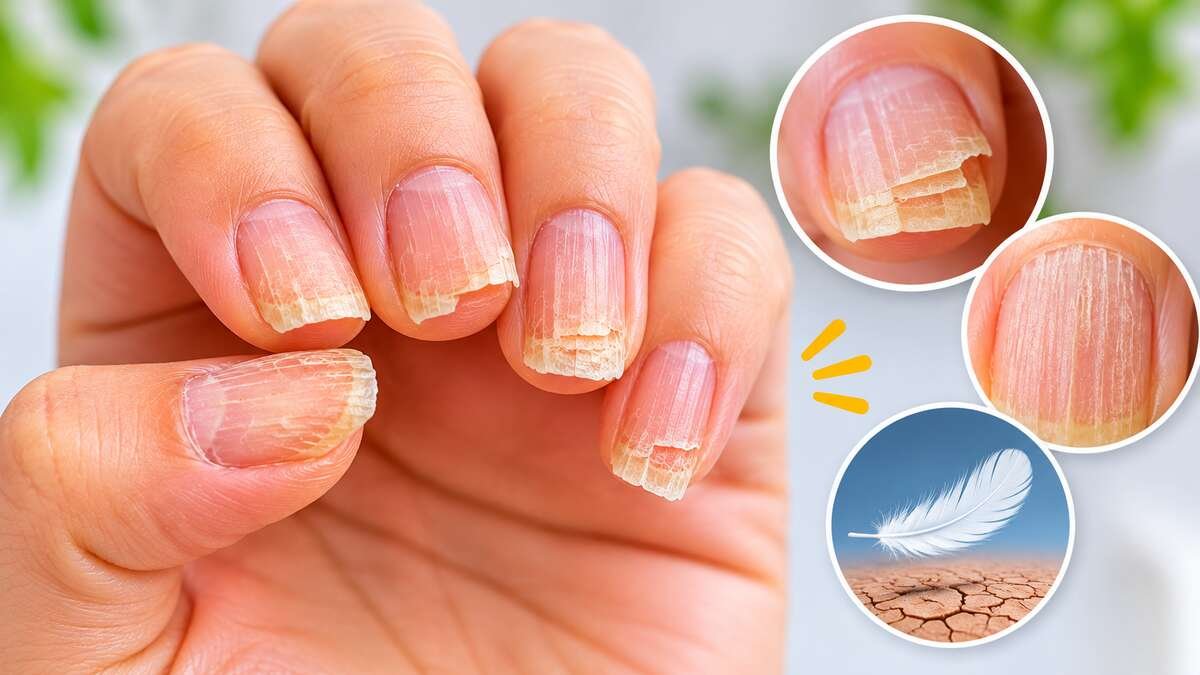

You reach for a package, and a nail catches and splits. A sweater snags on a rough edge, or a nail tip breaks while you type. If this keeps happening, you may be dealing with brittle nails, which are nails that break, split, or peel more easily than healthy ones.
So what do brittle nails feel like? They often feel dry, rough, thin, or weak. The edges may feel uneven or catch on clothing, and the nail layers may peel or flake. Some people notice that their nails bend or crack with very little pressure, while others mainly notice ridges or a coarse surface. Not everyone has every sensation.
This guide explains how brittle nails feel, which signs to look for, and how they show up in everyday life. It also covers possible causes, practical care steps, and when to see a healthcare professional. Brittle nails do not always point to a vitamin deficiency or a health problem, and nail appearance alone cannot reveal the cause.
What Do Brittle Nails Feel Like?
Brittle nails usually feel different from smooth, flexible, healthy nails. The nail plate (the hard, visible part of the nail) may feel less even and less firm. Sensations vary from person to person, and they can change over time.
Dry and Rough
The nail surface may feel coarse or uneven instead of smooth. You might notice it when you run a fingertip across the nail or when the edge catches on fabric or hair. Dryness is a common feature, as Cleveland Clinic notes that nails lose water faster than skin does.
Thin and Weak
Some brittle nails feel thinner or less firm than usual. They may bend, flex, or crack with less pressure than you would expect, for example when you press a button or lift a lid.
Peeling or Flaky
The nail plate can separate into thin layers, especially near the free edge (the tip). You may feel small flakes or layers lifting away, a bit like the pages of a book fanning apart. This pattern is called onychoschizia, one of the main presentations of brittle nails.
Sharp or Uneven Edges
Splitting and breakage can leave jagged edges. These can snag on clothing, scratch your skin, or catch on towels and hair.
Brittle nails do not necessarily hurt. Discomfort is more likely when a nail splits deeply, breaks close to the nail bed, or exposes sensitive tissue underneath.
Common Signs and Symptoms of Brittle Nails
Feeling a problem is one thing; seeing it is another. These are the visible signs that often go along with the sensations above. For a broader look at other changes, see our guide to the common causes of brittle nails.
Nails That Split Easily
Vertical splits or cracks may start at the nail tip and extend toward the base. This lengthwise pattern is known as onychorrhexis. A small split can deepen with typing, washing, or catching the nail on something.
Peeling Nail Layers
Thin layers of the nail plate may separate, usually at the edges. This horizontal peeling is also called lamellar splitting.
Frequent Nail Breakage
Nails may break during routine activities such as typing, washing dishes, handling objects, or opening containers. Breakage that happens again and again, rather than once after an injury, is more typical of brittleness.
Rough Nail Surfaces and Ridges
Nails may develop an uneven texture or visible ridges. Ridges have several possible causes, though, and are not always a sign of brittle nails. Mayo Clinic notes that harmless vertical ridges running from the cuticle to the tip can occur.
Nails That Bend or Flex Easily
Nails may feel less firm than usual. Some bend before breaking, while others crack with little pressure.
| Sign | What you may notice |
|---|---|
| Dryness | Rough or less smooth nail surface |
| Peeling | Thin layers lifting from the nail tip |
| Splitting | Cracks or separations in the nail |
| Weakness | Nails bend or break easily |
| Rough edges | Nails catch on clothing or hair |
| Frequent breakage | Nails break during everyday activities |
How Do Brittle Nails Feel in Everyday Situations?
These examples are meant to help you recognize patterns, not to diagnose anything. A nail that breaks once during one activity does not mean you have a persistent nail problem.
While Washing Your Hands or Showering
Repeated wetting and drying can contribute to nail fragility. Nails may feel softer and more flexible when wet, then dry, tight, and more likely to split afterward. Mayo Clinic notes that repeated or prolonged water contact can contribute to split fingernails.
When Typing or Using a Phone
Weak nail tips may catch, bend, or break during routine hand movements. You might notice a tip flexing against a keyboard or a small crack that widens over the day.
When Touching Fabrics or Hair
Peeling layers and rough edges can snag on sweaters, towels, and hair. That catching sensation is often the first thing people notice.
During Household Chores
Cleaning products, detergents, and repeated water exposure may worsen dryness or fragility. Nails may feel rough or sore at the edges after a round of dishes or scrubbing, especially without gloves.
What Is the Difference Between Brittle, Dry, and Weak Nails?
People often use these words interchangeably, and the traits overlap. A person can have dry nails that also peel and split, for example. These are everyday descriptions, not formal medical diagnoses.
| Nail description | Common characteristic |
|---|---|
| Brittle | Breaks, cracks, peels, or splits easily |
| Dry | Rough, dull, or flaky appearance |
| Weak | Less firm and more likely to bend |
One more distinction matters. Brittle nails are sometimes grouped as dry and brittle (too little moisture) or soft and brittle (too much moisture, often from detergents and water), according to Healthline’s overview of brittle nails. Knowing which feels more like yours can help you choose protective habits.
What Causes Nails to Become Brittle?
Brittle nails can develop because of everyday habits, environmental exposure, aging, or certain health conditions. Often several factors overlap. This section gives a short overview; our full guide to the common causes of brittle nails goes deeper.
Frequent Exposure to Water
Repeated cycles of wetting and drying can weaken the nail structure and contribute to splitting. Frequent handwashing and sanitizing add to the effect, according to Cleveland Clinic.
Cleaning Products and Chemicals
Detergents, solvents, and some nail products can dry or irritate the nails and the skin around them. Wearing gloves for these tasks is a simple protective step.
Frequent Manicures and Polish Removal
Artificial nails, aggressive filing, and acetone-based removers may contribute to dryness and fragility. Mayo Clinic suggests acetone-free removers, since acetone can dry nails.
Aging
Nails often change with age. MedlinePlus describes brittle nails as often a normal result of aging. Slower nail growth means each part of the nail is exposed to water and dry air for longer, which can make splitting more common. Brittle nails are not inevitable, though.
Nutritional Deficiencies
Deficiencies involving iron, zinc, or other nutrients may affect nail health in some people, as MedlinePlus notes. Brittle nails alone do not prove a deficiency. If you are curious about diet, see our list of foods rich in iron.
Underlying Health Conditions
Thyroid disorders, psoriasis, eczema, and some fungal nail infections can contribute to nail changes. A clinician can sort out whether any of these apply.
Can Brittle Nails Be a Sign of a Health Problem?
Most of the time, brittle nails relate to everyday exposure or nail-care habits. Still, persistent or unusual nail changes can sometimes be associated with an underlying condition. Possibilities include:
- Iron deficiency: It may be associated with certain nail changes, but brittle nails alone are not enough to diagnose it.
- Thyroid disorders: MedlinePlus notes that thyroid disease may cause brittle nails. Other symptoms, such as fatigue, may appear too.
- Psoriasis and eczema: These can affect the nails or the skin around them.
- Fungal nail infections: They may cause thickening, discoloration, crumbling, or texture changes.
A healthcare professional can consider your symptoms, medical history, an exam, and tests when appropriate. Nail appearance alone cannot confirm a disease, and it is not a reason to assume the worst.
How to Care for Brittle Nails
These steps are practical and low risk, but they will not make nails stronger overnight. Fingernails grow slowly, so give new habits several weeks to show results.
Keep Nails Moisturized
Apply hand cream or a suitable nail moisturizer regularly, especially after washing your hands. Rub it into the nails and cuticles, as Mayo Clinic advises. The American Academy of Dermatology also recommends moisturizing after handwashing.
Wear Gloves During Household Chores
Protective gloves can shield nails when you wash dishes, clean, or use detergents.
Keep Nails at a Comfortable Length
Shorter nails are less likely to catch, bend, or break. Trim straight across with sharp clippers and round the tips slightly.
Avoid Aggressive Nail Treatments
Limit harsh filing, picking at peeling layers, and repeated artificial nail applications. Avoid cutting cuticles, since removal can lead to infection.
Follow a Balanced Diet
A varied diet with protein, vegetables, fruits, whole grains, and other nutrient-rich foods supports overall health, including nails. See our guides to a balanced diet and high-protein foods. Supplements such as biotin are not a universal fix; the NIH Office of Dietary Supplements says evidence for nail benefits is limited and that biotin can interfere with some lab tests. Ask a healthcare professional before starting one.
When Should You See a Doctor?
Most brittle nails are not an emergency. Consider seeing a healthcare professional if you have:
- Persistent or worsening nail brittleness despite good nail care
- Pain, swelling, redness, or bleeding around a nail
- Significant discoloration or thickening
- Nails separating from the nail bed
- Changes in several nails without an obvious explanation
- Other symptoms, such as unusual fatigue or changes in your general health
MedlinePlus also advises contacting a provider about new or widening dark streaks, blue or clubbed nails, or horizontal ridges. Sudden or unusual nail changes deserve attention, particularly alongside other symptoms.
Frequently Asked Questions About Brittle Nails
Do brittle nails feel rough?
Yes. Brittle nails may feel rough, uneven, or flaky, especially near the tips. Roughness can have several causes, though, and does not always mean your nails are brittle.
Do brittle nails hurt?
Usually, no. Pain may occur if a nail cracks deeply, breaks close to the nail bed, or irritates the surrounding skin. Pain, swelling, or bleeding around a nail is worth discussing with a healthcare professional, per Mayo Clinic.
Why do my nails feel soft and bend easily?
Soft, flexible nails may be affected by frequent water exposure, detergents, or nail products. Too much moisture is one recognized pattern, as Healthline explains. Persistent changes may need professional assessment.
Can brittle nails peel in layers?
Yes. Brittle nails can develop layers that separate near the tips. This is commonly described as nail peeling or lamellar splitting, and the medical term is onychoschizia.
Are brittle nails a sign of vitamin deficiency?
Nutritional deficiencies can sometimes contribute to nail changes, but brittle nails alone do not confirm one. MedlinePlus lists low iron and zinc among possible factors. A healthcare professional can tell you whether testing is appropriate.
Conclusion
Brittle nails commonly feel dry, rough, thin, or weak, and they may split, peel, or break easily. Protect your nails with moisture, gloves, and gentle care. If symptoms persist, worsen, or appear with other concerning changes, talk with a healthcare professional. More tips are in our healthy habits guide.
Sources
- American Academy of Dermatology: 11 dermatologists’ tips for healthy nails
- Mayo Clinic: Fingernails: Do’s and don’ts for healthy nails
- Mayo Clinic News Network: Self-care can strengthen weak fingernails
- Cleveland Clinic: What causes brittle nails and how to treat them
- MedlinePlus: Nail abnormalities
- MedlinePlus: Brittle nails
- NIH Office of Dietary Supplements: Biotin fact sheet for consumers
- Dermatology and Therapy: Pathogenesis, clinical signs and treatment recommendations in brittle nails: a review
- Healthline: Brittle nails
Medical Disclaimer
This article is for informational purposes only and should not replace professional medical advice, diagnosis, or treatment. Consult a qualified healthcare professional about persistent or concerning nail changes, and before starting any supplement or treatment
2 thoughts on “What Do Brittle Nails Feel Like? How to Recognize the Signs”
Comments are closed.