
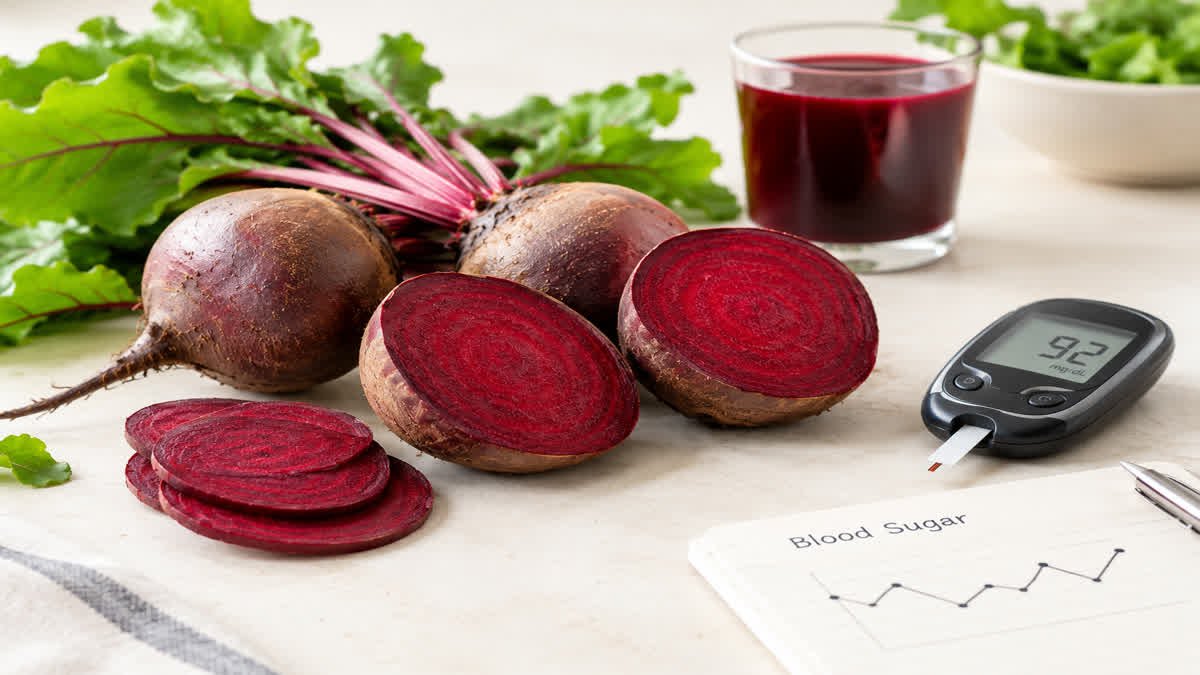

Beetroot may affect blood sugar in some circumstances, but the evidence is not strong enough to say it reliably lowers it. Some human studies report improvements in glucose measures, while others find little or no meaningful change. Beetroot is a nutritious vegetable that fits into a balanced diet, but it is not a proven treatment for diabetes.
Researchers are interested in beetroot for several reasons. It provides dietary nitrate, fiber, betalains (red-purple pigments), and other plant compounds. Nitrate can lead to more nitric oxide in the body, and scientists have asked whether that and other compounds could influence glucose metabolism.
This guide walks through what beetroot contains, what the studies show (including the ones that found no effect), how beetroot juice differs from whole beetroot, and what it all means for people with diabetes. It is general information and does not replace advice from your healthcare team.
Beetroot Nutrition and Blood Sugar
Beetroot (also called beets in the U.S.) is a root vegetable, not a supplement. According to USDA FoodData Central, raw beets provide carbohydrates, dietary fiber, folate, and potassium. They also contain naturally occurring nitrate, betalains, and other plant compounds.
Does Beetroot Contain Sugar?
Yes. Beetroot has naturally occurring sugars and other carbohydrates, but that does not automatically make it a high-sugar food. A whole vegetable with fiber is different from added sugars or concentrated juice products. For more background on how food and glucose connect, see our guides on blood sugar and the diabetes diet.
Why Are Researchers Interested in Beetroot?
Three groups of compounds get most of the attention:
- Dietary nitrate: It may increase nitric oxide availability. The Cambridge conference abstract on beetroot and blood glucose notes that nitric oxide is involved in regulating insulin secretion, glucose uptake, and liver glucose output.
- Betalains and polyphenols: They have antioxidant and other biological activity that scientists are exploring.
- Fiber: It can contribute to more gradual digestion of carbohydrate than many refined foods.
No single compound has been proven to control diabetes. Our guide on beetroot health benefits covers its broader nutrition.
So, Does Beetroot Actually Lower Blood Sugar?
The honest answer is that the evidence is promising but inconclusive. Results differ depending on whether researchers used whole beetroot or juice, the dose, how long the study ran, whether participants had diabetes, and which blood sugar measure was tracked. Some studies looked at a single meal, while others followed people for weeks.
A 2024 systematic review of human evidence looked at 20 studies (18 randomized controlled trials, one non-randomized trial, and one quasi-experimental study) covering conditions such as type 2 diabetes, obesity, and hypertension. The studies produced conflicting results, likely because of differences in design, dose, duration, and population. The authors concluded that beetroot may help maintain blood sugar in some circumstances, but that standardized research is needed before drawing a firm conclusion.
That review is the central evidence message of this article.
What Studies Have Found About Beetroot and Blood Sugar
Presenting only the positive results would be misleading. Here is a balanced look at both.
Studies Showing Potential Benefits
In a quasi-experimental study, 44 adults with type 2 diabetes ate 100 g of raw red beetroot daily for eight weeks. Their fasting blood sugar fell by about 13.5 mg/dL and HbA1c by about 0.34 percentage points. Because there was no randomized control group, the study cannot show that beetroot itself caused the changes.
A small pilot study examined a single dose of beetroot juice in people with type 2 diabetes who were off their medications for a short period. It explored glucose and blood pressure responses, and the authors stressed that larger trials are needed. An acute crossover trial in 18 healthy adults also suggested beetroot juice could blunt after-meal glucose peaks, but that was a short-term, small study.
Studies Showing Little or No Effect
A randomized clinical trial of 46 people with type 2 diabetes gave 24 mL of concentrated beetroot juice daily for 12 weeks. After adjusting for baseline values, it found no significant effect on fasting glucose, HbA1c, insulin, or insulin resistance. It also found no significant change in blood pressure or lipids.
The contrast between the eight-week raw beetroot study and the 12-week juice trial shows how much results can vary by design and preparation. To understand these lab measures, see our guides on the A1C test and insulin resistance.
What Does the Overall Evidence Mean?
There are interesting signals, and some studies show improvements. Others show no meaningful effect. Many studies are small, use different preparations and doses, and follow people for short periods.
That is why the evidence does not justify calling beetroot a proven blood-sugar-lowering food. It remains an area of active research.
How Could Beetroot Influence Blood Sugar?
Scientists have proposed several mechanisms. These are hypotheses, not proven clinical effects.
Dietary Nitrate and Nitric Oxide
Beetroot nitrate is converted to nitrite and then to nitric oxide, which plays an important role in blood vessel function. Researchers have investigated whether changes in nitric oxide signaling could affect glucose metabolism and insulin sensitivity. A plausible biological mechanism does not prove that eating beetroot will lower anyone’s blood glucose. You can read how this pathway works in our article on beetroot and blood pressure.
Fiber and Digestion
Whole beetroot contains fiber, which is part of healthier eating patterns and can affect digestion and carbohydrate absorption. That does not mean beetroot’s fiber alone has a clinically meaningful blood sugar effect. See our list of high-fiber foods.
Betalains and Polyphenols
These compounds show antioxidant and other biological activity. “Has biological activity” is not the same as “has been proven to lower blood sugar in humans,” and that distinction matters throughout this topic. Learn more about antioxidant-rich foods.
Is Beetroot Juice Better Than Whole Beetroot for Blood Sugar?
Much of the research uses beetroot juice, not ordinary servings of whole beetroot. The two are not interchangeable.
Whole Beetroot
Whole beetroot provides fiber, comes in a whole-food format, and is easy to add to meals. It also supplies several nutrients and plant compounds.
Beetroot Juice
Juice is more concentrated and usually contains less fiber. It can deliver a relatively concentrated dose of nitrate, and commercial products can differ a lot in composition. A study using concentrated juice does not prove that any beetroot juice you buy will lower blood sugar.
The takeaway: whole beetroot is a nutritious food, and beetroot juice is not a proven blood sugar treatment.
Can People With Diabetes Eat Beetroot?
For most people with diabetes, beetroot can be part of an overall balanced eating pattern. Portion size, the rest of the meal, whole beetroot versus juice, carbohydrate content, and fiber all matter. Individual blood glucose responses vary, so follow the guidance of your healthcare team.
Beetroot should not replace prescribed medication, glucose monitoring, physical activity recommendations, or a diabetes eating plan developed with a healthcare professional. The evidence does not support treating it as a therapy, and the 2024 systematic review found the picture remains unclear. For more, see our overview of type 2 diabetes.
Can Beetroot Increase Blood Sugar?
It can contribute carbohydrate to a meal, since beetroot naturally contains carbohydrates and sugars. Eating a whole vegetable is different from drinking a concentrated sweetened drink. Blood glucose responses also vary between people, and the whole meal matters.
Rather than labeling a food simply “good” or “bad” for blood sugar, look at the overall nutritional context. There is no need to cut out foods based only on their sugar content. If you monitor your glucose, your own readings, together with your clinician’s advice, are the best guide. Our article on blood sugar levels explains common targets.
Is Beetroot a Natural Diabetes Treatment?
Some common online claims go well beyond the evidence.
Claim: “Beetroot lowers blood sugar.” Reality: Human evidence is mixed and not enough for a definitive conclusion.
Claim: “Beetroot cures diabetes.” Reality: There is no evidence that beetroot cures diabetes.
Claim: “Beetroot detoxes excess sugar from the blood.” Reality: This is not an evidence-based description of how blood glucose is regulated.
Claim: “More beetroot means lower blood sugar.” Reality: There is no established basis for assuming larger amounts produce greater glucose benefits.
Healthy Ways to Eat Beetroot
Keep it practical and food-focused.
- Roast beetroot and serve it with a balanced meal.
- Add sliced or grated beetroot to salads.
- Make beetroot soup.
- Pair beetroot with beans or lentils.
- Serve beetroot alongside leafy vegetables (see our guide to leafy green vegetables).
- Add beetroot to a mixed vegetable dish.
What About Beetroot Juice?
If you choose juice, remember that it differs from whole beetroot in fiber and concentration. This article does not recommend a therapeutic amount. Check labels for added sugar.
Pairing Beetroot With Other Foods
Focus on the whole plate: vegetables, fiber-rich foods, protein, healthy fats, and appropriate carbohydrates. Overall diet quality matters far more than any one vegetable. For comparison, our articles on green tea and blood sugar and olive oil and blood sugar take the same evidence-first approach.
Are There Any Risks to Eating Beetroot?
Most people tolerate beetroot well. Common considerations include:
- Red or pink urine: Beetroot pigments can cause harmless discoloration called beeturia, which Medical News Today says affects roughly 10 to 14 percent of people.
- Red or pink stool: The same pigments can change stool color.
- Digestive symptoms: Some people get bloating or gas, depending on how much they eat.
- Oxalates: Beetroot contains oxalates. People who have been advised to manage dietary oxalate should talk with a healthcare professional.
- Concentrated products: Juice concentrates, powders, and nitrate supplements are not the same as ordinary food.
Normal beetroot consumption is not dangerous for healthy people. See our article on eating beetroot every day for more.
Frequently Asked Questions
Does Beetroot Lower Blood Sugar?
Research is promising but inconsistent, so no definitive blood-sugar-lowering effect has been established. A 2024 systematic review found conflicting results.
Is Beetroot Good for People With Diabetes?
It can be part of a balanced diet, but it is not a diabetes treatment. Follow your healthcare team’s plan.
Does Beetroot Juice Lower Blood Sugar?
Some studies suggest possible effects, while others, such as a 12-week randomized trial in people with type 2 diabetes, found none. The results are mixed.
Does Beetroot Contain Sugar?
Yes. It contains naturally occurring carbohydrates and sugars, along with fiber and other nutrients.
Does Beetroot Raise Blood Sugar?
It contributes carbohydrate to a meal, but the response depends on portion, preparation, and the individual.
Is Raw Beetroot Better Than Beetroot Juice?
Neither is clearly better for blood sugar. Raw or cooked whole beetroot has more fiber, while juice is more concentrated.
Can I Eat Beetroot if I Have Diabetes?
Many people with diabetes can include it in a balanced eating plan. Ask your healthcare professional or dietitian how it fits your needs.
Does Beetroot Improve Insulin Sensitivity?
This is still being investigated. It is not an established clinical benefit.
How Does Beetroot Affect Glucose Metabolism?
Researchers have proposed roles for nitrate and nitric oxide, fiber, and plant compounds such as betalains. These are hypotheses that need more human evidence.
The Bottom Line: Does Beetroot Lower Blood Sugar?
Beetroot is a nutritious vegetable that provides fiber, dietary nitrate, and plant compounds. Some studies suggest it may influence glucose regulation, while other human trials have found no significant improvement, and a systematic review concluded that the overall evidence remains unclear.
So beetroot is best viewed as part of a healthy eating pattern, not a proven way to lower blood sugar or treat diabetes. Anyone managing diabetes should keep following their healthcare team’s treatment and nutrition recommendations. Beetroot can be a nutritious addition to a balanced diet, but current research does not justify relying on it as a blood-sugar-lowering treatment.
Sources
- The Impact of Red Beetroot Products on Glycemic Profiles: A Systematic Review of Human Evidence. 2024.
- Effects of raw red beetroot consumption on metabolic markers and cognitive function in type 2 diabetes patients. Journal of Diabetes & Metabolic Disorders, 2021.
- Effects of concentrated beetroot juice consumption on glycemic control, blood pressure, and lipid profile in type 2 diabetes patients: randomized clinical trial study.
- The Effects of Acute Beetroot Juice Intake on Glycemic and Blood Pressure Responses When Controlling for Medication in Individuals with Type 2 Diabetes: A Pilot Study.
- Acute supplementation of beetroot but not blackcurrant juice manages postprandial blood glucose responses in healthy adults. Conference abstract.
- Medical News Today. Beeturia: Why beets can turn urine and stool red
- U.S. Department of Agriculture. FoodData Central
Medical Disclaimer: This article is for general information and education only. It is not medical advice and does not replace care from a doctor, dietitian, or other qualified healthcare professional. Everyone’s health needs are different, so please talk with your healthcare provider before changing your diet or diabetes treatment. Never stop or change diabetes medicine without medical guidance. If you have very high or very low blood sugar, confusion, vomiting, or trouble breathing, seek emergency care right away.