
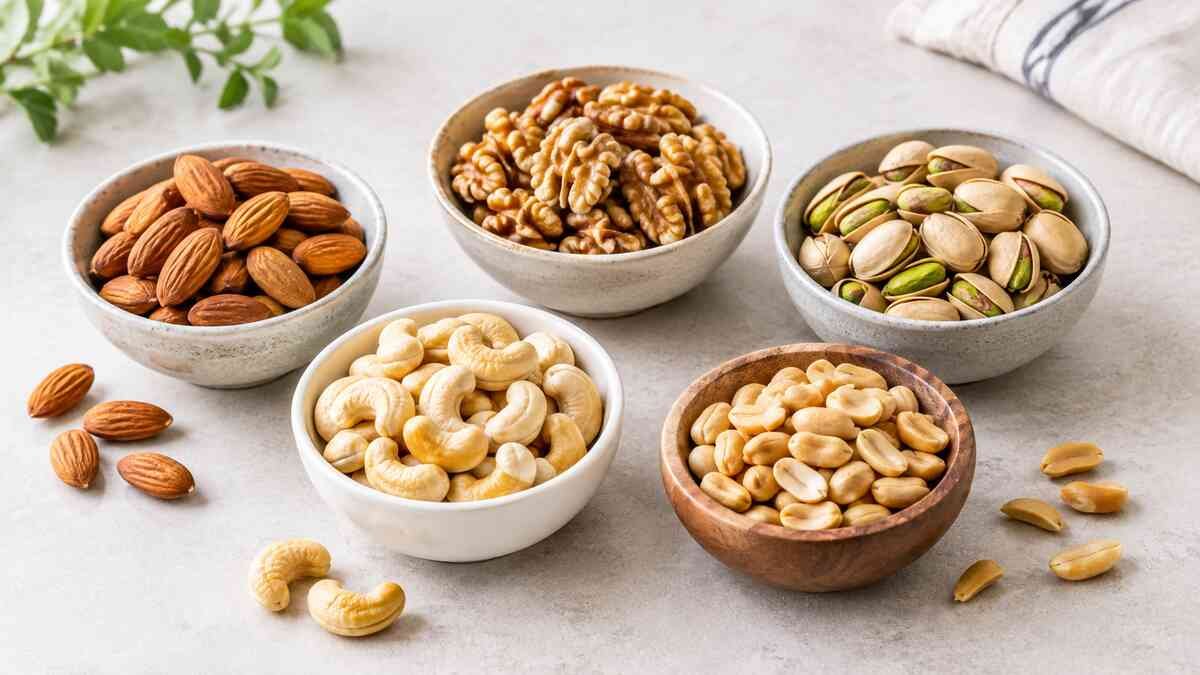

Nuts have a reputation problem. They are rich in fat, and a small handful can contain roughly 160 to 200 calories, so many people cut them out as soon as they start thinking about their weight. Yet nuts are some of the most studied foods in nutrition, and they appear again and again in healthy eating patterns. You can read more about their wider benefits in our guide to the health benefits of nuts.
Here is the surprising part. When researchers have tested nuts in randomized trials, adding them to the diet has generally not led to weight gain. Their protein, fiber, unsaturated fats, and chewy structure may help snacks feel more satisfying, and some evidence suggests the body does not absorb every calorie they contain.
So can nuts fit into a balanced plan for nuts and weight management? This guide explains what the research shows, which varieties are worth choosing, how much counts as a portion, and how to enjoy nuts without overdoing calories.
Are Nuts Good for Weight Management?
Nuts can be a good choice for weight management when eaten in reasonable portions. Although they are calorie-dense, they provide protein, fiber, and healthy fats that may help with appetite control. Research generally finds that nut consumption does not lead to weight gain when included in a balanced diet.
That answer comes with some important context. Studies mostly show that nuts are weight-neutral, meaning people who add them to their diets do not tend to gain weight. That is different from saying nuts cause weight loss, and the evidence does not support that claim.
Nuts also work best as part of an overall eating pattern. Two things matter most: how much you eat and what the nuts replace. A measured handful instead of chips or pastries is a very different choice from a handful added on top of everything else you already eat.
Think of nuts as a useful, nutritious food rather than a weight-loss tool. For broader strategies, see our overview of weight management and the Mediterranean diet, an eating pattern that includes nuts regularly.
Why Nuts May Support Healthy Weight Management
Nuts contain several nutrients and physical features that may help explain why they do not push body weight up the way their calorie count might suggest. Researchers are still studying these mechanisms, so treat them as possible explanations rather than guarantees.
Protein Helps Support Satisfaction
Protein tends to be more filling than refined carbohydrates, which is one reason it plays a role in satisfying snacks and meals. Nuts offer a convenient plant-based source. An ounce of almonds, pistachios, or peanuts provides roughly 6 to 7 grams of protein.
That is helpful, but nuts are not a protein powerhouse compared with foods such as Greek yogurt, eggs, fish, or poultry. Our guide to high-protein foods compares many options. Nuts are best seen as a modest contributor that also brings fiber and healthy fats.
Fiber May Help You Feel Satisfied
Dietary fiber slows digestion and adds bulk, which can make a snack feel more substantial. Almonds, pistachios, and hazelnuts are among the nuts with a good amount of fiber per serving, typically around 2 to 4 grams per ounce.
Fiber also supports regular digestion. If you want to build a fiber-rich diet more broadly, our article on high-fiber foods for digestive health is a good next read.
Healthy Fats Contribute to a Satisfying Snack
Most of the fat in nuts is unsaturated. That includes monounsaturated fats (abundant in almonds, cashews, pecans, and pistachios) and polyunsaturated fats (abundant in walnuts). Replacing saturated fat with unsaturated fat is a well-established part of heart-healthy eating, and you can learn more in our guide to healthy fats.
Fat is also why nuts are energy-dense. It provides more calories per gram than protein or carbohydrate. That does not make fat “bad,” but it does explain why portion size deserves attention.
The Physical Structure of Nuts Matters
Nuts are a whole-food package: the fat sits inside tough cell walls that are not always fully broken down by chewing and digestion. Some studies suggest that people absorb fewer calories from whole nuts than standard calculations predict, and that eating nuts may lead people to eat slightly less later. A 2023 review of nuts, energy balance, and body weight discusses both ideas.
This does not mean the calories in nuts do not count. The effect is partial, varies by nut type and form, and is still being studied. Nut butters and finely ground nuts, for example, likely release more of their energy than whole nuts do.
Do Nuts Cause Weight Gain? Understanding the Research
This is the question that worries most readers, and the research is reassuring. Even though a small portion of nuts contains substantial calories, controlled trials generally do not show that eating them leads to weight gain.
A systematic review and meta-analysis of 55 randomized trials found that nut-enriched diets did not increase body weight, body mass index (BMI), or waist circumference overall. This held whether or not participants were told to swap nuts in for other foods. An earlier meta-analysis of clinical trials reached a similar conclusion.
Another network meta-analysis of 105 trials found that tree nuts and peanuts generally did not increase measures of body fat. It reported that almond-enriched diets were linked with a smaller waist circumference, while hazelnut-enriched diets were linked with a slightly larger one. These are subgroup findings and should be read cautiously.
What about people actively trying to lose weight? A 2024 systematic review and meta-analysis looked at nuts combined with calorie-restricted diets. It found no significant differences in weight-related outcomes compared with calorie restriction without nuts. The authors noted that the available studies were limited and varied in their methods.
Large umbrella reviews point in a similar direction. A 2025 umbrella review linked higher intakes of whole grains, legumes, nuts, and fruits with a lower risk of overweight and obesity. Observational findings like these show association, not proof of cause and effect.
Several limits are worth keeping in mind:
- Many trials lasted weeks to months, not years.
- Participants in trials often receive guidance and monitoring that real life does not provide.
- Results are average effects, and individuals can respond differently.
The most accurate summary is that nuts are consistent with weight neutrality, with possible benefits when they replace less nutritious foods. They are not a proven way to lose weight on their own.
Best Nuts to Include in a Weight-Management Diet
There is no single best nut for weight loss. Each variety has a slightly different nutrient profile, and the best choice is often the one you enjoy and can portion sensibly. Avoid ranking nuts by calories alone, since a slightly lower-calorie nut is not automatically better for weight management.
1. Almonds
Almonds provide fiber, protein, vitamin E, and magnesium. They work as a grab-and-go snack or as a crunchy topping for yogurt, oatmeal, and salads. For a deeper look, see our article on almonds and their health benefits.
2. Walnuts
Walnuts stand out for their plant-based omega-3 fat, alpha-linolenic acid (ALA), along with other unsaturated fats and some fiber. They pair well with oatmeal, salads, and baked sweet potatoes. Learn more in our guide to the health benefits of walnuts, or compare the two in almonds vs. walnuts.
3. Pistachios
Pistachios provide protein, fiber, and unsaturated fats. In-shell pistachios have a practical advantage: the pile of empty shells makes it easier to see how much you have eaten, and shelling slows you down.
4. Cashews
Cashews provide protein, magnesium, and copper. Their creamy texture makes them easy to add to stir-fries, grain bowls, and snack mixes. They are tasty and easy to overeat, so measuring is helpful.
5. Peanuts
Peanuts are technically legumes, but people usually group them with nuts. They offer protein, fiber, and unsaturated fats, and plain peanuts are often one of the most affordable options.
6. Pecans
Pecans are rich in unsaturated fats and add flavor and crunch to meals. They are among the most energy-dense nuts, so serving size matters.
For a look at how nuts affect cardiovascular health, see our guide to the best nuts for heart health.
How Many Nuts Should You Eat for Weight Management?
A reference serving of about 1 ounce (28 to 30 grams), or a small handful, works well for many adults. It is not a prescription. People with higher calorie needs may eat more, and others may prefer less. Our article on how many nuts you should eat every day goes into more detail.
The USDA’s MyPlate guidance counts one-half ounce of nuts as one ounce-equivalent in the Protein Foods group, so a full ounce counts as two. Nuts can replace some other protein foods in a meal rather than being added on top of them.
The number of nuts in an ounce varies by type and size. This table gives approximate counts:
| Nut | Approximate 1-ounce portion |
|---|---|
| Almonds | 23 nuts |
| Walnuts | 14 halves |
| Pistachios | 49 kernels |
| Cashews | 18 nuts |
| Peanuts | 28 to 30 nuts |
| Pecans | 19 halves |
These counts are approximate and vary with size.
Nut butter works differently from whole nuts. A typical serving is 1 to 2 tablespoons, and it is easy to use more than you intended. MyPlate counts 1 tablespoon of peanut butter as one ounce-equivalent.
Practical tip: Measure a portion into a small bowl instead of eating straight from a large bag. It takes a few seconds and removes the guesswork.
How to Eat Nuts Without Overdoing Calories
Small habits make nuts easier to fit into your day. The goal is to enjoy them without turning a healthy snack into extra calories you did not plan for.
Use Nuts Instead of Less Nutritious Snacks
Swapping works better than adding. Try a measured portion of nuts in place of chips, candy, or highly processed snack foods. Substitution lets you gain nutrients without simply stacking more calories on top of your usual intake.
Add Nuts to Balanced Meals
Nuts can bring texture and staying power to meals you already enjoy. A few ideas:
- Sprinkle chopped nuts over oatmeal or plain yogurt.
- Add almonds or walnuts to salads.
- Use crushed peanuts to top vegetable dishes.
- Mix a small amount of nuts into homemade snack mixes with dried fruit and seeds.
Pairing nuts with vegetables and fruit also helps fill your plate. For ideas, see our guide to how to eat more vegetables.
Choose Simple, Minimally Processed Options
Plain nuts, either raw or dry-roasted, are good everyday choices. If sodium is a concern, choose unsalted or lightly salted versions. Roasted nuts can still fit into a balanced diet, but candy-coated, honey-glazed, or chocolate-covered nuts are better as occasional treats.
Pay Attention to Nut Butter Portions
Nut butters are nutritious but easy to over-serve. Check the label for added sugar, salt, and oils, and measure your serving with a spoon instead of eyeballing it. The shortest ingredient list is usually a good sign.
Common Mistakes to Avoid When Eating Nuts for Weight Management
Even healthy foods can work against your goals if you use them in ways that do not fit. These are the most common slip-ups.
- Eating straight from a large package. It is easy to lose track of how much you have eaten.
- Assuming healthy means unlimited. Nuts are nutritious, but calories still count.
- Choosing sweetened or coated nuts too often. Added sugar and extra oils change the nutrition picture.
- Adding nuts without replacing anything. If you add a handful on top of an already high-calorie snack, you may simply eat more overall.
- Believing a certain nut burns belly fat. No food targets fat in one area of the body, and no nut has been proven to do so.
- Expecting nuts alone to produce weight loss. Sleep, physical activity, stress, and overall food quality all matter. Our healthy habits guide covers the bigger picture.
Who Should Be Careful With Nuts?
For most people, nuts are a safe and nutritious food. A few groups need extra care, and this is general information rather than personal medical advice.
People with a peanut or tree nut allergy should avoid the nuts they react to and follow their healthcare provider’s guidance. The FDA lists peanuts and tree nuts among the major food allergens, and labels must identify them. Nut butters, trail mixes, granolas, and baked goods can also contain allergens or be exposed to cross-contact during processing.
People who limit sodium may prefer unsalted nuts. Those on medically prescribed diets, such as for kidney disease or after certain surgeries, may need personalized portion advice from a registered dietitian or doctor.
Anyone with swallowing difficulties should follow their clinician’s guidance, since whole nuts can be a choking hazard. If you are unsure whether nuts suit your situation, ask your healthcare provider.
Frequently Asked Questions
Are nuts good for weight loss?
Yes, nuts can fit into a weight-loss eating plan. Their protein, fiber, and healthy fats may help make snacks satisfying, and a 2024 meta-analysis found no significant difference in weight outcomes when nuts were added to calorie-restricted diets. However, nuts are calorie-dense, so portions and overall habits still matter.
Do nuts cause belly fat?
There is no good evidence that reasonable portions of nuts specifically cause belly fat. In a meta-analysis of 55 trials, nut-enriched diets did not increase waist circumference overall. Body-fat changes depend on broader factors, including total calorie intake, physical activity, sleep, and other lifestyle habits.
Which nuts are best for weight management?
Almonds, pistachios, walnuts, peanuts, and other unsweetened nuts can all fit into a balanced diet. Choose varieties you enjoy and can eat in reasonable portions rather than searching for one perfect nut. Our almonds vs. walnuts comparison can help you decide between two popular choices.
Can I eat nuts every day?
Many people can include nuts daily as part of a balanced diet. A small handful is a practical reference serving, but individual needs, calorie goals, and allergies should guide your choices. See how many nuts you should eat every day for more.
Are roasted nuts good for weight management?
Yes. Plain roasted nuts can fit into a weight-conscious eating pattern. Check the ingredient list for added sugar, excess salt, and oils, and keep portions in mind.
Is peanut butter good for weight management?
Peanut butter provides protein and unsaturated fats, but it is energy-dense, with roughly 90 to 100 calories per tablespoon. Choose a product with minimal added sugar and measure the serving instead of spreading it freely.
Conclusion
Nuts are calorie-dense, but they can still be part of a healthy weight-management diet. Their protein, fiber, and unsaturated fats add real nutritional value, and research generally suggests that nuts do not cause weight gain when they are part of balanced eating patterns.
Measured portions and smart swaps are the most practical strategies. Replace less nutritious snacks with nuts rather than adding them on top, and keep in mind that no single food manages weight on its own. Sustainable habits matter more than any one ingredient.
The simple takeaway: enjoy nuts in sensible portions, choose minimally processed varieties, and consider the overall quality of your diet. For more practical guidance, explore the rest of our nutrition articles.
Sources
- Guarneiri LL, Cooper JA. Intake of Nuts or Nut Products Does Not Lead to Weight Gain, Independent of Dietary Substitution Instructions: A Systematic Review and Meta-Analysis of Randomized Trials. Advances in Nutrition. 2021.
- Flores-Mateo G, et al. Nut intake and adiposity: meta-analysis of clinical trials. American Journal of Clinical Nutrition. 2013.
- Fernández-Rodríguez R, et al. The relationship of tree nuts and peanuts with adiposity parameters: A systematic review and network meta-analysis. 2021.
- Vilela DLS, et al. Effect of Nuts Combined with Energy Restriction on the Obesity Treatment: A Systematic Review and Meta-Analysis of Randomized Controlled Trials. Foods. 2024.
- Nikodijevic CJ, et al. The effects of tree nut and peanut consumption on energy compensation and energy expenditure: A systematic review and meta-analysis. Advances in Nutrition. 2023.
- Nuts, Energy Balance and Body Weight. Review, 2023.
- Kristoffersen, et al. Umbrella review of systematic reviews and meta-analyses on the consumption of different food groups and the risk of overweight and obesity. 2025.
- USDA Nutrition Evidence Systematic Review. Dietary Patterns and Growth, Size, Body Composition, and/or Risk of Overweight or Obesity.
- U.S. Department of Agriculture. MyPlate: Protein Foods.
- U.S. Food and Drug Administration. Food Allergies.
Medical Disclaimer: This article is for general educational purposes only and is not a substitute for professional medical advice, diagnosis, or treatment. Nutrition needs vary from person to person, so talk with your doctor or a registered dietitian before making major changes to your diet, especially if you have a health condition, a food allergy, or take medication. Never ignore professional advice or delay seeking care because of something you read here.