

Iron is a mineral your body needs to make hemoglobin, the protein in red blood cells that carries oxygen throughout the body. Iron deficiency happens when your body does not have enough iron to meet its needs. It can develop gradually and, if it progresses, may lead to iron deficiency anemia, according to the NIH Office of Dietary Supplements.
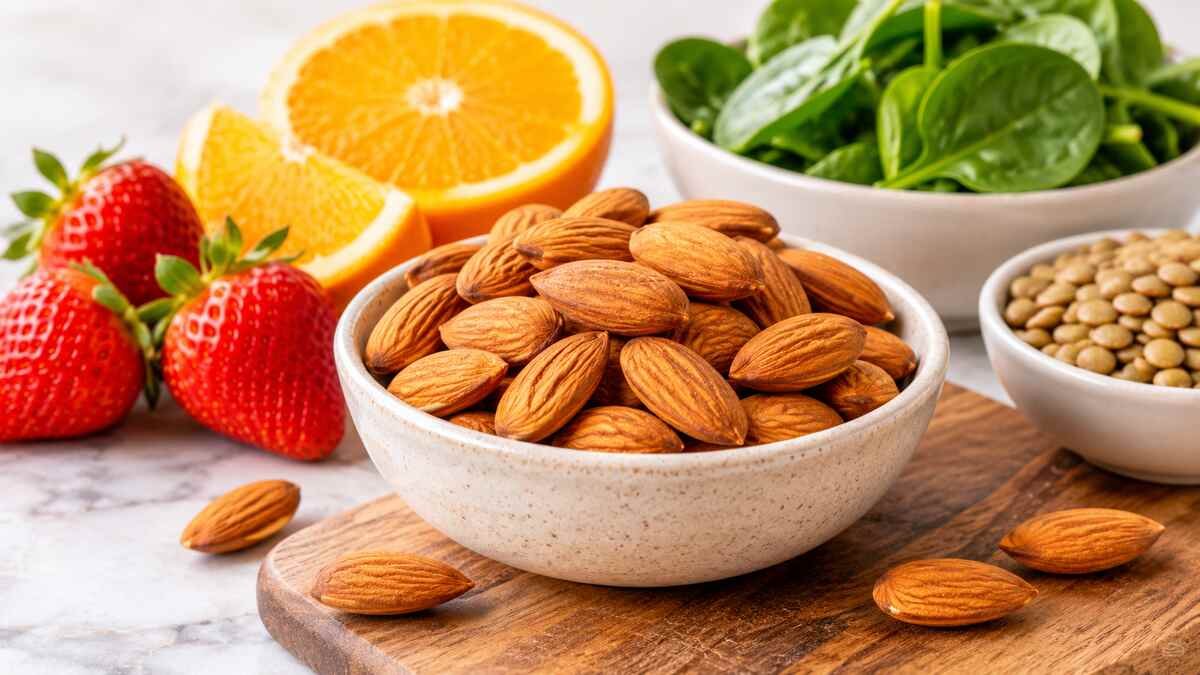
When people look for ways to eat more iron, nuts often come up. Almonds are a nutrient-rich food that contains a small amount of iron, along with magnesium, vitamin E, fiber, protein, and unsaturated fats. That naturally leads to a common question: can eating almonds help improve low iron levels?
This guide explains how much iron almonds provide, why the iron in plant foods is absorbed differently, and how to build an iron-conscious diet that includes almonds. The short answer is that almonds can contribute to your iron intake, but they are not a primary treatment for iron deficiency.
Are Almonds Good for Iron Deficiency?
Almonds can contribute to your daily iron intake, but they are not one of the best foods for correcting iron deficiency. A 1-ounce serving (about 23 almonds) provides roughly 1 mg of iron, which is modest compared with foods such as lentils, beans, iron-fortified cereals, and meat.
Almonds contain non-heme iron, the type found in plant foods. Non-heme iron is generally absorbed less efficiently than heme iron from animal foods. Eating almonds as part of a varied diet can support overall nutrition, but diagnosed iron deficiency may require iron supplements or other treatment prescribed by a healthcare professional.
In practice, almonds work best as a complement to other iron sources, not a replacement for them. If you suspect low iron, the first step is testing and medical guidance, not changing your snack routine alone.
How Much Iron Do Almonds Contain?
Almonds offer a helpful mix of nutrients, but iron is not their strongest feature. Understanding the numbers can help you set realistic expectations.
Iron content in a serving of almonds
A 1-ounce serving of almonds (28 to 30 grams, about 23 kernels) contains about 1 mg of iron, based on USDA-derived nutrition data. The exact amount varies with the variety of almond, the serving size, and the product you buy.
This is a modest contribution to daily needs. It adds up over a day when combined with other foods, but it is unlikely to close a meaningful iron gap on its own.
Almonds and daily iron requirements
How much iron you need depends on your age, sex, and life stage. The NIH lists the following U.S. Recommended Dietary Allowances for adults, as described in its iron fact sheet for health professionals:
- Adult men, 19 to 50 years: 8 mg per day
- Adult women, 19 to 50 years: 18 mg per day
- Adults 51 years and older: 8 mg per day
- Pregnancy: 27 mg per day
These are general U.S. dietary reference values for healthy people. They are not individualized treatment targets, and people with diagnosed iron deficiency may need different amounts under medical supervision. The NIH also notes that people who follow vegetarian diets may need more iron because of the lower absorption of non-heme iron.
Other nutrients in almonds
Almonds provide several nutrients that support overall diet quality. These include magnesium, vitamin E, dietary fiber, plant-based protein, and unsaturated fats. You can read more in our guide to almonds health benefits.
These nutrients are valuable, but they do not make almonds a direct treatment for iron deficiency. Think of almonds as one helpful piece of a balanced eating pattern.
Can Almonds Help Improve Iron Absorption?
Eating iron and absorbing iron are two different things. Several factors in your meal and your overall diet affect how much iron your body actually takes in.
Understanding non-heme iron
Iron in food comes in two forms: heme and non-heme. Meat, poultry, and seafood contain both types, while plant foods and iron-fortified products contain non-heme iron only, according to the NIH Office of Dietary Supplements.
Heme iron is absorbed more readily. Non-heme iron, found in nuts, beans, vegetables, and fortified grains, is more strongly influenced by what else you eat in the same meal.
Phytates and iron absorption
Almonds contain phytates (also called phytic acid), naturally occurring compounds that can bind iron and reduce how much your body absorbs. Nuts also contain polyphenols, which may influence iron absorption as well. The NIH notes that phytate and certain polyphenols in plant foods can lower non-heme iron bioavailability.
This does not make almonds unhealthy, and it does not mean you should avoid them. It simply means the iron in almonds should not be counted on as a highly absorbable source. Your overall diet and iron status matter more than any single food.
Vitamin C and iron absorption
Vitamin C (ascorbic acid) can improve absorption of non-heme iron. The NIH explains that vitamin C is one of the dietary components that enhance non-heme iron bioavailability. Our guide to foods high in vitamin C lists practical options.
Some simple combinations include:
- Almonds with strawberries
- Almonds with orange slices
- Almonds with kiwi
- Almonds served alongside a meal with beans or lentils and bell peppers
The goal is to improve absorption from the whole meal. Vitamin C does not turn the iron in almonds into a highly absorbable source on its own.
Can soaking almonds increase iron absorption?
Soaking almonds is a popular preparation method, and some people prefer the softer texture and taste. However, there is no strong human evidence that soaking reliably removes phytates or significantly improves iron absorption.
It is reasonable to treat soaking as a personal food-preparation preference, not an established strategy for treating iron deficiency.
How Many Almonds Should You Eat for Iron Deficiency?
No specific number of almonds has been shown to treat iron deficiency. What you can do is use a sensible serving as part of a varied diet.
What is a reasonable serving size?
A typical serving is about 1 ounce (28 to 30 grams), or roughly 23 almonds. This provides around 1 mg of iron and about 160 to 165 calories. A moderate portion like this fits easily into a balanced diet.
For more guidance on nut portions in general, see our article on how many nuts you should eat every day.
Can you eat almonds every day?
Yes, for most people without a tree nut allergy, almonds can be part of a regular eating routine. Variety is important, so it helps to rotate almonds with other nuts, seeds, legumes, and iron-containing foods.
Keep in mind that no almond serving has been established as a treatment dose for iron deficiency.
Are more almonds better for iron?
Not necessarily. Larger portions increase calorie intake, and because the iron in almonds is a modest, non-heme source, eating much more is not an efficient way to raise your iron.
A better approach is to pair a normal serving of almonds with more concentrated iron sources, such as lentils, beans, fortified cereals, or lean meat if you eat animal foods.
Best Ways to Eat Almonds for Iron Deficiency
The best approach is to make almonds part of meals that support iron intake overall.
Pair almonds with vitamin C-rich foods
Eating almonds alongside vitamin C-rich foods may help your body absorb more non-heme iron from the meal. Easy ideas include:
- Almonds with fresh strawberries
- Almonds with orange slices
- Almonds with kiwi or guava
- Almonds sprinkled over a lentil dish made with tomatoes
Add almonds to iron-rich meals
Almonds can add crunch and nutrients to meals that already contain more concentrated iron sources:
- Sprinkle sliced almonds over lentil soup
- Add almonds to iron-fortified breakfast cereal
- Combine almonds with chickpeas and vegetables
- Add almonds to oatmeal served with vitamin C-rich fruit
- Use unsweetened almond butter as part of a balanced snack
You can find more ideas in our guide to iron-rich foods.
Choose other iron-rich foods too
Almonds should be one part of a varied diet. Other helpful options include:
- Lentils and beans
- Iron-fortified cereals
- Tofu
- Meat, poultry, or seafood, where appropriate for your diet
- Dark green leafy vegetables
- Seeds, particularly pumpkin seeds and sesame seeds
See also our list of vegetables high in iron and our tips on how many vegetables a day to aim for.
Be mindful of tea and coffee
Tea and coffee can reduce absorption of non-heme iron when consumed with iron-containing meals. The NHS advises people with iron deficiency anemia to eat and drink less of items such as tea, coffee, and dairy around iron intake.
If you are trying to improve your iron intake, you may benefit from separating these drinks from iron-rich meals. Adopting healthy eating habits that fit your routine makes this easier to sustain.
Are There Any Risks of Eating Almonds With Iron Deficiency?
Almonds are safe for most people, but there are important points to keep in mind.
Almond allergies
Almonds are tree nuts and can cause allergic reactions in some people. If you have a known almond or tree nut allergy, avoid them. Severe allergic reactions, such as trouble breathing or swelling of the face or throat, need emergency medical attention.
Almonds are not a replacement for iron supplements
Diagnosed iron deficiency may need treatment beyond diet. According to the NHS, treatment commonly includes iron tablets once a cause has been identified, along with dietary changes.
Take supplements only as directed by a healthcare professional. Do not self-prescribe high-dose iron, since too much iron can be harmful, as the NIH explains.
Why the cause of iron deficiency matters
Iron deficiency is not always a diet problem. Possible causes include:
- Inadequate dietary iron
- Heavy menstrual bleeding
- Pregnancy-related iron needs
- Gastrointestinal blood loss
- Problems with iron absorption
The NHS notes that heavy periods and pregnancy are common causes, and that bleeding in the stomach or intestines can be an important cause in men and in women whose periods have stopped. Finding the cause is essential for choosing the right treatment.
When to seek medical advice
Talk with a healthcare professional if you have persistent fatigue, weakness, dizziness, shortness of breath, or other symptoms that may be linked to low iron. Symptoms alone cannot confirm iron deficiency, and blood tests are usually needed. Our overview of what causes fatigue explains why many conditions can look similar.
Frequently Asked Questions About Almonds and Iron Deficiency
Do almonds contain iron?
Yes. A 1-ounce serving of almonds provides roughly 1 mg of iron, according to USDA-based nutrition data. That is a modest amount compared with several other iron-rich foods.
Are almonds good for iron deficiency anemia?
Almonds can add to your dietary iron intake, but they are not enough to treat iron deficiency anemia on their own. People with diagnosed anemia should follow the treatment plan from their healthcare professional, as outlined by the NHS.
How many almonds should I eat daily for iron?
A typical serving of about 23 almonds provides approximately 1 mg of iron. This can contribute to your daily intake, but no almond serving has been established as a treatment for iron deficiency.
Do almonds increase hemoglobin?
Almonds provide some iron, which your body uses to make hemoglobin. However, there is not enough evidence to conclude that eating almonds alone reliably raises hemoglobin levels.
Are soaked almonds better for iron deficiency?
Soaked almonds may appeal because of texture or taste. There is no strong human evidence that soaking significantly improves iron absorption or treats iron deficiency.
Which nuts are highest in iron?
Iron content varies by nut type, variety, and serving size. Seeds, legumes, and iron-fortified foods often provide more concentrated iron than most nuts, as noted in the NIH iron fact sheet.
Can I eat almonds with iron supplements?
Almonds are a normal food that can fit into a balanced diet. However, other foods and drinks can affect how well you absorb iron supplements, so follow the directions from your healthcare professional or the product label.
Do almonds help with fatigue caused by iron deficiency?
Almonds provide nutrients that support general health, but they are not a reliable treatment for fatigue caused by low iron. The underlying cause of the fatigue should be evaluated and treated.
The Bottom Line: Are Almonds Good for Iron Deficiency?
Almonds contain a modest amount of iron, and it is non-heme iron, which is less readily absorbed than heme iron. They can contribute to your iron intake but should not be considered a primary treatment.
Pairing plant-based iron sources with vitamin C can help improve absorption. Almonds can be part of an iron-conscious diet, but a variety of iron-rich foods and appropriate medical care matter more for correcting iron deficiency. If you are also interested in other benefits, you may like our article on almonds and high cholesterol.
Sources
- NIH Office of Dietary Supplements. Iron: Fact Sheet for Health Professionals.
- NIH Office of Dietary Supplements. Iron: Fact Sheet for Consumers.
- NHS. Iron deficiency anaemia: treatment.
- NHS. Iron deficiency anaemia: causes.
- University Hospitals (USDA-based data). Nutrition facts: almonds, 1 oz (23 whole kernels).
Medical Disclaimer: This article is for informational purposes only and is not a substitute for professional medical advice, diagnosis, or treatment. Consult a qualified healthcare professional if you suspect iron deficiency or have been diagnosed with iron deficiency anemia. Do not start or change iron supplementation without appropriate medical guidance.
1 thought on “Are Almonds Good for Iron Deficiency? Benefits & Iron Content”
Comments are closed.