

If your nails split at the tips, peel in layers, or snap during simple tasks, you are not alone. Brittle nails are a common problem, and they can make everyday jobs like typing, opening packages, or folding laundry more frustrating than they should be. The good news is that many people can protect their nails and reduce further damage with simple habits at home.
In most cases, brittle nails come from wear and tear. Frequent handwashing, detergents, and repeated wetting and drying can weaken nails over time. Aging, nutritional deficiencies, and underlying medical conditions can sometimes play a role too, so the cause is not always the same for everyone.
This guide focuses on practical home care. You will learn what brittle nails are, what commonly causes them, ten ways to protect and relieve weak and brittle nails, and which remedies have limited evidence. You will also find out when home care is not enough and a healthcare professional should take a look.
What Are Brittle Nails?
Brittle nails are nails that split, crack, peel, or break easily. The medical term is onychoschizia, which the Canadian Dermatology Association describes as brittle, splitting, soft, or thin nails. It is a common problem that is often more frequent in women and tends to occur with aging.
Common signs include:
- Nails that split at the tips
- Peeling or flaking layers
- Nails that break easily
- Rough or uneven edges
- Nails that feel unusually dry or soft
Brittle nails can result from too little moisture or from too much. Dry, brittle nails feel hard and chip or crack easily. Nails that are overexposed to water and detergents can turn soft and peel. Either way, repeated damage can make everyday activities uncomfortable. For more on how brittle nails feel, see our guide to the signs of brittle nails.
What Causes Brittle Nails?
Knowing the likely cause helps you choose the right home care. This is a short summary; our full guide covers the common causes of brittle nails in more detail.
Frequent Exposure to Water
Repeated wetting and drying makes nails expand and shrink, which can lead to splitting, according to the Canadian Dermatology Association. Dishwashing, bathing, cleaning, and frequent handwashing all add up.
Harsh Chemicals and Cleaning Products
Detergents, household cleaners, and polish removers can dry the nail and the skin around it. Over time, repeated exposure can contribute to dryness and damage.
Excessive Manicures and Nail Treatments
Frequent gel manicures, artificial nails, aggressive filing, and polish removal may damage the nail plate, especially when products are scraped or peeled off.
Aging and Natural Nail Changes
The NHS notes that it is normal for nails to become thicker or break more easily as you get older.
Nutritional Deficiencies and Underlying Health Conditions
The NHS says nail problems can sometimes be a symptom of conditions such as psoriasis, iron deficiency anemia, or thyroid disease. The Canadian Dermatology Association adds that illness is a rare cause, with iron deficiency and thyroid disease most commonly linked. Persistent brittle nails should not automatically be blamed on a deficiency.
How to Relieve Brittle Nails at Home: 10 Practical Tips
These habits protect your nails from further damage and give new growth a better chance. They support nail health but will not instantly rebuild a damaged nail plate. If your brittle nails persist, see the section on when to talk with a doctor.
1. Moisturize Your Nails and Cuticles Regularly
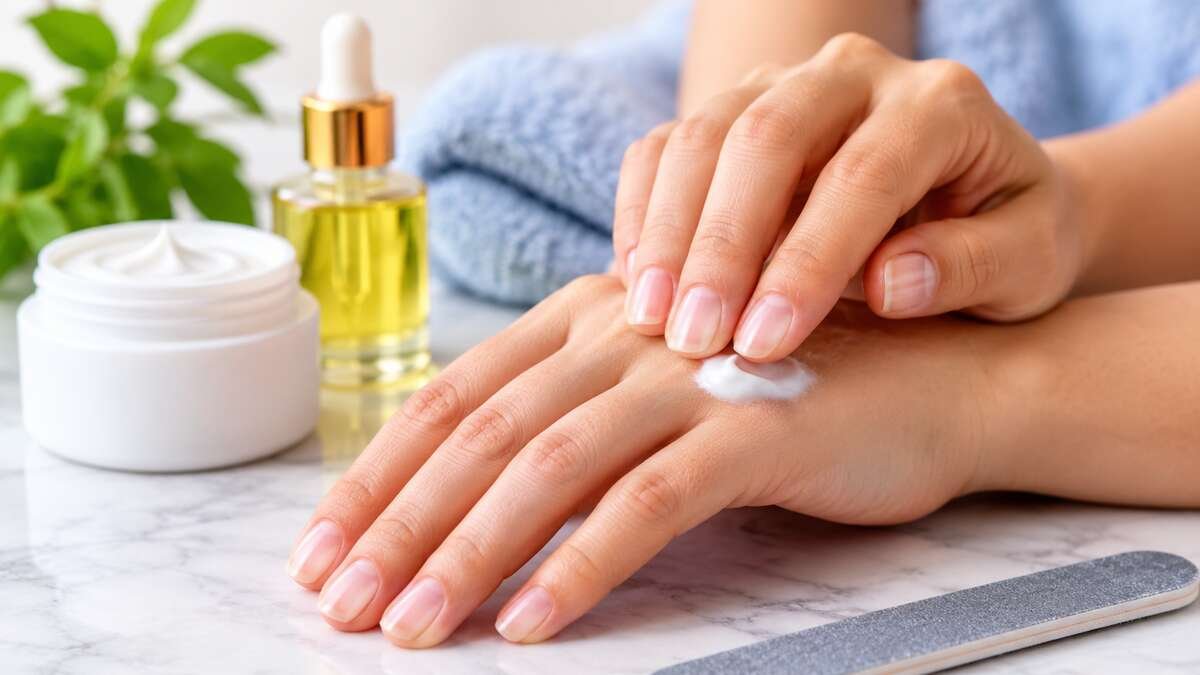
Moisturizer reduces dryness in the nail and the skin around it. The Canadian Dermatology Association recommends moisturizing hands regularly, and Mayo Clinic advises rubbing lotion into your nails and cuticles too.
A fragrance-free hand cream or a thicker ointment (such as one containing petrolatum) works well for many people. Apply it after washing your hands and again at bedtime.
2. Wear Gloves When Washing Dishes or Cleaning
Gloves limit time spent in water and detergents. The CDA and the NHS both recommend rubber gloves for dishwashing and household cleaning. Keep the inside of the gloves clean and dry, and take them off if they get damp inside.
3. Keep Your Nails Short and Smooth
Shorter nails are less likely to catch and split. Trim straight across or slightly rounded with sharp clippers. The CDA notes that filing can smooth ragged edges; use a fine, non-metal file and file in the direction of nail growth only. Avoid aggressive buffing.
4. Take a Break From Gel Manicures and Artificial Nails
Repeated cosmetic treatments can contribute to nail damage. The CDA suggests giving nails a break from manicures, polish, and polish remover. If you do wear them, remove them gently and never scrape or peel them off.
5. Avoid Harsh Nail Polish Removers
Mayo Clinic notes that acetone dries nails and suggests acetone-free removers. Remove polish less often, and use a gentle touch instead of repeated rubbing or scraping.
6. Avoid Biting, Picking, and Using Nails as Tools
Biting and picking damage the nail and the skin around it. Use a key, a coin, or a small tool to open packages or pry things instead of your fingernails.
7. Maintain a Balanced, Nutrient-Rich Diet
Nails are made of keratin, a protein, and they depend on overall nutrition. Adequate protein, iron, zinc, and a variety of other vitamins and minerals support normal nail health. Foods such as eggs, fish, beans, leafy greens, nuts, and whole grains are good choices. Supplements are not necessary for everyone and are not a substitute for treating a true deficiency. See our guide to a balanced diet.
8. Be Gentle With Your Cuticles
The cuticle helps seal the base of the nail. Mayo Clinic advises against having cuticles removed because it can lead to infection. Avoid cutting, picking, or pushing them back aggressively, and moisturize the surrounding skin instead.
9. Protect Your Nails From Repeated Wetting and Drying
Limit unnecessary soaking, and pat hands and nails dry gently after washing. Follow up with moisturizer so the nail does not dry out between washes. Our guide to dry skin offers more hydration ideas.
10. Give Your Nails Time to Grow
A damaged nail cannot repair itself overnight; healthier nail simply grows out from the base. The NHS notes that fingernails lost after an injury should grow back within about 6 months. Consistent protective habits help the new growth come in better, but results are gradual.
Do Home Remedies Really Help Brittle Nails?
Some home remedies are reasonable moisturizing steps, while others are unproven. Popular DIY ideas such as lemon juice, garlic, or apple cider vinegar have not been shown to fix brittle nails, so there is no good reason to rely on them.
Petroleum Jelly and Moisturizing Ointments
Thick ointments can reduce moisture loss and protect dry nails and the skin around them. They are a sensible, low-risk habit, but they do not permanently rebuild nail structure.
Natural Oils for Nail Care
Oils such as olive or almond oil may be used as optional moisturizers for dry cuticles and surrounding skin. Evidence that oils directly reverse nail brittleness is limited, according to a consumer health overview of natural treatments.
What About Biotin Supplements?
Biotin is a B vitamin that helps the body use carbohydrates, fats, and proteins, and it is widely marketed for hair and nails. The NIH Office of Dietary Supplements says there is little scientific evidence for these claims in people without a deficiency, and high doses can cause false results in some lab tests. The Canadian Dermatology Association likewise says there is not enough evidence to recommend over-the-counter biotin for brittle nails. Talk with a healthcare professional before taking any supplement.
Foods That Support Healthy Nails
Healthy nails depend on overall nutrition rather than any single superfood. Protein matters because nails are made of keratin. A varied diet also supplies the minerals and vitamins involved in normal growth.
- Protein: Eggs, fish, dairy, beans, and lentils. See high-protein foods.
- Iron: Beans, leafy greens, meat, and fortified cereals. See foods rich in iron.
- Zinc: Nuts, seeds, seafood, and legumes. See the health benefits of nuts.
- Other nutrients: A mix of fruits and vegetables, such as those in our guide to leafy greens.
Food alone will not resolve brittle nails caused by an underlying medical condition or by constant water and chemical exposure. If you suspect a deficiency, ask a clinician about testing rather than guessing.
When Should You See a Doctor About Brittle Nails?
Home care works for many people, but it is not always enough. Consider a medical assessment if you notice:
- Brittleness that is persistent or worsening despite good care
- Discoloration or unusual thickening
- Nails separating from the nail bed
- Pain, swelling, or redness around the nails
- Changes in several nails without an obvious explanation
- Nail changes with other unexplained symptoms, such as fatigue
Fungal infections, psoriasis, thyroid conditions, iron deficiency, and other medical issues can sometimes affect nail appearance. The NHS advises seeing a doctor if the skin around a nail is sore, red, swollen, and warm, which can signal infection. A clinician may examine your nails and recommend tests if needed.
Persistent or unusual changes should not be managed with home remedies alone. For related guidance, see our article on whether you should worry about brittle nails.
How Long Does It Take to Improve Brittle Nails?
Improvement is gradual. Protecting your existing nails can reduce new splitting within days or weeks, but healthier nail has to grow out from the base. A fingernail typically takes around six months to grow out completely, although growth rates vary, and the NHS gives about 6 months for fingernails to regrow after an injury.
Stay consistent with moisturizing, protection, and gentle trimming. Recovery time also depends on the cause, so if you see no improvement after a month or two of careful home care, consider talking with a healthcare professional.
How to Prevent Brittle Nails From Returning
Once your nails improve, keep the habits that helped:
- Keep a consistent moisturizing routine
- Wear protective gloves during wet household tasks
- Avoid excessive manicures and harsh nail treatments
- Keep nails trimmed and gently filed
- Avoid nail biting and picking
- Eat a balanced diet (see our healthy habits guide)
- Seek medical advice for recurring or unexplained nail changes
Frequently Asked Questions About Brittle Nails
How can I fix brittle nails naturally at home?
Moisturize your nails and cuticles, wear gloves for wet or chemical tasks, avoid harsh removers, and stop biting or picking. These steps, recommended by groups such as the Canadian Dermatology Association, protect nails while new growth comes in.
What is the fastest way to relieve brittle nails?
Moisturizing and reducing exposure to water and chemicals may improve comfort and protection quickly. Nail growth itself takes months, so there is no true overnight fix.
Does petroleum jelly help brittle nails?
It can help hold moisture in dry nails and surrounding skin, which makes it a reasonable protective step. It does not repair structural damage to the nail plate.
Why are my nails suddenly becoming brittle?
Common triggers include more handwashing, new cleaning products, frequent manicures, or dry weather. Nutritional or medical factors are also possible, so see a clinician if the change is sudden, widespread, or persistent. Our guide to what causes fatigue may help if you also feel unusually tired.
Can drinking more water make brittle nails stronger?
Normal hydration supports overall health, but drinking extra water is not an established treatment for brittle nails. A Cleveland Clinic dermatologist notes you cannot drink your way to more supple nails.
Should I take biotin for brittle nails?
Routine high-dose biotin is not recommended without professional guidance. The NIH Office of Dietary Supplements notes it can interfere with some blood tests, including thyroid hormone tests.
Conclusion
Brittle nails often improve when you moisturize regularly, protect your nails from water and chemicals, and handle them gently. Healthy nail growth takes time, so aim for steady habits rather than a quick fix. If changes persist, worsen, or appear with other symptoms, talk with a healthcare professional.
Sources
- Canadian Dermatology Association: Brittle nails
- NHS: Nail problems
- Mayo Clinic: Fingernails: Do’s and don’ts for healthy nails
- Mayo Clinic News Network: Self-care can strengthen weak fingernails
- Cleveland Clinic: Brittle nails: 5 tricks to keep your tips in top form
- NIH Office of Dietary Supplements: Biotin fact sheet for consumers
- EBSCO Research Starters: Natural treatments for brittle nails
Medical Disclaimer
This article is for informational purposes only and does not replace professional medical advice, diagnosis, or treatment. Consult a qualified healthcare professional about persistent or concerning nail changes, and before starting any supplement or treatment.
1 thought on “How to Relieve Brittle Nails at Home: 10 Practical Ways to Improve Nail Health”
Comments are closed.