
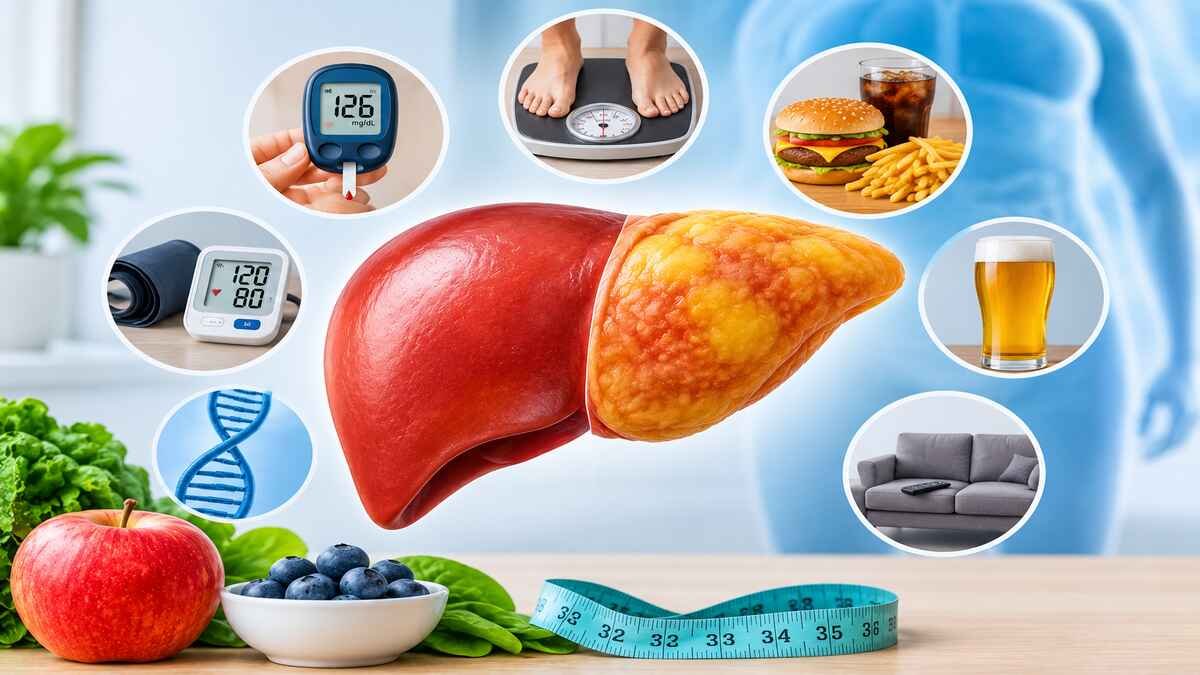

Fatty liver is a common liver condition that develops when excess fat builds up inside liver cells. It often causes no obvious symptoms, so many people do not know they have it. It is closely tied to obesity, insulin resistance, type 2 diabetes, and other metabolic problems, but it is not limited to people who are overweight.
Several factors can raise the risk, including diet, physical inactivity, genetics, alcohol, certain medications, and other medical conditions. Often, more than one factor is involved. Understanding how they fit together can help you recognize your own risk and take sensible steps to protect your liver.
This guide explains the most important fatty liver risk factors, why some people are more vulnerable than others, and when to ask a healthcare professional about evaluation. Having risk factors does not mean you have fatty liver, and the information here is general rather than personal medical advice. If you want to know what comes next after a diagnosis, see our guide to fatty liver treatment options.
What Is Fatty Liver Disease?
Understanding Fat Accumulation in the Liver
The liver helps process nutrients, store energy, and handle fats and sugars. Fatty liver, also called hepatic steatosis, occurs when too much fat collects in liver cells. This can happen when the body takes in or makes more fat than the liver can use or export.
Fatty liver usually causes few or no symptoms, according to the National Institute of Diabetes and Digestive and Kidney Diseases (NIDDK). In some people, simple fat buildup stays stable. In others, it leads to inflammation, liver cell injury, and scarring (fibrosis) over time.
Types of Fatty Liver Disease
Liver societies updated the terminology in 2023. Nonalcoholic fatty liver disease (NAFLD) is now called metabolic dysfunction-associated steatotic liver disease (MASLD), and nonalcoholic steatohepatitis (NASH) is now called metabolic dysfunction-associated steatohepatitis (MASH). Older terms still appear in many articles and medical records, as noted in the EASL, EASD, and EASO guidelines.
- MASLD: Fat buildup in the liver in people with at least one cardiometabolic risk factor, such as obesity or type 2 diabetes.
- MASH: A more serious form of MASLD with inflammation and liver cell injury.
- Alcohol-associated liver disease (ALD): Liver fat and damage linked to alcohol use.
- MetALD: A category for people who have metabolic risk factors and also drink more alcohol than the MASLD definition allows.
These types have different contributing factors, so they should not be treated as interchangeable diagnoses.
What Are the Main Risk Factors for Fatty Liver?
Fatty liver risk factors include obesity, abdominal fat, insulin resistance, type 2 diabetes, high cholesterol, elevated triglycerides, metabolic syndrome, unhealthy dietary habits, and genetic predisposition. Alcohol consumption and certain medications can also contribute to fat accumulation in the liver. People with normal body weight can develop fatty liver as well.
The major contributors covered below are:
- Excess body weight and abdominal fat
- Insulin resistance and type 2 diabetes
- High cholesterol and triglycerides
- Metabolic syndrome
- Unhealthy dietary patterns
- Physical inactivity
- Genetic predisposition
- Alcohol consumption
- Certain medications and medical conditions
Many people have several of these at once. Having more risk factors can raise the likelihood of developing fatty liver and of the disease progressing. Researchers are still studying exactly how these factors interact, so these links describe associations, not guaranteed causes.
1. Overweight, Obesity, and Excess Abdominal Fat
Excess body fat is one of the most important risk factors for metabolic fatty liver disease. The Mayo Clinic lists obesity, especially when fat is centered at the waist, among the main conditions that raise MASLD risk. The more excess weight a person carries, the higher the risk tends to be.
How Obesity Increases Fatty Liver Risk
When the body stores more energy than it uses, fat accumulates in several places, including the liver. Excess fat tissue also releases substances that promote inflammation and make cells less responsive to insulin. This insulin resistance can push the liver to take in and produce more fat.
Obesity is also linked to a higher chance of progressing from simple fat buildup to MASH and fibrosis. NIDDK notes that weight loss may shift MASH back toward simple fatty liver, while regaining weight may shift it the other way. For general guidance, see our article on healthy weight management.
Why Belly Fat Matters
Subcutaneous fat lies just under the skin. Visceral fat is stored deeper in the abdomen, around organs such as the liver and intestines. Visceral fat is more metabolically active and is more strongly linked to insulin resistance and liver fat.
Waist circumference can offer extra information beyond body mass index (BMI). Two people with the same BMI may have very different amounts of visceral fat, and therefore different metabolic risk.
2. Insulin Resistance and Type 2 Diabetes
Insulin resistance and type 2 diabetes are among the strongest drivers of fatty liver. They sit at the center of how MASLD develops.
The Connection Between Insulin Resistance and Fatty Liver
Insulin is a hormone that helps cells use glucose for energy. In insulin resistance, cells respond poorly to insulin, so the body produces more of it. Higher insulin levels can encourage fat storage and increase fat production in the liver, while also allowing more fatty acids to flow from fat tissue to the liver.
Over time, this excess fat can stress liver cells and contribute to inflammation. You can learn more in our guide to understanding insulin resistance.
Why People With Type 2 Diabetes Have Higher Risk
MASLD is very common among people with type 2 diabetes, and many do not know they have it, according to the Diabetes Canada clinical practice guideline. That guideline also notes that people with diabetes are more likely to have fibrosis, which is a key predictor of liver complications.
The relationship works in both directions. Fatty liver can worsen insulin resistance, and diabetes can worsen liver disease, because the two share metabolic mechanisms. Good blood sugar management supports both metabolic and liver health. Our overview of managing type 2 diabetes is a helpful starting point.
3. High Cholesterol and Elevated Triglycerides
Abnormal blood fats, known as dyslipidemia, often go hand in hand with fatty liver. The Mayo Clinic lists high cholesterol and high triglycerides among the conditions that increase MASLD risk.
The pattern most often seen includes:
- High triglycerides
- Elevated LDL cholesterol
- Low HDL cholesterol
Insulin resistance can change how the body handles fats. More fatty acids circulate in the blood, and the liver may take up more than it can process or export, so fat accumulates in liver cells.
High cholesterol and triglycerides frequently occur alongside obesity, diabetes, and metabolic syndrome, which makes it hard to separate their effects. For background, see our article on understanding high cholesterol.
4. Metabolic Syndrome and High Blood Pressure
What Is Metabolic Syndrome?
Metabolic syndrome is a cluster of related conditions that raise cardiometabolic risk. Common features include:
- A larger waist circumference
- High blood pressure
- Elevated blood glucose
- High triglycerides
- Low HDL cholesterol
Our guide to metabolic syndrome explains how it is diagnosed.
Why Metabolic Syndrome Raises Fatty Liver Risk
Insulin resistance underlies many of these features and is closely tied to liver fat. When several abnormalities occur together, the risk compounds. The Diabetes Canada guideline notes that multiple metabolic syndrome components, and how long they last, are associated with worse fibrosis and outcomes.
High blood pressure alone does not establish a diagnosis of fatty liver. It is better understood as one piece of a wider metabolic risk profile. Managing blood pressure, cholesterol, and blood glucose together supports overall health, including the liver. You can read more about high blood pressure on our site.
5. Unhealthy Diet and Excess Sugar Consumption
Dietary patterns can influence fatty liver risk, mostly by affecting calorie balance, body weight, and insulin sensitivity. No single food causes fatty liver on its own.
Diets High in Added Sugar and Fructose
Frequent intake of sugar-sweetened beverages, soft drinks, energy drinks, packaged sweets, and desserts can add many calories without making you feel full. Fructose, a sugar common in sweetened drinks, is processed largely by the liver and can promote fat production there. Research links high intake of sugary drinks with metabolic dysfunction and increased liver fat, although studies cannot prove cause in every case.
Refined Carbohydrates and Unhealthy Fats
Other patterns that may raise risk include:
- Refined grains such as white bread
- Highly processed foods
- Foods high in saturated fat
- Frequent fast food
- Eating more calories than your body uses
Overall dietary patterns and energy balance matter more than blaming one food. A balanced pattern rich in vegetables, whole grains, legumes, and unsaturated fats is generally better for metabolic health. For ideas, see our guides to what a healthy diet looks like and the Mediterranean diet.
6. Physical Inactivity and a Sedentary Lifestyle
A lack of physical activity is associated with a higher risk of fatty liver. Long hours of sitting, limited daily movement, and little aerobic or muscle-strengthening activity can all contribute. Inactivity also promotes weight gain and insulin resistance, which are both linked to liver fat.
Regular activity helps the body regulate glucose and improves metabolic health. It can lower liver fat, and this benefit may occur even when weight loss is small. The Mayo Clinic recommends staying active most days of the week.
Most adults can work toward at least 150 minutes of moderate-intensity activity per week, adjusted to their health and ability. See our overview of the benefits of exercise for easy ways to start.
7. Genetics and Family History
Two people with similar habits can have different fatty liver risk because of their genes. A family history of fatty liver disease or cirrhosis may signal higher susceptibility. NIDDK notes that genes are one of several factors that may make a person more likely to develop MASLD.
Researchers have identified gene variants, such as PNPLA3 and TM6SF2, that are associated with more liver fat and a higher risk of progression. These variants affect how liver cells handle fat. Routine genetic testing is not part of standard care for most people.
Genetic predisposition does not mean someone will inevitably develop fatty liver. Genetics can influence both the likelihood of developing the condition and the risk of it progressing, but lifestyle and metabolic health still matter.
8. Alcohol Consumption and Fatty Liver Risk
How Alcohol Affects the Liver
The liver breaks down most of the alcohol a person drinks. This process produces byproducts that can promote fat buildup and injure liver cells. Prolonged heavy drinking can cause inflammation, and over time may lead to fibrosis and cirrhosis.
Can Alcohol Increase Risk in People With Metabolic Conditions?
Yes, alcohol and metabolic risk factors can interact. NIDDK explains that someone with MASLD risk factors who also drinks excessively could have both conditions at the same time, and no test can easily tell how much each contributes.
This is why the newer MetALD category exists. It recognizes a continuum between MASLD and alcohol-associated liver disease, as discussed in the EASL guidelines. No specific amount of alcohol is universally safe for people with fatty liver, so ask your healthcare professional what is appropriate for you.
9. Age, Sex, and Hormonal Factors
Risk tends to rise with age, partly because metabolic risk factors accumulate over time. Patterns also differ between men and women. Women may see their risk change after menopause, although researchers are still working out how much hormonal shifts play a role compared with weight and metabolic changes.
Polycystic ovary syndrome (PCOS), which involves insulin resistance, is also associated with a higher risk of MASLD.
Age and sex should not be treated as stand-alone diagnostic clues. They interact with genetics, metabolic health, and lifestyle, and a person of any age or sex can develop fatty liver.
10. Other Medical Conditions and Certain Medications
Some less common conditions and medicines can also lead to fat buildup in the liver. NIDDK notes that fatty liver can have causes other than MASLD, which is why doctors may order tests to look for them.
Medical Conditions Associated With Fatty Liver
- Polycystic ovary syndrome (PCOS)
- Obstructive sleep apnea
- Hypothyroidism and certain other endocrine disorders
- Hepatitis C, particularly genotype 3, which can cause liver steatosis
Medications That May Contribute to Fatty Liver
Examples of medicines associated with liver fat include corticosteroids, amiodarone, tamoxifen, and methotrexate. Medication-related liver fat is not always the same as ordinary metabolic fatty liver. Do not stop a prescribed medicine on your own, because the risks of stopping may outweigh the risks of the medicine. Talk with your healthcare professional about any concerns.
Can Thin or Normal-Weight People Develop Fatty Liver?
Yes. Lean MASLD occurs in people without overweight or obesity. Body weight alone cannot determine whether someone has fatty liver.
Several factors may be involved:
- Visceral fat and insulin resistance despite a normal BMI
- Genetic predisposition
- Abnormal cholesterol and triglyceride levels
- Poor metabolic health despite a normal-looking weight
BMI cutoffs for metabolic risk can differ by ethnicity. For people of Asian descent, the MASLD definition uses a lower BMI threshold (about 23 rather than 25), because metabolic risk can be significant at a lower BMI. This is one reason weight alone is not a reliable guide.
Who Should Be Screened or Evaluated for Fatty Liver?
Some people may benefit from a medical risk assessment. The EASL guidelines suggest case-finding in people with cardiometabolic risk factors, abnormal liver enzymes, or signs of liver fat on imaging, especially when type 2 diabetes or obesity is present. This includes people with:
- Type 2 diabetes
- Obesity or abdominal obesity
- Several features of metabolic syndrome
- Persistently abnormal liver enzymes
- A family history of advanced fatty liver disease or cirrhosis
- Liver fat found incidentally on imaging
Risk assessment does not mean everyone needs an ultrasound or biopsy. Clinicians often start with a blood-based score such as FIB-4, followed by elastography when appropriate, to estimate scarring without a biopsy. Ask your healthcare professional what is right for you.
Frequently Asked Questions About Fatty Liver Risk Factors
1. What is the biggest risk factor for fatty liver?
Obesity, insulin resistance, and type 2 diabetes are major risk factors for MASLD, according to the Mayo Clinic. Their relative importance varies from person to person.
2. Can you get fatty liver without drinking alcohol?
Yes. MASLD develops in association with metabolic risk factors and does not require alcohol use. Alcohol can still add to liver injury in some people.
3. Can a person with normal weight develop fatty liver?
Yes. Lean MASLD can occur at a normal BMI, especially when visceral fat, insulin resistance, genetics, or other metabolic factors are involved.
4. Does eating too much sugar cause fatty liver?
Excess added sugar, particularly from sugar-sweetened drinks, can contribute to weight gain, metabolic dysfunction, and increased liver fat. It is usually one part of a larger pattern rather than the only cause.
5. Is fatty liver hereditary?
Genetics can influence susceptibility, and NIDDK lists genes among the factors involved. A family history does not guarantee that you will develop the condition.
6. Can fatty liver develop without symptoms?
Yes. NIDDK describes fatty liver as often a silent disease. Many people learn they have it only after blood tests or imaging done for another reason.
Final Thoughts: Understanding Your Fatty Liver Risk
Fatty liver has many contributing risk factors, and metabolic conditions play a central role. Genetics and lifestyle can interact, and a normal body weight does not eliminate risk. Recognizing your risk early can help you seek appropriate evaluation and take preventive steps. If you have concerns, talk with a qualified healthcare professional about your individual risk factors.
Sources
- NIDDK: Symptoms and Causes of NAFLD and NASH
- Mayo Clinic: Fatty Liver Disease (MASLD), Symptoms and Causes
- EASL, EASD, EASO: Clinical Practice Guidelines on the Management of MASLD (Journal of Hepatology, 2024)
- Diabetes Canada: Diabetes and MASLD in Adults, A Clinical Practice Guideline (2025)
- AASLD: Clinical Assessment and Management of MASLD
Medical Disclaimer: This article is for general education only and does not replace advice from a doctor or other qualified healthcare professional. Having a risk factor does not mean you have fatty liver, and not having one does not mean you are safe. Talk with your healthcare provider about your own risk, testing, and any changes to your diet, exercise, alcohol use, or medications. Do not stop a prescribed medicine without medical guidance. Seek medical care promptly if you notice yellowing of the skin or eyes, severe abdominal pain, or swelling in the belly or legs.
3 thoughts on “Fatty Liver Risk Factors Explained: Causes, Health Conditions & Lifestyle Habits”
Comments are closed.