
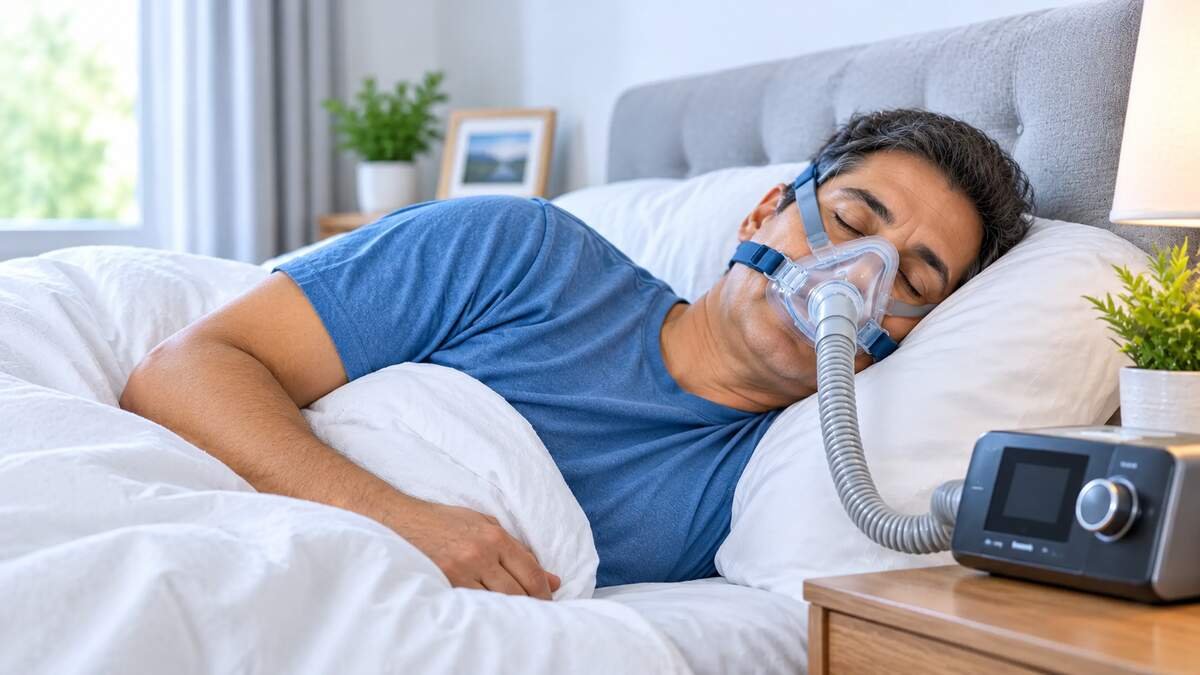

Loud snoring is easy to joke about. Waking up tired after a full night in bed is easy to blame on stress or a busy week. But when these signs come with repeated pauses in breathing, they may point to sleep apnea, and many people wonder how seriously to take it.
The honest answer is that sleep apnea can be a serious medical condition, particularly when it is moderate or severe and goes untreated. It is also a condition that can be diagnosed and managed. Understanding the risks helps you act on symptoms early rather than ignoring them.
This guide explains what sleep apnea does to the body, which health problems are linked to untreated sleep apnea, and how doctors measure severity. It also covers warning signs, diagnosis, and treatment options. Keep in mind that risk varies a great deal from person to person, and only a healthcare professional can assess yours.
Is Sleep Apnea Serious?
Yes, sleep apnea can be a serious medical condition, especially when left untreated. Repeated breathing interruptions during sleep can lower oxygen levels, disrupt sleep, and increase the risk of high blood pressure, heart disease, stroke, and daytime accidents. Early diagnosis and appropriate treatment can help reduce these risks.
Sleep apnea causes breathing to stop or become shallow many times during the night. Each interruption can pull the body out of deep sleep and may reduce the oxygen reaching the blood. Over months and years, this pattern can take a toll.
The National Heart, Lung, and Blood Institute (NHLBI) lists stroke and heart attack among the possible complications of untreated sleep apnea. It also notes that poor sleep quality can make it harder to concentrate, make decisions, and remember things.
Still, not everyone has the same symptoms or develops the same complications. Severity, existing health conditions, and individual circumstances all matter. A diagnosis of sleep apnea does not mean you will develop heart disease or stroke. It does mean the condition deserves attention.
The encouraging part is that treatment works for many people. Effective care can improve sleep quality and help manage the health risks linked to the condition.
What Is Sleep Apnea and How Does It Affect the Body?
Understanding Sleep Apnea
Sleep apnea is a sleep-related breathing disorder. During sleep, breathing repeatedly stops or becomes shallow. Each event is usually brief, but they can happen many times per night.
When breathing is interrupted, the brain senses the problem and briefly wakes the person so breathing can resume. Most people do not remember these awakenings. Over the course of a night, though, they can fragment sleep and reduce the restorative deep sleep the body needs.
Main Types of Sleep Apnea
- Obstructive sleep apnea (OSA): The most common type. The upper airway becomes blocked or narrowed during sleep, which can reduce or stop airflow.
- Central sleep apnea (CSA): The brain does not send the right signals to control breathing. This is a signaling problem, not a blockage.
- Complex sleep apnea: Also called treatment-emergent central sleep apnea. It happens when a person diagnosed with OSA develops central apnea while receiving therapy, according to Mayo Clinic.
Why Repeated Breathing Interruptions Matter
Three effects are most often discussed. First, oxygen levels can dip repeatedly during sleep. Second, sleep becomes fragmented, so a night in bed may not feel restful. Third, the heart and blood vessels may be placed under added strain as the body responds to each interruption.
For a closer look at how the condition develops, see CollectedMed’s overview of what causes sleep apnea.
Why Can Untreated Sleep Apnea Be Dangerous?
Several processes help explain why sleep apnea is linked to health problems. Researchers are still studying how they interact, and the picture differs between individuals.
- Oxygen fluctuations: Breathing pauses can cause blood oxygen to drop repeatedly during the night.
- Frequent brief awakenings: These prevent normal sleep cycles from completing.
- Stress-response activation: The body’s stress systems may switch on during each event.
- Heart rate and blood pressure changes: These shifts may occur during breathing events.
- Strain on the heart and blood vessels: Over time, repeated stress may contribute to cardiovascular problems.
- Daytime effects: Poor sleep can affect concentration, memory, mood, and alertness.
The NHLBI explains that untreated sleep apnea can strain the heart and blood vessels and may affect other organs, as described on its Living With Sleep Apnea page.
One NIH-funded analysis of about 4,500 middle-aged and older adults found that higher cardiovascular risk in people with OSA was linked mainly to lower blood oxygen levels. The NHLBI summary of the study notes that the findings need validation in future research.
Your level of risk depends on how severe the sleep apnea is, what other health conditions you have, and your overall circumstances. That is why individual evaluation matters.
7 Potential Health Risks of Untreated Sleep Apnea
The health problems below are associations, not guaranteed outcomes. Researchers have found links between sleep apnea and these conditions, but that does not prove every person with sleep apnea will develop them.
1. High Blood Pressure
Repeated oxygen drops and sleep interruptions may affect how the body regulates blood pressure. The NHLBI lists hard-to-control high blood pressure among the conditions linked to untreated sleep apnea.
A study of 664 African American adults with hypertension, reported by NHLBI, found that those with moderate or severe sleep apnea were twice as likely to have resistant hypertension. Milder sleep apnea showed no such association in that study. To learn more about blood pressure, read CollectedMed’s guide to high blood pressure.
2. Heart Disease
Nighttime breathing interruptions may place extra strain on the cardiovascular system. The NHLBI connects untreated sleep apnea with atrial fibrillation, heart attack, and heart failure. Mayo Clinic also lists heart problems and irregular heartbeats among possible complications.
Sleep apnea is a risk factor, not a guarantee. For broader context, see CollectedMed’s article on heart disease.
3. Increased Risk of Stroke
Stroke is another cardiovascular condition associated with untreated sleep apnea, according to the NHLBI. The relationship likely involves blood pressure and overall cardiovascular health. If you have symptoms of sleep apnea, a medical evaluation is a reasonable step.
4. Type 2 Diabetes and Blood Sugar Problems
Sleep disruption and intermittent low oxygen may affect metabolic health. Mayo Clinic notes that OSA is associated with insulin resistance and type 2 diabetes. The two conditions can also exist side by side. Learn more about type 2 diabetes and insulin resistance on CollectedMed.
5. Daytime Fatigue and Cognitive Problems
Excessive daytime sleepiness is one of the most common effects. Some people also have trouble with memory, concentration, and decision-making. Irritability and reduced productivity can follow. If you often wake up feeling unrefreshed, see CollectedMed’s piece on waking up tired.
6. Increased Risk of Accidents
Sleepiness can slow reaction time and weaken alertness. Mayo Clinic notes that severe daytime sleepiness may raise the risk of accidents while driving or at work. The NHLBI advises people with sleep apnea to avoid driving when they feel tired or sleepy.
If you struggle to stay awake while driving or operating machinery, talk to a healthcare professional promptly.
7. Mood and Mental Well-Being
Disrupted sleep is associated with mood changes, including irritability and low mood, and can reduce quality of life. Persistent mood symptoms deserve professional attention whatever their cause. CollectedMed explains more in its article on sleep and mental health.
Is Mild Sleep Apnea Serious?
Mild sleep apnea involves fewer breathing disturbances than moderate or severe cases, but “mild” does not automatically mean “no concern.”
Doctors commonly measure severity with the apnea-hypopnea index (AHI). It counts the average number of apneas (near-complete or complete drops in airflow) and hypopneas (partial reductions) per hour of sleep, as the Sleep Foundation explains. For adults, the commonly used categories are:
| Severity | AHI (events per hour) |
|---|---|
| Normal | Fewer than 5 |
| Mild sleep apnea | 5 to 14 |
| Moderate sleep apnea | 15 to 29 |
| Severe sleep apnea | 30 or more |
These categories are typically used for adult obstructive sleep apnea. AHI is only one part of a clinical assessment. Symptoms, oxygen levels, existing medical conditions, and overall health also influence decisions.
Some people with mild sleep apnea have significant daytime symptoms, while others with higher AHI scores feel fewer effects. That is why a healthcare professional should interpret sleep study results rather than relying on the number alone.
Warning Signs That Sleep Apnea May Be Affecting Your Health
Nighttime Warning Signs
- Loud, persistent snoring
- Repeated pauses in breathing noticed by another person
- Gasping or choking during sleep
- Restless sleep
- Frequent nighttime awakenings
- Waking with a dry mouth
Daytime Warning Signs
- Excessive daytime sleepiness
- Morning headaches
- Difficulty concentrating
- Memory problems
- Irritability
- Unrefreshing sleep
You can find a fuller list in CollectedMed’s guide to the early signs of sleep apnea.
When Symptoms Deserve Medical Attention
Repeated breathing interruptions should not be ignored. If symptoms persist, discuss them with a healthcare professional.
Not everyone with sleep apnea snores. Mayo Clinic notes that loud snoring can signal a serious problem but that not everyone with sleep apnea snores. The FDA also notes that symptoms may be less obvious in women.
Who Is at Higher Risk of Developing Serious Sleep Apnea?
Sleep apnea can affect people of different ages and body types. No single risk factor confirms a diagnosis. Factors associated with higher risk include:
- Family history of sleep apnea
- Airway and facial anatomy, such as a narrow throat
- Increasing age
- Excess body weight, one possible risk factor for OSA
- Enlarged tonsils or other airway-related conditions
- Alcohol use and smoking
- Certain medical conditions, including heart failure and prior stroke (particularly for central sleep apnea)
Mayo Clinic notes that men are two to three times more likely to have OSA, and that postmenopausal women are also at increased risk. The NHLBI lists obesity, large tonsils, and hormone changes among factors that can narrow the airway. For more detail, see CollectedMed’s article on sleep apnea risk factors.
How Is Sleep Apnea Diagnosed?
Medical Evaluation
Diagnosis usually starts with a conversation about your symptoms and medical history. Observations from a bed partner or family member can be very helpful, especially about snoring and breathing pauses. A provider will also consider related health conditions and risk factors.
Sleep Studies
The FDA states that a sleep study is needed to diagnose OSA, and it may be done in a sleep lab or at home. Two common approaches are:
- Polysomnography: An overnight sleep study, usually performed in a sleep laboratory.
- Home sleep apnea testing: A simpler test that may be appropriate for selected adults with suspected OSA.
Understanding AHI Results
The AHI summarizes how many breathing disturbances occur per hour and is used to classify mild, moderate, and severe disease. Oxygen levels and other findings also matter. Your provider will explain what your results mean for your situation. More on this process is available in CollectedMed’s guide to how sleep apnea is diagnosed.
Can Sleep Apnea Be Treated Effectively?
For many people, yes. Treatment should be personalized, and a provider will help match it to your needs. Do not stop prescribed treatment or change CPAP settings without medical advice.
CPAP Therapy
Positive airway pressure is the most common treatment, according to the NHLBI treatment page. Continuous positive airway pressure (CPAP) delivers steady air pressure through a mask to help keep the airway open during sleep. Variations include BPAP, which changes pressure between inhaling and exhaling, and APAP, which adjusts pressure automatically.
CPAP works best when used consistently as prescribed. Side effects such as congestion or dry mouth can occur, so report problems to your provider.
Oral Appliances
Custom-fitted oral devices, made by a dentist or orthodontist, can help hold the jaw or tongue forward. The NHLBI describes them as an option for people who cannot or prefer not to use CPAP. They are not right for everyone.
Lifestyle and Sleep Habit Changes
The NHLBI notes that providers may recommend lifelong habits such as:
- Regular physical activity
- Healthy sleep habits and a consistent schedule
- Limiting alcohol and caffeine, especially near bedtime
- Quitting smoking
- Working toward a healthy weight, as advised by a healthcare professional
- Sleeping on your side when appropriate
The FDA cautions that lifestyle changes may help but may not eliminate sleep apnea on their own. See CollectedMed’s tips on managing sleep apnea at home and how to improve sleep.
Surgical Options
Some people may benefit from procedures that address specific airway problems, such as tonsil removal or nerve stimulation therapy. Whether surgery makes sense depends on your anatomy and a thorough medical evaluation. Explore other approaches in CollectedMed’s overview of sleep apnea treatment options.
What Happens If Sleep Apnea Goes Untreated for Years?
Over time, untreated sleep apnea may lead to:
- Continued sleep fragmentation
- Persistent daytime fatigue
- Potential cardiovascular complications
- Possible difficulty with blood sugar regulation
- Reduced quality of life
- A greater risk of sleepiness-related accidents
The NHLBI also links untreated sleep apnea with conditions such as chronic kidney disease and metabolic syndrome. These are associations, and complications differ widely between people.
Untreated sleep apnea does not mean everyone will develop severe disease. But the longer symptoms are ignored, the more chances there are for problems to build. Regular follow-up also matters after treatment starts. The NHLBI recommends checkups to confirm treatment is working, and a repeat sleep study may be needed after significant weight gain or loss.
When Should You Seek Medical Help for Sleep Apnea?
Arrange a medical evaluation if you or someone close to you notices:
- Repeated pauses in breathing during sleep
- Loud snoring with gasping
- Persistent daytime sleepiness
- Morning headaches
- Difficulty concentrating or staying alert
Urgent safety information: Severe breathing difficulty while awake, chest pain, fainting, or stroke-like symptoms (such as sudden weakness on one side, face drooping, or trouble speaking) need urgent medical attention. Call 911 or go to the nearest emergency department rather than waiting for a routine sleep appointment.
Frequently Asked Questions About Sleep Apnea
1. Is sleep apnea a life-threatening condition?
Untreated sleep apnea can increase the risk of serious complications, including heart attack and stroke, according to the NHLBI. However, individual risk varies, and effective treatment is available. Talk to a healthcare professional about your own situation.
2. Can sleep apnea damage your heart?
Sleep apnea is associated with high blood pressure, atrial fibrillation, heart failure, heart attack, and stroke, as described on the NHLBI Living With page. Association does not mean everyone with sleep apnea will develop heart problems. Managing the condition is an important part of heart health.
3. Can you live a normal life with sleep apnea?
Many people manage sleep apnea successfully with the right diagnosis, treatment, and follow-up. Treatment plans often combine a breathing device or oral appliance with healthy sleep habits. Ongoing checkups help make sure the plan keeps working.
4. Does mild sleep apnea need treatment?
It depends. Treatment decisions consider symptoms, sleep study results, other health conditions, and a professional assessment. Some people with mild sleep apnea have meaningful symptoms and benefit from treatment, so ask your provider what makes sense for you.
5. What happens if you ignore sleep apnea?
Ongoing sleep disruption can cause persistent daytime sleepiness and make it harder to focus. Over time, untreated sleep apnea is linked to possible long-term complications such as cardiovascular and metabolic problems, per Mayo Clinic. Not everyone will experience all of them.
6. Does CPAP reduce the risks of sleep apnea?
CPAP is the most common treatment and can effectively treat obstructive sleep apnea by keeping the airway open during sleep, according to the NHLBI. It improves breathing at night, but no treatment can promise to remove every long-term health risk. Your provider can explain what to expect.
Final Thoughts: Should You Take Sleep Apnea Seriously?
Yes. Sleep apnea can be a serious health condition, and untreated sleep apnea is associated with cardiovascular and metabolic complications. Even milder symptoms deserve attention when they persist. A sleep study can confirm the diagnosis and severity, and effective treatments can improve sleep and help manage related risks.
If you suspect sleep apnea, take the first step and discuss your symptoms with a qualified healthcare professional.
Sources
- National Heart, Lung, and Blood Institute. Sleep Apnea
- National Heart, Lung, and Blood Institute. Sleep Apnea: Treatment
- National Heart, Lung, and Blood Institute. Sleep Apnea: Living With
- National Heart, Lung, and Blood Institute. NIH-funded study explains link to increased cardiovascular risks for people with obstructive sleep apnea (2023)
- National Heart, Lung, and Blood Institute. Moderate or severe sleep apnea doubles risk of hard-to-treat hypertension in African-Americans (2018)
- Mayo Clinic. Sleep apnea: Symptoms and causes
- U.S. Food and Drug Administration. Sleep apnea: consumer update
- Sleep Foundation. Apnea-Hypopnea Index (AHI)
Medical Disclaimer: This article is for informational and educational purposes only and should not replace professional medical advice, diagnosis, or treatment. If you suspect you have sleep apnea, consult a qualified healthcare professional for proper evaluation and guidance.