

Why does one person develop ulcerative colitis while another does not? Researchers are still working on the full answer. Studies have, however, identified several factors that may influence a person’s likelihood of developing this chronic inflammatory bowel disease (IBD).
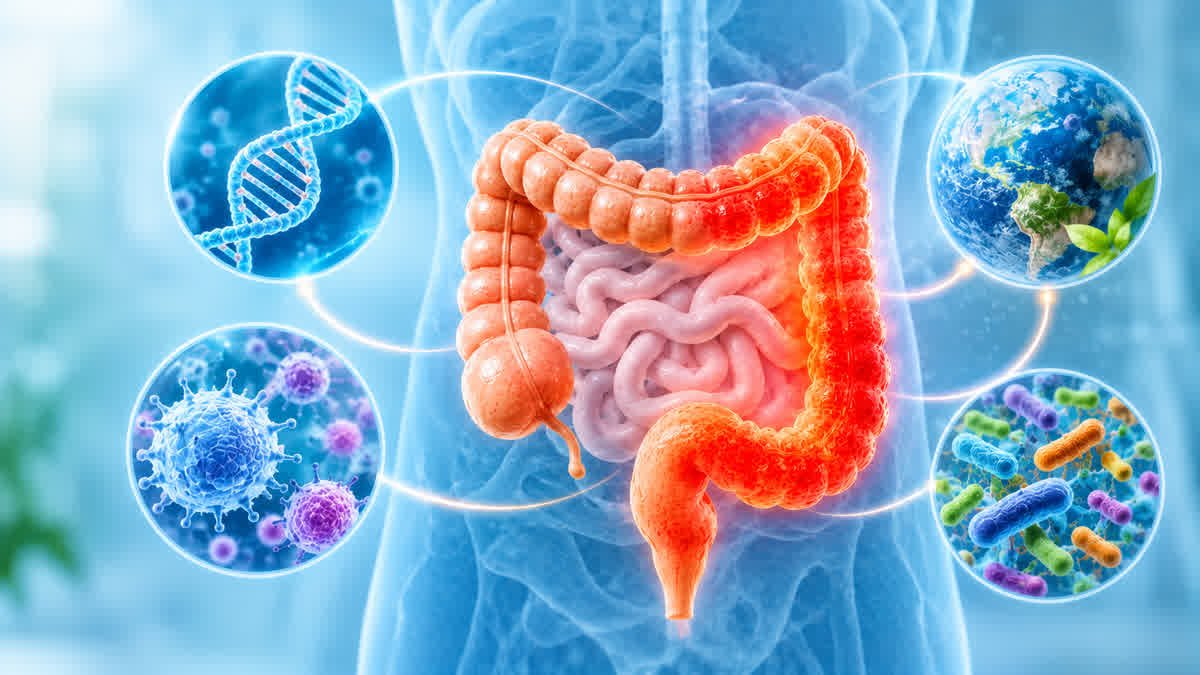
Ulcerative colitis (UC) causes long-lasting inflammation in the inner lining of the colon and rectum. Factors linked to higher risk include family history, inherited genetic variations, age, immune system activity, differences in the gut microbiome, and certain environmental influences. According to the National Institute of Diabetes and Digestive and Kidney Diseases (NIDDK), the exact cause of ulcerative colitis is still unknown.
This guide explains what each risk factor means, how strong the evidence is, and what remains uncertain. Having one or more risk factors does not mean you will develop UC, and many people with the condition have none. If you want a broader look at disease mechanisms, see our article on what causes ulcerative colitis.
What Are Ulcerative Colitis Risk Factors?
Before looking at individual factors, it helps to understand what a “risk factor” actually is. The term is often misread as a cause, and the two ideas are not the same.
Risk Factors Versus Direct Causes
A risk factor is something associated with a higher likelihood of developing a condition. It does not mean the factor produces the condition on its own. Some people with several risk factors never develop UC, while others with none receive a diagnosis.
Some risk factors are inherited, while others involve the environment or the body’s own biological processes. Researchers generally describe UC as multifactorial, meaning several influences probably interact over time. No single factor has been shown to explain the disease for everyone.
Why Researchers Study UC Risk Factors
Identifying risk patterns helps scientists understand how the disease starts. It also guides research into possible prevention strategies and helps clinicians recognize who may need closer attention when symptoms appear.
It is also worth stating clearly that ulcerative colitis is not contagious. You cannot catch it from another person. The American College of Gastroenterology notes that family, biological, and environmental factors are all relevant to understanding UC.
Main Risk Factors at a Glance
| Risk factor | What research suggests |
|---|---|
| Family history | Having a close relative with IBD is associated with increased risk |
| Genetics | Certain genetic variations may influence susceptibility |
| Age | UC is more likely to develop between ages 15 and 30, but can occur at any age |
| Ancestry | Some population groups have reported higher prevalence |
| Immune function | Abnormal immune responses contribute to intestinal inflammation |
| Gut microbiome | Microbiome differences are associated with IBD |
| Environment | Environmental exposures may interact with genetic and biological factors |
| Lifestyle and medication exposures | Some associations are being investigated, but evidence varies |
Family History and Genetics
Family history is one of the most consistently recognized risk associations for ulcerative colitis. It is still only one piece of a larger picture.
Does Ulcerative Colitis Run in Families?
UC can occur in more than one member of the same family. People who have a parent, sibling, or child with inflammatory bowel disease may have a higher chance of developing it themselves. The NIDDK lists family history as one of the factors associated with UC.
A family history of Crohn’s disease can also be relevant. Both conditions belong to the IBD group, and relatives may be affected by either one.
Still, most people with UC do not have a close relative with the condition. A family connection raises the odds somewhat, but the large majority of relatives of people with UC never develop it. The Crohn’s & Colitis Foundation provides additional background on family patterns.
How Genetics May Influence UC Risk
Researchers have identified many genetic variations associated with inflammatory bowel disease. Many of them appear to affect how the immune system responds, how well the intestinal lining acts as a barrier, and how the body interacts with gut microbes.
These variations are best understood as influences on susceptibility. They do not guarantee that someone will develop UC. Environmental and biological factors also appear to play a role, which is one reason identical genetic risk can lead to different outcomes.
Genetic testing cannot reliably predict whether an individual will develop UC. Family history can provide useful context for a conversation with your clinician, but it cannot determine your future health.
Can Someone Develop UC Without a Family History?
Yes. Many people diagnosed with ulcerative colitis have no known family history of IBD. This is why the absence of a relative with the condition should not be taken as a reason to ignore persistent digestive symptoms.
If you want to understand how family history is used alongside other information, you can read more about how IBS is diagnosed, since clinicians often consider similar questions when evaluating long-lasting bowel symptoms.
Age and Ulcerative Colitis Risk
UC can start at almost any point in life, but certain periods are more common than others.
Which Age Groups Are More Likely to Develop UC?
Ulcerative colitis can develop at any age. Diagnosis is relatively common in adolescents and young adults. NIDDK reports that UC is most likely to start between ages 15 and 30, according to its definition and facts overview.
Some people are diagnosed later in adulthood. A smaller number of children are diagnosed at younger ages, and these cases are usually evaluated by pediatric specialists.
Can Older Adults Develop Ulcerative Colitis?
Yes. UC is not a condition limited to young people, and new diagnoses can occur in middle-aged and older adults. Persistent digestive symptoms should not automatically be blamed on aging.
In older adults, bowel symptoms have many possible explanations, including infections, medication effects, diverticular disease, and other conditions. That is why a proper medical evaluation matters at any age.
Does Age Determine Disease Severity?
Age alone cannot predict how severe UC will become. The extent of inflammation in the colon, the presence of complications, other health conditions, and how a person responds to treatment all matter. Each person’s course is different.
Ethnicity, Ancestry, and Geography
Population-level research has found differences in how often UC occurs across groups and regions. These findings need careful interpretation.
Is Ulcerative Colitis More Common in Certain Populations?
UC occurs in people of all racial and ethnic backgrounds. Some studies have reported differences in prevalence between groups. People of Ashkenazi Jewish ancestry have historically been identified as having a higher risk of IBD, as described by the Crohn’s & Colitis Foundation.
These patterns probably reflect a combination of inherited and environmental influences rather than a single explanation. Ancestry should never be read as determining whether any individual will or will not develop UC.
Does Where Someone Lives Affect UC Risk?
UC has been reported in many parts of the world. Its frequency has risen in several regions during periods of industrialization and urbanization. The Centers for Disease Control and Prevention (CDC) also describes IBD as a condition influenced by both genetic and environmental factors.
Researchers are exploring how environmental exposures, dietary patterns, sanitation, healthcare access, and other population-level changes may contribute. Geographic associations do not establish a direct cause, and better diagnosis in some regions can also change how often the condition is recorded.
Immune System Function and Ulcerative Colitis Risk
The immune system is central to how UC develops, though it does not tell the whole story.
How Does the Immune System Relate to UC?
The immune system normally protects the body from harmful microorganisms. In people with UC, abnormal immune activity contributes to ongoing inflammation in the lining of the colon. The NIDDK describes an abnormal immune response as one factor that may be involved.
Researchers believe an inappropriate or exaggerated immune reaction, perhaps to normal gut bacteria, may play a part. Scientists are still studying what triggers this response in the first place.
Is Ulcerative Colitis an Autoimmune Disease?
UC is commonly described as an immune-mediated inflammatory condition. It is sometimes grouped with autoimmune diseases, but calling it a simple autoimmune disorder oversimplifies matters. Its underlying mechanisms involve genetics, gut microbes, and the intestinal barrier in addition to immune cells.
For readers searching this question, the most accurate answer is that the immune system is clearly involved, while the full explanation is more complex than a single autoimmune label suggests.
Can Immune System Problems Increase UC Risk?
Inherited immune-related differences, combined with environmental influences, may affect how susceptible a person is. Immune dysfunction is an important part of UC biology. It is not, however, a complete explanation for why one particular person develops the disease.
Having another immune-related condition does not mean you will develop UC. Doctors may still ask about your overall medical history because some immune-related conditions occur together more often than expected.
Gut Microbiome and Intestinal Health
The trillions of microorganisms in the digestive tract are one of the most active areas of IBD research.
What Is the Gut Microbiome?
The gut microbiome is the community of microorganisms that live in the digestive tract, including bacteria, viruses, and fungi. These microbes help digest certain components of food and support normal intestinal function. They also interact with the immune system and help shape the environment inside the intestines.
For general background, see our guide on how to improve gut health.
What Is the Connection Between Gut Bacteria and UC?
Studies have found differences in microbiome patterns between people with IBD and people without it. These differences may be linked to inflammation and immune activity. The NIDDK lists the gut microbiome among the factors that may contribute to UC.
What is still unclear is the direction of the relationship. Microbiome changes may contribute to disease development, may result from inflammation, or may involve both processes at once.
Can an Unbalanced Gut Microbiome Cause UC?
Microbiome differences are an area of ongoing research, not a proven single cause of ulcerative colitis. There is also no established evidence that taking probiotics, supplements, or particular foods can prevent UC by correcting the microbiome. Anyone considering these products for a medical reason should speak with a healthcare professional first.
Environmental and Lifestyle Factors
Environmental exposures are studied because genes alone do not explain why UC develops. Each factor below is described according to the strength of the evidence, and most of the research is observational. Observational studies can show associations, but they cannot prove cause and effect.
Diet and Eating Patterns
Researchers are studying how dietary patterns relate to IBD risk. Some population studies have looked at diets high in highly processed foods and at other dietary exposures. Findings vary, and no single food or ordinary eating habit has been established as the direct cause of UC.
For that reason, restrictive diets should not be presented as a way to prevent the condition. A balanced approach, like the one described in our guide to a healthy diet, supports overall health without making promises about UC.
Smoking and Ulcerative Colitis Risk
The relationship between smoking and UC is complicated. Some studies have observed differences in UC risk between people who currently smoke, people who formerly smoked, and people who never smoked. A common finding is that former smokers have a higher risk than people who have never smoked.
This does not make smoking a prevention strategy. Smoking carries serious risks to the heart, lungs, and many other organs, and it is linked to worse outcomes in related conditions such as Crohn’s disease. Nobody should start or continue smoking to influence their UC risk. If you smoke and want help quitting, a healthcare professional can offer support.
Antibiotic Exposure and Gut Health
Antibiotics can change the mix of microorganisms in the gut. Researchers are studying whether antibiotic exposure, particularly at certain periods of life such as early childhood, is associated with later IBD development.
An association does not establish that antibiotics cause UC. Antibiotics treat serious infections and are often essential. They should be used only when medically appropriate and when prescribed or recommended by a qualified professional.
Industrialization and Environmental Changes
UC has become more commonly reported in regions that have undergone rapid industrialization and urbanization. Possible explanations include changes in diet, sanitation, early-life exposures, and lifestyle. Researchers are also looking at how these exposures might interact with genetics, immune activity, and the microbiome.
Population-level research has limits. It can point to patterns worth studying, but it cannot show why a specific person developed UC.
Stress and Ulcerative Colitis Risk
Stress has not been established as a direct cause of ulcerative colitis. It may affect digestive function and can influence how someone experiences symptoms. That is different from causing the disease itself.
People should not be blamed for developing UC because of stress or emotional experiences. If stress feels hard to manage, our guide on how to reduce stress offers practical starting points.
A 2020s review of dietary, lifestyle, and environmental factors associated with ulcerative colitis highlights how often study findings differ and why caution is needed.
Medications and Other Possible Associations
Medication questions deserve a calm, balanced answer. Research here is mixed, and it should not cause unnecessary worry.
Are Certain Medications Associated With IBD Risk?
Researchers have investigated whether nonsteroidal anti-inflammatory drugs (NSAIDs), such as ibuprofen and naproxen, are linked to IBD development or to symptom flares. They have also examined antibiotic exposure and other medication-related environmental influences.
Findings differ from study to study, and some associations are not specific to UC. The American College of Gastroenterology is a helpful starting point for questions about medicines and UC.
Do Medications Directly Cause Ulcerative Colitis?
An observed association does not prove that a medication caused UC. People often take medicines because of other health problems, and those conditions or circumstances may influence the results. Scientists call this confounding, and it is a common limitation in observational research.
Do not stop a prescribed medication or avoid necessary treatment because of an article about possible risk associations. If you have concerns about a medicine, discuss them with your prescriber before making any changes.
What About Previous Surgery or Other Health Factors?
Some studies have reported that people who had their appendix removed at a young age may have a lower risk of UC in certain populations. The evidence is not consistent, and this is not a recommendation to have surgery. Appendectomy should never be considered a preventive measure.
Factors That Do Not Directly Cause UC
Misinformation about ulcerative colitis is common. These clarifications may help reduce blame and confusion.
Does Stress Cause Ulcerative Colitis?
Stress may influence digestive symptoms, but it is not established as the direct cause of UC. Mayo Clinic notes that stress and certain foods may aggravate symptoms without causing the disease.
Is UC Caused by Eating Spicy Food?
Spicy foods can bother some people’s digestive systems, especially during active symptoms. They are not established as a cause of ulcerative colitis.
Is Ulcerative Colitis Contagious?
No. UC cannot be caught from another person through physical contact, sharing food, or everyday interaction.
Does Having Digestive Problems Mean Someone Will Develop UC?
No. Diarrhea, abdominal discomfort, and changes in bowel habits are common and have many possible causes. Our overview of common digestive problems explains how varied these causes can be, and experiencing these symptoms does not automatically mean someone has UC.
Risk Factors Versus Common Misconceptions
| Factor | What readers should understand |
|---|---|
| Family history | Increases risk but does not guarantee UC |
| Stress | May influence symptoms but is not an established direct cause |
| Spicy food | Not established as a direct cause |
| Smoking | Complex association; never a prevention strategy |
| Gut bacteria | Research suggests an association, not a proven single cause |
| Genetics | May contribute but do not determine an individual’s outcome |
| Antibiotics | Exposure is being studied; association does not prove causation |
Can You Reduce or Prevent the Risk of Ulcerative Colitis?
Is Ulcerative Colitis Preventable?
There is currently no proven way to prevent UC. Researchers do not yet understand every factor that contributes to its development, so no strategy can promise protection.
What Can People Do for Their General Digestive Health?
These general habits support digestive well-being, though they are not proven to prevent UC:
- Maintain balanced eating habits, including plenty of fiber-rich foods if they suit your health needs.
- Avoid smoking.
- Use medications responsibly and according to professional advice.
- Seek medical assessment for persistent digestive symptoms.
- Discuss relevant family history with a healthcare professional.
See our guide to preventive health for broader habits that support long-term wellness.
Can Lifestyle Changes Eliminate Genetic Risk?
No. Lifestyle changes cannot remove inherited susceptibility or guarantee that UC will never develop. If someone is diagnosed, it is not a personal failure, and it is not something they caused.
When to Seek Medical Advice
Persistent diarrhea, blood in the stool, recurring abdominal pain, or unexplained changes in bowel habits deserve a medical evaluation. These symptoms can have many causes, and a clinician may recommend tests to find out what is happening. You can learn more about the early signs of ulcerative colitis and what to expect from ulcerative colitis treatment options.
Seek urgent medical care for severe abdominal pain, heavy bleeding, faintness, or signs of significant dehydration. Our article on when abdominal pain is an emergency can help you recognize warning signs. Risk factors alone should not be used to diagnose yourself.
Frequently Asked Questions
What is the biggest risk factor for ulcerative colitis?
No single factor is the biggest for everyone. Having a close relative with IBD is one of the better-recognized associations, but most people with UC have no affected relative. See the NIDDK overview.
Can ulcerative colitis run in families?
Yes, it can. A parent, sibling, or child with IBD may raise your risk somewhat, but most relatives never develop the condition.
Can someone develop UC without a family history?
Yes. Many people diagnosed with ulcerative colitis have no known family history of IBD.
Does stress increase the risk of ulcerative colitis?
Stress is not established as a direct cause of UC. It may influence how symptoms feel, so managing stress can still be a useful part of overall well-being.
Does age affect the risk of UC?
UC can start at any age, but it is more likely to develop between ages 15 and 30, according to NIDDK. New diagnoses also occur in older adults.
Can diet cause ulcerative colitis?
No single food or ordinary eating habit has been proven to cause UC. Researchers are still studying how dietary patterns may relate to IBD risk.
Is ulcerative colitis preventable?
There is currently no proven way to prevent it. General healthy habits support digestive health, but they cannot guarantee that UC will not develop.
Is ulcerative colitis contagious?
No. You cannot catch UC from another person through contact, shared food, or daily interaction.
Conclusion: Understanding Ulcerative Colitis Risk Factors
Ulcerative colitis risk is shaped by several interacting factors. Family history, genetics, age, immune activity, microbiome differences, and environmental influences are all relevant areas of research. No single factor guarantees that someone will develop the condition, and the exact cause remains unknown.
If you have concerns, the most useful step is to talk with a qualified healthcare professional about persistent digestive symptoms and your family history. Understanding your health does not require worrying about every possible risk factor. Knowledge, calm attention to symptoms, and timely medical care go a long way.
Sources
- National Institute of Diabetes and Digestive and Kidney Diseases (NIDDK). Definition & Facts of Ulcerative Colitis
- NIDDK. Symptoms & Causes of Ulcerative Colitis
- Centers for Disease Control and Prevention. Inflammatory Bowel Disease
- Crohn’s & Colitis Foundation. Overview of Ulcerative Colitis
- American College of Gastroenterology. Ulcerative Colitis
- Mayo Clinic. Ulcerative Colitis: Symptoms and Causes
- PubMed. Dietary, lifestyle, and environmental factors in ulcerative colitis (search results)
Medical Disclaimer
This article is for educational purposes only and does not replace professional medical advice, diagnosis, or treatment. Speak with a qualified healthcare professional about persistent digestive symptoms or concerns about your personal health.