
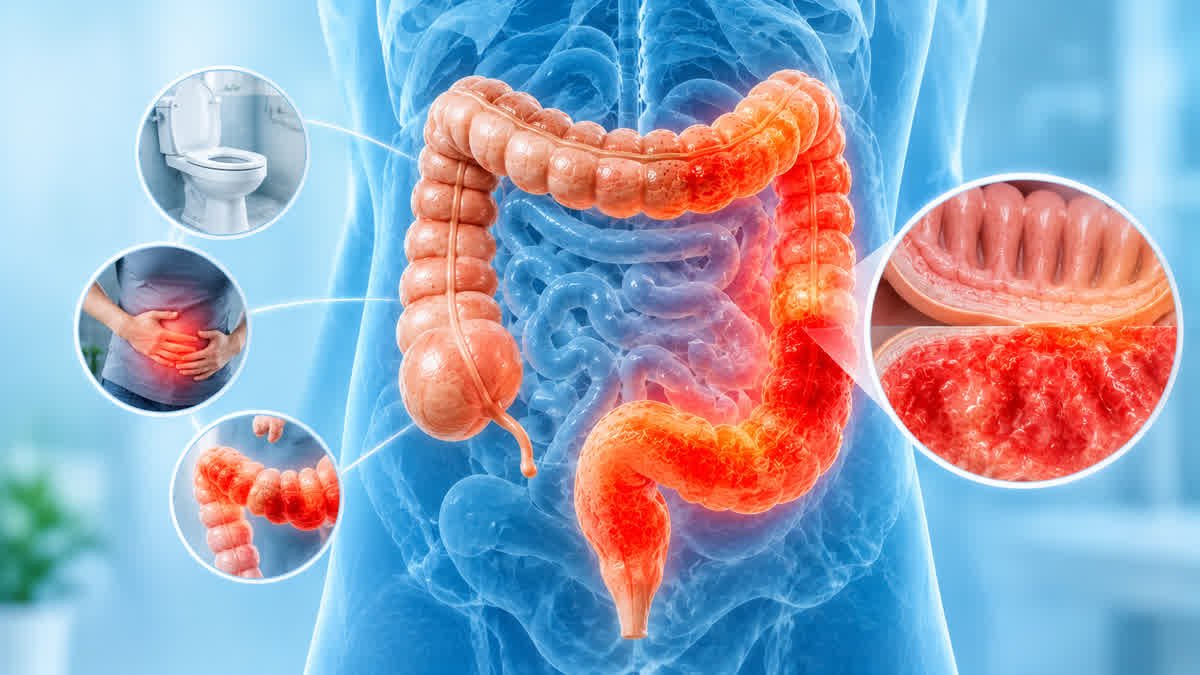

The early signs of ulcerative colitis can be easy to mistake for a common stomach bug or a passing digestive upset. Recurring diarrhea, blood in the stool, abdominal cramps, and a sudden urgent need to use the bathroom may point to inflammation in the colon. Ulcerative colitis is a chronic inflammatory bowel disease (IBD) that affects the colon and rectum.
Symptoms can develop gradually over weeks or months, or they can appear more suddenly. At first they may be mild, and they often resemble other digestive conditions such as irritable bowel syndrome (IBS) or an intestinal infection. That overlap is one reason many people wait before asking for help.
This guide explains the early warning signs, why they happen, and how they differ from other conditions. It also covers when to see a doctor and how a diagnosis is made. The goal is to help you recognize symptoms worth discussing with a healthcare professional, not to help you diagnose yourself.
What Is Ulcerative Colitis?
A little background makes the symptoms easier to understand.
Understanding Ulcerative Colitis
The National Institute of Diabetes and Digestive and Kidney Diseases (NIDDK) describes ulcerative colitis as a chronic disease in which abnormal immune reactions cause inflammation and ulcers on the inner lining of the large intestine. Inflammation usually starts in the rectum and may spread through part or all of the colon.
The condition often moves between flares, when symptoms are active, and remission, when they ease or disappear. The exact cause is not fully known, and you can read about current research in CollectedMed’s guide to what causes ulcerative colitis.
Why Early Recognition Matters
Symptoms vary from person to person, and no single symptom confirms the disease. Paying attention to patterns, such as how long symptoms last and whether they keep returning, gives your doctor useful information.
It also helps to know that “early signs” is not a formal medical stage of ulcerative colitis. It simply describes the first symptoms a person notices, which may be mild or may be more intense from the start.
What Are the Early Signs of Ulcerative Colitis?
The most common early signs of ulcerative colitis are recurring diarrhea, blood or mucus in the stool, abdominal cramping, a sudden urge to have a bowel movement, and a feeling that the bowel has not fully emptied. NIDDK lists diarrhea, rectal bleeding, and abdominal pain among the most common symptoms. Not everyone has all of them, and they do not always appear in the same order.
1. Frequent Diarrhea or Loose Stools
Diarrhea is one of the most recognizable early signs. When the lining of the colon is inflamed, it does not absorb water as well as usual, so stools become loose or watery.
Some people notice a change in how often they go before anything else. Diarrhea may happen during the day, at night, or both. The NHS advises seeing a doctor if diarrhea lasts more than 7 days, and persistent or repeating episodes are worth evaluating even if they come and go.
2. Blood in the Stool or Rectal Bleeding
Inflammation and ulcers in the intestinal lining can bleed. Blood may be mixed into the stool, appear as streaks, or show up on toilet paper. It can look bright red or darker.
Rectal bleeding should not automatically be blamed on hemorrhoids. Several digestive conditions can cause bleeding, and ulcerative colitis is only one of them. Blood in the stool is a reason to get medical advice, not a reason to assume a specific diagnosis.
3. Abdominal Pain and Cramping
Intestinal inflammation can cause cramping or discomfort in the abdomen. Many people feel cramps before a bowel movement, and the pain may ease afterward. The NHS notes that pain is often felt in the lower left part of the abdomen, though location and intensity vary.
Abdominal pain by itself has many possible causes, which you can explore in CollectedMed’s guide to what causes abdominal pain. Pain that appears together with persistent diarrhea or rectal bleeding deserves closer attention.
4. Urgent Need to Have a Bowel Movement
Bowel urgency is the sudden feeling that you must get to a bathroom right away. It is common in ulcerative colitis, particularly when the rectum is inflamed.
Repeated urgency can disrupt school, work, travel, and social plans. Many people start mapping bathrooms or avoiding certain activities without realizing the pattern may be a symptom worth mentioning to a doctor.
5. Mucus in the Stool
The inflamed lining may produce extra mucus, which can show up in or around the stool. A little mucus on its own is not unusual. Mucus that appears repeatedly, especially with diarrhea, pain, or blood, should be evaluated.
6. Feeling That the Bowel Has Not Fully Emptied
This sensation is called tenesmus. It is a constant urge to pass stool even when the bowel is empty, and it may happen after you have just used the bathroom. NIDDK lists tenesmus as one possible symptom.
Rectal inflammation is thought to contribute to the feeling. It differs from occasional constipation, in which stool is hard to pass.
Early Symptoms of Ulcerative Colitis Explained
Some early symptoms affect general well-being rather than bowel habits. They are easy to overlook, and many have other causes.
Unusual Tiredness and Fatigue
Ongoing inflammation can contribute to fatigue. Bleeding from the colon may also lead to anemia, which can cause tiredness and weakness. Nighttime bowel movements that interrupt sleep can make daytime exhaustion worse.
Fatigue has many possible explanations, as CollectedMed explains in its guide to what causes fatigue. Persistent tiredness alongside digestive symptoms is worth raising with a doctor.
Reduced Appetite
Abdominal discomfort and active inflammation can reduce appetite. Some people eat less during symptomatic periods to avoid cramps or urgency. Eating much less over time can affect nutrition, so ongoing appetite loss should be discussed with a healthcare professional.
Unexplained Weight Changes
When appetite and nutrient absorption are affected, some people lose weight without trying. The NHS lists losing weight without trying among the symptoms of IBD. Unintended weight loss needs medical evaluation, but weight change alone cannot establish a diagnosis.
Nighttime Bowel Movements
Waking up to have diarrhea or sudden urgency can be a sign of active colon inflammation. Recurring nighttime symptoms disrupt sleep and are less typical of many minor digestive upsets, so they are worth mentioning to your doctor.
How Do Early Symptoms of Ulcerative Colitis Develop?
Understanding the biology can make the symptoms feel less mysterious.
Inflammation in the Colon
Ulcerative colitis affects the inner lining of the large intestine. Persistent inflammation irritates the lining and can lead to small ulcers. The affected tissue may bleed easily and produce mucus.
How Inflammation Affects Bowel Movements
An inflamed colon does not absorb water efficiently, which contributes to frequent loose stools. Inflammation near the rectum can make it more sensitive, which increases urgency and the feeling of incomplete emptying. Irritated tissue can also cause cramping and discomfort.
Why Symptoms Differ Between Individuals
Several factors shape what a person experiences:
- The location of the inflammation
- How much of the colon is involved
- How severe the inflammation is
- Individual differences in disease activity
Symptoms may build slowly or begin suddenly, as NIDDK explains, and they range from mild to severe.
Mild vs. Severe Ulcerative Colitis Symptoms
The following descriptions are meant to show the range of symptoms. They are educational, not diagnostic criteria, and only a healthcare professional can assess severity.
What Mild Ulcerative Colitis May Look Like
Mild symptoms may include fewer bowel movements than in more active disease, occasional blood in the stool, and mild abdominal discomfort. They may come and go. NIDDK notes that mild symptoms may include fewer than four bowel movements a day with blood passing sometimes.
What Moderate Symptoms May Look Like
Moderate disease may bring more frequent diarrhea, recurring rectal bleeding, stronger cramps, fatigue, and reduced appetite. Daily life is more often affected.
What Severe Ulcerative Colitis May Look Like
Severe disease may involve frequent bloody bowel movements, significant abdominal pain, fever, marked fatigue, and signs of dehydration or anemia. NIDDK describes severe symptoms as including more than six bowel movements a day with blood most of the time.
| Symptom category | Possible presentation |
|---|---|
| Mild | Occasional bleeding, fewer bowel changes |
| Moderate | More frequent diarrhea, bleeding, and cramps |
| Severe | Frequent bloody diarrhea, significant pain, fever, and systemic symptoms |
Note: This table is for general education and is not a way to measure your own disease severity.
Early Signs of Ulcerative Colitis Outside the Digestive System
Inflammation in IBD can affect other parts of the body. The Crohn’s & Colitis Foundation reports that roughly 30% of people with IBD have persistent symptoms outside the digestive tract. These symptoms are not exclusive to ulcerative colitis and may have unrelated causes.
Joint Pain and Swelling
Some people develop joint stiffness, pain, or swelling, sometimes called IBD-related arthritis. The NHS lists painful and swollen joints as a possible symptom during flares.
Eye Irritation and Inflammation
IBD can be linked with eye inflammation, which may cause redness, irritation, pain, or sensitivity to light. Eye pain or any change in vision needs prompt assessment.
Skin Changes
Some people develop tender, red, or swollen areas of skin. These inflammatory skin changes are linked with IBD in some people but can also come from many other causes.
Mouth Ulcers
Recurring mouth ulcers are another possible sign. The NHS includes mouth ulcers among symptoms some people have during a flare. They are very common in the general population, so mouth ulcers alone say little about the colon.
Early Ulcerative Colitis Symptoms vs. Other Digestive Conditions
Several conditions cause similar symptoms, which is why testing matters.
Ulcerative Colitis vs. Irritable Bowel Syndrome (IBS)
Both can cause abdominal pain and changes in bowel habits. IBS is a functional bowel disorder and does not cause the inflammation and ulcers seen in ulcerative colitis. Rectal bleeding, ongoing inflammation, or abnormal test results call for investigation beyond an IBS label.
The NHS stresses that IBD differs from IBS even when symptoms look alike. See CollectedMed’s guides on early signs of IBS, what causes IBS, and how IBS is diagnosed.
Ulcerative Colitis vs. Crohn’s Disease
Both are forms of IBD and can look alike. Ulcerative colitis primarily affects the colon and rectum, while Crohn’s disease can affect other parts of the digestive tract and deeper layers of the bowel wall. Only testing can tell them apart.
Ulcerative Colitis vs. Gastrointestinal Infections
Infections can cause diarrhea, cramps, and sometimes bloody stools. Stool tests help distinguish infection from IBD, and the NHS notes that a stool sample can be checked for infection because gastroenteritis can have similar symptoms. For a broader look at everyday digestive complaints, see common digestive problems.
| Condition | Common symptoms | Important distinction |
|---|---|---|
| Ulcerative colitis | Diarrhea, blood, mucus, urgency | Chronic inflammation of the colon lining |
| IBS | Abdominal pain, bloating, diarrhea or constipation | Functional bowel disorder without UC-type intestinal inflammation |
| Crohn’s disease | Diarrhea, abdominal pain, fatigue | Can affect different areas of the digestive tract |
| Gastrointestinal infection | Diarrhea, cramps, sometimes fever | Often related to an infectious organism |
Note: This table is not a self-diagnosis tool. Many of these conditions overlap, and a healthcare professional must evaluate your symptoms.
When Should You See a Doctor?
Do not wait for symptoms to become severe. Getting evaluated early gives you a clearer picture and access to appropriate care.
Symptoms That Deserve Medical Evaluation
Make an appointment if you notice:
- Persistent or recurring diarrhea
- Blood in the stool
- Ongoing abdominal pain
- Frequent bowel urgency
- Unexplained fatigue or weight changes
- Digestive symptoms that interfere with daily activities
The NHS advises that you see a doctor as soon as possible if you think you have symptoms of ulcerative colitis and have not been diagnosed.
When Symptoms Need Urgent Medical Attention
Get urgent medical help if you have:
- Severe abdominal pain
- Heavy or ongoing rectal bleeding
- Bloody diarrhea with fever or significant weakness
- A fast heartbeat
- Signs of significant dehydration, such as dizziness, very dark urine, or extreme thirst
- Rapid worsening of how you feel
The NHS lists very bad or bloody diarrhea, a high temperature, and a fast heartbeat as reasons for urgent advice. If symptoms suggest a medical emergency, contact your local emergency services or go to the nearest emergency department. CollectedMed’s guide on when abdominal pain is an emergency offers more detail.
How Is Early Ulcerative Colitis Diagnosed?
So how is ulcerative colitis diagnosed? There is no single test. Doctors combine your history, an exam, lab results, and a look inside the colon. NIDDK says doctors review symptoms, medical and family history, perform a physical exam, and may order blood tests, stool tests, and endoscopy.
Medical History and Physical Examination
Your doctor will ask how long symptoms have lasted, how often they happen, whether there is a family history of IBD, and which medicines you take. They may examine your abdomen and check vital signs.
Blood Tests
Blood tests can look for anemia and for markers of inflammation such as C-reactive protein (CRP). They also help assess general health. Normal blood tests do not rule out ulcerative colitis, and abnormal ones do not confirm it.
Stool Tests
Stool samples can be checked for infections. Doctors may also use fecal calprotectin, a marker that can suggest inflammation in the intestine and help decide who needs further testing. Guidance such as the British Society of Gastroenterology’s 2025 IBD guideline discusses how these tests fit into the diagnostic pathway.
Colonoscopy and Biopsy
Colonoscopy lets a doctor view the lining of the colon and take small tissue samples (biopsies). Examining those samples under a microscope helps confirm the diagnosis and rule out other conditions. A flexible sigmoidoscopy, which examines the lower colon, may be used in some situations. Endoscopy with biopsy is central to confirming ulcerative colitis.
Can Early Treatment Help Manage Ulcerative Colitis?
Timely diagnosis allows treatment to begin sooner. Treatment aims to control inflammation, ease symptoms, and help people reach and stay in remission. The right approach depends on how much of the colon is affected and how severe the disease is, and regular monitoring helps track disease activity.
Early treatment does not guarantee remission or prevent every complication, and responses differ from person to person. Never start, stop, or change a medication based on symptoms alone. To learn what treatment can involve, see CollectedMed’s ulcerative colitis treatment options explained and the NICE patient information on ulcerative colitis.
Frequently Asked Questions
What are the first signs of ulcerative colitis?
The first signs often include recurring diarrhea, blood or mucus in the stool, abdominal cramps, and sudden bowel urgency. Symptoms vary, and NIDDK notes they differ from person to person.
Can ulcerative colitis start with mild symptoms?
Yes. Early symptoms can be mild, such as occasional blood in the stool or fewer bowel changes. Mild symptoms can still deserve evaluation, especially if they keep returning.
Is blood in the stool an early sign of UC?
It can be, but it does not automatically mean ulcerative colitis. Hemorrhoids, infections, and other conditions also cause bleeding, so any rectal bleeding should be assessed by a doctor.
Does ulcerative colitis cause frequent bowel movements?
Often, yes. Inflammation in the colon can lead to frequent loose stools and urgency. The number varies with how active the disease is.
Can you have ulcerative colitis without abdominal pain?
Yes. Some people have mainly diarrhea, bleeding, or urgency with little pain. Pain is common but not required.
How quickly do ulcerative colitis symptoms develop?
They can build gradually over weeks or months or begin more suddenly. NIDDK explains that the condition can start either way.
Can ulcerative colitis symptoms come and go?
Yes. Many people alternate between flares and remission, and remission can last weeks or years. Symptoms returning does not always mean the disease has changed.
When should you get checked for ulcerative colitis?
See a doctor if diarrhea persists, you notice blood in your stool, or ongoing pain and urgency affect daily life. Seek urgent care for severe pain, heavy bleeding, fever, or dehydration.
Conclusion
Early ulcerative colitis symptoms commonly include recurring diarrhea, rectal bleeding, mucus, abdominal cramps, and urgency. They can vary, may start out mild, and are shared by several other digestive conditions, including IBS, Crohn’s disease, and infections. Symptoms alone cannot confirm a diagnosis, so proper testing and medical assessment matter.
If digestive changes are lasting or worrying you, you do not need to figure them out alone. Talk with a qualified healthcare professional. Timely evaluation can help you get the right care and ongoing support.
Sources
- Ulcerative Colitis, National Institute of Diabetes and Digestive and Kidney Diseases (NIDDK)
- Symptoms & Causes of Ulcerative Colitis, NIDDK
- Ulcerative Colitis (all sections, including diagnosis), NIDDK
- Ulcerative colitis, NHS
- Inflammatory bowel disease (IBD), NHS
- Ulcerative colitis, NHS 111 Wales
- Ulcerative colitis, nidirect (NHS Northern Ireland)
- How to Recognize Signs of IBD and When to See a Doctor, Crohn’s & Colitis Foundation
- Ulcerative colitis: information for the public, NICE guideline NG130
- British Society of Gastroenterology guidelines on inflammatory bowel disease in adults: 2025, Gut
Medical Disclaimer: This article is for general educational purposes only and is not medical advice. It does not diagnose, treat, or replace care from a qualified healthcare professional. Always talk with your doctor about symptoms, medications, or health concerns, and contact local emergency services right away if you have severe abdominal pain, heavy rectal bleeding, high fever, or signs of dehydration.