
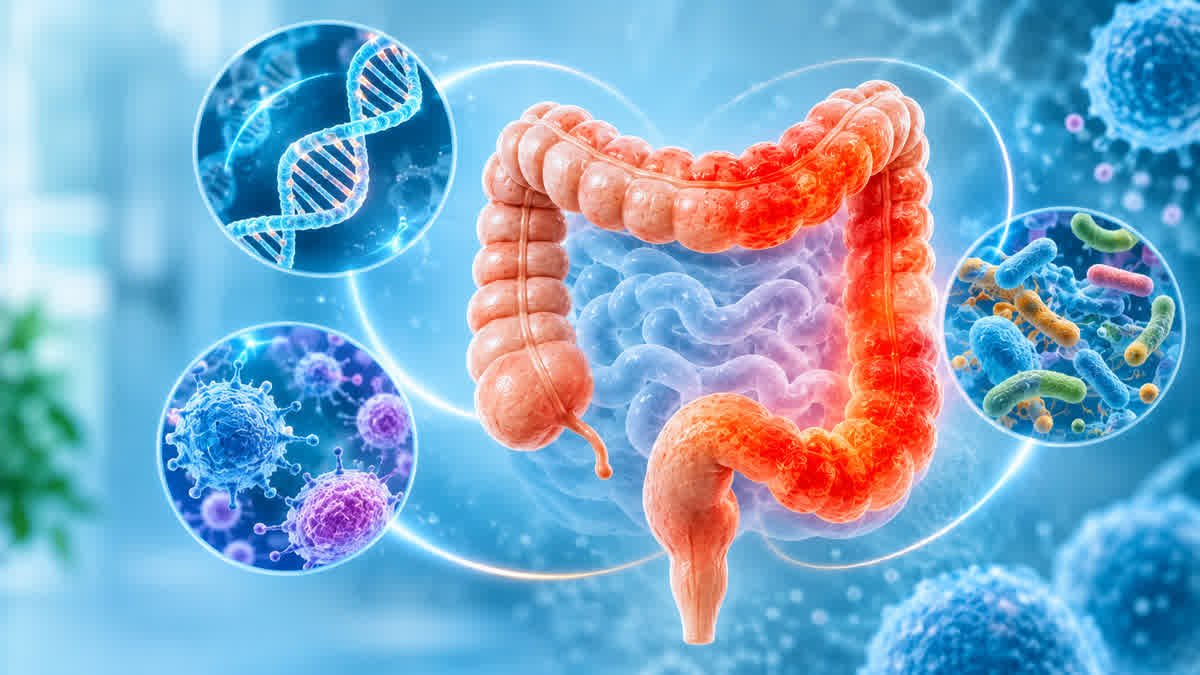

Why does ulcerative colitis develop? It is a question researchers are still working to answer. Ulcerative colitis is a chronic form of inflammatory bowel disease (IBD) that causes inflammation and ulcers in the lining of the colon and rectum, and its exact cause is not fully understood.
What scientists do know is that no single factor seems to be responsible. The leading explanation is a complex interaction between genetic susceptibility, an abnormal immune response, changes in the gut microbiome, and environmental influences. Each of these pieces may matter, but none of them has been proven to cause the disease on its own.
Just as important, ulcerative colitis is not caused by eating unhealthy food, going through a stressful period, or poor hygiene. If you or someone you love has been diagnosed, nothing here is about blame. This guide explains what is known, what is still uncertain, and how causes, risk factors, and flare-up triggers differ, so you can separate solid science from common myths.
What Is Ulcerative Colitis?
Before looking at causes, it helps to understand what the condition actually is.
Understanding Ulcerative Colitis
The National Institute of Diabetes and Digestive and Kidney Diseases (NIDDK) describes ulcerative colitis as a chronic disease in which abnormal immune reactions cause inflammation and ulcers on the inner lining of the large intestine. It is one type of IBD. Crohn’s disease and microscopic colitis are other common types.
Inflammation typically starts in the rectum and may spread upward through part or all of the colon. The condition often follows a pattern of flares, when symptoms are active, and remission, when symptoms ease or disappear. According to NIDDK, remission can last for weeks or even years.
Common Symptoms
Symptoms vary from person to person and can range from mild to severe. NIDDK lists these common signs:
- Diarrhea, which may be persistent or recurring
- Blood in the stool or rectal bleeding
- Abdominal pain and cramping
- An urgent need to have a bowel movement
- Mucus or pus in the stool
Some people also experience fatigue or a reduced appetite. Because many digestive conditions cause overlapping symptoms, it can help to read about common digestive problems and what causes abdominal pain in general. Only a healthcare professional can tell them apart.
Ulcerative Colitis vs. Crohn’s Disease
Both conditions are inflammatory bowel diseases, but they differ in where and how they affect the gut. Ulcerative colitis is limited to the colon and rectum, and the inflammation is continuous along the lining. Crohn’s disease can affect any part of the digestive tract, from the mouth to the anus, and may involve deeper layers of the bowel wall.
This is different from irritable bowel syndrome (IBS), which does not cause the visible inflammation and ulcers seen in IBD. You can learn more in CollectedMed’s guide to what causes IBS.
What Causes Ulcerative Colitis?
The exact cause of ulcerative colitis is not known. Research suggests it develops when genetic susceptibility, an abnormal immune response, gut microbiome changes, and environmental factors interact over time, leading to chronic inflammation in the colon. No single factor has been proven to cause it by itself.
NIDDK states that doctors are not sure what causes the condition, but experts think genes, abnormal immune reactions, the microbiome, and the environment may all play a role. Researchers are still studying how these pieces fit together. A scientific review in the Annual Review of Medicine describes IBD as arising from a convergence of genetic risk, environmental factors, and gut microbes, and notes that genetics alone is rarely enough to cause disease.
This is called a multifactorial condition. In plain terms, it means several ingredients may need to come together, and the recipe is probably different from person to person.
Causes, Risk Factors, and Triggers Are Not the Same Thing
Much of the confusion online comes from mixing three separate ideas:
- Underlying causes and mechanisms: the biological processes that lead to persistent inflammation, such as immune dysregulation and barrier changes.
- Risk factors: characteristics or exposures linked to a higher chance of developing the disease. A risk factor raises the odds but does not guarantee anything.
- Triggers: things that may bring on or worsen symptoms in someone who already has ulcerative colitis. A trigger is not the same as the reason the disease developed.
Keeping these categories separate is the best protection against misinformation. Having a risk factor does not mean you will develop ulcerative colitis, and many people develop it with no known risk factor at all.
Main Factors That May Contribute to Ulcerative Colitis
Researchers have identified several areas that appear to be involved. Each one is explained below, along with what remains uncertain.
1. Immune System Dysfunction
The immune system normally protects the body from harmful microorganisms. In the gut, it has a more delicate job. It must defend against dangerous germs while tolerating food and the trillions of helpful microbes that live in the intestine.
In ulcerative colitis, this balance appears to break down. NIDDK explains that abnormal immune reactions lead to inflammation in the large intestine. Immune cells and inflammatory signaling molecules called cytokines remain active in the colon lining, even when there is no obvious infection to fight. Over time, this ongoing inflammation damages the lining and produces ulcers.
The immune system is clearly central to the disease. However, researchers have not found one simple immune explanation that applies to every patient. This is one reason treatments that target the immune response work well for some people and less well for others. You can read more about those approaches in CollectedMed’s overview of ulcerative colitis treatment options.
2. Genetic Factors and Family History
Ulcerative colitis sometimes runs in families. NIDDK notes that certain genes increase the chance that a person will develop it, and people with a first-degree relative who has IBD are more likely to be affected.
Genome-wide studies have linked more than 240 genetic regions to IBD, and many of them are shared between ulcerative colitis and Crohn’s disease. Several of these genes influence how the immune system is regulated and how well the intestinal lining works as a barrier.
Still, ulcerative colitis is not inherited through a single gene in a simple, predictable way. Many people with the condition have no close relatives with it. Each gene variant adds only a small amount of risk, and most people who carry them never develop the disease.
3. Gut Microbiome Imbalance
The gut microbiome is the community of bacteria, viruses, and fungi that lives in the digestive tract and helps with digestion. It also communicates constantly with the immune system.
NIDDK reports that studies have found differences between the microbiomes of people who have IBD and those who do not. Researchers often describe this as dysbiosis, meaning a shift in the balance and variety of gut microbes. Some studies suggest people with ulcerative colitis tend to have less microbial diversity.
The key question is which comes first. Does an altered microbiome help trigger inflammation, or does inflammation change the microbiome? The evidence suggests the relationship may run in both directions. No single bacterium has been shown to cause ulcerative colitis, and a microbiome difference does not by itself prove cause.
4. Intestinal Barrier Dysfunction
The lining of the colon works like a protective wall. It allows nutrients and water to pass through while limiting how much contact the immune system has with microbes and their byproducts.
A review in F1000Research describes an impaired epithelial barrier as a factor in ulcerative colitis. If the barrier is weakened, the immune system may be exposed to more microbial material, which could encourage inappropriate immune activation and inflammation. Some of the genes linked to ulcerative colitis are involved in barrier function.
This remains an active area of research. Barrier dysfunction is considered an important piece of the puzzle, not a single confirmed cause.
5. Environmental Influences
Environmental factors are thought to interact with genes and the immune system. Researchers have noticed several patterns:
- Geographic differences: UC is more common in industrialized regions, and rates have been rising in many newly industrialized countries.
- Urbanization and lifestyle change: The F1000Research review links westernization factors such as urban living, pollution, diet changes, and antibiotic use with ulcerative colitis, though these links do not prove direct cause.
- Early-life exposures: Factors in infancy and childhood, including how the microbiome first develops, are being studied.
- Medication exposures: Some medications, including certain antibiotics and anti-inflammatory pain relievers, have been associated with IBD in some studies.
These are associations found in population studies. They do not show that any one exposure directly causes ulcerative colitis in an individual.
Summary of Potential Contributing Factors
| Potential contributing factor | How it may be involved |
|---|---|
| Genetic susceptibility | May increase the likelihood of developing UC |
| Immune system dysfunction | May contribute to persistent intestinal inflammation |
| Gut microbiome changes | May influence intestinal and immune system interactions |
| Intestinal barrier dysfunction | May increase exposure to microbial components |
| Environmental influences | May interact with genetic and immune-related factors |
| Medication exposures | Some medications have been associated with IBD in research |
Note: These are potential contributing factors, not individually proven causes. Researchers believe they work together, and their relative importance likely differs from person to person.
Does Genetics Play a Role in Ulcerative Colitis?
Genetics is one of the most common concerns readers raise, especially those with relatives who have IBD.
Is Ulcerative Colitis Hereditary?
Genetics contributes to susceptibility, but ulcerative colitis is not purely hereditary. Having a parent or sibling with IBD can raise your chances compared with the general population. However, genetic predisposition does not guarantee that the disease will develop.
Twin research supports this idea. Even identical twins, who share the same DNA, often do not both develop ulcerative colitis, which suggests that non-genetic factors also matter.
Can You Develop UC Without a Family History?
Yes. Many people with ulcerative colitis have no known relatives with the condition. Genetic susceptibility can combine with immune-related and environmental factors in people with no obvious family pattern. Not having affected relatives does not rule out the disease.
Can Genetic Testing Predict UC?
Researchers have found hundreds of associated genetic variations, but each one carries only a small effect. Routine genetic testing is not generally used to diagnose ulcerative colitis or to predict who will get it. Diagnosis depends on symptoms, lab tests, and examination of the colon.
Can Lifestyle and Environmental Factors Affect Ulcerative Colitis?
People with a new diagnosis often search their past for something they did wrong. The evidence does not support blaming everyday choices.
Does Diet Cause Ulcerative Colitis?
No particular food has been established as the direct cause of ulcerative colitis. The Merck Manual states that diet and stress do not cause IBD. Eating too much junk food or having a “bad diet” is not considered the reason someone develops it, as patient education from UW Health also explains.
That said, researchers are studying whether long-term dietary patterns influence the gut microbiome and IBD risk. This is an active research area, and results so far are not strong enough to give firm prevention advice. Separately, some foods may worsen symptoms for certain people once the disease is present.
For general guidance, see CollectedMed’s overview of what a healthy diet looks like.
Can Stress Cause Ulcerative Colitis?
Psychological stress is not an established cause of ulcerative colitis. The Merck Manual is direct on this point: stress can lead to flare-ups and worsen symptoms, but it does not cause IBD.
The gut and brain communicate closely, which is why stress can affect how the digestive system feels and functions. Living with a chronic, unpredictable condition can also be stressful in itself. Managing stress supports overall well-being, and CollectedMed offers tips on how to reduce stress. It cannot prevent or cure ulcerative colitis.
Does Smoking Increase the Risk of UC?
The relationship between smoking and IBD is complicated and often misunderstood. In Crohn’s disease, smoking is a clear risk factor. In ulcerative colitis, population studies have found the opposite pattern: current smoking has been associated with a lower likelihood of developing it, and the F1000Research review notes that UC often presents after smoking cessation.
This does not make smoking safe or useful in any way. Smoking causes cancer, heart disease, lung disease, and many other serious harms. No one should smoke to try to prevent or treat ulcerative colitis, and the research findings do not apply to every individual. If you smoke and want to quit, quitting is the right decision for your health, and a healthcare professional can help you do it safely.
Can Medications or Infections Cause UC?
Some medications have been associated with IBD risk or symptom changes in research, including certain antibiotics and nonsteroidal anti-inflammatory drugs (NSAIDs). These are associations, not proof that a medication caused the disease. Never stop a prescribed medication without talking to your doctor.
Infections are a different matter. Some bacterial and parasitic infections can cause bloody diarrhea that looks very much like ulcerative colitis. This is called infectious colitis, and it is a separate condition that usually resolves with appropriate treatment. This is why doctors often order stool tests to rule out infections before confirming a diagnosis of ulcerative colitis.
What Can Trigger Ulcerative Colitis Flare-Ups?
This is where many articles blur an important line. What causes ulcerative colitis to develop is not necessarily the same as what makes symptoms worse in someone who already has it.
Understanding UC Flare-Ups
A flare-up is a period when symptoms return or worsen after a stretch of milder symptoms or remission. A flare reflects increased disease activity in a condition that is already present. It does not mean something new caused the disease.
Possible Factors Associated With Flare-Ups
The Crohn’s & Colitis Foundation and other expert sources identify several factors that may be linked to flares in some people:
- Gastrointestinal infections, which can irritate an already inflamed colon.
- Skipping or stopping prescribed medication, which is a common and preventable reason symptoms return.
- Certain medications, including NSAIDs such as ibuprofen and naproxen, which the Foundation’s flare guide lists as possible triggers. Ask your doctor before using them.
- Psychological stress, which may contribute to symptom worsening in some people.
- Individual food intolerances, which may increase digestive discomfort without changing the underlying inflammation.
The same guide stresses that no single food or beverage aggravates symptoms for everyone with IBD, so each person’s pattern is individual.
Are Flare-Ups Always Caused by Something?
No. Flares can happen without any identifiable trigger. The Foundation notes that IBD may flare up for no apparent reason. Returning symptoms do not automatically mean you did something wrong, that a particular food caused inflammation, or that treatment has failed.
If symptoms return, contact your healthcare team rather than guessing at the reason. Severe symptoms need prompt care. CollectedMed explains when abdominal pain is an emergency if you are unsure what warrants urgent attention.
Is Ulcerative Colitis an Autoimmune Disease?
Ulcerative colitis is commonly described as an immune-mediated inflammatory condition. Although immune system dysfunction plays an important role, researchers have not established a single autoimmune mechanism that fully explains the disease.
The distinction matters. In classic autoimmune diseases, scientists can often point to a specific target, such as a particular protein the immune system mistakenly attacks. In ulcerative colitis, the immune response appears to be directed at the intestinal lining and its microbes, but the exact mechanism is still being worked out. Interactions with the microbiome and the intestinal barrier seem to be part of the story.
You may see ulcerative colitis called autoimmune in some sources, and that shorthand is not unreasonable for general audiences. “Immune-mediated” is the more precise term, because it reflects what is known without claiming more than the evidence supports.
Who Is More Likely to Develop Ulcerative Colitis? Risk Factors Explained
Risk factors can help explain patterns in populations, but they cannot predict what will happen to any one person.
Age
Ulcerative colitis can develop at any age. NIDDK notes it is more likely to develop in people between the ages of 15 and 30. MedlinePlus describes two peaks in onset, one at ages 15 to 30 and another at ages 50 to 70. A first diagnosis later in life is not unusual.
Family History
Having a close relative with IBD is associated with higher risk. However, family history is not required, and most people with a relative who has IBD never develop it themselves.
Geographic and Environmental Background
Disease rates differ across regions and populations, and they have risen as countries industrialize. Researchers believe environmental and genetic influences both contribute, though the specific reasons are not fully understood.
Does Gender Affect UC Risk?
Ulcerative colitis affects people of all genders. Unlike some other IBD patterns, there is no major difference in how often men and women develop it, and no sex-based risk should be assumed.
Can Ulcerative Colitis Be Prevented?
There is currently no established way to reliably prevent ulcerative colitis. MedlinePlus states that there is no known prevention for the condition. Because researchers are still investigating its causes, prevention strategies remain unproven.
A healthy lifestyle supports digestive and general health. CollectedMed’s resources on preventive health and how to live a healthy lifestyle are good starting points. These habits do not guarantee that ulcerative colitis will not develop.
People with a family history should be aware of their risk without assuming they will get the disease, and they can mention it to their doctor. Most importantly, ulcerative colitis is not something anyone should blame themselves for developing.
How Is Ulcerative Colitis Diagnosed?
Diagnosis is based on several pieces of information rather than a single test. According to NIDDK, doctors review your symptoms and medical and family history, perform a physical exam, and may order blood tests, stool tests, and endoscopy of the large intestine.
Blood tests can show inflammation or complications such as anemia. Stool tests help rule out infections. A colonoscopy or flexible sigmoidoscopy with biopsies lets doctors see the lining and examine tissue samples. Current guidelines, including the British Society of Gastroenterology’s 2025 IBD guideline and the American College of Gastroenterology’s 2025 update, support this combined approach. No single symptom or genetic test confirms ulcerative colitis.
Frequently Asked Questions
What is the main cause of ulcerative colitis?
There is no single proven cause. Researchers believe it results from a combination of genetic susceptibility, abnormal immune responses, gut microbiome changes, and environmental factors, as NIDDK describes.
Is ulcerative colitis hereditary?
Genes can increase susceptibility, and having a close relative with IBD raises the chance somewhat. But it is not inherited in a simple way, and many people with ulcerative colitis have no affected relatives.
Can stress cause ulcerative colitis?
Stress is not an established cause of ulcerative colitis. It may worsen symptoms or contribute to flares in people who already have the condition, according to the Merck Manual.
Does diet cause ulcerative colitis?
No specific food or diet has been shown to cause it. Diet is an active research area, and some foods may worsen symptoms in certain people once the disease is present.
Is ulcerative colitis an autoimmune disease?
It is better described as an immune-mediated inflammatory condition. The immune system plays a central role, but researchers have not identified one autoimmune mechanism that explains every case.
Can an infection cause ulcerative colitis?
Infections can cause colitis that mimics ulcerative colitis, which is why doctors test stool samples. Infectious colitis is a separate condition, and infection has not been shown to be the underlying cause of chronic ulcerative colitis.
Can ulcerative colitis develop suddenly?
Usually it begins gradually, but it can also start suddenly. NIDDK notes that the condition can begin gradually or start suddenly and range from mild to severe.
Can ulcerative colitis be prevented?
No reliable prevention method is currently known. Healthy habits support general wellness, but they cannot guarantee that ulcerative colitis will not develop.
Conclusion
The exact cause of ulcerative colitis remains unknown. Genetics, immune dysfunction, microbiome changes, and environmental factors appear to interact, and no one element explains every case. It also helps to remember that lifestyle factors and flare-up triggers should not be confused with the underlying cause.
Ulcerative colitis is not the result of personal failure, stress, or poor dietary choices. If you have persistent digestive symptoms such as ongoing diarrhea, blood in the stool, or abdominal pain, talk with a healthcare professional rather than trying to work out the cause yourself.
With an accurate diagnosis and a good care plan, many people achieve long stretches of remission.
Sources
- Ulcerative Colitis, National Institute of Diabetes and Digestive and Kidney Diseases (NIDDK)
- Symptoms & Causes of Ulcerative Colitis, NIDDK
- Ulcerative Colitis (all sections), NIDDK
- Ulcerative Colitis, MedlinePlus (National Library of Medicine)
- What Is Inflammatory Bowel Disease? Merck Manual Consumer Version
- Ulcerative colitis: Recent advances in the understanding of disease pathogenesis, F1000Research (2020)
- Genetic and Epigenetic Factors in Ulcerative Colitis: A Narrative Literature Review, Genes (2025)
- Gut microbiota in inflammatory bowel disease, Annual Review of Medicine
- British Society of Gastroenterology guidelines on inflammatory bowel disease in adults: 2025, Gut
- ACG Clinical Guideline Update: Ulcerative Colitis in Adults (2025 summary), American College of Gastroenterology
- Managing Flares and Other IBD Symptoms, Crohn’s & Colitis Foundation
- Myths About Inflammatory Bowel Disease (IBD), UW Health
Medical Disclaimer: This article is for general educational purposes only and is not medical advice. It does not diagnose, treat, or replace care from a qualified healthcare professional. Always talk with your doctor about symptoms, medications, or health concerns, and seek urgent care right away if you have severe abdominal pain, heavy rectal bleeding, high fever, or signs of dehydration.
3 thoughts on “What Causes Ulcerative Colitis? Genetics, Immune System & More”
Comments are closed.