
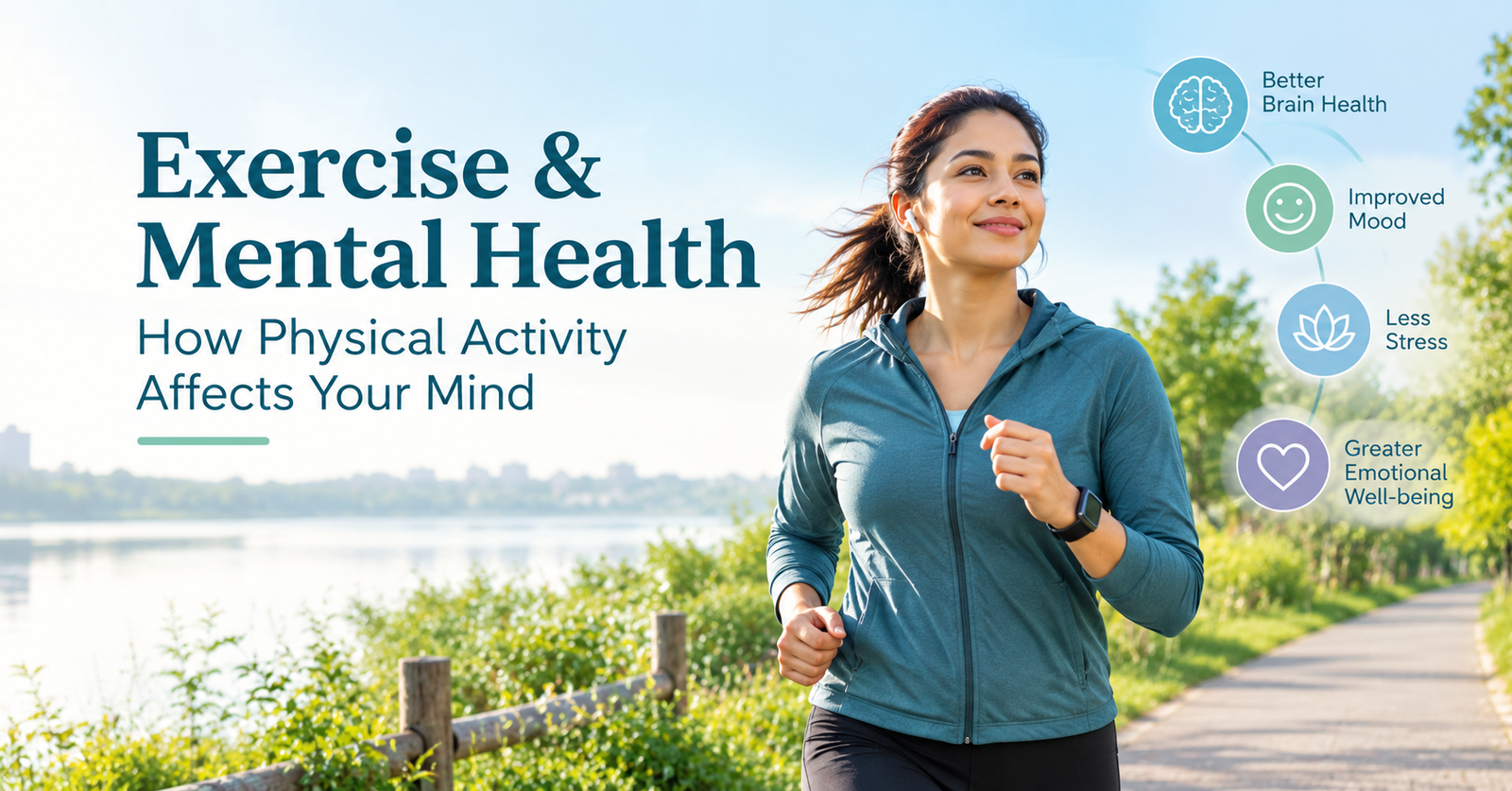

Exercise benefits far more than your physical health. Regular physical activity can improve mood, reduce short-term feelings of anxiety, support better sleep, improve cognitive function, and lower the risk of depression.
According to the CDC, some brain and mental health benefits of physical activity can occur immediately after a single session, while regular activity over time is associated with lower depression risk and improved sleep. Exercise can support mental health in real, measurable ways, but it isn’t a universal replacement for therapy, medication, or other professional treatment.
Important: This article is for general information only and is not a substitute for professional medical advice, diagnosis, or treatment.
What Is the Connection Between Exercise and Mental Health?
Physical activity affects the body and mind together, touching brain health, mood regulation, stress response, sleep, cognitive function, social connection, and everyday self-confidence.
The World Health Organization (WHO) states that regular physical activity can reduce symptoms of depression and anxiety while supporting thinking, learning, and overall well-being. These benefits are well documented, though how strongly they apply, and for how long, varies from person to person.
Physical activity is also one of the most consistently supported habits for long-term heart health and diabetes prevention, which makes it a habit with benefits that extend well beyond mood alone.
How Does Exercise Affect the Brain?
Several mechanisms likely contribute to exercise’s mental health benefits, though the science is still evolving in some areas.
Brain and Nervous System Effects
Physical activity is associated with measurable changes in brain function and cognition over time, including areas involved in mood and memory.
Stress Response
Regular movement may help the body manage its physical stress response more effectively, which can translate into feeling calmer and more resilient during stressful periods.
Sleep
Exercise can support sleep quality, which is closely tied to mental health in its own right. The CDC reports that physical activity can improve sleep quality in adults.
Social Connection
Group exercise, walking with friends, team sports, and community fitness activities all create natural opportunities for social interaction, which supports mental health independently of the physical activity itself.
Can Exercise Improve Mood?
Physical activity can provide both short-term and longer-term mental health benefits. In the short term, people often notice feeling better after activity, reduced tension, and a sense of accomplishment. Over time, regular activity is linked to more stable, improved emotional well-being.
Exercise won’t make everyone feel happier after every single workout, and that’s normal. The benefit tends to come from consistency over time, not from any one session producing a dramatic mood shift.
Exercise and Anxiety
Physical activity may help reduce anxiety symptoms through several possible activities, including walking, running, cycling, swimming, strength training, yoga, and other moderate aerobic activity.
WHO recommends considering structured physical exercise for adults with generalized anxiety disorder or panic disorder, though this recommendation is conditional and based on lower-certainty evidence than some other treatments.
Exercise can be part of anxiety management, but people with significant anxiety symptoms may also need evidence-based psychological or medical treatment alongside it, not instead of it.
Exercise and Depression
Regular physical activity is associated with fewer depressive symptoms for many people, and consistency tends to matter more than intensity or perfection.
WHO recommends physical activity as part of treatment for adults with depressive episodes who have inactive lifestyles, noting that for moderate or severe depression, it’s generally used alongside antidepressants or psychological treatment rather than as a standalone fix.
Exercise doesn’t cure depression. It’s more accurate to say exercise may help reduce depressive symptoms and can be a genuinely valuable part of a broader treatment plan.
Exercise and Stress
Physical activity is a practical tool for everyday stress management. Options include walking breaks, outdoor activity, strength training, stretching, yoga, recreational sports, and even short activity sessions worked into a busy workday.
Exercise isn’t a guaranteed solution for chronic stress, but it’s a genuinely useful piece of a broader approach. Our guide on how to reduce stress covers additional techniques that work well alongside physical activity.
Exercise and Sleep
Physical activity and sleep quality are closely connected, and better sleep in turn supports emotional health. The CDC reports that physical activity can improve sleep quality, while consistent daytime movement supports healthier sleep-wake routines overall.
Our guide on sleep and mental health covers this relationship in more depth, including how sleep and mood affect each other in both directions.
What Types of Exercise Are Best for Mental Health?
There’s no single “best” exercise for mental health. Different activities offer different benefits, and the best choice is generally whichever one you’ll actually do consistently.
| Exercise Type | Potential Mental Health Benefits |
|---|---|
| Walking | Accessible, low barrier to entry |
| Running | Aerobic fitness and mood support |
| Cycling | Cardiovascular activity and outdoor movement |
| Swimming | Full-body aerobic activity |
| Strength Training | Muscle strength and physical confidence |
| Yoga | Movement, flexibility, and relaxation |
| Group Sports | Physical activity plus social interaction |
| Dancing | Movement, enjoyment, and social connection |
According to WHO guidelines, different forms of physical activity, including aerobic activity, walking, muscle-strengthening exercise, and yoga, can all provide mental health benefits.
How Much Exercise Do You Need for Mental Health?
For adults, WHO recommends 150 to 300 minutes of moderate-intensity aerobic activity per week, or an equivalent amount of vigorous activity, alongside muscle-strengthening activity.
That number can feel daunting if you’re starting from zero. Some physical activity is genuinely better than none. The CDC confirms that adults gain health benefits from any amount of moderate- to vigorous-intensity activity, with the full recommended amount simply providing greater benefit on top of that.
Can a Short Workout Help Your Mental Health?
Yes. Even brief periods of activity can offer real benefits, including a 10-minute walk, a short stretching session, a brief bodyweight workout, a walk during a work break, taking the stairs, or a short bike ride.
The CDC notes that some benefits of physical activity occur immediately, and any amount of activity can provide some health benefit. You don’t need a full workout to see value from moving your body.
How to Start Exercising for Better Mental Health
Getting started matters more than getting it perfect.
Start Small
You don’t need an ambitious workout schedule right away. A short, manageable routine you’ll actually keep is far more valuable than an intense one you’ll abandon after a week.
Choose Something Enjoyable
Pick activities you’re actually likely to continue, not just ones that seem most “effective” on paper.
Set Realistic Goals
Focus on consistency rather than perfection. Missing a day doesn’t undo your progress.
Add Movement to Daily Life
WHO notes that physical activity includes transportation, work, recreation, sports, and everyday activities, not just formal workouts. Walking more, gardening, cycling, doing household tasks, and taking the stairs all count.
Increase Gradually
If you’re currently inactive, build up activity gradually rather than jumping straight into an intense routine. Our overview of the benefits of exercise covers additional practical guidance for building a sustainable routine.
Exercise When You Feel Depressed or Unmotivated
Depression can make even small amounts of motivation genuinely difficult to access, and low energy or fatigue often makes exercise feel like one more overwhelming task.
A few realistic strategies can help:
- Start with just 5 to 10 minutes
- Choose low-effort movement over an intense workout
- Exercise with a friend for accountability
- Schedule activity at a consistent time of day
- Focus on completing the activity, not the intensity
- Celebrate consistency, not perfection
Lack of exercise doesn’t cause depression, and struggling to exercise while depressed isn’t a personal failing. It’s a genuine symptom of the condition itself.
Exercise and Specific Mental Health Conditions
Exercise interacts differently with different mental health conditions, and it’s worth understanding your specific situation.
Exercise and Anxiety
Physical activity may help reduce anxiety symptoms and support broader stress management, though it works best alongside other treatment for significant anxiety.
Exercise and Depression
Exercise can meaningfully reduce depressive symptoms and is often recommended as part of a broader treatment approach, particularly for people with inactive lifestyles.
Exercise and ADHD
Physical activity may support overall well-being, routine, and focus for people with ADHD, but exercise doesn’t replace ADHD treatment, including medication or behavioral strategies when those are appropriate.
Exercise and Bipolar Disorder
Physical activity can be a healthy part of a daily routine for people with bipolar disorder, though maintaining consistent sleep and following prescribed treatment remain essential alongside it.
Exercise and Stress
Movement is one practical, accessible tool for managing everyday stress, though it works best as part of a broader stress-management approach rather than a stand-alone fix.
Can Exercise Replace Therapy or Medication?
Not necessarily. Exercise can genuinely complement professional treatment, but whether someone needs psychotherapy, medication, or another intervention depends on their specific symptoms and diagnosis.
WHO specifically describes physical activity as an adjunct to psychological or medication treatment for moderate-to-severe mental health conditions, not a replacement for them. Our guide on what therapy is and how it works covers what professional treatment actually involves, if you’re weighing your options.
Exercise and Mental Health: Common Mistakes to Avoid
A few patterns can undermine the mental health benefits of exercise:
- Starting too intensely, too fast
- Comparing your progress with other people’s
- Exercising only for weight loss rather than overall well-being (our guide to weight management covers a more balanced approach)
- Ignoring pain or injuries
- Expecting an immediate, dramatic transformation
- Using exercise to avoid seeking needed professional care
- Exercising excessively
- Neglecting sleep and recovery
Avoiding these patterns helps exercise stay a sustainable, genuinely supportive habit rather than another source of pressure.
When Should You Talk to a Mental Health Professional?
Consider professional support if you experience:
- Persistent sadness
- Severe anxiety
- Loss of interest in activities you normally enjoy
- Significant sleep disruption
- Difficulty functioning at work or home
- Persistent hopelessness
- Thoughts of self-harm or suicide
Exercise can support mental health, but it should never delay appropriate professional treatment when these symptoms are present. If you or someone you know is having thoughts of suicide or self-harm, seek urgent help immediately. In the United States, the 988 Suicide & Crisis Lifeline is available by call or text, 24 hours a day; outside the U.S., contact your local emergency number or a regional crisis service.
When Should You Talk to a Doctor Before Exercising?
People with certain medical conditions, significant symptoms, injuries, or concerns about starting vigorous exercise may benefit from speaking with a healthcare professional first. The CDC advises people managing chronic conditions to discuss an appropriate activity plan with their healthcare provider before making major changes.
Frequently Asked Questions
How does exercise affect mental health?
Exercise supports mood regulation, stress response, sleep, and cognitive function. Regular activity is associated with lower depression risk, reduced anxiety symptoms, and better overall emotional well-being.
Can exercise improve mental health?
Yes, for many people. Both single sessions and consistent, ongoing activity are linked to real mental health benefits, though exercise works best as part of a broader approach that may also include professional treatment.
Can exercise reduce anxiety?
Physical activity may help reduce anxiety symptoms, and structured exercise is a conditional recommendation for adults with generalized anxiety or panic disorder. It works best alongside other appropriate treatment for significant anxiety.
Can exercise help depression?
Yes. Regular physical activity is associated with fewer depressive symptoms and is often recommended as part of a broader depression treatment plan, particularly for people with inactive lifestyles.
What is the best exercise for mental health?
There’s no single best option. Walking, running, swimming, strength training, yoga, and group sports can all offer mental health benefits — the most effective choice is one you’ll actually do consistently.
How much exercise do I need for mental health?
Adults are generally advised to aim for 150 to 300 minutes of moderate-intensity activity per week, but any amount of activity provides some benefit. You don’t need to hit the full target to notice a difference.
Can a 10-minute workout improve mood?
Yes. Some mental health benefits of exercise occur immediately after even brief activity, and short sessions are a realistic, valuable starting point.
Does walking help mental health?
Yes. Walking is one of the most accessible forms of exercise and is associated with genuine mental health benefits, including improved mood and reduced stress.
Does exercise help with stress?
Yes. Physical activity is a practical, accessible tool for everyday stress management, though it works best alongside other stress-reduction strategies for chronic or severe stress.
Can exercise replace therapy?
Not necessarily. Exercise can complement therapy and other professional treatment, but it isn’t a guaranteed substitute, especially for moderate to severe mental health conditions.
Can exercise replace medication for depression?
Not necessarily. Exercise may help reduce depressive symptoms, but for moderate or severe depression, it’s generally used alongside medication or psychological treatment rather than instead of them.
How do I exercise when I feel depressed?
Start small, choose low-effort activities, exercise with a friend for support, and focus on consistency rather than intensity. Struggling to exercise while depressed is a symptom of the condition, not a personal failing.
Key Takeaways
- Exercise benefits both physical and mental health.
- Regular physical activity can help reduce symptoms of anxiety and depression.
- Exercise can also support sleep, cognition, and overall well-being.
- Different activities, including walking, aerobic exercise, strength training, and yoga, can all provide benefits.
- Adults should generally aim for 150 to 300 minutes of moderate activity per week.
- Any amount of activity is better than none.
- Exercise can complement professional mental health treatment but isn’t a universal substitute for it.
For a broader look at mental health, our overview of what mental health means is a useful starting point, and our collection of healthy living tips covers everyday habits that support overall well-being alongside regular activity.
Sources
- World Health Organization. Physical Activity
- Centers for Disease Control and Prevention. Benefits of Physical Activity
- Centers for Disease Control and Prevention. Health Benefits of Physical Activity for Adults
- World Health Organization. Structured Physical Exercise for Anxiety
- World Health Organization. Physical Activity for Depression
- World Health Organization. WHO Guidelines on Physical Activity and Sedentary Behaviour
- World Health Organization. WHO Guidelines on Physical Activity and Sedentary Behaviour: At a Glance
- Centers for Disease Control and Prevention. Adding Physical Activity as an Adult
- Centers for Disease Control and Prevention. Steps for Getting Started With Physical Activity
Medical Disclaimer
This article provides general health information and does not replace individualized medical evaluation or treatment. If you have concerns about your mental health, talk to a qualified healthcare professional. If you or someone you know is in crisis, contact local emergency services or a crisis line immediately.
Read our full Medical Disclaimer.