
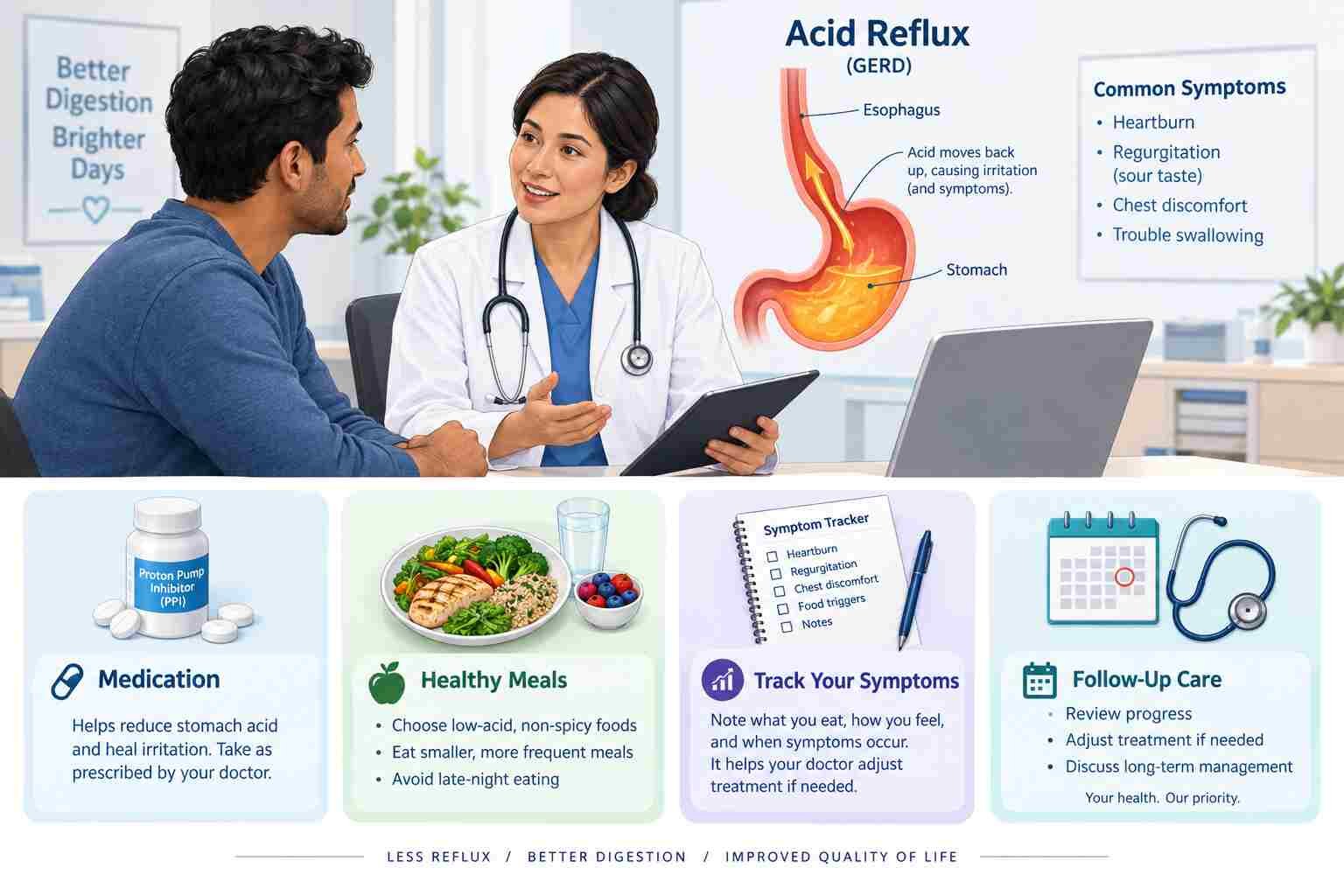

Hearing “you have acid reflux” or “you have GERD” can leave you with more questions than answers. Will you need medicine? Do you have to give up your favorite foods? Will the symptoms ever go away? These are normal questions, and the answers depend on your symptoms, your health history, and how you respond to treatment.
An acid reflux diagnosis does not necessarily mean you will have symptoms forever, and it does not automatically mean severe disease. Treatment is usually individualized. It may include lifestyle changes, medicines, monitoring, and, in some cases, further testing or procedures. The National Institute of Diabetes and Digestive and Kidney Diseases (NIDDK) lists lifestyle changes, medicines, and, for some people, surgery as options for GERD.
This guide walks through what usually happens next: how your doctor reviews your symptoms, what treatment may look like, what to expect from medicine, when more testing is considered, and when to call your clinician. It is general information, not individual medical advice, and no guide can promise that symptoms will disappear quickly.
What Does an Acid Reflux Diagnosis Mean?
Acid reflux (also called gastroesophageal reflux, or GER) happens when stomach contents flow back into the esophagus, the tube that carries food to your stomach. Occasional reflux is common. NIDDK describes GERD as a longer-lasting condition in which reflux causes repeated symptoms or complications.
If you want to understand why this happens in the first place, see our guide on what causes acid reflux. To learn how common the condition is, read about how common acid reflux is.
Acid Reflux vs. GERD
| Acid reflux | GERD |
|---|---|
| Can happen occasionally | Repeated or persistent reflux |
| May cause occasional heartburn | Can cause frequent symptoms or complications |
| May improve with simple changes | May require ongoing treatment |
Frequency is only one piece of the picture. Severity, sleep disruption, and complications also matter, so your clinician looks at the whole situation. If you want to know how doctors reach a diagnosis, our article on how acid reflux is diagnosed explains the process.
What Happens After an Acid Reflux Diagnosis?
Here is a simple roadmap. Your own path may differ.
- Review your symptoms and diagnosis with your healthcare professional.
- Follow recommended lifestyle changes.
- Start medicine if it is prescribed or recommended.
- Track symptoms and possible triggers.
- Attend follow-up appointments.
- Complete additional testing if recommended.
- Seek medical attention if symptoms persist, worsen, or become concerning.
Step 1: Your doctor reviews your symptoms
NIDDK says doctors usually diagnose GER and GERD by reviewing your symptoms and medical history. Expect questions about:
- How often symptoms occur
- Whether symptoms happen after meals
- Nighttime symptoms
- Regurgitation (a sour or bitter taste rising into your throat)
- Difficulty swallowing
- Chest discomfort
- Medicines and supplements you take
- Lifestyle factors such as diet, smoking, alcohol, and sleep
Step 2: You may start treatment
Treatment can include lifestyle changes, over-the-counter medicines, prescription medicines, or a combination. We explain each below.
Step 3: Your response is monitored
Your clinician may adjust treatment based on how well your symptoms improve and whether you have side effects. This is a normal part of care, not a sign that something went wrong.
Step 4: Further testing may be considered
More testing may make sense if symptoms do not improve, complications are suspected, or another condition could be causing your symptoms. You can read about the main tests later in this guide.
What Treatment Can You Expect?
There is no single plan that works for everyone. NIDDK’s treatment overview for GER and GERD lists lifestyle changes, medicines, and, in some cases, surgery. For a closer look at your options, see our guide to acid reflux treatment options.
Lifestyle Changes
Many people start here. Common changes include:
- Eating smaller meals
- Identifying your personal trigger foods
- Avoiding meals close to bedtime
- Staying upright after eating
- Reaching or maintaining a healthy weight when appropriate
- Quitting smoking
- Adjusting sleep habits if nighttime reflux is a problem
If you have symptoms at night, NIDDK suggests leaving a few hours between your last meal and lying down. Raising the head of your bed may also help, as described in its treatment guidance. Keep in mind that there is no universal “acid reflux diet.” Finding what affects you matters more than following a long list.
Our guide on how to manage acid reflux at home offers practical steps. If you are wondering which habits to pay attention to first, read about things that can make acid reflux worse. Healthy weight and eating habits also connect to our guide on weight management.
Medications for Acid Reflux
Medicine types differ in how they work. This section is a brief overview, not a prescribing guide.
- Antacids can provide quick relief for mild or occasional symptoms. They neutralize acid but generally do not treat inflammation of the esophagus.
- H2 blockers reduce acid production and often last longer than antacids.
- Proton pump inhibitors (PPIs) also reduce acid production and can help heal the esophageal lining in people with GERD.
Some people need prescription-strength medicine or a different approach based on their symptoms and response. NIDDK describes these medicine types in more detail.
Safety note: Do not stop, change, or extend a prescribed medicine without talking with your healthcare professional.
What Changes Should You Make to Your Diet?
Aim for practical, not restrictive. Some people notice symptoms with:
- High-fat foods
- Spicy foods
- Coffee or caffeine
- Alcohol
- Chocolate
- Mint
- Tomatoes or citrus
The Mayo Clinic heartburn guide lists many of these as possible triggers. Triggers vary from person to person, so you do not need to cut out every item automatically. Focus on the foods and drinks that actually worsen your symptoms.
Try a symptom diary
A diary helps you and your clinician spot patterns. For a couple of weeks, record:
- What you ate and drank
- Meal size and time
- Your symptoms
- Exercise or activity
- Bedtime
- Medicines you took
What Should You Expect From Acid Reflux Medication?
Patients often have the same questions, and the honest answer is that it varies.
When will symptoms improve? Response depends on the cause, severity, medicine, and the person. Antacids may help within minutes for mild symptoms, while other medicines can take longer. Ask your clinician what timeline to expect for your plan.
What if symptoms do not improve? Contact your healthcare professional. Treatment may need to be adjusted or further evaluation considered.
What side effects should I watch for? Side effects differ by medicine. Read the label, and ask your pharmacist or doctor about what to look for.
Can I take over-the-counter medicine regularly? NIDDK advises talking with your doctor if you use antacids regularly, especially if you need them every day or your symptoms are severe. Mayo Clinic suggests seeing a healthcare professional if you use nonprescription heartburn medicines more than twice a week.
Will I need long-term treatment? Some people do and some do not. Duration depends on your symptoms, your response, and whether complications are present.
Will You Need More Tests After an Acid Reflux Diagnosis?
Not everyone needs extensive testing. NIDDK explains that doctors diagnose most cases from symptoms and medical history. Testing is more likely when symptoms persist, complications are suspected, or another condition needs to be ruled out.
Upper GI Endoscopy
A doctor passes a thin, flexible tube with a camera through your mouth to look at your esophagus, stomach, and the first part of your small intestine. Doctors may order it to check for complications of GERD or for other problems that could be causing your symptoms. They may also take small tissue samples (biopsies).
Esophageal pH Monitoring
This test tracks acid in your esophagus over time using a small catheter or capsule. NIDDK describes it as the most accurate way to detect stomach acid in the esophagus. Doctors may order it to confirm GERD or to see whether treatment is working.
Other Testing
Depending on your situation, clinicians may consider other tests, such as esophageal motility testing (manometry). A clinical review of GERD diagnosis notes that manometry alone is not used to diagnose GERD but is needed before surgery for severe reflux is considered.
What Does Everyday Life With Acid Reflux Look Like?
Many people can keep eating most of their usual foods. You may need to identify a few specific triggers, and meal timing can matter more than you expect. Symptoms can change over time, and your treatment may need adjusting.
Being consistent with your lifestyle changes and medicine can help manage symptoms. A diagnosis does not mean you must overhaul your life overnight. Start with one or two changes that fit your routine and build from there. Our article on living with acid reflux offers more day-to-day guidance.
What If Your Acid Reflux Symptoms Don’t Improve?
Contact your healthcare professional if:
- Symptoms stay frequent despite treatment
- Symptoms are getting worse
- Over-the-counter medicine is not giving enough relief
- Symptoms return whenever you stop medicine
- You have difficulty or pain when swallowing
- You have persistent vomiting
- You have unexplained weight loss
- New or unusual symptoms develop
Mayo Clinic recommends seeing a doctor for severe or frequent GERD symptoms and when you need nonprescription treatment often. NIDDK also lists trouble swallowing, persistent vomiting, and unexplained weight loss as warning signs.
When Is Acid Reflux an Emergency?
🚨 Seek urgent medical attention (call 911 in the U.S.) for chest pain, especially if it occurs with shortness of breath, jaw pain, arm pain, or other symptoms that suggest a heart problem. Chest pain should not automatically be assumed to be acid reflux.
Mayo Clinic advises getting immediate help for chest pain with these warning signs, because heart attack and GERD symptoms can overlap. For more detail, see our guides on heart attack symptoms and chest pain.
Follow-Up After an Acid Reflux Diagnosis
At follow-up visits, your clinician may review:
- How often symptoms occur
- How well treatment is working
- Medicine side effects
- Diet and lifestyle changes
- New symptoms
- Whether further testing is needed
Before your appointment, record:
- Your symptoms and when they occur
- Foods that seem to trigger them
- Medicines and supplements you take
- Whether treatment is helping
- Any new symptoms
- Questions you want to ask
Mayo Clinic also suggests writing down symptoms, triggers, medicines, and questions before an appointment so you can make the most of your time.
Can Acid Reflux Be Managed Long Term?
Many people can control GERD symptoms with an individualized mix of lifestyle measures and medicine. Long-term management may include:
- Identifying and limiting your triggers
- Maintaining healthy eating habits
- Managing weight when appropriate
- Using medicine when recommended
- Regular medical follow-up when needed
Some people with persistent symptoms are eventually evaluated for procedures or surgery if medicine and lifestyle changes are not enough. NIDDK explains surgical and procedural options for GERD. You can also read how to prevent acid reflux or review acid reflux risk factors to understand what may keep symptoms coming back.
Frequently Asked Questions
What should I do after being diagnosed with acid reflux?
Follow the treatment plan your clinician gives you, which may include lifestyle changes and medicine. Track your symptoms and possible triggers, and keep follow-up appointments. Call your healthcare professional if symptoms persist or worsen. NIDDK outlines common treatment steps.
Does an acid reflux diagnosis mean I need medication?
Not always. Treatment depends on how often and how severe your symptoms are, the diagnosis, and your circumstances. Some people manage well with lifestyle changes, while others need over-the-counter or prescription medicine. Your clinician can help you decide.
Can acid reflux go away?
Symptoms can often be controlled, and some people have only occasional episodes. Others have recurring or chronic GERD that needs ongoing management. Our article on whether acid reflux can go away on its own explains what to expect.
What foods should I avoid after an acid reflux diagnosis?
There is no single list that fits everyone. Common triggers include fatty, spicy, or acidic foods, caffeine, alcohol, chocolate, and mint, but your own triggers matter most. Mayo Clinic lists possible heartburn triggers, and a symptom diary can help you find yours.
How long does acid reflux treatment take to work?
It varies with the cause, severity, treatment type, and the individual. Antacids may help quickly with mild symptoms, while other treatments can take longer. Ask your clinician what to expect, and read our guide on how long acid reflux lasts.
Will I need an endoscopy for acid reflux?
Many people do not need one right away. NIDDK says doctors may order an upper GI endoscopy to check for complications or for problems other than GERD. It is more likely when symptoms persist or warning signs appear.
Can I live normally with acid reflux?
Yes, many people do. With individualized lifestyle changes and, when needed, medicine, most people can manage their symptoms and carry on with daily life. Work with your healthcare professional to adjust your plan over time.
Conclusion
An acid reflux diagnosis is a starting point, not a life sentence. Most people begin with an individualized plan that may include lifestyle changes, medicine, symptom tracking, and follow-up. More testing is considered when symptoms persist or complications are suspected.
Focus on the changes that matter most for you, keep notes on your symptoms, and ask questions at every visit. Call your healthcare professional if symptoms get worse, return after treatment, or come with warning signs such as trouble swallowing, persistent vomiting, or unexplained weight loss. For chest pain with shortness of breath, or arm or jaw pain, get emergency help right away.
Sources
- National Institute of Diabetes and Digestive and Kidney Diseases (NIDDK). Acid Reflux (GER & GERD) in Adults
- NIDDK. Symptoms & Causes of GER & GERD
- NIDDK. Diagnosis of GER & GERD
- NIDDK. Treatment for GER & GERD
- Mayo Clinic. Gastroesophageal reflux disease (GERD): Symptoms and causes
- Mayo Clinic. Gastroesophageal reflux disease (GERD): Diagnosis and treatment
- Mayo Clinic. Heartburn: Symptoms and causes
- Mayo Clinic News Network. Mayo Clinic Q and A: Is it heartburn or a heart attack?
- PubMed Central. Clinical review of GERD diagnosis
Medical Disclaimer: This article is for general information and education only. It does not provide medical advice, diagnosis, or treatment, and it is not a substitute for care from a qualified healthcare professional. Everyone’s health situation is different, so talk with your own clinician about your symptoms, medicines, and treatment choices. Never ignore or delay seeking professional advice because of something you read here. If you think you may be having a medical emergency, such as severe chest pain, call 911 or your local emergency number right away.