
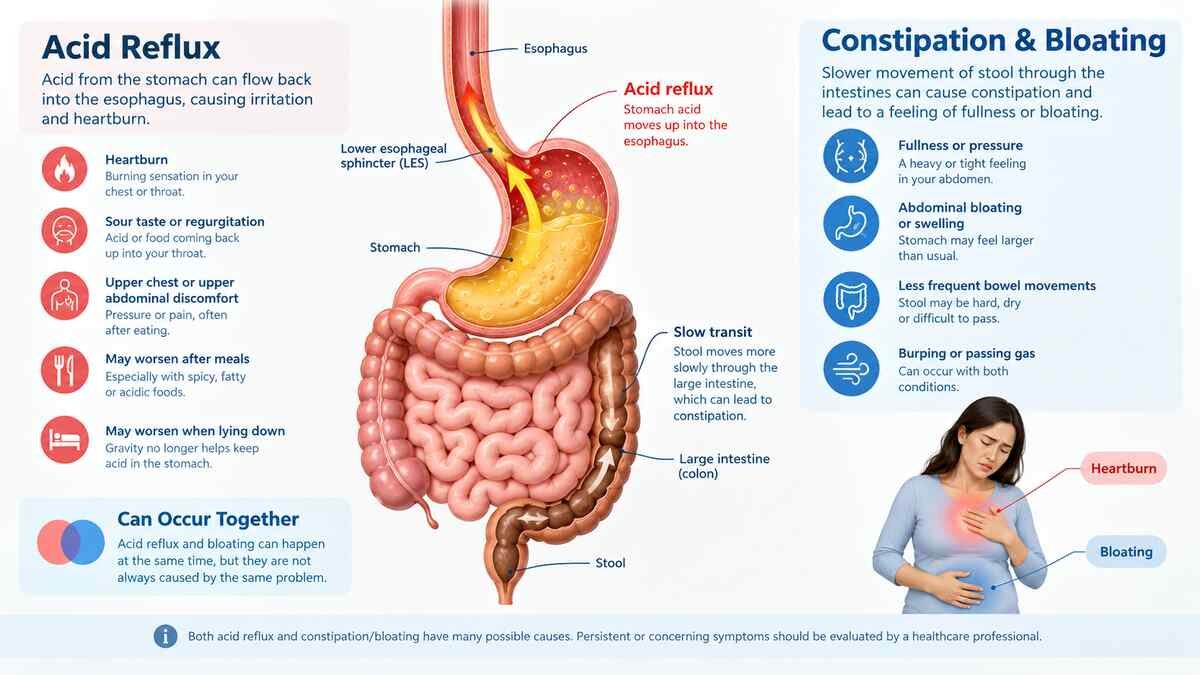

Heartburn on Monday, no bowel movement until Thursday. If you are dealing with both, it is natural to wonder whether one is causing the other. Acid reflux and constipation can certainly show up at the same time.
They involve different parts of the digestive system, though. Reflux affects the esophagus and upper digestive tract, while constipation involves the colon and bowel habits. Constipation is not considered one of the main symptoms of acid reflux, but the two can still be connected in indirect ways, such as through medicines, diet, hydration, activity level, and other digestive problems.
This guide explains whether reflux and constipation are linked, what may connect them, how reflux medicines fit in, and what may help. It also covers when to see a doctor. It offers general information, not a diagnosis.
Can Acid Reflux Cause Constipation?
Quick answer: Acid reflux does not usually directly cause constipation. However, the two can occur together, and some acid reflux medicines, especially certain antacids, may contribute to constipation. Diet, dehydration, low activity, and other digestive conditions can also cause constipation.
Acid reflux happens when stomach contents flow back into the esophagus. The typical symptoms are heartburn and regurgitation, according to NIDDK.
Constipation looks different. NIDDK describes it as fewer than three bowel movements a week, hard, dry, or lumpy stools, stools that are difficult or painful to pass, or a feeling that not all stool has passed. That is why constipation is not a typical direct symptom of reflux.
The conditions can still coexist. They may share contributing factors, or treatment for one may affect the other. For background on reflux itself, see our guide on what causes acid reflux.
How Are Acid Reflux and Constipation Linked?
Seven connections are worth knowing. None of them means that reflux itself causes constipation.
- Some reflux medicines may cause constipation
- Diet changes can affect both
- Dehydration can worsen constipation
- Being less active can contribute
- Other digestive problems may overlap
- Bloating can make symptoms feel connected
- The cause may be something other than reflux
1. Some Acid Reflux Medicines May Cause Constipation
This is one of the strongest links. NIDDK lists antacids that contain aluminum and calcium among the medicines and supplements that can make constipation worse. Other medicines can also contribute, including calcium channel blockers.
Not every reflux medicine does this. Side effects vary by product and by person. Do not stop a prescribed medicine without speaking with a healthcare professional. Our guide to acid reflux treatment options explains the main medicine types.
2. Diet Changes Can Affect Both Conditions
People managing reflux sometimes change how they eat, and those changes can unintentionally affect bowel habits. Examples include:
- Eating less fiber or a narrower range of foods
- Drinking fewer fluids
- Eating fewer fruits, vegetables, or whole grains
- Relying on large meals or highly processed foods
- Cutting out many foods at once to avoid possible triggers
NIDDK lists not eating enough fiber among the common causes of constipation. The goal is to manage reflux triggers without unnecessarily eliminating foods your bowels depend on. Our guides on what makes acid reflux worse and high-fiber foods for digestive health can help you balance both.
3. Dehydration Can Make Constipation Worse
Not drinking enough fluids can contribute to harder stools. Fluids matter even more when you increase fiber. NIDDK’s constipation treatment guidance recommends fiber along with enough fluids, and its eating, diet, and nutrition page offers more detail. If a healthcare professional has told you to limit fluids, follow that advice.
4. Being Less Active Can Contribute to Constipation
Physical activity supports normal bowel movement, and a very sedentary routine may contribute to constipation. NIDDK lists regular physical activity among the steps that may help.
Gentle movement such as walking may help some people. Walking after a meal can also be comfortable if you have reflux, as long as it does not trigger symptoms. Our guide on walking for health offers simple ways to start.
5. Constipation and Reflux May Share Other Digestive Problems
Several digestive conditions can involve both upper and lower symptoms. Possible contributors include:
- Indigestion (dyspepsia)
- Irritable bowel syndrome (IBS)
- Changes in how the gut moves food along
- Food-related symptoms
- Other gastrointestinal conditions
Bloating, abdominal discomfort, burping, and changes in bowel habits can overlap across these conditions. Mayo Clinic notes that IBS can cause bloating, gas, abdominal pain, diarrhea, or constipation. Our overview of common digestive problems gives more background.
6. Bloating Can Make the Symptoms Feel Connected
Constipation can cause fullness, bloating, pressure, and discomfort in the belly. Reflux can cause heartburn, regurgitation, and upper abdominal or chest discomfort.
When both are happening, it is easy to assume one is driving the other. In many cases they are simply occurring together. Our articles on acid reflux and bloating and acid reflux and abdominal pain explore these overlaps.
7. The Underlying Cause May Be Something Other Than Acid Reflux
Constipation has many possible causes, and it may have more than one at a time. NIDDK says you may be constipated for many reasons, including medicines, daily routine changes, and certain health and nutrition problems. Possible causes include:
- Low fiber intake
- Dehydration
- Lack of physical activity
- Certain medicines
- Dietary changes
- IBS
- Hypothyroidism
- Diabetes
- Pregnancy
- Other intestinal or digestive problems
Because the list is long, symptoms alone cannot tell you the cause. If you want to learn how doctors approach this, our guide on what causes abdominal pain offers helpful context.
What Does Constipation Feel Like?
Common signs include:
- Fewer than three bowel movements per week
- Hard, dry, or lumpy stools
- Straining or difficulty passing stool
- Painful bowel movements
- A feeling that not all stool has passed
- Abdominal fullness or bloating
These match NIDDK’s description of constipation symptoms. Normal bowel habits vary from person to person, so a change from your own pattern is often the most useful clue.
Acid Reflux vs. Constipation: What’s the Difference?
| Symptom | Acid reflux | Constipation |
|---|---|---|
| Heartburn | Common | Not typical |
| Sour taste or regurgitation | Common | Not typical |
| Hard stools | Not typical | Common |
| Infrequent bowel movements | Not typical | Common |
| Difficulty passing stool | Not typical | Common |
| Abdominal fullness or bloating | May overlap | Common |
| Straining during bowel movements | Not typical | Common |
| Symptoms worse after meals | Possible | Possible |
| Medicine-related | Possible | Possible |
These patterns are general and not diagnostic. Many people have features of both.
Can Acid Reflux Medicine Cause Constipation?
It can, depending on the medicine and the person.
Antacids. Some antacids, particularly those containing calcium or aluminum, can cause constipation. NIDDK names antacids with aluminum and calcium as medicines that can make constipation worse.
H2 blockers and PPIs. It is not accurate to say that these medicines cause constipation for everyone. Side effects vary by medicine and individual. If you notice a change in your bowels after starting one, mention it to your pharmacist or clinician.
Other medicines. You may also take unrelated medicines or supplements that contribute to constipation, such as calcium channel blockers.
Safety note: Speak with a healthcare professional before changing or stopping any medicine. NIDDK advises discussing medicines or supplements that may cause constipation with your healthcare professional.
How to Relieve Constipation When You Have Acid Reflux
Try these general steps. They may not work for everyone.
Increase Fiber Gradually
Fruits, vegetables, whole grains, and beans are common sources of fiber. Add them a little at a time, because a sudden jump can worsen gas and bloating. NIDDK advises adding fiber to your diet gradually so your body can adjust.
Drink Enough Fluids
Fluids help fiber work and may make stools softer and easier to pass. Follow your clinician’s advice if you have been told to limit fluids.
Stay Physically Active
Regular movement may support bowel function. Even a daily walk can help.
Don’t Ignore the Urge to Have a Bowel Movement
Try to go when you feel the need, and keep a consistent routine if that helps.
Review Your Medicines
If constipation began after you started a new medicine or supplement, discuss it with a healthcare professional before making changes.
Continue Reflux-Friendly Eating Habits
You do not need a strict “acid reflux diet.” Instead:
- Eat appropriate portions.
- Identify your own triggers.
- Avoid lying down soon after eating.
- If you have nighttime reflux, leave a few hours between your last meal and bedtime.
Our guide on how to manage acid reflux at home covers these habits in more detail.
Can Treating Constipation Help Acid Reflux?
Treating constipation may reduce bloating and abdominal discomfort. If constipation is adding to your overall digestive misery, improving bowel regularity may help you feel better.
However, treating constipation is not a proven treatment for acid reflux itself. Reflux should be managed according to its own causes and symptoms, which may include lifestyle changes and medicine. See our guide to acid reflux treatment options for the main approaches.
When Should You See a Doctor?
Talk with a healthcare professional if:
- Constipation does not improve with self-care
- Constipation keeps returning
- Reflux symptoms are frequent or persistent
- Over-the-counter treatments are not helping
- You have difficulty or pain swallowing
- You have persistent vomiting
- You are losing weight without trying
- You notice blood in your stool or vomit
- You have persistent or severe abdominal pain
NIDDK says to see a doctor right away if you have constipation along with rectal bleeding, blood in your stool, constant abdominal pain, inability to pass gas, vomiting, fever, lower back pain, or unexplained weight loss. For reflux, NIDDK lists persistent vomiting, swallowing problems, bleeding, and unexplained weight loss among the warning signs. Our guide on when to see a doctor for acid reflux goes through them in detail.
Don’t assume chest pain is acid reflux. Seek emergency medical help (call 911 in the U.S.) for severe or unexplained chest pain, especially with shortness of breath or pain spreading to the arm or jaw.
Mayo Clinic advises urgent medical attention for these symptoms. You can also read our guides on chest pain and heart attack symptoms.
How Is the Cause of Constipation Diagnosed?
A healthcare professional may ask about:
- How often you have bowel movements
- Stool consistency
- Diet and fluid intake
- Physical activity
- Medicine and supplement use
- Other digestive symptoms
- Your medical and family history
They may also do a physical exam and order tests when needed. NIDDK says doctors may use information from your medical and family history, a physical exam, or tests to find the cause of constipation. If reflux is also a concern, our article on how acid reflux is diagnosed explains that process.
Treatment for Acid Reflux and Constipation
These are two separate conditions, so treatment is separate too. No single approach is a cure for both.
Acid reflux treatment may include:
- Lifestyle changes and eating-habit changes
- Over-the-counter medicines when appropriate
- H2 blockers
- Proton pump inhibitors (PPIs)
- Prescription treatment when necessary
- Further evaluation for persistent symptoms
NIDDK describes lifestyle changes and medicines as common approaches to GER and GERD.
Constipation treatment may include:
- More fiber, added gradually
- Adequate fluids
- Physical activity
- Regular bowel habits
- Short-term over-the-counter treatments when appropriate
- Prescription medicines for chronic constipation
NIDDK describes diet and lifestyle measures as a first step in many cases, with medicines or other treatments when needed. Ask your healthcare professional before using laxatives regularly.
Frequently Asked Questions
Can acid reflux cause constipation?
Acid reflux does not usually cause constipation directly, but the two can occur together. Medicines, diet, hydration, activity level, and other digestive conditions can link them. NIDDK describes common constipation causes.
Can acid reflux medicine cause constipation?
Some can. Antacids containing calcium or aluminum are known to contribute in some people, while other reflux medicines vary. If you notice bowel changes after starting a medicine, talk with your pharmacist or clinician before making changes.
Can antacids make you constipated?
Yes, certain antacids, especially those containing aluminum or calcium, can cause constipation in some people. NIDDK lists them among medicines that can make constipation worse. Check product labels and ask a pharmacist about alternatives.
Why do I have acid reflux and constipation at the same time?
They may share causes such as diet changes, low fluid intake, low activity, medicines, or another digestive condition. They may also simply be occurring together. A healthcare professional can help sort out the reason if both keep returning.
Can constipation make acid reflux worse?
The relationship is not well established. Constipation can cause bloating and abdominal pressure, which may make digestive symptoms feel worse, but it is not proven to cause or worsen reflux directly. Identify your own triggers and treat each condition on its own terms.
How can I relieve constipation if I have acid reflux?
Add fiber gradually, drink enough fluids, stay active, keep regular bathroom habits, and review your medicines with a healthcare professional. NIDDK outlines these steps. Keep following your reflux plan as well.
What should I eat for constipation and acid reflux?
There is no single diet for both. Fruits, vegetables, whole grains, and beans can support regularity, while you limit only the foods that trigger your reflux. Our guide on what a healthy diet looks like can help you plan.
When is constipation a sign of something serious?
See a doctor right away if constipation comes with rectal bleeding, blood in the stool, constant abdominal pain, inability to pass gas, vomiting, fever, or unexplained weight loss. NIDDK lists these warning signs. Most constipation is not serious, but these signs should be checked.
Conclusion
Acid reflux and constipation can occur together, but constipation is not a typical direct symptom of reflux. Medicines, diet, fluids, activity, and other digestive conditions are more likely links.
If you have both, treat each one on its own terms. Add fiber and fluids gradually, stay active, review your medicines with a professional, and keep following your reflux plan. Our guides on living with acid reflux and acid reflux treatment options can help.
If symptoms persist, return often, or come with warning signs, see a healthcare professional. Do not assume chest pain is reflux, and call 911 for severe chest pain or pain spreading to the arm or jaw.
Sources
- National Institute of Diabetes and Digestive and Kidney Diseases (NIDDK). Constipation
- NIDDK. Symptoms & Causes of Constipation
- NIDDK. Treatment for Constipation
- NIDDK. Eating, Diet, & Nutrition for Constipation
- NIDDK. Symptoms & Causes of GER & GERD
- NIDDK. Treatment for GER & GERD
- Mayo Clinic. Irritable bowel syndrome: Symptoms and causes
- Mayo Clinic News Network. Mayo Clinic Q and A: Is it heartburn or a heart attack?
Medical Disclaimer: This article is for general information and education only. It does not provide medical advice, diagnosis, or treatment, and it is not a substitute for care from a qualified healthcare professional. Everyone’s health situation is different, so talk with your own clinician about your symptoms, medicines, and treatment choices. Never ignore or delay seeking professional advice because of something you read here. If you think you may be having a medical emergency, such as severe chest pain, call 911 or your local emergency number right away.