
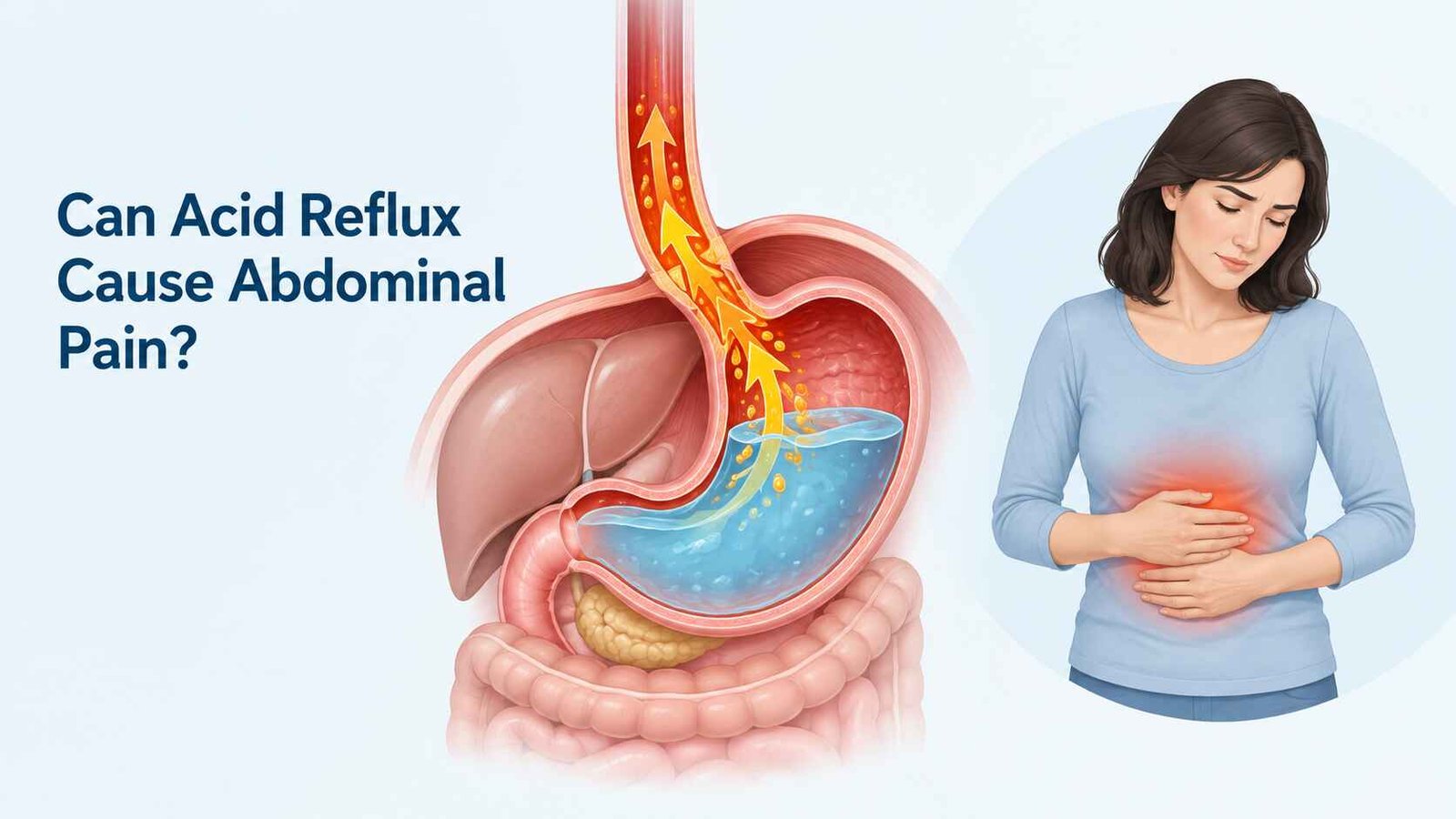

You have a burning or aching feeling in your stomach area, and you wonder whether acid reflux could be the reason. It is a fair question. Reflux and upper belly discomfort often show up together, which makes them easy to link.
Acid reflux mainly affects the esophagus, the tube that carries food to your stomach. Even so, people with gastroesophageal reflux disease (GERD) can feel pain in the upper abdomen or chest. Mayo Clinic lists upper belly or chest pain among possible GERD symptoms.
The key point is that abdominal pain has many possible causes, so persistent, severe, or unusual pain should not automatically be blamed on reflux. This guide covers seven things to know: where reflux pain is felt, what the timing can tell you, what other symptoms to look for, other causes of stomach pain, what makes reflux worse, what may help, and when to seek care. It is general information, not a diagnosis.
Can Acid Reflux Cause Abdominal Pain?
Quick answer: Yes. Acid reflux can be associated with pain or discomfort in the upper abdomen, along with typical heartburn and chest discomfort. However, abdominal pain has many possible causes, so persistent, severe, or unusual pain should not automatically be attributed to acid reflux.
Acid reflux can cause discomfort in the upper abdomen, particularly when it comes with heartburn or regurgitation. But abdominal pain is not specific to reflux. It can also occur with indigestion, gastritis, gallstones, ulcers, and other digestive problems.
Why Can Reflux Cause Pain?
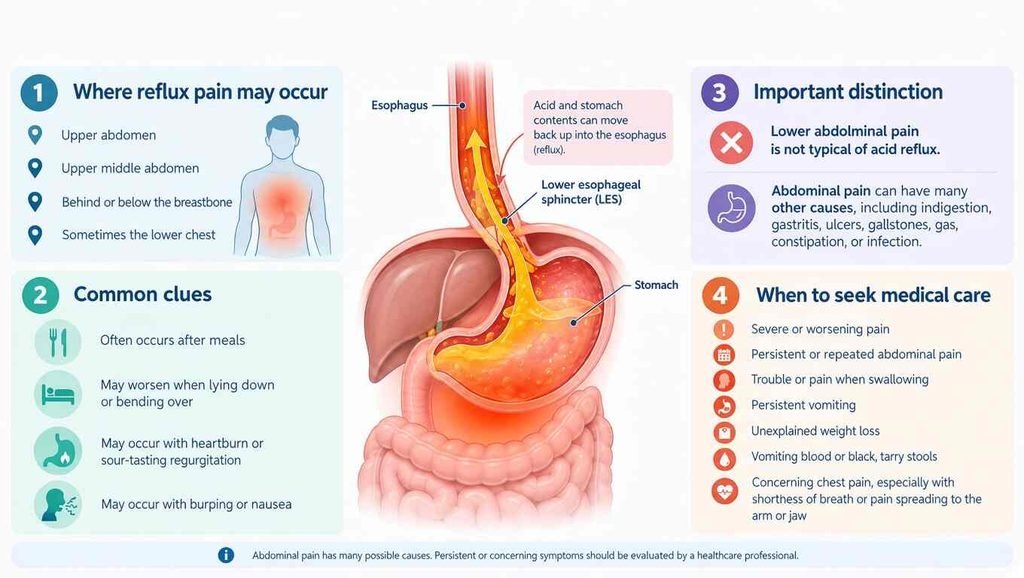
The lower esophageal sphincter (LES) is a ring of muscle that normally helps keep stomach contents from moving upward. If it relaxes at the wrong time or becomes weak, stomach contents can flow back into the esophagus.
Stomach acid can irritate the lining of the esophagus. That irritation can cause burning or pain. NIDDK explains that GER happens when the LES relaxes at the wrong time or weakens. If you want to know more about why this happens, see our guide on what causes acid reflux.
7 Things You Should Know About Acid Reflux and Abdominal Pain
- Reflux pain is usually felt higher in the abdomen
- The timing of pain can provide clues
- Acid reflux pain often comes with other symptoms
- Not all stomach pain is caused by acid reflux
- Certain habits can make reflux-related discomfort worse
- Simple changes may help relieve reflux symptoms
- Persistent or severe abdominal pain shouldn’t automatically be blamed on reflux
1. Reflux Pain Is Usually Felt Higher in the Abdomen
Reflux-related discomfort tends to show up in these areas:
- The upper abdomen
- The upper middle abdomen
- The area just below the breastbone
- The chest, sometimes reaching up toward the throat
Mayo Clinic describes GERD discomfort as possibly occurring in the upper belly or chest. Lower abdominal pain is less typical of reflux, so other causes deserve consideration. Pain location alone cannot confirm or rule out reflux. Our guide on what causes abdominal pain explains the wider range of possibilities.
2. The Timing of Pain Can Provide Important Clues
Reflux symptoms may be more noticeable:
- After eating
- After a large meal
- When lying down
- When bending over
- At night
Mayo Clinic notes that heartburn commonly happens after eating and may worsen when lying down or bending over. The table below shows general patterns, not diagnoses.
| Pattern | What it may suggest |
|---|---|
| Upper abdominal burning after meals | Could be reflux or indigestion |
| Symptoms worse when lying down | Reflux may be contributing |
| Pain with persistent vomiting | Needs medical evaluation |
| Severe, constant abdominal pain | May indicate another condition |
Our guides on abdominal pain after eating and abdominal pain at night explore these timing patterns further.
3. Acid Reflux Pain Often Comes With Other Symptoms
Abdominal discomfort fits reflux better when classic reflux symptoms are also present. These can include:
- Heartburn
- A sour or acidic taste
- Regurgitation (stomach contents rising into the throat or mouth)
- Burping
- Nausea
- Chest discomfort
- Difficulty swallowing
NIDDK lists heartburn and regurgitation as common GERD symptoms and also notes nausea, chest pain, and swallowing problems. Our article on early signs of acid reflux can help you recognize the pattern. Symptoms can also look different from person to person, as covered in our guides to acid reflux symptoms in women and in men.
4. Not All Stomach Pain Is Caused by Acid Reflux
Several other conditions can cause upper abdominal discomfort. These include indigestion (dyspepsia), gastritis, peptic ulcers, gallstones, food intolerance, constipation or gas, and infections.
NIDDK describes indigestion as a group of symptoms that most often includes pain, burning, or discomfort in the upper abdomen, along with bloating, nausea, or belching. NIDDK also notes that indigestion can be confused with acid reflux. Mayo Clinic’s indigestion overview adds that people with indigestion sometimes have heartburn too.
You do not need to memorize a list of conditions. Where the pain is, when it happens, how severe it is, and what other symptoms come with it all help a clinician work out the cause. Our guide on common digestive problems gives helpful background.
5. Certain Habits Can Make Reflux-Related Discomfort Worse
Some everyday habits can aggravate reflux symptoms in some people:
- Large meals
- High-fat or fried foods
- Spicy foods
- Alcohol
- Coffee or caffeine
- Eating late at night
- Lying down soon after eating
- Smoking
The Mayo Clinic heartburn guide lists many of these as possible triggers, and triggers differ from person to person.
6. Simple Changes May Help Relieve Reflux Symptoms
These steps are general and may not work for everyone:
- Eat smaller meals if large meals trigger symptoms.
- Identify your personal food triggers, perhaps with a symptom diary.
- Avoid lying down right after eating.
- If you have nighttime symptoms, leave a few hours between your last meal and bedtime.
- Consider weight management if a healthcare professional recommends it.
- Stop smoking.
- Follow medicine instructions carefully.
NIDDK’s treatment guidance for GER and GERD covers meal timing and other lifestyle steps. For more detail, see our guide on how to manage acid reflux at home. Do not stop a prescribed medicine without talking with your healthcare professional.
7. Persistent or Severe Abdominal Pain Shouldn’t Automatically Be Blamed on Reflux
This is the main safety point. Seek medical evaluation if:
- Pain is severe
- Pain is persistent or getting worse
- Pain keeps returning without an obvious trigger
- Pain interferes with eating or sleeping
- Symptoms do not improve with appropriate reflux treatment
- You have persistent vomiting
- You have difficulty or pain when swallowing
- You are losing weight without trying
- You have signs of digestive bleeding
NIDDK lists persistent vomiting, swallowing problems, bleeding, unexplained weight loss, and symptoms that do not improve with treatment as reasons to get medical care.
What Does Acid Reflux Stomach Pain Feel Like?
People describe reflux-related discomfort in different ways. It may feel like:
- A burning sensation
- Pressure or discomfort
- Pain in the upper abdomen
- Discomfort after meals
- Pain that comes with heartburn
- Symptoms that worsen when lying down or bending over
Not everyone has the same sensation, and pain quality alone cannot diagnose reflux. Our article on what abdominal pain feels like describes other types of pain, and our guide on abdominal pain that comes and goes may help if your discomfort is intermittent.
Can Acid Reflux Cause Lower Abdominal Pain?
Acid reflux mainly involves the esophagus and upper digestive tract, so lower abdominal pain is not a typical reflux symptom. If your pain is concentrated in the lower abdomen, another cause should be considered. This is especially true if the pain is severe, persistent, or comes with bowel or urinary symptoms.
Many people searching for “acid reflux abdominal pain” may actually have pain unrelated to reflux. A healthcare professional can help sort this out.
Acid Reflux vs. Other Causes of Upper Abdominal Pain
| Possible cause | Typical clues |
|---|---|
| Acid reflux/GERD | Heartburn, regurgitation, upper abdominal or chest discomfort |
| Indigestion | Upper abdominal discomfort, fullness, bloating, belching |
| Gastritis | Upper abdominal pain, nausea, indigestion |
| Gallbladder problems | Often upper-right abdominal pain, sometimes after meals |
| Peptic ulcer | Upper abdominal pain that may relate to eating |
| Other conditions | Symptoms vary depending on the cause |
These patterns are not diagnostic. Similar symptoms can overlap, and persistent or severe pain should be evaluated by a healthcare professional.
When Should You See a Doctor for Acid Reflux and Abdominal Pain?
Schedule an appointment if:
- Reflux happens frequently
- Symptoms continue despite lifestyle changes
- Over-the-counter medicines are not helping
- Abdominal pain keeps returning
- You have difficulty swallowing
- You have persistent nausea or vomiting
- You are losing weight without trying
Mayo Clinic recommends seeing a doctor for severe or frequent GERD symptoms, or if you use nonprescription heartburn medicine more than twice a week. Our guide on when to see a doctor for acid reflux goes through the warning signs in more detail.
Seek urgent or emergency care (call 911 in the U.S.) for:
- Severe or unexplained chest pain
- Chest pain with shortness of breath
- Chest pain spreading to the arm or jaw
- Vomiting blood
- Black, tarry stools
- Severe, constant abdominal pain
Chest pain should not be assumed to be reflux. Mayo Clinic advises immediate medical help for severe chest pain or pressure, especially with shortness of breath or arm or jaw pain.
For more on emergencies, see our articles on when abdominal pain is an emergency and heart attack symptoms.
How Is the Cause of Abdominal Pain Diagnosed?
Medical History
A clinician may ask:
- Where the pain occurs
- When it started
- What it feels like
- Whether it happens after meals
- Whether lying down makes it worse
- What other digestive symptoms you have
- Which medicines you take
Physical Examination
An exam can help show whether your symptoms fit reflux or another condition.
Additional Tests
If symptoms suggest complications, another condition, or do not improve with treatment, your clinician may consider tests such as an upper GI endoscopy or reflux monitoring. NIDDK explains that doctors usually diagnose GER and GERD from symptoms and medical history, with testing used in some situations. Our guide on how acid reflux is diagnosed explains each step.
Treatment if Acid Reflux Is Causing Your Symptoms
Treatment depends on how often and how severe your symptoms are. NIDDK lists lifestyle changes and medicines as common treatments, with surgery considered in some cases. Possible approaches include:
- Lifestyle changes
- Antacids for occasional, mild symptoms
- H2 blockers
- Proton pump inhibitors (PPIs)
- Prescription treatment when appropriate
- Further treatment for persistent or complicated GERD
Our guide to acid reflux treatment options compares these choices. Always follow label or prescriber instructions.
Frequently Asked Questions
Can acid reflux cause abdominal pain?
Yes, especially upper abdominal discomfort, but abdominal pain has many possible causes. Reflux is only one of them. Mayo Clinic lists upper belly pain among possible GERD symptoms.
Where does acid reflux pain occur?
Reflux-related pain is usually felt in the chest or upper abdomen, not the lower abdomen. It may reach up toward the throat. Pain location alone cannot confirm reflux, so talk with a clinician if you are unsure.
What does acid reflux stomach pain feel like?
It is often described as burning, pressure, or discomfort, and it may happen after eating or worsen while lying down. Sensations vary from person to person. Heartburn or regurgitation alongside the pain makes reflux more likely.
Can acid reflux cause lower abdominal pain?
Lower abdominal pain is not typical of reflux and may have another cause. If it is severe, persistent, or comes with bowel or urinary symptoms, see a healthcare professional. Our guide on what causes abdominal pain outlines other possibilities.
How can I relieve acid reflux stomach pain?
Smaller meals, staying upright after eating, avoiding your personal triggers, and leaving a few hours before bed may help. Antacids may relieve occasional mild symptoms when used as directed on the label. If you need medicine often, talk with a healthcare professional. NIDDK describes common treatments.
When is stomach pain from acid reflux serious?
Pain is more concerning if it is severe, persistent, or paired with persistent vomiting, bleeding, trouble swallowing, unexplained weight loss, or chest pain. Seek emergency care for severe chest pain, vomiting blood, or black, tarry stools. NIDDK lists these warning signs.
Can GERD cause upper abdominal pain?
Yes. Upper abdominal or chest pain can occur with GERD, although these symptoms are not specific to it. Mayo Clinic notes that upper belly or chest pain can be a GERD symptom, so other conditions should be considered if pain persists.
Conclusion
Acid reflux can cause upper abdominal discomfort, but not every stomachache is acid reflux. The location, timing, accompanying symptoms, and severity of the pain all matter, and persistent or concerning pain deserves medical evaluation.
If your symptoms fit reflux, simple steps such as smaller meals and earlier dinners may help, and our guides on acid reflux treatment options and living with acid reflux offer more support. If anything on the warning list sounds familiar, contact a healthcare professional. For severe chest pain or signs of bleeding, call 911.
Sources
- National Institute of Diabetes and Digestive and Kidney Diseases (NIDDK). Symptoms & Causes of GER & GERD
- NIDDK. Diagnosis of GER & GERD
- NIDDK. Treatment for GER & GERD
- NIDDK. Definition & Facts of Indigestion
- Mayo Clinic. Gastroesophageal reflux disease (GERD): Symptoms and causes
- Mayo Clinic. Indigestion: Symptoms and causes
- Mayo Clinic. Heartburn: Symptoms and causes
- Mayo Clinic News Network. Mayo Clinic Q and A: Is it heartburn or a heart attack?
Medical Disclaimer: This article is for general information and education only. It does not provide medical advice, diagnosis, or treatment, and it is not a substitute for care from a qualified healthcare professional. Everyone’s health situation is different, so talk with your own clinician about your symptoms, medicines, and treatment choices. Never ignore or delay seeking professional advice because of something you read here. If you think you may be having a medical emergency, such as severe chest pain, call 911 or your local emergency number right away.