
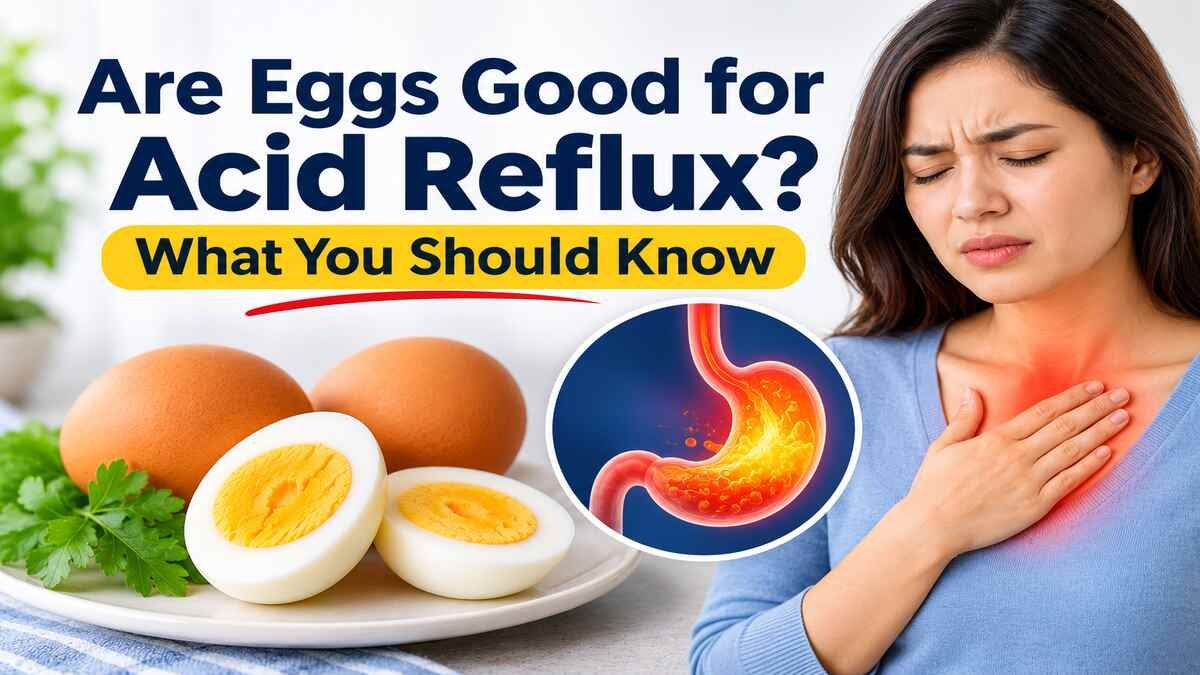

Acid reflux happens when stomach contents flow back up into the esophagus. It often causes heartburn (a burning feeling in the chest) and regurgitation (a sour taste or liquid rising in the throat). Because food can trigger these symptoms in some people, many wonder about everyday staples like eggs. Eggs are affordable, protein-rich, and a popular breakfast food.
Here is the short answer: yes, eggs can generally be eaten by people with acid reflux. Boiled and poached eggs are often easier to tolerate because they need little or no added fat. Egg whites may also suit people who are sensitive to higher-fat foods, while fried eggs made with butter or lots of oil may worsen symptoms for some. Individual triggers vary, so eggs are not a universal reflux trigger.
This guide explains how eggs may affect reflux and how whites and yolks differ. You will also learn which cooking methods are gentler, how much to eat, and which habits matter most. For background on the condition, see our guide to what causes acid reflux.
Are Eggs Good for Acid Reflux?
Eggs can generally be included in a reflux-friendly diet. They are not acidic foods, and they are not on the usual lists of common triggers. The NIDDK says foods commonly linked to GERD symptoms include citrus fruits, tomatoes, chocolate, coffee, high-fat foods, mint, spicy foods, and alcohol. Eggs are not named, though high-fat preparations can fall into the fat category.
Advice from health systems varies a little. UPMC lists eggs among protein choices for people managing GERD, while an earlier UPMC GERD diet guide lists fried eggs among foods to limit. The Cleveland Clinic suggests that using egg whites instead of whole eggs can lower the chance of reflux. These views are consistent: preparation, fat content, and individual tolerance matter most.
Portion size and the foods eaten with eggs also play a role. Boiled and poached eggs are often better tolerated than high-fat fried versions. People with GERD do not necessarily need to eliminate eggs completely. Eggs are a possible protein source for many, not a treatment, and our guide to the health benefits of eggs covers their nutrition in more depth.
How Do Eggs Affect Acid Reflux?
Can Eggs Trigger Heartburn?
Eggs are not acidic, so they do not automatically cause reflux. Responses vary, and a symptom after an egg meal does not prove the egg itself was the cause. Large portions, rich add-ons, and lying down soon after eating can all contribute.
Evidence specifically examining eggs as an independent GERD trigger is limited. Most guidance comes from general principles about dietary fat and meal habits. That is why personal experience matters.
Does Fat Content in Eggs Matter?
Yes, it can. Nearly all of an egg’s fat sits in the yolk, while the white is mostly protein. High-fat meals may aggravate reflux in some people, and the NIDDK lists high-fat foods among commonly reported triggers.
Added ingredients matter even more. Butter, cheese, cream, and cooking oils can raise the total fat in an egg meal considerably. Still, not everyone with GERD reacts to fat, and not every yolk causes symptoms.
Why Do Some People Experience Reflux After Eating Eggs?
Possible reasons include:
- Eating a large portion
- Cooking eggs in a lot of butter or oil
- Pairing eggs with bacon or sausage
- Eating too fast or overeating
- Lying down soon after the meal
- Individual food sensitivities
If you notice a pattern, a food diary can help show whether eggs, the cooking fat, or the sides are the real culprit. Our guide to what makes acid reflux worse lists other aggravating factors.
Egg Whites vs. Egg Yolks: Which Is Better for Acid Reflux?
Are Egg Whites Good for Acid Reflux?
Egg whites are high in protein and low in fat. They may help people who notice symptoms after eating whole eggs. The International Foundation for Gastrointestinal Disorders says that if eggs are a problem for you, you can stick to the whites and avoid the higher-fat yolks, which are more likely to cause symptoms.
Whites can be boiled, poached, or scrambled with very little added fat. Choose gentle seasonings if spicy foods bother you.
Can Egg Yolks Trigger Acid Reflux?
Yolks hold most of an egg’s fat, which may worsen symptoms in some people. They are not automatically harmful to everyone with GERD. Pay attention to your own response, especially with larger or richer meals.
Should You Avoid Egg Yolks Completely?
Not necessarily. Yolks provide choline, vitamin B12, and vitamin D, among other nutrients. See our guide to vitamin B12 foods for other sources. Skipping yolks is not needed unless they consistently trigger your symptoms, and your overall diet matters too.
Best Ways to Prepare Eggs for Acid Reflux
How you cook eggs and what you serve with them often matter more than the egg itself. Always cook eggs until the whites and yolks are firm.
Boiled Eggs
Boiled eggs need no added cooking fat, which makes them a convenient option. Keep portions moderate and seasonings simple.
Poached Eggs
Poaching uses water instead of butter or oil. Serve poached eggs on whole-grain toast with non-acidic vegetables.
Scrambled Eggs
Use minimal butter or oil, or a small amount of olive oil. Try egg whites or a mix of one whole egg and extra whites. Skip heavy cream and high-fat cheese.
Fried Eggs
Frying can add significant fat. Excess butter or oil may worsen symptoms for people sensitive to rich meals. A nonstick pan with a light coating can help.
Egg Meals to Limit if You Have Acid Reflux
- Eggs with bacon or sausage
- Eggs with fatty cheese
- Eggs with spicy sauces
- Eggs cooked in a lot of butter
- Eggs served with greasy fried foods
Key takeaway: the cooking method and accompanying foods may matter more than the egg itself.
How Many Eggs Can You Eat With Acid Reflux?
No universal egg limit exists for people with GERD. Smaller meals are easier on many people with reflux, as the NIDDK and Cleveland Clinic both note in general terms. Watch how you respond to whole eggs and to egg whites. Other health conditions can also affect what is right for you.
For example, people with high cholesterol or diabetes may need separate advice about egg yolks. Our guide to eggs and high cholesterol covers that side of the question.
Can You Eat Eggs Every Day With Acid Reflux?
Some people eat eggs regularly with no symptoms. Others reduce portions or change cooking methods. See our article on eating eggs every day for general guidance.
Is One Egg Better Than Two?
A smaller portion may be easier to tolerate for some, but responses vary. One fixed portion is not a medical recommendation. Start with what feels comfortable and adjust.
Who Should Be Careful About Eating Eggs?
Be more cautious if you:
- Consistently get heartburn after eating eggs
- Have frequent or severe GERD symptoms
- Have a diagnosed egg allergy (see Mayo Clinic)
- Follow a medically prescribed diet
- Notice symptoms after most high-fat meals
Avoid cutting out nutritious foods unless you have good reason to think they trigger symptoms. The 2022 ACG guideline suggests avoiding foods that personally trigger symptoms, and a clinical summary of it notes that routine global elimination of trigger foods is not recommended.
Persistent reflux may need medical evaluation and treatment, not diet changes alone. Learn more in our guides to when to see a doctor for acid reflux and acid reflux treatment options.
Foods to Eat and Avoid Alongside Eggs for Acid Reflux
Foods That May Be Easier to Tolerate
- Oatmeal and whole-grain bread
- Bananas and melons (see health benefits of bananas)
- Leafy greens, broccoli, and carrots (see leafy greens)
- Lean poultry and fish
- Low-fat dairy, if tolerated (see yogurt for acid reflux)
Balanced, lower-fat meals may help some people manage symptoms. No food is guaranteed to prevent reflux.
Foods That May Trigger Acid Reflux
- Fried foods and high-fat meats
- Chocolate
- Coffee and other caffeinated drinks
- Citrus fruits
- Tomato-based foods
- Spicy meals
- Alcohol
- Mint
The NIDDK notes these are commonly linked to symptoms, but they do not affect everyone.
Build a Reflux-Friendly Egg Breakfast
- One boiled egg with oatmeal and banana
- A poached egg on whole-grain toast
- An egg-white scramble with spinach
- Scrambled eggs with steamed vegetables
These are meal ideas, not guaranteed reflux prevention.
Lifestyle Tips for Managing Acid Reflux
Eat Smaller, More Frequent Meals
Large meals add pressure in the stomach. Eat slowly and avoid overeating. The ACG guideline lists smaller meals as a sensible approach.
Avoid Eating Before Bedtime
The ACG guideline suggests avoiding meals within 2 to 3 hours of bedtime. The NIDDK says eating at least 3 hours before lying down may improve symptoms.
Stay Upright After Eating
Sit or stand after meals so gravity helps keep stomach contents down. For nighttime symptoms, the ACG guideline also suggests elevating the head of the bed.
Identify Your Personal Food Triggers
Keep a food and symptom diary. Look for patterns, and avoid only the foods that consistently worsen your symptoms. Our guide to managing acid reflux at home offers more practical tips.
Frequently Asked Questions About Eggs and Acid Reflux
Are boiled eggs good for acid reflux?
Boiled eggs are often a suitable option because they need no added cooking fat. Tolerance still varies from person to person. Start with a moderate portion and watch your symptoms.
Can scrambled eggs cause heartburn?
They can for some people, especially when made with butter, cream, or high-fat cheese. Using little oil, adding vegetables, or mixing in egg whites may help. Every person reacts differently.
Are egg whites better than egg yolks for acid reflux?
Egg whites contain less fat than yolks, so they may be easier on some people with reflux. The Cleveland Clinic suggests whites can minimize the chance of reflux. Whole eggs may still suit many people.
Can I eat eggs every morning if I have GERD?
If you tolerate eggs without symptoms, you can generally keep them in your breakfast routine. Pay attention to portions and cooking methods. Talk with your healthcare professional if symptoms continue.
Do fried eggs make acid reflux worse?
Fried eggs made with a lot of butter or oil may worsen symptoms in people sensitive to high-fat meals. A light coating of oil in a nonstick pan can help. Boiled or poached eggs are alternatives.
Should I stop eating eggs if I have heartburn?
Not necessarily. Complete avoidance is unnecessary unless eggs consistently trigger symptoms or another condition requires it. Heartburn that is frequent or severe deserves medical evaluation.
Conclusion
Eggs are generally suitable for many people with acid reflux. Boiled and poached eggs are often easier to tolerate than high-fat fried versions. Egg whites may help people who are sensitive to richer meals, and individual triggers vary. Meal size and timing matter too.
Chest pain can also signal a heart problem, so seek emergency care for severe or unusual chest pain (see when chest pain is an emergency). Talk with a healthcare professional if symptoms are persistent, severe, or paired with trouble swallowing or weight loss.
Sources
- National Institute of Diabetes and Digestive and Kidney Diseases. Eating, Diet, & Nutrition for GER & GERD
- Katz PO, et al. ACG Clinical Guideline for the Diagnosis and Management of Gastroesophageal Reflux Disease. Am J Gastroenterol. 2022.
- MDCalc. ACG summary: Diagnosis and Management of Gastroesophageal Reflux Disease
- UPMC HealthBeat. GERD Diet: Foods to Eat for Acid Reflux
- UPMC HealthBeat. Suggested Diet for GERD
- Cleveland Clinic. Foods To Eat and Avoid if You Have GERD
- International Foundation for Gastrointestinal Disorders (About GERD). Diet Changes for GERD
- Mayo Clinic. Egg allergy
Medical Disclaimer: This article is for general educational purposes only and is not medical advice. It does not replace diagnosis or treatment from a qualified healthcare professional. If you have frequent heartburn, trouble swallowing, unexplained weight loss, or chest pain, talk with your doctor right away. Do not stop or change prescribed medication without their guidance.