
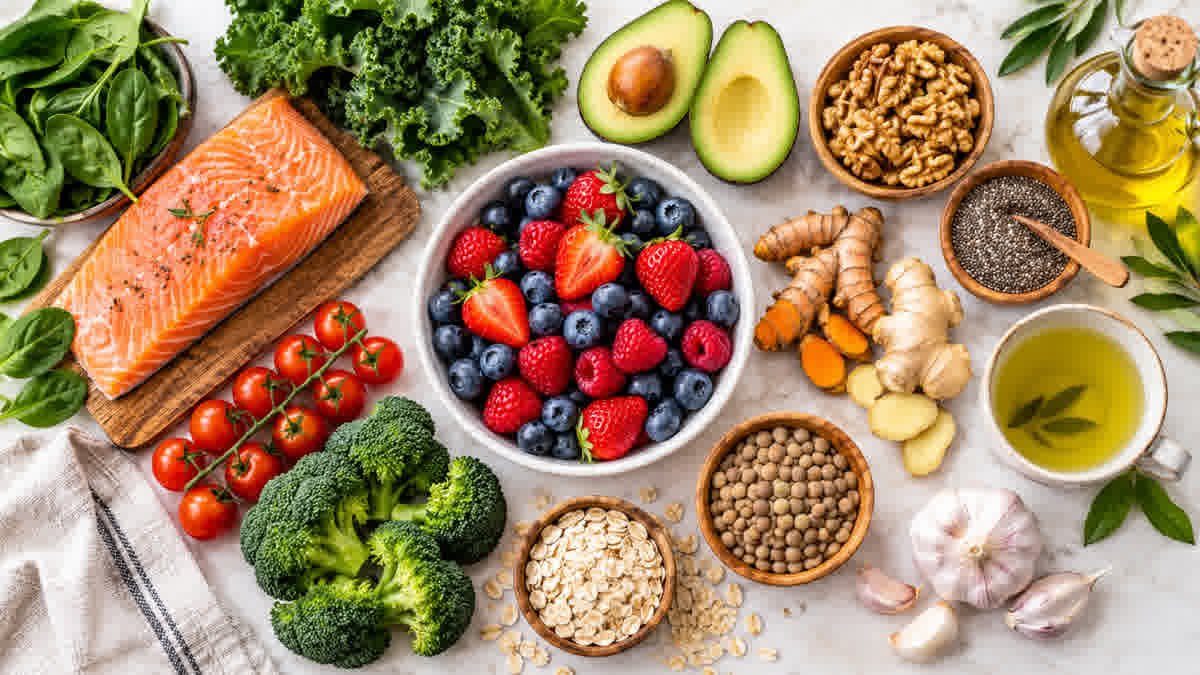

Many everyday foods contain nutrients and plant compounds that support overall health and the body’s normal inflammatory response. From colorful berries and leafy greens to fatty fish and extra-virgin olive oil, anti-inflammatory foods can fit into almost any eating style without requiring a restrictive plan. The goal is not to chase a single “superfood” but to build meals that are rich in variety.
Inflammation itself is not the enemy. It is part of the immune system’s normal response, and short-term (acute) inflammation helps the body respond to injury or infection. Chronic inflammation, which persists for months or years, has been associated with several long-term health conditions, according to the Cleveland Clinic. Diet is one of several lifestyle factors that may influence it, along with sleep, physical activity, stress, and smoking.
Research suggests that a balanced diet built around fruits, vegetables, whole grains, legumes, nuts, seeds, and healthy fats tends to be linked with lower levels of inflammation. These foods supply fiber, omega-3 fatty acids, vitamins, minerals, and beneficial plant compounds. In this guide, you will learn what anti-inflammatory foods are, meet 15 of the best options, and find practical ways to enjoy them every day.
What Are Anti-Inflammatory Foods?
Anti-inflammatory foods are nutrient-rich foods that contain compounds associated with a healthier inflammatory response. They do not work like medicines, and no single ingredient can “turn off” inflammation. Harvard Health notes that an official anti-inflammatory diet does not exist; the term generally describes an eating pattern that emphasizes minimally processed plant foods, unsaturated fats, and fish.
Understanding Inflammation
Acute inflammation is a protective response. When you cut a finger or fight off an infection, the body sends immune cells to the area, which may cause redness, warmth, swelling, and tenderness. This type of inflammation is temporary and usually resolves as healing occurs.
Chronic inflammation is different. It can continue quietly for months or years, and researchers have linked it to a range of long-term conditions. Many factors contribute, including diet quality, body weight, sleep, physical activity, stress, and tobacco use, so food is only one part of the picture.
How Food May Support a Healthy Inflammatory Response
Different components of food contribute in different ways:
- Antioxidants: Antioxidants help protect cells from oxidative damage.
- Omega-3 fatty acids: Omega-3 fatty acids take part in processes that help regulate inflammation.
- Dietary fiber: Fiber supports digestive health and feeds beneficial gut microorganisms, which is closely tied to gut health.
- Vitamins and minerals: These help maintain normal immune and cellular function.
- Polyphenols: These plant compounds are found in berries, olive oil, tea, and many other foods.
Keep in mind that the overall eating pattern matters far more than any single food. Antioxidant content alone also does not prove that a food will deliver a clinical benefit.
15 Best Anti-Inflammatory Foods to Add to Your Diet
The foods below are widely recommended as part of an anti-inflammatory eating pattern. Each one offers a distinct mix of nutrients, and most are easy to find, affordable, and simple to prepare.
1. Berries
Blueberries, strawberries, raspberries, and blackberries are rich in vitamin C, fiber, and polyphenols such as anthocyanins, the pigments that give berries their deep colors. These compounds contribute to the antioxidant activity of berries, which is one reason they appear on nearly every list of anti-inflammatory foods. For more ideas, see this guide to foods high in vitamin C.
Choose fresh or frozen berries without added sugar. Frozen berries are picked at peak ripeness and are often more budget-friendly.
Practical tip: Add berries to oatmeal, plain yogurt, smoothies, or breakfast bowls.
2. Fatty Fish
Salmon, sardines, mackerel, herring, and trout are among the best dietary sources of EPA and DHA, two long-chain omega-3 fatty acids. According to the NIH Office of Dietary Supplements, getting EPA and DHA from food (and supplements, if you take them) is the practical way to raise your levels of these fats. They are involved in the body’s regulation of inflammation.
Harvard Health suggests at least two servings of fatty fish per week as part of an inflammation-conscious diet. Learn more about fatty fish and omega-3 fatty acids on CollectedMed.
Practical tip: Bake salmon with herbs and vegetables, or serve sardines on whole-grain toast.
3. Leafy Green Vegetables
Spinach, kale, collard greens, and Swiss chard provide folate, vitamin K, carotenoids, fiber, and other beneficial nutrients. These nutrients support normal cellular and immune function and add very few calories to a meal. Harvard Health lists dark green leafy vegetables among foods that are high in polyphenols.
Rotate your greens rather than relying on one type. Variety gives you a broader range of nutrients. You can read more about the health benefits of leafy green vegetables.
Practical tip: Stir spinach into eggs, add kale to soups, or serve sautéed greens as a side dish.
4. Extra-Virgin Olive Oil
Extra-virgin olive oil is a major source of monounsaturated fat and contains phenolic compounds, including oleocanthal, which has been studied for its antioxidant and anti-inflammatory properties. It is also a useful replacement for some saturated-fat-rich cooking fats such as butter. It is a cornerstone of the Mediterranean diet, an eating pattern that Harvard Health describes as anti-inflammatory.
Olive oil is a healthy fat, but it is not a treatment or a way to prevent disease on its own. Its benefits come from replacing less healthy fats within an overall balanced diet.
Practical tip: Use it in salad dressings, drizzle it over roasted vegetables, or stir it into bean dishes.
5. Turmeric
Turmeric contains curcumin, one of its best-known bioactive compounds. Laboratory studies and clinical trials have investigated whether curcumin affects inflammatory pathways. However, the National Center for Complementary and Integrative Health (NCCIH) notes that it is challenging to compare the available evidence on turmeric.
Most research uses concentrated curcumin supplements, so the results do not automatically apply to the small amounts of turmeric used in cooking. Concentrated supplements may interact with medications, may be unsafe during pregnancy, and have been linked to rare cases of liver injury. Talk with a healthcare professional before taking them.
Practical tip: Add turmeric to lentil soup, vegetable curries, rice dishes, or homemade soups.
6. Ginger
Fresh and dried ginger contain gingerols and other naturally occurring compounds that researchers have studied for several health effects, including possible effects on inflammation. NCCIH reports that ginger has been studied for several types of nausea and vomiting, and it is also promoted for osteoarthritis and other conditions.
Ginger should not be viewed as a treatment for chronic inflammatory conditions. It is best enjoyed as a flavorful ingredient that adds variety to meals. People who take blood thinners should ask a healthcare professional before using ginger supplements.
Practical tip: Use ginger in stir-fries, soups, teas, and marinades.
7. Garlic
Garlic contains sulfur-containing compounds, including allicin-related compounds that form when garlic is cut or crushed. Harvard Health includes garlic among the herbs and spices that contain natural anti-inflammatory compounds. Its potential biological effects are interesting, but clinical evidence in people is still limited, so it is best seen as a flavorful part of a healthy diet.
Cooking can change the composition of garlic’s active compounds. Letting crushed garlic rest for a few minutes before cooking is a common tip for preserving more of them.
Practical tip: Add crushed garlic to roasted vegetables, lentils, sauces, and homemade dressings.
8. Broccoli and Other Cruciferous Vegetables
Broccoli, cauliflower, Brussels sprouts, and cabbage provide vitamin C, fiber, and glucosinolates. When these vegetables are chopped or chewed, some glucosinolates can be converted into biologically active compounds, including sulforaphane, under suitable conditions. Research on these compounds is ongoing, and much of it comes from laboratory studies.
The practical takeaway is simple: eating a variety of vegetables, including cruciferous ones, supports a nutrient-rich diet. Overcooking can reduce some beneficial compounds.
Practical tip: Steam broccoli lightly, roast cauliflower, or add shredded cabbage to soups.
9. Tomatoes
Tomatoes provide vitamin C, potassium, and lycopene, a carotenoid with antioxidant properties. Cooking tomatoes, especially with a little olive oil, can increase how well the body absorbs lycopene in some preparations. This makes cooked sauces and soups a smart choice alongside fresh tomatoes.
Tomatoes are best viewed as one component of a varied diet, not a stand-alone remedy.
Practical tip: Use tomatoes in salads, soups, vegetable stews, and homemade sauces.
10. Walnuts
Walnuts are a plant-based source of alpha-linolenic acid (ALA), an omega-3 fatty acid. They also provide fiber, unsaturated fats, and other beneficial plant compounds. ALA is different from the EPA and DHA found in fatty fish; the NIH notes that the body converts only a small amount of ALA into EPA and DHA.
Walnuts are calorie-dense, so a small handful goes a long way. People with tree nut allergies should avoid them. For more ideas, explore these nutrient-dense foods to add to your diet.
Practical tip: Sprinkle chopped walnuts over oatmeal, salads, or plain yogurt.
11. Chia Seeds
Chia seeds contain ALA omega-3 fatty acids, fiber, and minerals such as magnesium and calcium. The fiber supports regular bowel movements and gut health. Chia seeds do not provide the same omega-3 benefits as oily fish, because ALA is not equivalent to EPA and DHA.
If you are new to high-fiber foods, increase your intake gradually and drink enough fluids to help avoid bloating.
Practical tip: Mix chia seeds into oatmeal, yogurt, or overnight pudding. Allow them to absorb liquid before eating.
12. Flaxseeds
Flaxseeds provide ALA omega-3 fatty acids, fiber, and lignans, which are plant compounds with antioxidant properties. They add a nutty flavor and a nutrient boost to many dishes. Ground flaxseed is generally easier to digest than whole flaxseed, which can pass through the body largely intact.
As with other fiber-rich foods, drink adequate fluids when you increase your intake.
Practical tip: Add ground flaxseed to smoothies, porridge, or whole-grain baking recipes.
13. Beans and Lentils
Chickpeas, black beans, kidney beans, and lentils offer protein, fiber, folate, and minerals such as iron and magnesium. Their fiber acts as fuel for beneficial gut microorganisms, which supports digestive health. Explore more high-fiber foods for digestive health and the best prebiotic foods to see how legumes fit in.
People who are prone to gas may do better by introducing legumes gradually. Rinsing canned beans can also help.
Practical tip: Prepare lentil soup, bean salads, chickpea curries, or vegetable-and-bean stews.
14. Oats and Other Whole Grains
Oats, barley, and other minimally processed whole grains contribute fiber, B vitamins, and minerals. Oats are notable for beta-glucan, a type of soluble fiber. Whole grains differ from refined grain products, which have had the bran and germ removed, along with much of the fiber and many nutrients.
Choosing whole grains more often supports digestive health and a balanced dietary pattern. See this overview of healthy foods for more everyday choices.
Practical tip: Choose oatmeal for breakfast, or use barley in soups and grain bowls.
15. Green Tea
Green tea contains catechins, including EGCG, along with other polyphenols that may have antioxidant effects. Studies have examined how green tea affects various biomarkers, but that does not mean drinking it treats inflammation. According to NCCIH, no safety concerns have been reported for green tea consumed as a beverage by adults, although liver injury has been reported with concentrated green tea extracts.
Green tea also contains caffeine, so intake and timing may matter for people who are sensitive. Choose unsweetened tea over sugar-heavy bottled versions.
Practical tip: Enjoy a cup of green tea with breakfast or as an afternoon beverage.
How to Add Anti-Inflammatory Foods to Your Diet
Knowing which foods are helpful is only the first step. The real benefit comes from turning that knowledge into habits you can maintain.
Build Meals Around Whole Foods
A flexible approach works best. Aim to include:
- Vegetables and fruits in a range of colors
- Whole grains such as oats and barley
- Protein sources such as fish, beans, lentils, eggs, and tofu
- Unsaturated fats from olive oil, nuts, and seeds
If you want a broader framework, this guide explains what is a healthy diet.
Eat More Variety, Not Just One Superfood
Different foods supply different nutrients and plant compounds, so variety helps you cover more bases. Harvard Health advises eating the widest variety of plant-based foods possible and focusing on an overall healthy diet instead of singling out individual “good” and “bad” foods. You do not need expensive powders or specialty products to eat well. Browse the healthiest foods to eat every day for simple, affordable ideas.
Make Small, Sustainable Changes
Gradual swaps are easier to keep than a complete overhaul:
- Replace some refined-grain breakfasts with oatmeal.
- Add berries or another fruit to breakfast.
- Include beans or lentils in several meals each week.
- Use olive oil in place of some saturated-fat-rich fats.
- Choose fish regularly if it is suitable, affordable, and accessible for you.
- Add an extra serving of vegetables to lunch or dinner.
Support Nutrition With Healthy Habits
Food works alongside other lifestyle factors. Regular physical activity, adequate sleep, stress management, and avoiding smoking are all part of an overall healthy lifestyle. Read about the benefits of exercise and how to improve sleep to round out your routine.
Foods to Limit for a Balanced Anti-Inflammatory Diet
A healthy dietary pattern is built on overall choices, not on labeling single foods as harmful. Still, some foods are worth enjoying less often. Harvard Health notes that foods linked with inflammation, such as sodas, refined carbohydrates, and processed meats, are generally also not ideal for overall health.
Limit Excessive Added Sugar
Sugary drinks, sweets, and frequent high-sugar snacks add calories without much nutrition. Reducing excessive added sugar can improve your overall dietary quality and make room for more nutrient-dense choices.
Reduce Frequent Consumption of Highly Processed Foods
Processed meats, heavily refined snack foods, and meals that are consistently high in sodium or saturated fat are best kept occasional. Not every processed food is unhealthy, though. Canned beans, frozen vegetables, and plain yogurt are convenient examples that can fit well in a balanced diet.
Choose Healthier Fats More Often
Nuts, seeds, olive oil, and fatty fish provide unsaturated fats that can replace some saturated fats in your meals. This kind of swap is a hallmark of the Mediterranean diet.
Avoid Extreme Dietary Restrictions
Most people do not need to eliminate entire food groups. Exceptions include medical needs, allergies, intolerances, or personal dietary preferences. An overall pattern rich in minimally processed plant foods, whole grains, and appropriate protein sources matters more than avoiding any one ingredient.
Frequently Asked Questions About Anti-Inflammatory Foods
What Are the Most Powerful Anti-Inflammatory Foods?
No single food is universally the most powerful. Berries, fatty fish, leafy greens, legumes, nuts, and olive oil are all useful choices because each provides different nutrients and plant compounds. A varied diet that includes several of them is more practical than relying on one.
What Can I Drink to Help Reduce Inflammation?
Water and unsweetened tea are practical everyday choices. Green tea contains polyphenols, and NCCIH reports no safety concerns for adults who drink it as a beverage, though it does contain caffeine. No drink is a cure or a substitute for medical treatment.
Are Eggs an Inflammatory Food?
Eggs can be part of a balanced diet for many people, and there is no need to label them as universally inflammatory. Whether they suit you depends on your nutritional needs, any allergies, and your overall eating pattern. Your doctor or a registered dietitian can help if you have specific concerns.
How Long Does It Take for an Anti-Inflammatory Diet to Work?
There is no universal timeline. Results vary depending on your current eating habits, health conditions, and other lifestyle factors. Changes in lab markers and in how you feel do not necessarily happen at the same pace, so focus on building habits you can sustain.
Can Anti-Inflammatory Foods Treat Chronic Inflammation?
Food can support overall health, but it cannot replace diagnosis or treatment for inflammatory diseases. The Cleveland Clinic recommends talking with your healthcare provider about your risk for chronic inflammation and how to manage existing conditions. If you have persistent symptoms or a diagnosed condition, consult a qualified healthcare professional.
Conclusion: Make Anti-Inflammatory Foods a Daily Habit
Anti-inflammatory foods work best as part of a balanced, varied dietary pattern. Berries, leafy greens, fatty fish, legumes, whole grains, nuts, seeds, and olive oil provide complementary nutrients, and small, sustainable changes are more realistic than restrictive diets or reliance on individual superfoods. Physical activity, sleep, and appropriate medical care matter too.
Start with one or two simple changes, such as adding berries to breakfast, including beans at lunch, or preparing fish with vegetables for dinner. Over time, these choices can help build a varied eating pattern that supports your overall health.
Sources
- Cleveland Clinic. Inflammation: What It Is, Symptoms, Causes & Treatment
- Harvard Health Publishing. Anti-inflammatory diet: Foods that help reduce chronic inflammation
- Harvard Health Publishing. Fighting inflammation with food
- Harvard Health Publishing. Foods you should eat to help fight inflammation
- Harvard Health Publishing. Foods that fight inflammation
- National Institutes of Health, Office of Dietary Supplements. Omega-3 Fatty Acids: Fact Sheet for Consumers
- National Center for Complementary and Integrative Health. Turmeric
- National Center for Complementary and Integrative Health. Ginger
- National Center for Complementary and Integrative Health. Green Tea
- National Institute of Diabetes and Digestive and Kidney Diseases, LiverTox. Turmeric
Medical Disclaimer: This article is for general educational purposes only and is not medical advice. It does not diagnose, treat, or prevent any condition, and it cannot replace guidance from a qualified healthcare professional. Talk with your doctor or a registered dietitian before making major changes to your diet, especially if you have a health condition, food allergy, or take medication. If you have persistent symptoms or think you may have a medical problem, seek professional care promptly.