
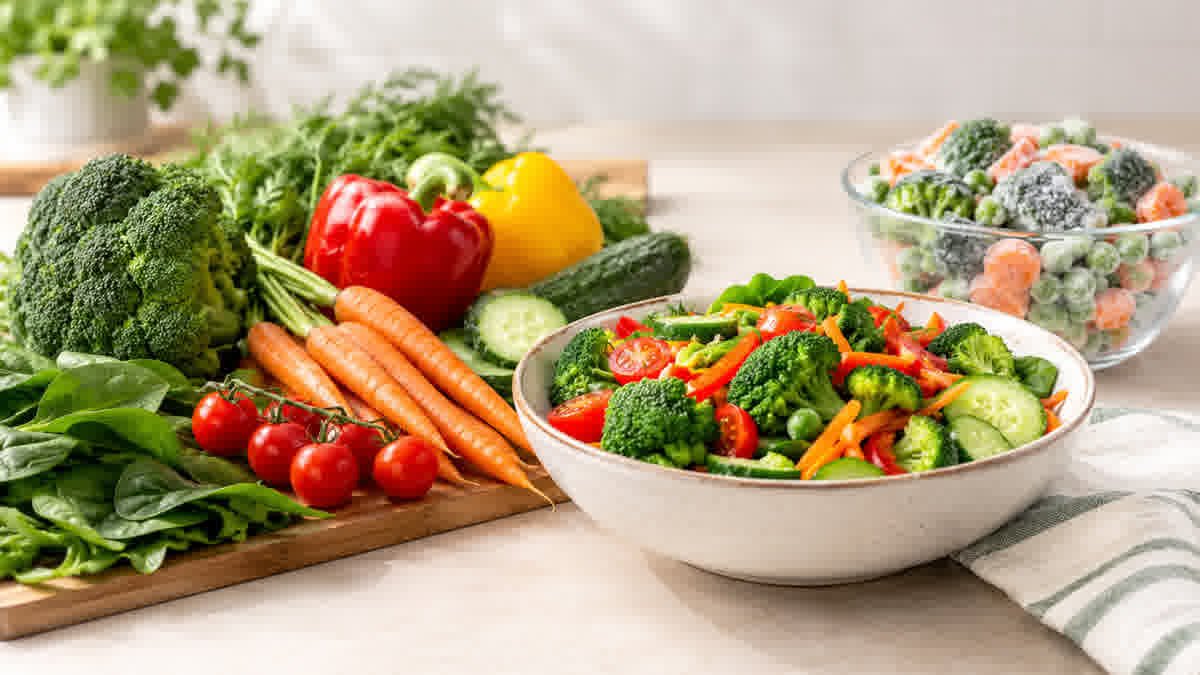

For many adults, around 2 to 3 cups of vegetables a day is a useful starting point. The right amount varies with age, calorie needs, and which dietary guideline you follow. The World Health Organization (WHO) recommends at least 400 grams of fruits and vegetables combined each day for adults, which is not a vegetable-only target. Eating a variety of vegetables helps provide fiber, vitamins, minerals, and other beneficial plant compounds.
If you have searched this question before, you may have seen several different answers. That is because guidelines count vegetables in different ways. The 2025 to 2030 Dietary Guidelines for Americans set a goal of 3 servings of vegetables a day for a 2,000-calorie pattern. The American Heart Association (AHA) suggests 2½ cups daily for the same calorie level.
This guide explains how many vegetables you need, what counts as one serving, and why the numbers differ. You will also find a sample day of eating, practical tips for adding more vegetables, and answers to common questions. The goal is to make the target feel doable, not complicated.
How Many Vegetables Should You Eat a Day?
A practical reference point for many adults is 2 to 3 cups of vegetables daily. Fresh, frozen, and suitable canned vegetables can all contribute. The Dietary Guidelines encourage eating vegetables in whole form and note that frozen, dried, or canned options without added sugars can fit too.
Your own target may be higher or lower. Age, body size, activity level, and total calorie needs all matter. Think of these numbers as general guidance, not a personal prescription.
How Many Servings of Vegetables Should You Eat Daily?
There is no single universal number. Each guideline uses its own serving system, and the numbers only look different because the units differ.
Recommended Vegetable Intake for Adults
Here is how the main sources describe daily vegetable intake for a 2,000-calorie eating pattern:
- Dietary Guidelines for Americans, 2025 to 2030: 3 servings of vegetables per day. In U.S. guidance, one serving is generally 1 cup of raw or cooked vegetables, or 2 cups of raw leafy greens.
- American Heart Association: 2½ cups of vegetables daily, from a wide variety of fresh, frozen, canned, or dried options.
- DASH eating plan (NHLBI): 4 to 5 daily servings of vegetables. DASH servings are smaller, about ½ cup of cooked vegetables or 1 cup of raw leafy greens each.
These add up to a similar amount of food, roughly 2 to 3 cups. Your calorie needs may be different from 2,000 a day, so treat these as reference points.
How Many Vegetables Should Children Eat?
Children need less than adults, and the amount rises with age. Earlier USDA MyPlate guidance, republished by NDSU Extension, listed these daily amounts for people who get less than 30 minutes of moderate activity beyond normal daily routines:
| Age group | Daily vegetables |
|---|---|
| Children, 2 to 3 years | 1 cup |
| Children, 4 to 8 years | 1½ cups |
| Girls, 9 to 13 years | 2 cups |
| Boys, 9 to 13 years | 2½ cups |
| Girls, 14 to 18 years | 2½ cups |
| Boys, 14 to 18 years | 3 cups |
| Women, 19 to 50 years | 2½ cups |
| Women, 51 and older | 2 cups |
| Men, 19 to 50 years | 3 cups |
| Men, 51 and older | 2½ cups |
Active children and teens may need more. For young children, the pediatrician or a registered dietitian can help set realistic goals, especially for picky eaters.
Does Age or Activity Level Change How Much You Need?
Yes. Needs change with age, appetite, energy use, and life stage, including pregnancy. A very active person generally needs more food overall, including vegetables, than someone who is mostly sedentary.
Medical conditions and some medications can also change dietary needs. If you have kidney disease, take blood thinners, or follow a special diet, ask a healthcare professional before making big changes.
What Does the WHO Recommend?
The WHO recommends at least 400 grams of fruits and vegetables combined per day, which it describes as about five portions. This is not 400 grams of vegetables alone. The WHO also notes that potatoes, sweet potatoes, cassava, and other starchy roots do not count toward this target.
What Counts as One Serving of Vegetables?
Serving sizes cause most of the confusion. Once you know the basic cup equivalents, counting gets much easier.
Examples of One Cup of Vegetables
Under common U.S. guidance, each of these counts as about 1 cup of vegetables:
- 1 cup of chopped raw or cooked broccoli
- 1 cup of cooked carrots
- 1 cup of cooked spinach, measured after cooking
- 2 cups of raw leafy salad greens
The AHA lists 2 cups of raw leafy salad greens and 1 cup of cut-up vegetables as examples of one cup. Leafy greens take up more space before cooking because they shrink as they cook. A big pile of raw spinach becomes a small scoop once it wilts.
Is a Serving the Same as a Portion?
Not exactly. A serving is a standard reference amount used in nutrition guidance. A portion is the amount you actually put on your plate.
Your portion may be smaller or larger than a serving. Restaurant portions, for example, are often much bigger than a standard serving. The AHA calls this “portion distortion”.
Do Vegetables in Soups and Mixed Dishes Count?
Yes. Vegetables in soups, curries, stews, stir-fries, and casseroles can all add to your daily total. How much they count depends on how much vegetable the dish contains and how much you eat.
A bowl of soup with a few carrot slices adds little. A vegetable-heavy stew or stir-fry can add a full cup or more.
| Food example | Approximate cup-equivalent |
|---|---|
| Chopped broccoli | 1 cup |
| Cooked carrots | 1 cup |
| Raw leafy salad greens | 2 cups |
| Vegetables in soup | Depends on quantity |
This table shows common U.S. cup-equivalents. It is not a universal serving standard for every country.
Why Is It Important to Eat Vegetables Every Day?
Vegetables are a core part of most healthy eating patterns. The evidence supports a pattern of eating, not any one vegetable or any guarantee about disease.
Supports Healthy Digestion
Vegetables provide dietary fiber, which supports regular bowel movements. The WHO notes that eating at least 400 grams of fruits and vegetables daily helps ensure an adequate intake of dietary fiber.
If you currently eat few vegetables, add them gradually. A sudden jump in fiber can cause gas or bloating. Drinking enough fluids also helps. For gut-friendly options, see our guide to vegetables for gut health.
Provides Essential Vitamins and Minerals
Different vegetables supply different nutrients. Depending on the type, vegetables can provide folate, vitamin C, vitamin K, potassium, and carotenoids. Dark leafy greens, orange vegetables, and tomatoes each bring something different.
Our guide to the health benefits of eating vegetables daily goes deeper on specific nutrients.
Helps Build Satisfying Meals
Vegetables add water, fiber, color, and volume to meals. That can make a plate more filling without relying only on large portions of other foods. They pair well with protein and whole grains.
Supports Long-Term Health
Research links vegetable-rich eating patterns with better long-term health. The AHA’s 2021 scientific statement reports that diets rich in fruits and vegetables, except white potatoes, are associated with lower cardiovascular risk. The WHO also says that eating enough fruits and vegetables reduces the risk of noncommunicable diseases.
Much of this evidence is observational. It shows an association with better outcomes, not proof that any single vegetable prevents disease. Vegetables work best as part of an overall healthy pattern.
Which Vegetables Should You Eat Each Day?
Variety matters more than eating one specific vegetable every day. Different colors and types supply different nutrients, so mix them across the week. Here are common groups with familiar examples:
- Leafy greens: spinach, amaranth leaves, kale, cabbage, and lettuce. See our guide to the benefits of leafy green vegetables.
- Red and orange vegetables: carrots, tomatoes, pumpkin, and red peppers.
- Cruciferous vegetables: broccoli, cauliflower, and cabbage. Read more about cruciferous vegetables.
- Other vegetables: okra, eggplant, cucumber, green beans, and zucchini.
- Starchy vegetables: potatoes, sweet potatoes, and corn. Guidelines classify these differently, so see our explainer on starchy vs. non-starchy vegetables.
Use what is available, affordable, and familiar to you. A varied plate over the week beats a perfect plate on one day.
What Does a Day of Eating Enough Vegetables Look Like?
This is an illustrative plan, not a prescription. It totals about 2½ cups, and the optional snack brings it to 3 cups.
- Breakfast (about ½ cup): Scrambled eggs with spinach and tomatoes, or vegetables added to another savory breakfast.
- Lunch (about 1 cup): A generous mixed salad, cooked vegetables, or vegetables served with rice and a protein source.
- Optional snack (about ½ cup): Carrot sticks, cucumber slices, or sliced peppers.
- Dinner (about 1 cup): Cooked vegetables, a vegetable curry, or a vegetable-rich stir-fry served with the rest of your meal.
Actual cup-equivalents depend on ingredients, preparation, and portion sizes.
Can You Eat All Your Vegetables in One Meal?
There is no rule that you must split vegetables evenly across meals. Spreading them through the day is easier for some people. Others prefer bigger portions at lunch or dinner. The Dietary Guidelines encourage eating vegetables and fruits throughout the day, but the best schedule is the one you can keep up.
Do Frozen or Canned Vegetables Count?
Yes. The Dietary Guidelines include frozen, dried, and canned vegetables as options. The AHA suggests choosing vegetables without salty sauces. For canned products, look for low-sodium or no-salt-added versions and rinse them before use.
For more detail, read our guide on whether frozen vegetables are healthy.
How to Eat More Vegetables Every Day
Small changes work better than big overhauls. These strategies fit into busy routines.
Add Vegetables to Meals You Already Enjoy
Stir spinach into eggs, grate carrots into rice dishes, and layer cabbage or cucumber on sandwiches. Add extra vegetables to lentil soups and curries. You are not changing the meal, just filling it out.
For more ideas, see our guide on how to eat more vegetables.
Keep Convenient Options Available
Frozen vegetables, prewashed greens, and precut vegetables make healthy meals faster. If a shortcut helps you eat vegetables more often, it is worth using. Proper washing and storage keep produce fresh longer. Our guide to washing and storing vegetables covers the basics.
Make Half Your Plate Vegetables and Fruits
The plate method is a simple visual aid. It is not a precise serving calculator. The half plate is for vegetables and fruits together, so it does not mean the whole half has to be vegetables.
Increase Intake Gradually
If you eat few vegetables now, start by adding one serving to one meal. Then build variety over a few weeks. If you notice bloating, increase fiber more slowly and drink plenty of water.
Small, repeatable steps also support the broader habits in our guide to healthy habits for everyday life.
Common Mistakes When Counting Vegetable Servings
Counting fruit as vegetables. Fruits and vegetables both contribute to overall produce intake, but they are separate food groups. See our comparison of vegetables vs. fruits.
Assuming every serving is the same size. Cup-equivalents depend on the vegetable and how it is prepared. Two cups of raw salad greens count as about one cup.
Eating only one type of vegetable. Different vegetables provide different nutrient combinations. Rotating your choices covers more ground.
Believing fresh is always better. Frozen and suitable canned vegetables can also be nutritious choices. The best vegetable is often the one you will actually eat.
Frequently Asked Questions About Daily Vegetable Intake
How many vegetables should I eat a day to stay healthy?
For many adults, 2 to 3 cups a day is a practical reference range. The exact target depends on your age, calorie needs, and which guideline you follow. Current U.S. guidance sets 3 servings for a 2,000-calorie pattern.
Is eating five servings of vegetables a day enough?
It can be, depending on the serving system. DASH uses smaller half-cup servings, so 4 to 5 servings is roughly 2 to 2½ cups. The WHO’s five portions refer to fruits and vegetables combined, not vegetables alone.
Can you eat too many vegetables?
Very high intake can cause gas, bloating, or loose stools in some people, especially if fiber rises quickly. Some conditions and medications also affect what is right for you. For example, people taking warfarin are usually advised to keep their vitamin K intake steady, so check with your healthcare team if this applies.
Do potatoes count toward daily vegetable intake?
It depends on the guideline. U.S. guidance counts potatoes and other starchy vegetables as vegetables. The WHO does not count potatoes, sweet potatoes, or cassava toward its 400-gram target. Potatoes are not unhealthy, but variety across other vegetable types is still worth aiming for.
Are frozen vegetables as healthy as fresh vegetables?
Both can be nutritious, and frozen vegetables are convenient and keep well. Choose plain frozen vegetables without heavy sauces or extra salt. For a closer look, read our guide on frozen vegetables.
Is it better to eat vegetables raw or cooked?
Both are useful. Cooking can make some nutrients easier to absorb and can reduce others, depending on the vegetable and method. Eating a mix is a good approach, and our guide to raw vs. cooked vegetables explains the differences.
The Bottom Line
For many adults, about 2 to 3 cups of vegetables a day is a reasonable starting point, but individual needs differ. Aim for variety, use fresh or frozen options as convenient, and make small changes you can keep up. For a bigger picture of balanced eating, see our guide to what a healthy diet looks like.
Sources
- World Health Organization: Healthy diet fact sheet
- U.S. Department of Health and Human Services and USDA: Dietary Guidelines for Americans, 2025 to 2030
- American Heart Association: Suggested Servings From Each Food Group
- American Heart Association: 2021 Dietary Guidance to Improve Cardiovascular Health (Circulation)
- National Heart, Lung, and Blood Institute (NIH): DASH Eating Plan
- USDA MyPlate daily vegetable amounts by age, via NDSU Extension: Vary Your Veggies
Medical Disclaimer: This article is for general educational purposes only and is not a substitute for professional medical advice, diagnosis, or treatment. Your nutrition needs depend on your age, health, medications, and lifestyle. Talk with your doctor or a registered dietitian before making major changes to your diet, especially if you have a medical condition.