
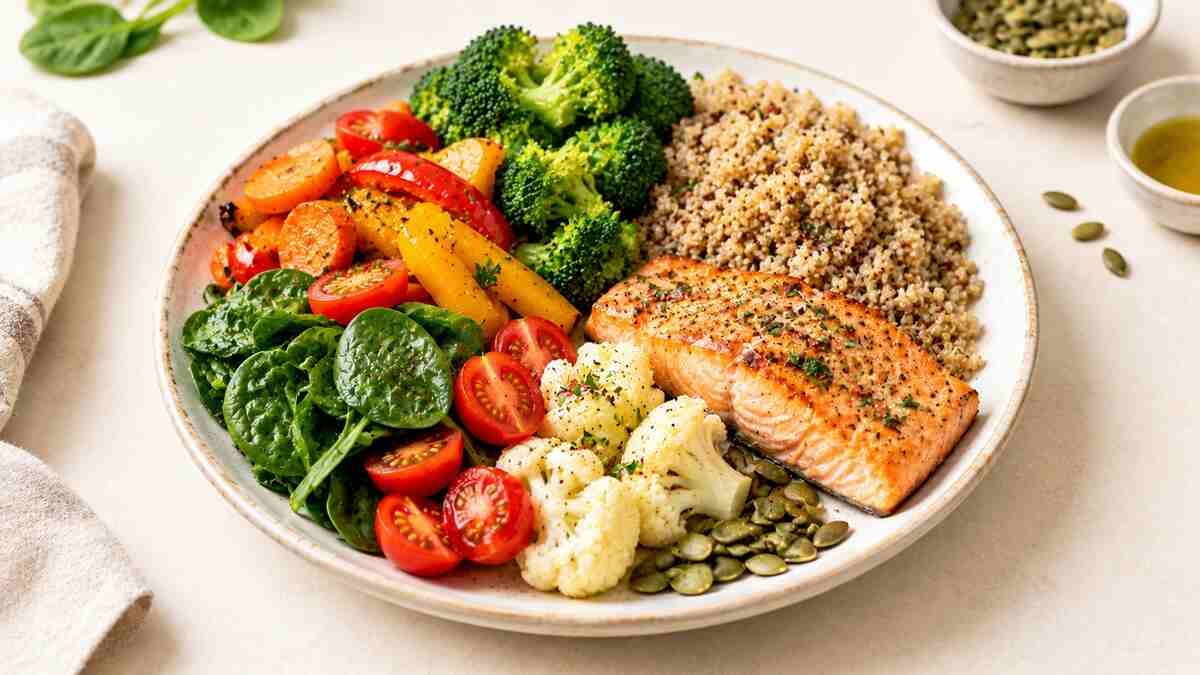

Eating well can feel complicated when you are tired, busy, and hungry. Most people do not want to weigh every ingredient, count every calorie, or follow a rigid meal plan. They simply want to know whether the meal in front of them is a good one.
A simple answer is to start with vegetables. Building a balanced plate with vegetables as the foundation means filling a generous part of your plate with colorful produce, then adding a protein food, a carbohydrate source such as whole grains or legumes, and a small amount of healthy fat. It is a flexible way to think about meals, and it works across many cuisines, budgets, and schedules.
This guide explains what a balanced plate is, why vegetables make a strong starting point, and how to build one step by step, with practical examples. The plate model is a visual guide, not a strict formula or a calorie prescription. The information here is general and educational, and it does not replace advice from a doctor or registered dietitian.
What Is a Balanced Plate?
A balanced plate is a meal that brings together several food groups so that it supplies a range of nutrients, including fiber, protein, carbohydrates, fats, vitamins, and minerals. No single food provides everything the body needs. Variety is what makes a meal, and an overall eating pattern, more complete. For a wider look at this idea, see our guide on what makes a balanced diet.
Balanced does not mean identical. A balanced plate can look very different in a home that cooks rice and lentils, a household that prefers pasta and salad, or a family that eats mostly plant-based meals.
The simple plate method
Harvard’s Healthy Eating Plate is a widely used example. It suggests filling about half the plate with vegetables and fruits, about one quarter with whole grains, and about one quarter with healthy protein, along with healthy oils and water, according to the Harvard T.H. Chan School of Public Health. Because this article focuses on vegetables, the produce half leans toward non-starchy vegetables, with fruit as a welcome addition at meals or snacks.
The exact proportions differ across guides. Harvard’s version, for example, does not count potatoes as vegetables, while earlier federal guidance placed starchy vegetables in their own vegetable subgroup. In January 2026, the U.S. Department of Health and Human Services and the USDA released the 2025 to 2030 Dietary Guidelines for Americans, which introduced an inverted pyramid graphic that gives prominent space to protein, dairy, vegetables, fruits, and healthy fats. These differences are a reminder that plate diagrams are teaching tools. They are not calorie prescriptions, and no single diagram fits every person.
Why balance matters more than perfection
One meal does not decide how healthy your diet is. A pattern of varied meals across days and weeks matters far more than making every plate look the same. Some days, a sandwich and a side salad may be all you have time for, and that is perfectly fine.
Our overview of the principles of a healthy diet covers this bigger picture in more detail.
Why Should Vegetables Be the Foundation of Your Plate?
Vegetables are a practical starting point because they come in many forms, fit into almost every cuisine, and supply nutrients that are easy to miss when meals revolve around refined grains or highly processed foods. The World Health Organization recommends eating at least 400 grams of fruits and vegetables a day (about five portions), not counting starchy roots such as potatoes, sweet potatoes, and cassava.
Vegetables provide fiber, vitamins, and minerals
Different vegetables contribute different nutrients. Leafy greens supply folate and vitamin K, peppers and tomatoes can provide vitamin C, and many vegetables offer potassium and dietary fiber, as described by the Harvard Nutrition Source. Because the nutrient profile varies from one vegetable to the next, variety matters more than relying on a single favorite.
To explore this further, read our overview of the health benefits of eating vegetables daily.
Color and variety help broaden nutrient intake
Leafy greens, red and orange vegetables, cruciferous vegetables, and members of the onion family each bring something different to a meal. Color is a handy reminder to vary your choices. It is not a guarantee that a meal contains every nutrient you need.
Think of color as a prompt to mix things up across the week, not a checklist to complete at every meal.
Vegetables can make meals more satisfying
Many vegetables contain fiber and water, which add volume and texture to a meal. That can help a plate feel more substantial without relying on large portions of other foods.
Still, vegetables complement the energy and nutrients found in protein foods, grains, legumes, and fats. They do not replace them. A plate made only of lettuce and cucumber is unlikely to keep you full or meet your needs.
How to Build a Balanced Plate Step by Step
Use these five steps as a starting point with foods you already enjoy. You do not need to measure anything. The goal is a plate that looks varied, tastes good, and fits your appetite and routine.
Step 1: Fill a generous portion with vegetables
Begin with non-starchy vegetables such as spinach, cabbage, broccoli, cauliflower, carrots, tomatoes, peppers, cucumber, green beans, okra, or eggplant. Aim for a generous share of the plate, often about half, and adjust to your appetite and the type of meal.
Fresh, frozen, and suitable canned vegetables can all fit. You do not need a different vegetable at every meal, because variety across the week counts. Our guide on how to eat more vegetables offers simple ideas, and our article on whether frozen vegetables are healthy explains why they can be a convenient choice.
Step 2: Add a protein source
Choose beans, lentils, chickpeas, tofu, eggs, fish, poultry, or other protein foods that suit your preferences. Protein supports the maintenance of body tissues and many normal body functions. The Healthy Eating Plate model favors fish, poultry, beans, and nuts, and suggests limiting red meat and avoiding processed meats.
Adding lentils or beans to a vegetable dish is an easy way to make it more substantial. A simple vegetable soup becomes a fuller meal with a handful of cooked lentils stirred in.
Step 3: Choose a grain or other carbohydrate source
Brown rice, whole-wheat roti, oats, whole-grain bread, barley, and other grains all work, depending on what is available and what you enjoy. Carbohydrates provide energy for the body and brain. Whole grains usually supply more fiber than refined alternatives.
Potatoes and sweet potatoes are nutritious foods, but plate guides classify them differently. They should not automatically be counted as non-starchy vegetables. Our comparison of starchy and non-starchy vegetables explains how the two groups differ.
Step 4: Include healthy fats
Small amounts of unsaturated fats can round out the plate. Good sources include nuts, seeds, olive oil and other suitable vegetable oils, and foods such as avocado. These fats provide essential fatty acids and help the body absorb the fat-soluble vitamins A, D, E, and K, according to MedlinePlus.
You do not need much. A drizzle of oil on roasted vegetables or a sprinkle of seeds on a salad is often enough. For more detail, see our guide to healthy fats.
Step 5: Add flavor and adjust the meal
Herbs, spices, lemon juice, garlic, and vinegar can make vegetables far more appealing without heavy sauces or extra salt. Try different seasoning styles to keep familiar vegetables interesting.
Portion sizes and the mix of foods can change with appetite, activity level, age, and individual needs. A physically active teenager, an older adult with a small appetite, and a person managing a medical condition may all need different plates.
Which Vegetables Should You Choose?
Many people rely on two or three familiar vegetables. Widening the range is one of the easiest ways to improve a meal. If you are unsure how much to aim for, our article on how many vegetables to eat each day offers practical guidance.
Leafy greens
Spinach, amaranth leaves, kale, lettuce, mustard greens, and other local greens are good everyday options. They provide folate, vitamin K, and other micronutrients. Cooking them with a little oil and garlic or adding them to soups, curries, and egg dishes makes them easy to use. Our guide to the health benefits of leafy green vegetables goes deeper.
Red, orange, and yellow vegetables
Carrots, pumpkin, tomatoes, and bell peppers bring bright color to the plate. They contain carotenoids, which are plant pigments, and some of these can be converted to vitamin A in the body. Peppers and tomatoes can also contribute vitamin C.
Cruciferous and other vegetables
Broccoli, cauliflower, and cabbage belong to the cruciferous family, and okra, eggplant, cucumber, and green beans add even more variety. These vegetables are culinary all-rounders. They can be stir-fried, roasted, steamed, grilled, or added to curries and salads.
Learn more in our guide to cruciferous vegetables. If heart health is a priority for you, our list of heart-healthy vegetable choices is a helpful next read.
Fresh, frozen, or canned?
All three forms can be useful. Fresh vegetables are ideal when they are in season and affordable. Frozen vegetables are convenient, store well, and often cost less out of season.
When buying canned or packaged vegetables, check the label for added salt and sauces. Choosing options labeled low sodium or no salt added can help, and the WHO advises keeping total salt intake below 5 grams a day. Pick the form that is affordable, available, and easy for you to use regularly.
Balance Your Vegetables With Protein, Grains, and Healthy Fats
Vegetables are the foundation, but the other parts of the plate make the meal more complete and more satisfying. Here is how each one contributes.
Plant-based proteins
Lentils, beans, chickpeas, tofu, nuts, and seeds are practical, nutrient-rich protein sources that can fit a range of budgets and eating patterns. According to the Harvard T.H. Chan School of Public Health’s guide to protein, plant-based foods such as legumes, nuts, and seeds can contribute valuable protein as part of a balanced diet. Legumes also provide fiber and carbohydrates, meaning they can contribute to more than one food group on a balanced plate. A chickpea curry, for example, provides protein, carbohydrates, and fiber in the same dish.
People following fully plant-based diets need to pay attention to certain nutrients, including vitamin B12, which occurs naturally in animal-derived foods and is also available in fortified foods and supplements. The National Institutes of Health Office of Dietary Supplements explains that people who eat little or no animal-based food may have difficulty getting enough vitamin B12. A registered dietitian can help plan a varied plant-based diet and identify appropriate fortified foods or supplements when needed.
Animal-based protein options
Eggs, fish, poultry, and dairy foods can fit into many eating patterns. Choosing a variety of protein sources throughout the week can help provide a range of essential nutrients, as explained in Harvard Health’s guide to high-protein foods. Processed meats, such as sausages and deli meats, are best limited; Harvard’s Healthy Eating Plate recommends avoiding processed meats, while the World Health Organization (WHO) explains the evidence linking processed meat consumption to colorectal cancer.
When a meal includes fish, vegetables make an easy and nutritious accompaniment. Steamed greens, grilled eggplant, or a fresh tomato and cucumber salad can add color, flavor, and variety to the plate. Harvard’s healthy eating guidance also emphasizes pairing healthy protein sources with plenty of vegetables and other nutritious foods.
Whole Grains and Balanced Meals
Brown rice, whole-wheat roti, oats, barley, millet, and whole-grain bread are all options to consider when building a balanced plate. Whole grains provide fiber and other nutrients, and the Harvard T.H. Chan School of Public Health’s guide to whole grains explains how they can fit into a healthy eating pattern.
A balanced meal does not have to include expensive or unfamiliar ingredients. Rice, roti, and bread you already eat can all be part of a balanced plate when paired with vegetables, protein-rich foods, and sources of healthy fats. The Harvard Healthy Eating Plate offers a useful visual guide to combining these food groups.
If you want to eat more whole grains, start with small, manageable changes. For example, try mixing brown rice with white rice or replacing some of your usual grain choices with whole-grain alternatives. Gradually adjust your choices according to your preferences, budget, and what is readily available.
Why healthy fats matter
Dietary fat supplies essential fatty acids and helps with the absorption of vitamins A, D, E, and K. Unsaturated fats from nuts, seeds, avocado, and vegetable oils are generally preferred over large amounts of saturated fat.
Fats are also energy dense, so a small amount goes a long way. Use oils and other fat sources in amounts that suit the meal and your individual needs.
Balanced Plate Examples for Everyday Meals
These examples show how the method works with familiar foods. Each one combines vegetables with a protein source, a carbohydrate source, and, where it fits, a little healthy fat.
| Meal | Example plate | Balance explained |
| Breakfast | Vegetable omelet, whole-grain toast, and sliced tomato | Vegetables, protein, and grains |
| Lunch | Brown rice, lentils, leafy greens, and mixed vegetables | Carbohydrates, plant protein, and varied vegetables |
| Dinner | Fish or tofu, whole-wheat roti, and cooked vegetables | Protein, grains, and vegetables |
| Plant-based meal | Chickpea and vegetable curry with brown rice | Legumes provide both protein and carbohydrates |
| Quick meal | Frozen mixed vegetables, eggs or tofu, and rice | Convenient combination of food groups |
| Budget-friendly meal | Beans, seasonal vegetables, and whole-wheat roti | Familiar, affordable ingredients with variety |
These are illustrative combinations, not prescribed portions. The right amounts depend on hunger, activity level, individual requirements, and your overall eating pattern.
You can also adapt them to your culture and kitchen. Swap roti for tortillas, rice for quinoa, or lentils for black beans. The structure stays the same while the flavors change.
How to Build a Balanced Plate on a Budget
A balanced plate does not need to be expensive. A few habits can keep costs manageable and reduce food waste.
Choose seasonal and locally available vegetables
Seasonal produce is often fresher and cheaper. Familiar local vegetables usually give better value than specialty ingredients marketed as superfoods. No single vegetable is essential, and a varied mix is what counts.
Use frozen, canned, and batch-cooked foods
Frozen vegetables, suitable canned beans, cooked lentils, and planned leftovers save time and money. Cooking a large pot of lentils or beans once and using it across several meals is a simple strategy. Our guide to washing and storing vegetables can help you keep produce fresh longer.
Make small changes consistently
Add one extra vegetable to a meal you already make. Keep convenient options such as frozen peas, carrots, or washed greens on hand. Rotate ingredients through the week so meals stay interesting.
Small, repeatable changes are easier to sustain than a complete overhaul.
Common Mistakes When Building a Balanced Plate
A few common pitfalls can make the plate method less useful than it should be:
- Treating the plate method as a rigid rule for every person.
- Filling the plate with vegetables but forgetting protein and other energy sources.
- Assuming every vegetable has the same nutrient profile.
- Believing healthy meals require expensive ingredients.
- Relying on heavy sauces or excess salt to make vegetables appealing.
- Thinking a single meal must be perfectly balanced to count as healthy.
The goal is a sustainable overall eating pattern, not dietary perfection. People with specific medical needs, such as diabetes, kidney disease, or food allergies, may need individualized guidance from a doctor or registered dietitian, since some conditions call for adjustments to the usual plate model.
Frequently Asked Questions
How much of your plate should be vegetables?
A common guide is to fill about half the plate with vegetables and fruits, then divide the rest between protein and whole grains or other carbohydrate sources. Individual needs and plate models vary, so treat this as a starting point rather than a rule. The Harvard Healthy Eating Plate is one example of this approach.
Can a balanced plate be plant-based?
Yes. Vegetables, legumes, whole grains, nuts, seeds, and appropriate fortified foods can all contribute to a balanced plant-based eating pattern. Because some nutrients, such as vitamin B12, are mainly found in animal foods or fortified products, it can help to review your plan with a registered dietitian.
Are frozen vegetables healthy?
Yes. Plain frozen vegetables can be nutritious, convenient, and affordable alternatives to fresh produce. Choose options without added sauces or excess salt when you can, and see our guide on frozen vegetables for more detail.
Do potatoes count as vegetables on a balanced plate?
It depends on the guide. Potatoes are nutritious, but the Harvard plate and the WHO fruit and vegetable target do not count them as vegetables because they are starchy. Many people treat potatoes as part of the carbohydrate portion of the plate instead.
Do I need to follow the plate method at every meal?
No. It is a flexible visual guide, not a strict requirement. Overall dietary variety and adequacy matter more than exact proportions at every meal, and your needs may change with age, activity, and health.
Is it a problem if I do not like many vegetables?
Not necessarily. Many people find they enjoy vegetables more when they are prepared in new ways, such as roasted, spiced, or blended into soups and sauces. Start with the ones you like and add one new option at a time.
Conclusion: Make Vegetables the Starting Point
Start with a variety of vegetables, add a protein food and a suitable carbohydrate source, include some healthy fat, and choose foods that fit your routine, culture, and budget. You do not need to be perfect. Pick one meal you already enjoy and make one small change this week, such as adding an extra vegetable or swapping in a whole grain.
Sources
- Harvard T.H. Chan School of Public Health, The Nutrition Source: Healthy Eating Plate
- Harvard T.H. Chan School of Public Health, The Nutrition Source: Vegetables and Fruits
- World Health Organization: Healthy diet fact sheet
- U.S. Department of Health and Human Services and USDA: Dietary Guidelines for Americans, 2025 to 2030
- MedlinePlus, National Library of Medicine: Dietary Fats
Medical Disclaimer
This article is for general educational purposes only and is not medical advice. It does not diagnose, treat, or replace guidance from a qualified healthcare professional. Nutrition needs vary from person to person, so talk with your doctor or a registered dietitian before making major changes to your diet, especially if you have a medical condition, food allergy, or take medication. If you have urgent symptoms, seek medical care right away.