
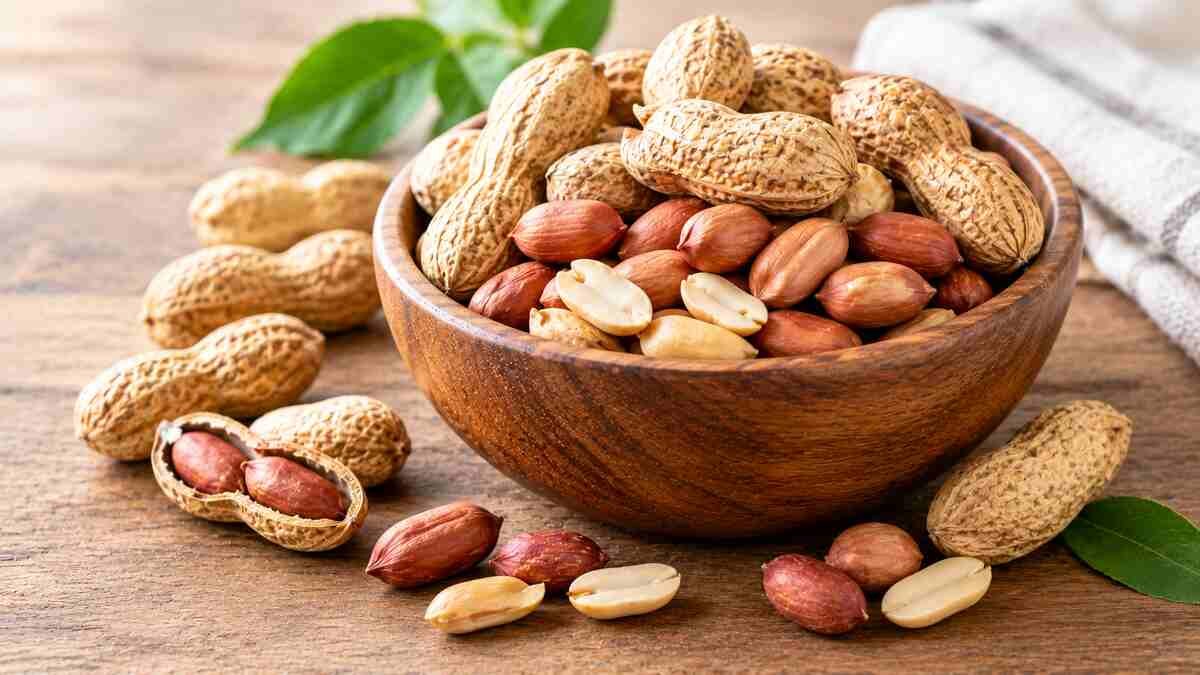

Peanuts are nutrient-dense legumes that provide plant-based protein, unsaturated fats, fiber, magnesium, niacin, and other nutrients. They can be part of a balanced eating pattern and may support heart health when they replace foods higher in saturated fat. Plain or lightly processed peanuts are practical choices, although people with peanut allergies must avoid them.
Peanuts are an affordable, widely available food that shows up in snacks, sauces, spreads, and regional dishes around the world. Despite the name, they are not true nuts. They belong to the same botanical family as beans, lentils, and peas, which helps explain why their nutrition looks different from that of most tree nuts.
This guide explores peanut nutrition, eight potential health benefits, how raw, roasted, and boiled peanuts compare, and whether peanut butter measures up. It also covers serving sizes, meal ideas, and important allergy precautions. For a broader look at the food group, see our overview of the health benefits of nuts.
Are Peanuts Healthy? Understanding Their Nutritional Value
Peanuts are considered nutrient-dense because they deliver protein, mostly unsaturated fat, fiber, and several vitamins and minerals in a small serving. They contain no dietary cholesterol, which is true of all plant foods. They are also energy-dense, at about 166 calories per ounce, so portion awareness helps.
Whole peanuts and processed peanut products are not the same. Plain peanuts, whether raw, dry-roasted, or boiled, differ from candy-coated peanuts, heavily salted snack mixes, or sweetened peanut butters. Check labels to see what else is in the package.
Peanuts fit well into varied, balanced eating patterns. You can find more nutrient-rich options in our list of nutrient-dense foods to include in your diet.
Why Are Peanuts Technically Legumes?
Peanuts grow underground in pods, unlike tree nuts, which grow on trees. Botanically, they belong to the legume family along with beans, peas, and lentils. For this reason, they are sometimes grouped with legumes, as in our guide to the health benefits of legumes.
Nutrition guidance and research usually group peanuts with nuts because their nutrient profile and culinary uses are similar. Peanut allergy and tree nut allergy are also separate conditions. Some people have one, some have both, and some have neither.
Peanut Nutrition Facts: What Does One Serving Provide?
A one-ounce (28-gram) serving of dry-roasted, unsalted peanuts provides approximately the following, based on USDA data:
| Nutrient | Approximate amount |
|---|---|
| Calories | 166 kcal |
| Protein | 6.7 g |
| Total fat | 14.1 g |
| Carbohydrates | 6.1 g |
| Fiber | 2.3 g |
| Magnesium | 50 mg |
| Potassium | 187 mg |
| Niacin | 3.8 mg |
| Vitamin E | 2 mg |
| Folate | 41 mcg |
Values are approximate and depend on the variety, preparation, and database.
Protein in Peanuts
Peanuts provide more protein per ounce than most tree nuts, at roughly 6 to 7 grams. This makes them a convenient plant-based protein source for snacks and meals. For more options, see our guide to high-protein foods.
Peanuts can contribute to your protein intake, but they are not the only source you need. A varied diet includes beans, grains, dairy, eggs, fish, and other foods.
Healthy Fats in Peanuts
Fat makes up most of the calories in peanuts, and most of it is unsaturated. Monounsaturated fat is the largest portion, followed by polyunsaturated fat, with a smaller amount of saturated fat. Our guide to healthy fats explains how these types differ.
The overall fat profile matters when you consider food choices. Replacing foods high in saturated fat with foods rich in unsaturated fat is a standard part of heart-conscious eating.
Vitamins and Minerals in Peanuts
Peanuts provide several micronutrients, including:
- Niacin (vitamin B3): Supports normal energy metabolism.
- Folate: Involved in cell division and normal tissue growth.
- Vitamin E: A fat-soluble vitamin with antioxidant properties.
- Magnesium: Supports muscle and nerve function.
- Phosphorus and potassium: Contribute to bone health and fluid balance.
A serving of peanuts contributes to your daily needs, but peanuts alone do not meet them.
8 Potential Health Benefits of Peanuts
Research on peanuts mostly shows associations and modest effects, not guaranteed outcomes. Here is what the evidence suggests.
1. May Support Heart Health
Peanuts provide unsaturated fats, fiber, and other nutrients that fit into a heart-conscious diet. In several large studies, people who ate more peanuts and nuts had a lower risk of death from heart disease, although these studies cannot prove cause and effect. We cover this in more detail below.
2. Provide Plant-Based Protein
Protein supports the maintenance of normal tissues and many body functions. Peanuts are a convenient plant-based source, whether eaten as a snack or added to meals.
Combine peanuts with other protein-rich foods as part of a varied diet. Our list of heart-healthy foods includes ideas for pairing them.
3. Contribute to Digestive Health
Peanuts contain dietary fiber, with about 2 to 3 grams per ounce. Fiber supports normal digestion and regular bowel movements.
Peanuts are one contributor among many. Combine them with vegetables, fruit, legumes, and whole grains to reach your daily fiber needs, as discussed in our guide to high-fiber foods for digestive health.
4. Provide Antioxidant Compounds
Peanuts contain polyphenols and other plant compounds. Peanut skins, the papery layer on raw or in-shell peanuts, are especially rich in naturally occurring antioxidants.
Laboratory antioxidant activity does not automatically translate into a specific health outcome in people. Think of this as a small bonus, not a primary reason to eat peanuts. Our guide to antioxidant-rich foods shows how to build variety.
5. Supply Important Vitamins and Minerals
Niacin, magnesium, folate, and vitamin E all play roles in energy metabolism, normal cell function, and other body processes. Peanuts can help you meet those needs as part of a balanced diet.
They are not a treatment for nutrient deficiencies. If you suspect a deficiency, talk with a healthcare professional.
6. May Fit Into a Healthy Blood Sugar Eating Pattern
Peanuts contain protein, fat, and fiber, along with a modest amount of carbohydrate. Plain peanuts can be a useful alternative to some highly refined snack foods.
The research is modest. A meta-analysis of randomized trials of tree nuts and peanuts found improvements in fasting insulin and insulin resistance, but not in fasting glucose or HbA1c. Peanuts are not a diabetes treatment. For more, read our guide to the best nuts for type 2 diabetes.
7. May Help Support a Satisfying Eating Pattern
The mix of protein, fat, and fiber helps make a peanut snack more substantial than many refined snacks. A small handful can make a piece of fruit or a slice of toast more filling.
Peanuts are not a weight-loss food. A network meta-analysis of tree nuts and peanuts found that they generally did not increase measures of body fat, but they should replace other foods instead of simply adding calories. Our article on nuts and weight management explains the research.
8. Offer an Affordable Source of Plant Nutrition
Peanuts are usually less expensive than tree nuts, and they are widely available. They work in many cuisines, from West African stews to Thai sauces to American sandwiches.
This accessibility makes them a practical way to add plant nutrition to a plant-forward eating pattern.
Are Peanuts Good for Heart Health?
Evidence from large observational studies is encouraging. A Vanderbilt-led study of more than 200,000 mostly low-income Black and White Americans and Chinese adults found that peanut consumption was linked to lower total mortality and lower cardiovascular mortality. Earlier work in two large U.S. cohorts found similar associations for peanuts and tree nuts.
Observational studies cannot prove that peanuts caused the lower risk. People who eat peanuts regularly may differ in other ways, and the researchers themselves noted that randomized trials were needed to confirm cause and effect.
What we can say is that peanuts provide unsaturated fats and other nutrients that fit a heart-conscious diet. Replacing less nutritious snacks with plain peanuts may improve overall diet quality. Peanuts do not prevent heart attacks or cure high cholesterol.
For comparisons with other nuts, see our guide to the best nuts for heart health.
Raw vs. Roasted vs. Boiled Peanuts: Which Is Better?
All three forms can fit into a healthy diet. The differences are mainly flavor, texture, and what gets added.
Raw Peanuts
Raw peanuts have a mild, slightly beany flavor and a softer texture. They are good for cooking, making homemade peanut butter, or roasting at home. Store them in a cool, dry place in a sealed container to maintain quality.
Dry-Roasted Peanuts
Roasting brings out a stronger flavor and a satisfying crunch. Plain dry-roasted peanuts are convenient and shelf-stable. Check the label for sodium and added ingredients, since some products include oils, sugar, or flavorings.
Boiled Peanuts
Boiled peanuts, a Southern U.S. specialty and a common street food elsewhere, are soft and moist. Boiling changes texture and water content. Salted versions can contain considerable sodium, so keep this in mind if you are limiting salt.
Which Type Should You Choose?
No single method is universally best. Choose based on taste, cooking use, and the ingredient label. Plain or minimally processed products are the most practical everyday options.
| Type | Main characteristics |
|---|---|
| Raw peanuts | Mild flavor, soft texture, versatile for cooking |
| Dry-roasted peanuts | Crunchy and flavorful; check for added salt |
| Boiled peanuts | Soft and moist; often salted |
| Candied or coated peanuts | Often contain added sugar; better as a treat |
Peanut Butter: Is It as Healthy as Whole Peanuts?
Peanut butter provides much of the same protein and unsaturated fat as whole peanuts. The basic nutrition is similar, but commercial products vary widely in added sugar, salt, and oils.
Peanut butter is not automatically healthier or less healthy than whole peanuts. It is also easier to over-serve, since a spoonful goes quickly. It works well on toast, in oatmeal, in smoothies, and in sauces.
What Should You Look for on a Peanut Butter Label?
- Peanuts as the main ingredient. The shortest ingredient list is often a good sign.
- Minimal added sugar.
- Sodium that fits your needs.
- No unnecessary ingredients if a simpler product is available.
Natural peanut butter may separate, which is normal. Stir it well and refrigerate it after opening if you want to slow separation.
How Much Peanuts Should You Eat?
One ounce (28 grams), or roughly 28 shelled peanuts, is a commonly used reference serving. For peanut butter, two tablespoons is a common reference serving. These are practical measurement examples, not compulsory daily targets.
Personal needs differ based on calorie goals, health conditions, and the rest of your diet. Our guide on how many nuts you should eat every day covers portions across several nuts.
Easy Ways to Include Peanuts in Your Daily Meals
Peanuts are easy to work into meals you already enjoy:
- Breakfast: Spread peanut butter on whole-grain toast or stir it into oatmeal.
- Snack: Pair plain peanuts with fruit.
- Lunch: Sprinkle crushed peanuts over vegetable salads.
- Dinner: Add peanuts to vegetable stir-fries or savory sauces.
- Smoothies: Blend peanut butter into a fruit and yogurt smoothie.
- Homemade cooking: Use ground peanuts in sauces and traditional dishes.
If anyone in your household has a peanut allergy, avoid these foods and take care to prevent cross-contact in the kitchen. Use separate utensils, cutting boards, and surfaces.
Possible Side Effects and Who Should Avoid Peanuts
For most people, peanuts are safe and nutritious. A few precautions apply.
- Peanut allergy: Peanuts are a major food allergen and can cause serious, sometimes life-threatening reactions. The FDA lists peanuts among the major food allergens. People with a peanut allergy should avoid them and follow their clinician’s advice. Seek emergency help for signs of a severe reaction, such as trouble breathing, swelling of the throat, or widespread hives.
- Digestive discomfort: Some people feel bloated or uncomfortable after eating peanuts, especially in large amounts.
- Salted products: Salted peanuts and boiled peanuts can contain substantial sodium.
- Sweetened products: Candied peanuts and some peanut butters contain added sugar.
- Storage: Keep peanuts in a cool, dry place in a sealed container. Discard any that smell musty or look moldy.
Do not experiment with peanuts if you have a known allergy. For infants, ask a pediatrician about the timing of peanut introduction, especially if your baby has eczema or other food allergies.
Frequently Asked Questions About Peanuts
Are peanuts healthy to eat every day?
Peanuts can be included regularly in a balanced eating pattern for people who are not allergic. The right amount and frequency depend on your individual needs and the rest of your diet. Large cohort studies have linked regular nut and peanut intake with lower mortality, though they cannot prove cause and effect.
Are peanuts nuts or legumes?
Peanuts are botanically legumes, like beans and lentils. They are commonly grouped with nuts in nutrition guidance because of their similar nutrients and uses.
Are raw or roasted peanuts healthier?
Both provide useful nutrients. Plain varieties without excessive salt, sugar, or coatings are practical choices, whether raw, dry-roasted, or boiled in lightly salted water.
Are peanuts good for heart health?
Peanuts provide unsaturated fats and other nutrients that fit a heart-conscious eating pattern. Observational research links peanut intake with lower cardiovascular mortality. They are not a substitute for medical care.
How much protein is in peanuts?
A one-ounce serving of dry-roasted peanuts provides approximately 6 to 7 grams of protein, depending on the variety and preparation.
Is peanut butter healthy?
Peanut butter can provide protein and unsaturated fats. Compare labels and choose products with minimal added sugar and a short ingredient list.
Can peanuts cause allergies?
Yes. Peanut allergy can cause serious reactions. The FDA identifies peanuts as a major food allergen. People with a known peanut allergy should avoid peanuts and follow medical advice.
Conclusion: Making Peanuts Part of a Balanced Diet
Peanuts offer plant-based protein, unsaturated fats, fiber, and a range of vitamins and minerals in an affordable, versatile package. They can fit into a varied eating pattern, whether you enjoy them whole, roasted, boiled, or as peanut butter. Choose plain or lightly processed versions most of the time, and try different preparations to find what you like.
Variety across food groups still matters, and anyone with a peanut allergy must avoid them completely.
Sources
- U.S. Department of Agriculture data. Peanuts, all types, dry-roasted, without salt, 1 oz (nutrition facts as presented by University Hospitals).
- Luu HN, et al. Prospective evaluation of the association of nut/peanut consumption with total and cause-specific mortality. JAMA Internal Medicine. 2015. (Vanderbilt University Medical Center summary.)
- Bao Y, et al. Association of nut consumption with total and cause-specific mortality. New England Journal of Medicine. 2013. (Summary.)
- Tindall AM, et al. The effect of nuts on markers of glycemic control: a systematic review and meta-analysis of randomized controlled trials. American Journal of Clinical Nutrition. 2019.
- Fernández-Rodríguez R, et al. The relationship of tree nuts and peanuts with adiposity parameters: a systematic review and network meta-analysis. 2021.
- U.S. Food and Drug Administration. Food Allergies.
Medical Disclaimer: This article is for general educational purposes only and is not a substitute for professional medical advice, diagnosis, or treatment. Nutrition needs vary from person to person, so talk with your doctor or a registered dietitian before making major changes to your diet, especially if you have a health condition, a food allergy, or take medication. Never ignore professional advice or delay seeking care because of something you read here.
2 thoughts on “Health Benefits of Peanuts: Nutrition, Benefits, and How to Eat Them”
Comments are closed.