
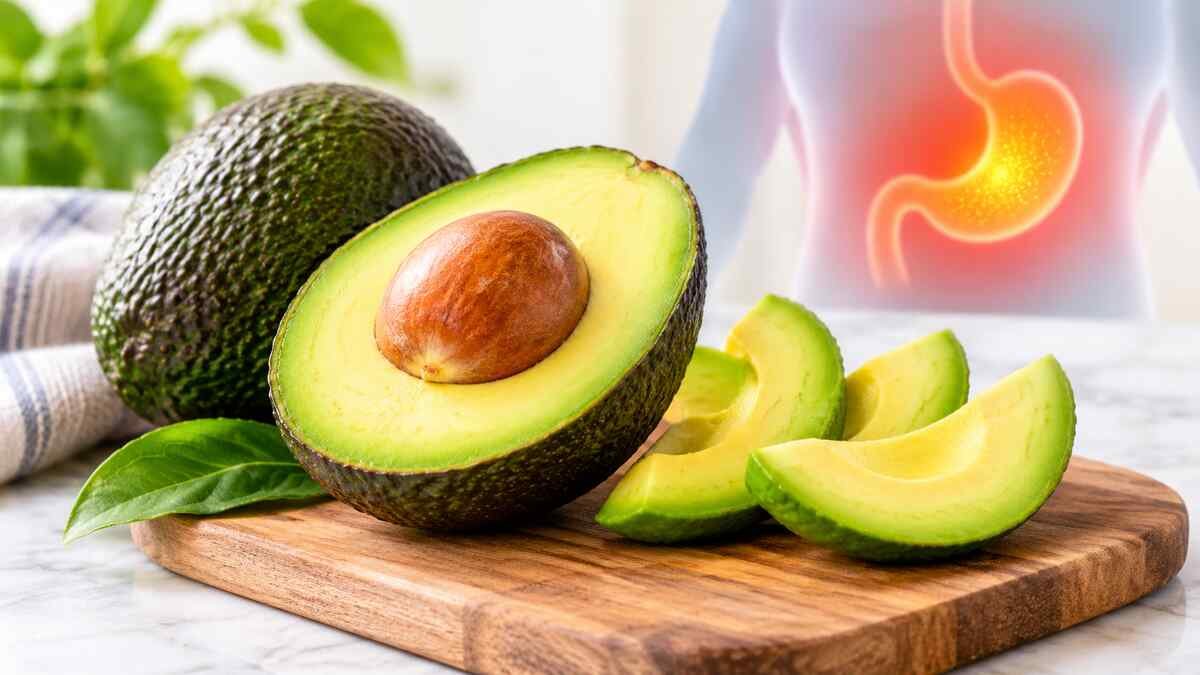

Avocado may be a suitable food for some people with acid reflux, but it is not a guaranteed remedy. It contains beneficial unsaturated fats and fiber, and it is a low-acid fruit. Its fat content, however, may worsen heartburn in people who are sensitive to high-fat foods, and the amount you eat can make a difference.
The link between avocado and acid reflux comes down to how dietary fat, digestion, and the lower esophageal sphincter (the muscular valve between the esophagus and stomach) interact. High-fat meals are commonly linked with reflux symptoms in some people. Avocado’s fat is mostly unsaturated, but it is still fat, so portion size and what you pair it with matter.
Individual tolerance matters more than a blanket rule. This guide explains what acid reflux is, whether avocado is acidic, how it may help or trigger symptoms, and how to eat it more comfortably. It also covers when to talk with a healthcare professional.
What Is Acid Reflux, and Why Does It Happen?
Understanding acid reflux
According to the National Institute of Diabetes and Digestive and Kidney Diseases (NIDDK), gastroesophageal reflux (GER) happens when stomach contents come back up into the esophagus. Having it once in a while is common.
A ring of muscle called the lower esophageal sphincter (LES) normally keeps stomach contents where they belong. NIDDK explains that reflux problems may develop when the LES becomes weak or relaxes when it shouldn’t. For a deeper look at triggers, see our guide on what causes acid reflux.
Common symptoms of acid reflux
Reflux symptoms vary from person to person. Common ones include:
- A burning feeling in the chest (heartburn)
- A sour or bitter taste in the mouth
- Regurgitation of food or liquid
- Symptoms that feel worse after meals or when lying down
Our article on the early signs of acid reflux covers these in more detail.
Acid reflux vs. GERD
Occasional reflux is common and does not always mean a medical problem. Gastroesophageal reflux disease (GERD) is a more severe and long-lasting condition in which reflux causes repeated, bothersome symptoms or leads to complications over time, according to NIDDK. Researchers estimate that about 20 percent of people in the United States have GERD.
Heartburn and GERD are not interchangeable terms. If you think you may have GERD, it is worth seeing a doctor. You can read more in our guide on how serious acid reflux can be.
Is Avocado Good for Acid Reflux?
The honest answer is that it depends on the person. Avocado is a nutrient-dense food that many people with reflux tolerate, but it is not a treatment, and there is no solid evidence that it reduces reflux on its own.
Why avocado may be tolerated by some people
Several features make avocado a reasonable choice for many people:
- It is a nutrient-dense fruit with mostly unsaturated fats.
- It provides dietary fiber.
- It is not a citrus fruit and is generally considered a lower-acid food.
- It fits into a balanced eating pattern when it does not trigger your symptoms.
Some dietitians include avocado on lists of fruits that often do not trigger heartburn, along with bananas, melons, and pears, as reported by Livestrong. Those lists reflect general experience, not proof that avocado is safe for everyone. For more on its nutrition, see our guide to the health benefits of avocado.
Why avocado may worsen acid reflux
Avocado contains a considerable amount of fat compared with most fruits. Harvard Health Publishing advises easing back on heartburn-triggering foods, including anything fatty, fried, or spicy. Fat may slow stomach emptying and influence how the LES behaves, although research on this in everyday eating is limited.
A large portion can cause discomfort, especially alongside other high-fat foods. Dietary fat is commonly linked with reflux symptoms, but responses vary, and the evidence does not establish avocado as a universal trigger.
Is avocado safe for everyone with GERD?
People with GERD do not automatically need to avoid avocado. NIDDK notes that some people with GERD find that certain foods or drinks trigger symptoms, and that a doctor may suggest reducing or avoiding specific ones to see if symptoms improve.
Pay attention to your own response. A smaller portion may be better tolerated than a large serving.
Does Avocado Trigger Heartburn?
It can, for some people. Avocado is not a common trigger for everyone, but its fat content and the way it is served can play a role.
The relationship between fat and heartburn
High-fat foods are commonly associated with reflux symptoms in some people. Avocado’s fat is predominantly unsaturated, which is generally favorable for heart health, but total fat still matters for reflux.
Nutritional quality and reflux tolerance are two different questions. A food can be very healthy and still be a poor fit for your reflux. Our guide to healthy fats explains why unsaturated fats are part of a balanced diet.
Why avocado may cause heartburn in some people
Several factors may contribute:
- Eating a large serving
- Combining avocado with fried or greasy foods
- Having a heavy meal
- Lying down soon after eating
- Individual sensitivity to particular foods
Often the surrounding meal matters as much as the avocado. Our article on what makes acid reflux worse covers these aggravating factors.
Is avocado more likely to cause reflux than other fruits?
Avocado differs from many fruits because it contains more fat. That does not mean it is always worse than other fruits. Some people tolerate it well, while others react more strongly to citrus, tomatoes, or other foods.
The practical approach is to compare your own response to different foods rather than assuming one ranking applies to everyone.
Is Avocado Acidic?
Avocado’s acidity and pH
Avocado is generally regarded as a low-acid fruit compared with citrus fruits. NIDDK lists acidic foods, such as citrus fruits and tomatoes, among the foods and drinks commonly linked to GERD symptoms. Avocado does not fall into that group.
Acidity is not the only factor, though. For some people, fat content and portion size matter more.
Can a low-acid food still trigger reflux?
Yes. Reflux involves stomach contents moving into the esophagus, not simply eating acidic foods. A food can be low in acid and still trigger symptoms through other routes, such as its fat content, the size of the meal, or timing.
A low-acid food is not automatically reflux-safe. That is why tracking your own symptoms is more useful than relying on pH alone.
Nutritional Benefits of Avocado for Digestive Health
Avocado offers real nutritional value. Exact amounts vary by variety and ripeness, so check the USDA FoodData Central database for specific figures. USDA data cited for raw avocados show roughly 15 grams of fat and nearly 7 grams of fiber per 100 grams.
Healthy unsaturated fats
Most of avocado’s fat is monounsaturated, the same general type found in olive oil. These fats can be part of a balanced eating pattern. Healthy fats are not automatically reflux-friendly in large amounts, so portion size still matters.
Dietary fiber
Avocado contains dietary fiber, which supports regular bowel movements and overall digestive health. Fiber does not directly treat acid reflux. For other fiber sources, see our list of high-fiber foods for digestive health.
Vitamins and minerals
Avocado provides potassium, folate, vitamin E, and other nutrients. It can add variety to your diet, but vitamins and minerals do not cure GERD. If you are also managing blood pressure, our article on avocado and high blood pressure may be useful.
Does avocado improve digestion?
Avocado can be part of a balanced diet that supports digestion. There is no established evidence that avocado directly cures acid reflux or prevents GERD. Our guide on eating avocado every day covers general daily intake.
How to Eat Avocado With Acid Reflux
These are cautious, practical suggestions, not medically established rules.
Start with a small portion
Try 1 to 2 tablespoons of mashed avocado first. This is a cautious starting point, not a clinically established safe serving. Watch how you feel over the next few hours, and increase the portion only if it is well tolerated.
Choose simple avocado preparations
Simple options tend to be easier to evaluate:
- Plain mashed avocado
- Avocado with whole-grain toast
- Small amounts of avocado in salads
- Avocado paired with lean protein and vegetables
Avoid combining avocado with common reflux triggers
Some combinations may be more problematic:
- Avocado with fried foods
- Avocado with spicy sauces
- Avocado with large amounts of cheese
- Avocado with acidic ingredients such as lemon juice or tomato, if these are personal triggers
Harvard Health lists chocolate, onions, and tomato sauce among foods to limit or avoid. Guacamole often includes onion, tomato, or lime juice, so it may be a different experience from plain avocado.
Pay attention to meal timing
Meal timing can matter as much as food choice. Consider these habits:
- Eat moderate portions.
- Avoid large meals close to bedtime.
- Stay upright after eating.
- Leave at least 3 hours between your last meal and lying down.
NIDDK states that if you have GERD symptoms at night or when lying down, eating meals at least 3 hours before bed may improve symptoms. The American College of Gastroenterology (ACG) guideline also suggests avoiding meals within 2 to 3 hours of bedtime, though it rates the evidence as low.
For more habits, see our guide to managing acid reflux at home.
Best and Worst Ways to Eat Avocado for Acid Reflux
| Avocado preparation | Potential reflux consideration |
|---|---|
| Plain mashed avocado | Simple preparation; portion size still matters |
| Avocado on whole-grain toast | May be a balanced option in a moderate portion |
| Avocado with grilled chicken | Can provide a balanced meal |
| Avocado with spicy salsa | Spices may trigger symptoms in some people |
| Avocado with fried foods | Combined fat content may increase discomfort |
| Large avocado smoothie | Large portions or added ingredients may be problematic |
These are general suggestions, not a universal list of safe and unsafe foods. Individual triggers vary, and UPMC notes that spicy foods, fried foods, dairy products, and highly acidic foods can trigger GERD symptoms in some people.
Other Foods That May Be Better Tolerated With Acid Reflux
There is no single GERD diet. As the International Foundation for Gastrointestinal Disorders (IFFGD) notes, no proven “GERD diet” exists, and the aim is a healthy variety of foods. The following may be easier for some people to tolerate, but no food is guaranteed to prevent reflux.
Fruits that may be easier to tolerate
- Bananas (see our guide to the health benefits of bananas)
- Melons
- Pears
- Apples, depending on individual tolerance
Vegetables and grains
- Oatmeal
- Brown rice
- Whole-grain bread
- Leafy greens (see health benefits of leafy greens)
- Broccoli (see broccoli and acid reflux)
- Cucumbers
Lean protein options
- Skinless chicken
- Fish
- Tofu
- Other lower-fat protein sources
UPMC notes that lean protein and high-fiber foods can help balance the effects of reflux triggers. Our article on almonds and acid reflux and the guide to yogurt and acid reflux cover other common questions.
When Should You Avoid Avocado or Talk to a Doctor?
Signs avocado may be a personal trigger
Consider cutting back or pausing avocado if:
- Heartburn repeatedly occurs after eating it
- Symptoms become more severe after larger portions
- Reflux symptoms interfere with sleep or daily activities
When to seek medical advice
NIDDK advises seeing a doctor if you think you have GERD or if symptoms do not get better with over-the-counter medicines or lifestyle changes. Seek medical advice if you have:
- Frequent or persistent heartburn
- Difficulty swallowing
- Painful swallowing
- Persistent vomiting
- Unexplained weight loss
Chest pain may need urgent evaluation, especially with shortness of breath, sweating, or pain spreading to the arm or jaw. Mayo Clinic advises getting medical help right away for chest pain with shortness of breath or jaw or arm pain, because these can be heart attack symptoms. Read more in our guide on when chest pain is an emergency and when to see a doctor for acid reflux.
Do not stop prescribed reflux medication without talking to your healthcare professional first.
Frequently Asked Questions About Avocado and Acid Reflux
Is avocado good for acid reflux?
Avocado may be tolerated by some people with acid reflux because it is a nutrient-dense, low-acid fruit. Its fat content may trigger symptoms in sensitive individuals, so tolerance varies.
Can avocado cause heartburn?
Yes, it can in some people, particularly when eaten in large portions or as part of a high-fat meal. Many people with reflux eat avocado without problems.
Is avocado bad for GERD?
Avocado is not universally bad for GERD. Some people tolerate it well, while others notice symptoms after eating it. NIDDK recommends talking with your doctor about which foods seem to worsen your symptoms.
Can I eat avocado every day if I have acid reflux?
Possibly, if it does not trigger your symptoms. Start with a small portion and monitor your response. There is no universal daily serving recommendation for people with GERD.
Is avocado toast good for acid reflux?
It may be suitable when made with a moderate amount of avocado and whole-grain bread. Skip ingredients that personally trigger your reflux, such as chili flakes, tomato, or heavy toppings.
Does avocado help reduce stomach acid?
There is no established evidence that avocado directly reduces stomach acid or treats acid reflux. Its role is as one food within an overall eating pattern.
Should I eat avocado at night if I have acid reflux?
If you have nighttime reflux, avoid large meals close to bedtime. NIDDK says eating at least 3 hours before lying down may improve symptoms.
Final Verdict: Should You Eat Avocado With Acid Reflux?
Avocado can be part of a balanced diet for some people with acid reflux. Its healthy fats and fiber offer nutritional benefits, and it is a lower-acid food. Its fat content may still trigger symptoms in some people.
Start with a small portion, keep meals moderate, and notice how your body responds. A food journal can help you spot patterns. The best approach is to identify your personal triggers rather than automatically eliminating nutritious foods. For broader guidance, see our overview of what is a balanced diet.
Sources
- NIDDK. Definition & Facts for GER & GERD
- NIDDK. Symptoms & Causes of GER & GERD
- NIDDK. Eating, Diet, & Nutrition for GER & GERD
- Katz PO, et al. ACG Clinical Guideline for the Diagnosis and Management of Gastroesophageal Reflux Disease. Am J Gastroenterol. 2022;117(1):27-56.
- Harvard Health Publishing. GERD diet: Foods to avoid to reduce acid reflux
- UPMC HealthBeat. GERD diet and acid reflux
- Mayo Clinic. Gastroesophageal reflux disease (GERD)
- IFFGD. Diet Changes for GERD
- USDA. FoodData Central
Medical Disclaimer: This article is for informational purposes only and is not a substitute for professional medical advice, diagnosis, or treatment. Always talk with a qualified healthcare professional about your symptoms, diet, or medications. Seek medical care promptly if you have persistent or severe acid reflux symptoms, trouble swallowing, or chest pain.