
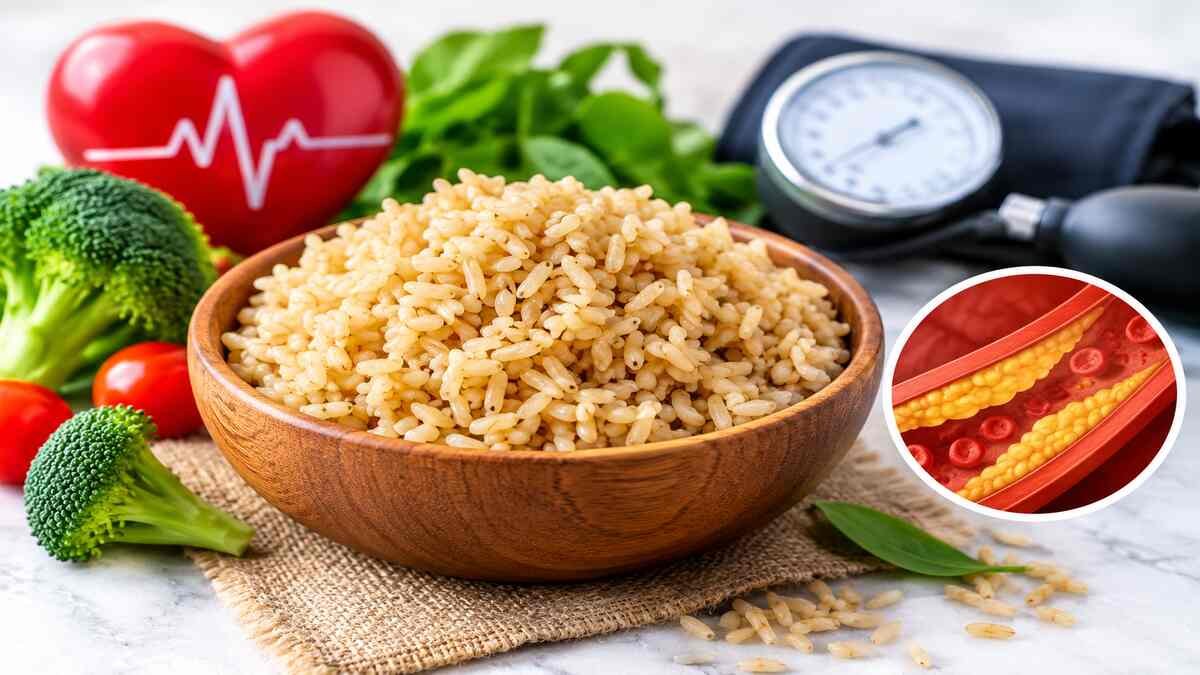

Can swapping the rice on your plate help support healthier cholesterol levels? It is a common question for people trying to improve their numbers through food. Brown rice is a nutritious whole grain and a sensible choice for most people with high cholesterol, but it is not a proven cholesterol-lowering treatment on its own.
Brown rice keeps its bran and germ, while white rice has these outer layers removed during processing. That is why brown rice contains more fiber, magnesium, and other naturally occurring nutrients. Whole grains as a group are part of heart-healthy eating patterns, yet the evidence for a direct LDL-lowering effect from brown rice specifically is limited.
This guide explains what brown rice offers, how it compares with white rice and oats, what research shows, and how to include it in a heart-conscious diet. It also covers possible drawbacks such as arsenic and digestive tolerance. The information is general and is not individualized medical advice. For broader background on this grain, see our guide to the health benefits of brown rice.
Is Brown Rice Good for High Cholesterol?
Yes, brown rice can be a nutritious choice for people concerned about cholesterol. It is a whole grain that contains fiber and other beneficial nutrients, and it can replace refined grains in a balanced eating pattern. However, eating brown rice alone is unlikely to lower LDL cholesterol significantly.
It helps to separate two ideas. Supporting overall heart health through diet is different from directly treating high cholesterol. Brown rice fits the first goal well. For the second, other foods and sometimes medication have stronger evidence.
Why Brown Rice May Be a Better Choice for Heart Health
Several features explain why brown rice is often preferred over white rice:
- It keeps more of the grain’s natural components.
- It contains dietary fiber.
- It provides magnesium and other micronutrients.
- It can replace refined grains in everyday meals.
The American Heart Association’s 2026 dietary guidance, as summarized by News-Medical, favors whole grains over refined grains and lists brown rice among them.
Does Brown Rice Actually Lower LDL Cholesterol?
LDL cholesterol is often called bad cholesterol because higher levels are linked with a greater risk of cardiovascular disease. Our guide to LDL vs. HDL cholesterol explains the difference.
Research on whole grains has produced mixed findings that depend on the grain studied. A 2020 systematic review and meta-analysis of randomized trials found that whole-grain oats improved total and LDL cholesterol. Whole-grain rice, in contrast, was linked mainly with a small improvement in triglycerides. The authors concluded that more research is needed.
The takeaway is that brown rice is a healthy dietary option, not a proven cholesterol-lowering treatment.
How Brown Rice May Affect Cholesterol Levels
Several nutritional features make brown rice relevant to cholesterol management. Each one should be viewed in context.
Dietary Fiber and Cholesterol
Brown rice contains both soluble and insoluble fiber. Soluble fiber can help lower LDL cholesterol by reducing cholesterol absorption and affecting bile acid recycling. Insoluble fiber mainly supports regular digestion.
One cup of cooked brown rice provides about 3 grams of fiber, according to USDA FoodData Central. Most of that is not the viscous soluble fiber most strongly linked with LDL reduction. The American College of Cardiology notes that soluble fiber is relatively higher in legumes, fruits, vegetables, barley, and oats.
Whole Grains and Cardiovascular Health
Health organizations recommend choosing whole grains over refined grains. Making that swap can improve overall diet quality. A 2015 meta-analysis in the American Journal of Clinical Nutrition found that whole-grain intake lowered LDL and total cholesterol compared with non-whole-grain diets, and that whole-grain oats appeared most effective.
The 2026 ACC/AHA dyslipidemia guideline recommends an eating pattern rich in fruits, vegetables, nuts, legumes, whole grains, and fiber, along with less saturated fat (JACC). Brown rice can be one part of that pattern. It is not the part with the strongest evidence.
The Role of Magnesium and Plant Compounds
Magnesium supports normal muscle and nerve function and many other processes, according to the NIH Office of Dietary Supplements. The bran layer also contains naturally occurring plant compounds. These add to the grain’s nutritional profile, but there is no evidence that they directly remove cholesterol from the bloodstream.
Brown Rice vs. White Rice for Cholesterol
Brown rice is generally the more nutrient-dense option. It retains the bran, germ, and endosperm, while white rice keeps only the endosperm. That gives brown rice more fiber and certain minerals. White rice may feel easier to digest for some people.
| Nutritional feature | Brown rice | White rice |
|---|---|---|
| Processing | Whole grain | Refined grain |
| Fiber | Generally higher | Generally lower |
| Magnesium | Generally higher | Generally lower |
| Bran layer | Retained | Removed |
| Glycemic response | Varies by variety and preparation | Varies by variety and preparation |
Should You Replace White Rice With Brown Rice?
Replacing some refined grains with whole grains can improve overall dietary quality. The change should be practical and sustainable, not a strict rule. If you enjoy white rice, you can still include it while adding other whole grains, such as oats, barley, quinoa, or whole-wheat bread, to your meals.
If you also track blood sugar, see our article on whether brown rice lowers blood sugar.
Nutritional Benefits of Brown Rice for Heart Health
Beyond cholesterol, brown rice contributes to a heart-conscious diet in several ways.
Provides Dietary Fiber
Fiber supports digestive health and contributes to a nutritious eating pattern. Brown rice is a helpful but modest source, so combining it with beans, vegetables, and fruit adds more.
Supplies Magnesium
A cup of cooked brown rice provides roughly one-fifth of the Daily Value for magnesium. This supports normal muscle and nerve function, among other roles.
Supports a Balanced Whole-Grain Diet
Whole grains add variety and can replace more refined grain products such as white bread and many packaged snacks.
Contains Naturally Occurring Antioxidant Compounds
The bran layer contains phenolic compounds and other plant chemicals. They contribute to brown rice’s nutritional makeup. They should not be seen as proof that brown rice prevents heart attacks or reverses plaque.
How to Include Brown Rice in a Heart-Healthy Diet
Brown rice works best as one part of a balanced meal. These practical ideas can help.
Combine Brown Rice With Vegetables
Add broccoli, spinach, carrots, bell peppers, or green beans. Vegetables add fiber, vitamins, minerals, and variety. Our guide to how to eat more vegetables offers more ideas.
Add Plant-Based Protein Sources
Pair brown rice with lentils, chickpeas, beans, peas, or tofu. Legumes are especially useful because they add soluble fiber and plant protein. See our overview of the health benefits of legumes.
Choose Heart-Healthy Cooking Ingredients
Small changes make a difference:
- Use modest amounts of unsaturated oils such as olive oil.
- Limit butter and other saturated-fat-rich ingredients.
- Go easy on salt in rice dishes.
- Choose minimally processed ingredients.
Our guide to olive oil benefits explains why it is a common choice.
Think About Overall Meal Balance
Brown rice should be one component of a meal, not the whole meal. A good example is brown rice with lentils, steamed vegetables, and a small amount of olive oil.
How Much Brown Rice Should You Eat?
There is no universal brown rice serving that is prescribed for lowering cholesterol. Portions depend on your energy needs, activity level, health conditions, and overall diet. No amount of brown rice has been shown to lower cholesterol by a specific percentage. Our article on eating brown rice every day covers daily intake in more detail.
Potential Drawbacks of Eating Brown Rice
A balanced article should cover the downsides too. These are manageable for most people.
Arsenic Exposure
Rice absorbs inorganic arsenic from soil and water, and it tends to take up more than other grains. Because brown rice keeps its bran, it can contain more inorganic arsenic than white rice. In FDA testing reported by NBC News, average inorganic arsenic levels per serving of rice grains ranged from 2.6 to 7.2 micrograms, with brown rice at the high end.
The FDA said these levels were too low to cause short-term health effects. Its advice was to eat a balanced diet with a variety of grains, such as wheat, barley, and oats, rather than relying on any single food. Variety is the practical response, and there is no need for alarm.
Digestive Discomfort
The fiber in brown rice may cause bloating or gas in people who are not used to high-fiber foods. Increase fiber gradually and drink enough fluids. Our overview of high-fiber foods for digestive health includes tips.
Carbohydrate Content
Brown rice is still a carbohydrate food. Being a whole grain does not make its carbohydrate content irrelevant to your needs. You do not need to cut out carbohydrates to improve cholesterol.
Other Foods That May Help Manage High Cholesterol
Dietary patterns matter more than any one food. The ACC notes that eating oats, barley, legumes, soy protein, nuts, and other plant foods high in soluble fiber can support healthier LDL levels.
| Food | Potential benefit |
|---|---|
| Oats | Rich in beta-glucan soluble fiber |
| Barley | Contains beta-glucan |
| Beans and lentils | Provide soluble fiber and plant protein |
| Nuts | Provide unsaturated fats and fiber |
| Fruits | Provide fiber and beneficial plant compounds |
| Vegetables | Supply fiber and important micronutrients |
| Olive oil | Provides monounsaturated fat |
Replacing saturated fat with unsaturated fat and adding fiber-rich foods can help support healthier LDL cholesterol. For more options, see our guides to almonds and high cholesterol and heart-healthy foods. Our overview of high cholesterol covers causes and treatment.
Who Should Be Careful About Eating Brown Rice?
Most people can eat brown rice without a problem. Some situations call for individualized advice.
People With Certain Digestive Conditions
Some people need to adjust their fiber intake depending on digestive symptoms or medical circumstances.
People Managing Blood Sugar
Brown rice contains carbohydrates and can raise blood glucose. Individual responses vary, so people with diabetes should consider portion size and ask their care team for guidance.
People With Specific Medical Dietary Requirements
If you have a condition that requires individualized nutrition management, talk with a qualified healthcare professional about which grains suit you.
Frequently Asked Questions
Is brown rice better than white rice for high cholesterol?
Brown rice contains more fiber and nutrients because it retains its bran and germ, so it is generally more nutrient-dense. However, it has not been proven to lower LDL cholesterol significantly on its own.
Does brown rice reduce LDL cholesterol?
Brown rice provides fiber, but research has not shown a strong, consistent LDL-lowering effect from brown rice specifically. A 2020 meta-analysis found clearer LDL benefits for oats than for rice.
Can I eat brown rice every day if I have high cholesterol?
Brown rice can be included regularly in a varied, balanced diet if it fits your nutritional needs. Because rice can contain arsenic, the FDA advises eating a variety of grains.
Is brown rice good for heart health?
It can contribute to a heart-healthy eating pattern, especially when it replaces refined grains and is paired with vegetables, legumes, and other nutritious foods.
Which is better for cholesterol: brown rice or oatmeal?
Oats have stronger evidence for lowering LDL cholesterol because of their beta-glucan soluble fiber (meta-analysis). Brown rice remains a nutritious option, and the two can both fit into a balanced diet.
Conclusion
Brown rice can be a nutritious addition to a heart-healthy diet because it contains fiber, magnesium, and other nutrients. It should not be viewed as a standalone solution for high cholesterol. The strongest dietary approach combines whole grains, fruits, vegetables, legumes, nuts, and healthy fats, with less saturated fat.
Think about your overall eating habits rather than one food. If your cholesterol stays high, talk with a qualified healthcare professional about your risk and treatment options. Do not stop or change prescribed cholesterol medication because of dietary changes.
Sources
- Marshall S, et al. The effect of replacing refined grains with whole grains on cardiovascular risk factors: a systematic review and meta-analysis of randomized controlled trials. Journal of the Academy of Nutrition and Dietetics. 2020;120(11):1859-1883.
- Hollænder PL, et al. Whole-grain and blood lipid changes in apparently healthy adults: a systematic review and meta-analysis of randomized controlled studies. American Journal of Clinical Nutrition. 2015;102(3):556-572.
- 2026 ACC/AHA/Multisociety Guideline on the Management of Dyslipidemia. Journal of the American College of Cardiology.
- American College of Cardiology. Prioritizing Health: Dietary Approaches for Elevated LDL-C.
- News-Medical. American Heart Association’s 9 diet rules to lower heart disease risk (summary of AHA dietary guidance).
- NBC News. Arsenic in rice not a risk over short term, FDA finds.
- U.S. Department of Agriculture. FoodData Central.
- National Institutes of Health, Office of Dietary Supplements. Magnesium fact sheet for health professionals.
Medical Disclaimer: This article is for general educational purposes only and is not medical advice. It does not diagnose, treat, or prevent any condition, and it should not replace guidance from a qualified healthcare professional. Talk with your doctor or a registered dietitian about your cholesterol levels and any dietary changes. Do not stop or change prescribed cholesterol medication because of anything you read here.