
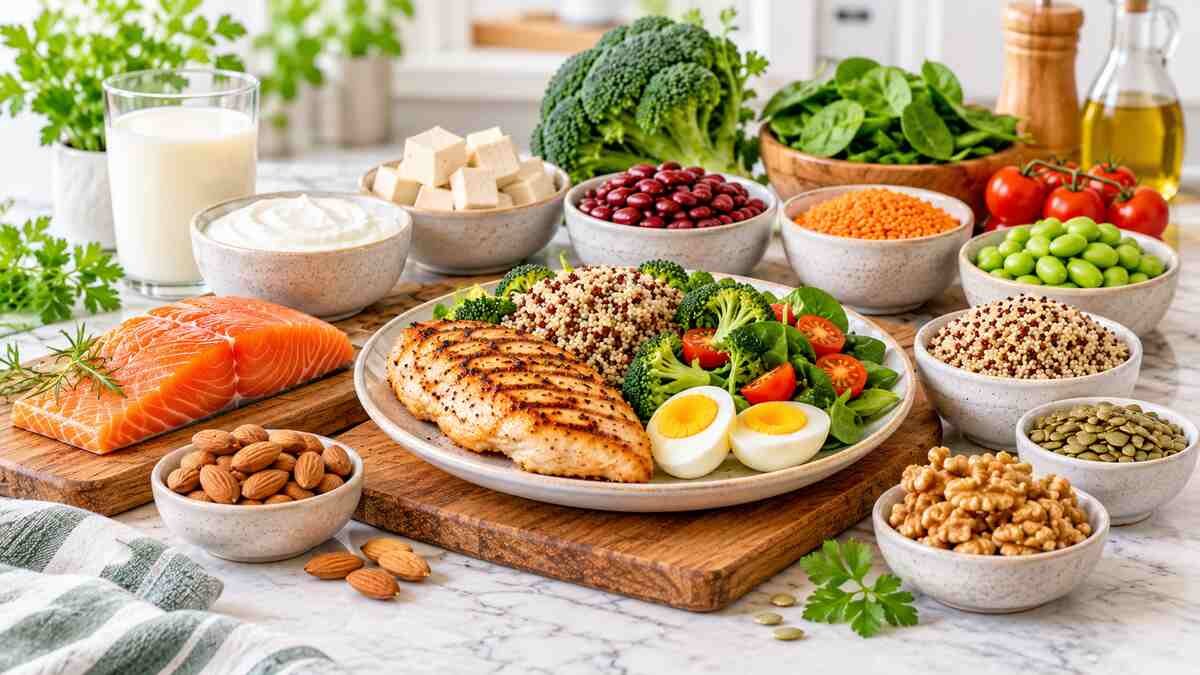

Protein is found in more foods than many people realize. From eggs, fish, and dairy to beans, lentils, tofu, nuts, and seeds, there are plenty of ways to include protein in everyday meals. Knowing your options makes it easier to build a varied and balanced diet.
Still, the choices can feel overwhelming. Search for a high protein diet and you will find long lists, powders, bars, and strict meal plans. In reality, most people can get protein from ordinary grocery store foods, and each food also brings its own mix of fiber, healthy fats, vitamins, and minerals.
This guide focuses on what to eat: food categories, easy meal combinations, snack ideas, and foods to enjoy less often. It does not repeat the science of protein, which we cover in our high protein diet for beginners guide, or the full ingredient lists in our high-protein foods article. This is general education, not individual medical advice.
What Foods Can You Eat on a High-Protein Diet?
A high-protein eating pattern can include foods such as eggs, fish, chicken, milk, yogurt, beans, lentils, chickpeas, tofu, nuts, and seeds. These foods provide protein along with varying amounts of vitamins, minerals, fats, and fiber. A balanced diet also includes fruits, vegetables, and carbohydrate-rich foods.
The Dietary Guidelines for Americans, 2025 to 2030 encourage a variety of animal and plant protein foods, including eggs, poultry, seafood, meat, beans, peas, lentils, nuts, seeds, and soy. USDA MyPlate describes the same range of choices.
Animal-Based Protein Foods
This group includes poultry, fish and seafood, eggs, lean meat, and dairy. Many of these foods provide all nine essential amino acids.
Plant-Based Protein Foods
This group includes beans, lentils, chickpeas, peas, soy foods, nuts, seeds, and some whole grains. Plant protein foods often provide fiber and unsaturated fats as well.
Dairy and Alternative Protein Foods
Milk, yogurt, kefir, cottage cheese, and fortified soy drinks are convenient options. They also supply calcium, and many fortified products supply vitamin D.
Your choices can reflect your preferences, budget, allergies, culture, and what is available near you. Protein foods can fit into breakfast, lunch, dinner, and snacks.
Animal-Based Foods to Include
Poultry, Including Chicken and Turkey
Chicken and turkey are widely available and easy to prepare. Skinless cuts are lower in saturated fat than cuts with skin. They work in soups, stir-fries, salads, wraps, and sheet-pan dinners. A 3-ounce cooked portion provides roughly 25 grams of protein, according to USDA FoodData Central.
Fish and Seafood
Salmon, sardines, tuna, trout, shrimp, and other seafood provide protein, and fatty fish also provide omega-3 fats. Learn more in our guides to fatty fish and salmon health benefits. People who are pregnant, breastfeeding, or feeding young children should follow the FDA’s advice about eating fish to choose lower-mercury options.
Eggs
Eggs provide about 6 grams of protein each, along with vitamin B12, choline, and selenium. They are versatile and affordable. You can boil, scramble, poach, or bake them into vegetable dishes. People with specific cholesterol or heart concerns should ask their healthcare professional how often eggs fit their diet.
Lean Meat
Cuts such as sirloin, pork tenderloin, and lean ground meat can fit into a balanced diet. They provide iron, zinc, and vitamin B12. Because some cuts are high in saturated fat, trimming visible fat and using smaller portions can help.
Dairy Products
Milk, plain yogurt, Greek yogurt, kefir, and cottage cheese offer protein and calcium. Plain or lightly sweetened options let you control added sugar. See our article on yogurt health benefits.
Variety within each category matters. Baking, grilling, steaming, poaching, and roasting are simple cooking methods that do not require much added fat. It also helps to choose mostly minimally processed foods and to keep processed meats to a minimum, as we explain below.
Plant-Based Foods to Include
Plant foods can be excellent protein sources, and they are often budget-friendly. Many also bring fiber, which most Americans do not get enough of.
Beans and Legumes
Black beans, kidney beans, pinto beans, white beans, split peas, and other legumes provide protein, fiber, iron, folate, and potassium. A cup of cooked beans typically provides about 12 to 15 grams of protein. Canned beans are convenient; rinsing them can lower sodium. Learn more about legumes.
Lentils and Chickpeas
Lentils cook quickly and need no soaking. A cup of cooked lentils provides about 18 grams of protein. Chickpeas can be roasted, blended into hummus, or added to salads and curries.
Soy Foods
Tofu, tempeh, edamame, and soy milk are soy-based foods. Soy is one of the few plant foods considered a complete protein, meaning it provides all nine essential amino acids. Tofu absorbs the flavors of sauces and spices, and tempeh has a firmer, nuttier texture.
Nuts and Seeds
Almonds, peanuts, walnuts, pistachios, pumpkin seeds, sunflower seeds, hemp seeds, and chia seeds contain protein, unsaturated fats, and minerals. They are also calorie-dense, so small handfuls go a long way. See the health benefits of nuts.
Whole Grains That Contain Protein
Oats, quinoa, whole-wheat bread, and brown rice provide smaller amounts of protein. Quinoa has about 8 grams per cooked cup, and oats about 5 grams. These amounts add up across the day.
Fiber from plant foods supports digestion and fullness. Eating a variety of plant foods over the day contributes to nutritional adequacy, and you do not need to combine them at every meal. Lentils, beans, chickpeas, and peanuts are some of the most affordable options.
Protein-Rich Foods That Also Provide Other Nutrients
When you choose protein foods, the “package” matters. A food with a similar amount of protein can come with very different amounts of fiber, fat, sodium, and vitamins. Our guide to nutrient-dense foods explores this idea further.
Foods That Provide Protein and Fiber
Beans, lentils, chickpeas, peas, and edamame provide protein, fiber, iron, and folate. They are a smart way to add both nutrients in one food.
Foods That Provide Protein and Healthy Fats
Nuts, seeds, and fatty fish provide protein with unsaturated fats. Fish such as salmon and sardines supply omega-3 fats, which support heart health. Eggs offer protein with several vitamins and minerals.
Foods That Provide Protein and Calcium
Milk, yogurt, kefir, cottage cheese, and fortified soy drinks provide protein with calcium. Canned salmon and sardines with soft bones can also be good sources of calcium.
Rather than focusing only on protein, aim for a variety of foods so that you cover many nutrients. See our list of healthiest foods to eat every day for more ideas.
What to Eat for Breakfast on a High-Protein Diet
Breakfast does not need to be complicated. Pair a protein food with a carbohydrate and fruit or vegetables, and adjust to your tastes and routine.
Eggs With Whole-Grain Toast
Scrambled, boiled, or poached eggs with whole-grain toast and sliced fruit make a simple, filling breakfast. Add spinach, tomatoes, or peppers for extra nutrients.
Yogurt With Fruit, Oats, and Nuts
Plain Greek yogurt topped with berries, oats, and chopped nuts offers protein, fiber, and healthy fats. Choose plain yogurt and add fruit for natural sweetness.
Milk-Based Oatmeal
Cooking oats in milk or fortified soy milk instead of water adds protein and calcium. Stir in peanut butter, seeds, or fruit.
Tofu Scramble With Vegetables
Crumbled tofu sautéed with onions, peppers, and spices is a plant-based alternative to scrambled eggs.
Beans With Toast or Flatbread
Beans on toast, or beans with flatbread or tortillas, are eaten as breakfast in many food traditions and provide protein and fiber.
What to Eat for Lunch and Dinner
You do not need a completely different way of eating. Most familiar meals can include a protein food.
Protein-Rich Lunch Ideas
- A whole-wheat wrap with chicken, vegetables, and a yogurt sauce
- A chickpea salad with leafy greens and whole-grain bread
- Lentil soup with a side salad
- An egg and vegetable sandwich with fruit
Balanced Dinner Combinations
- Baked fish with rice and steamed vegetables
- Rice, lentils, vegetables, and grilled fish
- Chicken or turkey with roasted potatoes and green beans
- A vegetable stir-fry with lean beef or shrimp and brown rice
Vegetarian Lunch and Dinner Options
- A tofu stir-fry with vegetables and rice
- Bean curry served with rice and vegetables
- Black bean tacos with salsa and avocado
- Pasta with white beans, tomatoes, and greens
These meals draw on familiar foods from many cuisines, and they show how protein fits within a complete plate. Portions and combinations can be flexible. For general guidance, read our overview of what a balanced diet is.
Healthy Snacks That Contain Protein
Snacks are optional. Eat them if you are hungry, and choose foods you enjoy. They do not need to be chosen only for their protein.
Dairy-Based Snacks
- Plain yogurt with fruit
- Cottage cheese with berries or tomatoes
- A glass of milk or fortified soy drink
- A piece of cheese with whole-grain crackers
Plant-Based Snacks
- A small handful of nuts or seeds
- Hummus with vegetables or pita bread
- Roasted chickpeas
- Edamame with a pinch of salt
Simple Combinations
- A hard-boiled egg with fruit or toast
- Peanut butter on apple slices or whole-grain bread
- Whole-grain crackers with tuna
Foods to Limit or Eat Less Often
Protein quality and overall eating patterns matter. No food needs to be labeled as “bad,” but some protein foods are best kept to occasional use.
Processed Meats
Bacon, sausage, hot dogs, deli meats, and cured meats are high in sodium and often in saturated fat. The World Health Organization’s cancer research agency classified processed meat as carcinogenic to humans (Group 1) in 2015, based on evidence linking it to colorectal cancer. It estimated about an 18% higher colorectal cancer risk for each 50 grams eaten daily, while noting that the absolute risk for an individual remains small. See the IARC announcement. The Dietary Guidelines also advise limiting saturated fat to under 10% of daily calories.
Deep-Fried Protein Foods
Fried chicken, fish sticks, and breaded, fried items add extra fat and calories. Baking, air frying, grilling, or sautéing with a small amount of oil can give similar flavors with less fat.
Highly Processed Protein Snacks
Some bars, chips, and shakes marketed as “high protein” are highly processed and may be low in fiber and other nutrients. Whole foods usually offer more nutritional value.
Protein Products With Excessive Added Sugar or Sodium
Flavored yogurts, protein drinks, and bars can contain a lot of added sugar, and canned or deli items can be high in sodium. Reading the label helps. See our guide to reading nutrition facts.
The overall pattern matters more than any single food. Occasional treats can fit into a healthy diet.
How to Combine Protein Foods With a Balanced Diet
A balanced plate includes protein and other food groups. For a broader look, see our guide to what a healthy diet is.
Pair Protein With Carbohydrates
Whole grains, potatoes, beans, fruit, and starchy vegetables provide energy and, depending on the food, fiber. Carbohydrate foods are not something to avoid on a high-protein diet.
Include Vegetables and Fruit
Fill part of your plate with vegetables and fruit for vitamins, minerals, and fiber. Colorful variety helps you get a range of nutrients.
Add Sources of Healthy Fats
Olive oil, avocado, nuts, seeds, and fatty fish provide unsaturated fats. They also help your body absorb fat-soluble vitamins. For a well-studied pattern that does this, see the Mediterranean diet.
Choose a Variety of Protein Foods Throughout the Week
Rotate between fish, poultry, eggs, beans, lentils, tofu, dairy, and nuts. Variety helps cover different nutrients and makes meals more interesting.
Common Mistakes When Choosing High-Protein Foods
Relying Only on Meat
Animal protein is not the only option. Over-relying on meat can leave out fiber and some plant nutrients.
Ignoring Plant-Based Protein
Beans, lentils, tofu, nuts, and seeds are affordable and nutritious. Many healthy eating patterns are built mostly on them.
Replacing Balanced Meals With Protein Products
Bars, shakes, and powders are convenient at times, but they are not required and should not routinely replace real meals.
Forgetting Other Essential Nutrients
Fiber, healthy fats, vitamins, and minerals matter too. A plate that is all protein is not balanced.
Assuming More Protein Is Always Better
Needs vary by age, activity, and health. Experts at the Harvard T.H. Chan School of Public Health noted that many Americans already eat plenty of protein and that the foods that come with it matter. People with kidney disease and some other conditions may need to limit protein, as explained by the National Institute of Diabetes and Digestive and Kidney Diseases. Ask your healthcare professional before making big changes.
Frequently Asked Questions
What Foods Can You Eat on a High-Protein Diet?
You can eat eggs, fish, poultry, lean meat, dairy, beans, lentils, chickpeas, tofu, tempeh, nuts, and seeds. Include vegetables, fruits, and whole grains too. See MyPlate for more examples.
What Are the Best Natural Sources of Protein?
There is no single best source. Eggs, fish, poultry, dairy, beans, lentils, soy foods, and nuts are all natural sources, each with different nutrients. A mix of animal and plant foods is a flexible approach.
Which Vegetables Contain Protein?
Green peas, edamame, spinach, broccoli, asparagus, and potatoes contain some protein. Edamame has about 17 grams per cooked cup, while most vegetables provide a few grams per serving. Check USDA FoodData Central for exact amounts.
Can You Get Enough Protein Without Eating Meat?
Yes. Beans, lentils, tofu, soy foods, nuts, seeds, eggs, and dairy can all provide protein. Eating a variety of plant foods through the day supplies all the essential amino acids.
Are Beans and Lentils Good Protein Sources?
Yes. A cup of cooked lentils provides about 18 grams of protein, and beans provide about 12 to 15 grams. They also supply fiber, iron, and folate, and they are budget-friendly.
What Are Some Protein-Rich Breakfast Foods?
Eggs, Greek yogurt, cottage cheese, milk-based oatmeal, tofu scramble, beans on toast, and peanut butter on whole-grain toast are all options. Pair them with fruit or vegetables.
Are Protein Supplements Necessary?
Most people do not need them. Food can supply enough protein for most healthy adults. Check labels for added sugar, and ask a healthcare professional if you have a medical condition.
Can a High-Protein Diet Include Carbohydrates?
Yes. Whole grains, beans, fruit, and starchy vegetables provide energy and fiber, and they can fit alongside protein foods. Balance matters more than cutting out a food group. See our guide to weight management for more on balanced habits.
Conclusion
Protein comes from many foods, including eggs, fish, poultry, dairy, beans, lentils, tofu, nuts, and seeds. Animal and plant sources can both contribute to a balanced diet, and everyday foods can be nutritious, affordable, and easy to prepare.
A high protein diet works best when it is one part of an overall eating pattern with plenty of vegetables, fruit, whole grains, and healthy fats. Choose foods that fit your needs, preferences, and circumstances. If you have a health condition, such as kidney disease, talk with a healthcare professional or registered dietitian first.
Sources
- U.S. Department of Agriculture and U.S. Department of Health and Human Services: Dietary Guidelines for Americans, 2025 to 2030
- USDA MyPlate: Protein Foods
- USDA FoodData Central
- Harvard T.H. Chan School of Public Health, The Nutrition Source: Dietary Guidelines for Americans 2025 to 2030
- International Agency for Research on Cancer: IARC Monographs evaluate consumption of red meat and processed meat (2015)
- National Institute of Diabetes and Digestive and Kidney Diseases: Chronic Kidney Disease
- U.S. Food and Drug Administration: Advice About Eating Fish
Medical Disclaimer: This article is for general educational purposes only and is not medical advice. It does not diagnose, treat, or prevent any condition, and it cannot replace guidance from a doctor, registered dietitian, or other qualified healthcare professional. Protein needs vary by age, health, and life stage. Talk with your healthcare provider before making major changes to your diet, especially if you have kidney disease or another medical condition, take medications, have food allergies, are pregnant or breastfeeding, or are planning changes for a child.
3 thoughts on “What to Eat on a High-Protein Diet: Foods, Meals & Tips”
Comments are closed.