
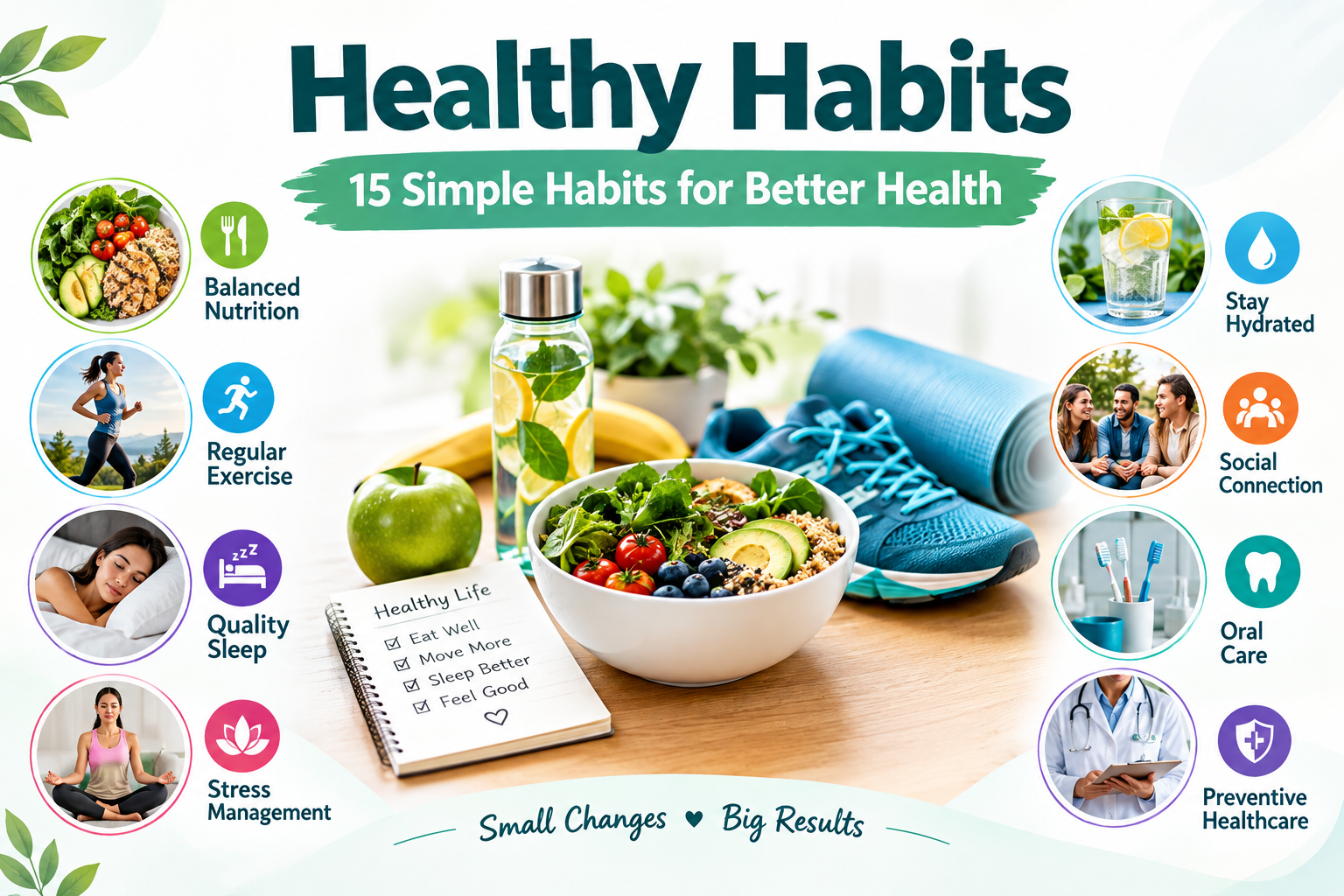

Healthy habits aren’t about following a perfect routine. They’re the small, repeatable behaviors you build into everyday life that add up over months and years.
You don’t need a complete lifestyle overhaul to feel the benefits. A few consistent habits around food, movement, sleep, and stress can meaningfully support your physical and mental health over time.
This guide covers what healthy habits actually are, 15 practical habits worth building, and a simple framework for making them stick.
Quick answer
- Healthy habits are repeated behaviors, not one-time choices, that support physical and mental well-being over time.
- The WHO identifies healthy diet, physical activity, avoiding tobacco and alcohol, adequate sleep, and social connection as key lifestyle factors for health.
- Consistency matters more than intensity. Small, sustainable habits outperform short bursts of extreme effort.
- Healthy habits support disease prevention but can’t guarantee you’ll avoid every condition.
- Starting with one specific habit works better than trying to change everything at once.
- Healthy habits complement medical care. They don’t replace it.
What are healthy habits?
A healthy habit is a behavior you repeat consistently enough that it becomes a normal part of your routine, rather than something you have to think hard about each time.
Habit vs. one-time healthy choice
Eating a salad once doesn’t change your health. Eating vegetables most days, most weeks, for months on end, does. The difference between a habit and a one-time choice is repetition over time.
Why consistency matters
Your body responds to patterns, not isolated events. A single workout barely registers physiologically, but a pattern of regular movement measurably changes your cardiovascular fitness, blood sugar regulation, and mood over weeks and months.
Individual needs differ
Age, health conditions, culture, resources, and personal preferences all shape which habits make sense for you. What works well for one person may not fit another’s life or health situation, and that’s normal.
Healthy habits should complement appropriate medical care, not replace it. If you have a diagnosed condition, work with your doctor to understand how lifestyle changes fit alongside treatment.
Why are healthy habits important?
Daily habits influence nearly every system in the body, from your heart to your mood to how well you sleep.
Physical and mental health
Regular movement, balanced eating, and adequate sleep all support cardiovascular health, metabolic function, and energy levels. These same habits are also linked to better mood regulation and lower rates of anxiety and depression symptoms.
Healthy aging and disease prevention
Consistent healthy habits are associated with a lower risk of heart disease, type 2 diabetes, and some cancers. It’s worth being clear, though: healthy habits reduce risk. They don’t eliminate it, and they can’t prevent every disease. Genetics, environment, and factors outside your control still play a role.
15 healthy habits for everyday life
These habits cover the areas of daily life with the strongest evidence behind them.
1. Eat a balanced, varied diet
Build meals around a mix of vegetables, fruits, whole grains, legumes, protein-rich foods, and healthy fats. Our guide to what a healthy diet looks like breaks down these principles in more depth.
2. Eat more fruits and vegetables
Fruits and vegetables contribute fiber, vitamins, minerals, and other beneficial compounds. No single fruit or vegetable is a “superfood.” Variety matters more than any one item.
3. Choose high-fiber foods
Beans, lentils, whole grains, fruits, vegetables, nuts, and seeds all support digestion and steady blood sugar. Our guide to high-fiber foods for digestive health covers where to find it.
4. Stay physically active
The WHO recommends 150 to 300 minutes of moderate-intensity aerobic activity per week, along with muscle-strengthening activity on two or more days. Walking, cycling, swimming, dancing, and household chores all count. Our full breakdown of the benefits of exercise covers why movement matters beyond weight.
5. Sit less and move more
Physical activity isn’t limited to structured workouts. Short walking breaks, taking the stairs, standing periodically, and active household tasks all help. The goal is making movement part of your day, not just your gym schedule.
6. Get enough quality sleep
A consistent sleep schedule, a relaxing bedtime routine, and a comfortable sleep environment all support better rest. Our guide on how to improve sleep covers practical steps, including when persistent sleep problems need medical attention.
7. Manage stress in healthy ways
Exercise, relaxation techniques, breathing exercises, time outdoors, and social connection all help regulate stress. Our guide on how to reduce stress covers specific techniques, including when to seek professional support.
8. Drink water regularly
Staying hydrated supports digestion, energy, and overall function. Fluid needs vary based on activity level, climate, diet, age, and health status, so there’s no single number that fits everyone.
9. Avoid tobacco and nicotine
Avoiding smoking and other tobacco products significantly lowers your risk of heart disease, several cancers, and lung disease. For people who currently use tobacco, quitting meaningfully reduces these risks at any age. Quitting isn’t simply about willpower. Evidence-based cessation support, including counseling and medication, improves success rates.
10. Be mindful of alcohol
Alcohol affects nearly every organ system, and less alcohol generally means lower alcohol-related risk. Alcohol isn’t necessary for a healthy or enjoyable lifestyle.
11. Maintain a healthy weight
Body weight is influenced by balanced eating, physical activity, sleep, stress, and long-term habits, not any single factor. Individual bodies and needs vary widely. If this is an area you’re focused on, our roundup of 2026 weight loss trends covers current, evidence-based approaches. Body weight is one health marker among many, not the only measure of health.
12. Take care of your oral health
The CDC recommends brushing teeth twice daily with fluoride toothpaste, cleaning between teeth daily, limiting frequent sugary foods and drinks, and attending regular dental checkups. Oral health is connected to overall health, including heart and digestive health.
13. Stay connected with other people
Family, friends, community, and social activities all contribute to overall well-being. Social connection is one component of a healthy life, not a guarantee against mental health struggles.
14. Keep up with preventive healthcare
Recommended screenings, vaccinations, routine medical and dental care, blood pressure checks, and appropriate diabetes screening all help catch problems early. Knowing your family health history also helps you and your doctor decide which screenings matter most for you.
15. Build habits you can maintain
The most important principle: choose habits that fit your real life. Start small, change one habit at a time, make habits specific, attach new habits to existing routines, and expect occasional setbacks. When you slip up, restart rather than abandoning the habit entirely.
How to build healthy habits that last
A simple framework makes new habits easier to stick with.
Step 1: Start with one habit
Trying to overhaul your entire lifestyle overnight rarely works. Pick one habit to focus on first.
Step 2: Make the habit specific
Vague goals are hard to act on. Instead of “I will exercise more,” try “I will walk for 20 minutes after dinner three days a week.”
Step 3: Make it easy
Set up your environment so the healthier choice takes less effort. Keep fruit visible on the counter, or lay out workout clothes the night before.
Step 4: Repeat it consistently
Focus on regular practice rather than perfection. Missing a day occasionally doesn’t undo your progress.
Step 5: Track progress
A calendar, checklist, app, or journal can help you notice patterns and stay motivated, if that approach works for you.
Step 6: Adjust when necessary
Healthy habits should flex with changes in work, family, health, and travel. A routine that survives real life beats a rigid one that falls apart under pressure.
Healthy habits vs. unhealthy habits
| Healthy habit | Habit to limit or replace |
|---|---|
| Eating varied, nutritious foods | Frequently relying on highly processed foods |
| Regular physical activity | Long periods of inactivity |
| Consistent sleep routine | Regularly sacrificing sleep |
| Healthy stress management | Using tobacco or excessive alcohol to cope |
| Preventive healthcare | Avoiding recommended checkups |
| Social connection | Persistent social isolation |
| Regular oral care | Neglecting dental hygiene |
| Sustainable weight management | Extreme dieting |
Simple healthy habits for beginners
If you’re just starting out, a short list of beginner-friendly habits is easier to act on than a long one:
- Walk regularly
- Add vegetables to meals
- Eat more whole foods
- Drink water regularly
- Establish a consistent sleep schedule
- Take movement breaks
- Practice stress management
- Avoid tobacco
- Limit alcohol
- Schedule preventive care
- Stay socially connected
Pick one or two from this list rather than trying all of them at once.
Healthy morning habits
A few habits can set a healthier tone for the day, though there’s no single routine everyone must follow:
- Wake at a consistent time
- Get natural light soon after waking
- Drink water
- Eat a balanced breakfast, if that works for your schedule
- Move your body, even briefly
- Plan your priorities for the day
Healthy evening habits
Evening habits mostly support better sleep and a calmer transition out of the day:
- Reduce stimulating activities before bed
- Prepare for the next day
- Eat dinner at a comfortable time
- Practice relaxation
- Limit alcohol in the evening
- Maintain a consistent bedtime
- Keep your sleep environment comfortable
Our guide on how to improve sleep covers this in more depth.
Healthy habits for long-term disease prevention
Lifestyle behaviors contribute to reducing risk for several chronic conditions, including heart disease, type 2 diabetes, some cancers, high blood pressure, obesity, and poor bone health.
The CDC identifies tobacco use, poor nutrition, physical inactivity, and excessive alcohol use as major risk factors behind chronic disease, alongside the importance of preventive care. Building healthy habits addresses several of these factors at once.
It’s worth repeating: lifestyle habits reduce risk. They can’t eliminate every disease risk, and some conditions develop regardless of how healthy your habits are.
Common healthy habit mistakes
A few patterns tend to derail otherwise good intentions:
- Trying to change everything at once
- Following extreme or restrictive diets
- Exercising to the point of exhaustion or injury
- Ignoring sleep while focusing only on diet and exercise
- Focusing only on weight instead of overall health
- Expecting instant results
- Relying on unproven supplements
- Feeling guilty after a single setback
- Comparing your routine to someone else’s
- Ignoring medical advice in favor of trends
Avoiding these patterns matters as much as building good habits in the first place.
How to create a simple healthy daily routine
A sample daily structure can help you visualize how these habits fit together, though it’s an example, not a medically required routine.
| Part of day | Healthy habit example |
|---|---|
| Morning | Light exposure, hydration, movement |
| Breakfast | Balanced, nutritious meal if desired |
| Daytime | Regular movement and nutritious meals |
| Afternoon | Short activity or walking break |
| Evening | Balanced dinner and relaxation |
| Night | Consistent bedtime routine |
Frequently asked questions
What are the most important healthy habits? Balanced nutrition, regular physical activity, quality sleep, stress management, avoiding tobacco, and preventive healthcare have the strongest evidence behind them for long-term health.
What are 10 healthy habits everyone should follow? A reasonable starting list includes eating a varied diet, staying physically active, sleeping consistently, managing stress, drinking enough water, avoiding tobacco, limiting alcohol, maintaining oral health, staying socially connected, and keeping up with preventive care.
How can I start healthy habits? Start with one specific, small habit rather than trying to change your whole lifestyle at once. Attach it to an existing routine to make it easier to remember.
How long does it take to build a healthy habit? Research on habit formation shows a wide range, often several weeks to a few months, depending on the habit and the person. Consistency matters more than hitting a specific timeline.
What are healthy habits for adults? The same core categories apply across adulthood: nutrition, movement, sleep, stress management, social connection, and preventive care, adjusted for individual age, health status, and life circumstances.
What healthy habits should I do every day? Daily habits like eating balanced meals, moving your body, and maintaining a consistent sleep schedule tend to have the most cumulative impact over time.
How can healthy habits improve my health? Consistent habits support cardiovascular health, metabolic function, mental well-being, and disease prevention, though they work best alongside appropriate medical care rather than as a replacement for it.
What are unhealthy habits to avoid? Tobacco use, excessive alcohol, chronic sleep deprivation, prolonged inactivity, and avoiding preventive checkups are among the habits most consistently linked to poor long-term health outcomes.
How can I maintain healthy habits long term? Build habits that fit your actual life, expect occasional setbacks, and focus on restarting rather than starting over completely after a slip.
Can small lifestyle changes improve health? Yes. Research consistently shows that small, sustained changes, rather than dramatic short-term ones, produce the most lasting health benefits.
The bottom line
Healthy habits aren’t about perfection. They’re practical, repeatable behaviors, like eating a balanced diet, staying active, sleeping well, managing stress, avoiding tobacco, maintaining social connections, and keeping up with preventive care, that support your health over time.
Start small, stay consistent, and build habits that actually fit your life. That approach beats any short-term overhaul in the long run.
Sources
- World Health Organization. Self-care for health and well-being
- World Health Organization. Physical Activity Fact Sheet
- Centers for Disease Control and Prevention. Chronic Diseases in America
- Centers for Disease Control and Prevention. Oral Health
Medical disclaimer
This article is for general information and education. It is not medical advice and cannot replace guidance from a qualified healthcare provider. Talk to a doctor before making significant changes to your diet, activity level, or existing treatment plan. Read our full Medical Disclaimer.
Read our full Medical Disclaimer.