
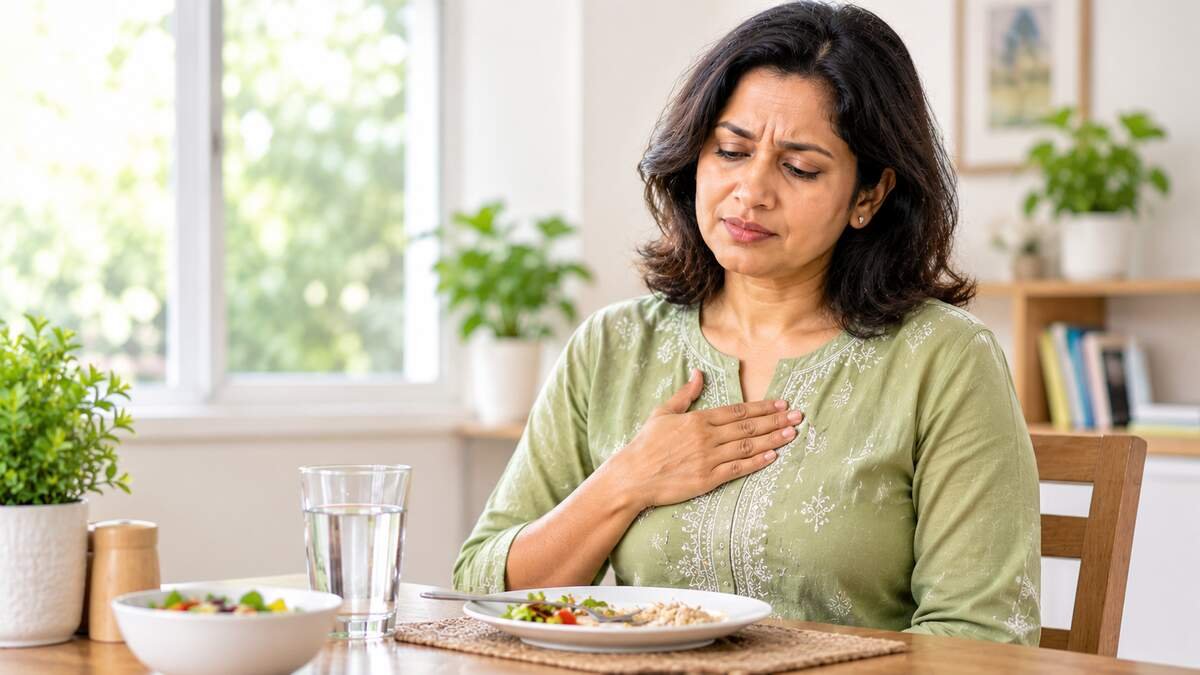
You finish a meal, and a short while later a burning feeling rises behind your breastbone. You may notice a sour taste in your mouth, or the burning may get worse when you bend over or lie down. Heartburn after eating is common, and it is usually caused by acid reflux, which happens when stomach acid moves back into the esophagus.
Large meals, fatty or spicy foods, and lying down too soon after eating can all make post-meal heartburn more likely. Occasional episodes are common and often manageable with simple changes. Heartburn that happens often or feels severe deserves a conversation with a healthcare professional.
This guide explains why meals can trigger heartburn, which foods and habits are most often involved, and how soon symptoms can start. You will also find practical ways to get relief and prevent it, how to tell whether frequent heartburn might point to GERD, and when to seek medical care. It offers general education and cannot diagnose your symptoms.
Why Do I Get Heartburn After Eating?
Heartburn after eating happens because a meal can make it easier for stomach contents to travel the wrong way. Mayo Clinic notes that heartburn usually occurs after eating and may also occur at night. It adds that the pain can worsen when you lie down or bend over.
How Acid Reflux Causes Heartburn
When you swallow, food travels down the esophagus and into the stomach. A ring of muscle called the lower esophageal sphincter (LES) sits between the two. It opens to let food through, then closes to keep stomach contents from moving back up.
If the LES relaxes at the wrong time or does not close well, stomach acid can flow into the esophagus. The National Institute of Diabetes and Digestive and Kidney Diseases (NIDDK) describes this as acid reflux. The esophageal lining is not designed to handle acid, so the irritation produces a burning feeling.
Why Meals Can Make Symptoms Worse
A meal fills and stretches the stomach, and that added fullness puts pressure on the LES. Large portions, high-fat foods, and pressure on the abdomen may make reflux more likely in people who are prone to it. Bending over or lying down soon after eating can make the burning more noticeable.
For more background, see our pillar guide on what causes heartburn and our overview of what heartburn feels like.
Common Causes of Heartburn After Eating
Several habits and conditions can contribute. Not everyone is affected by the same ones, and causes often overlap.
Eating Large Meals
Big portions increase stomach fullness and pressure. Mayo Clinic lists large meals among the factors linked to heartburn. Eating smaller amounts at a time can lighten that load for some people.
Eating Too Quickly
Eating fast can lead to overeating and uncomfortable fullness before your body signals that you have had enough. That may make reflux more likely for some people. Evidence that fast eating directly causes acid reflux in everyone is limited, so think of it as one possible contributor.
Lying Down After Meals
Gravity normally helps keep stomach contents down. When you lie flat soon after eating, that help disappears, and acid can move upward more easily. Mayo Clinic advises waiting two to three hours after a meal before lying down.
Fatty and Fried Foods
High-fat meals tend to be heavy and may stay in the stomach longer. For some people, they are a dependable trigger. Fried foods and rich, creamy dishes are common examples.
Other Lifestyle and Health Factors
Other factors can raise the chance of reflux after meals:
- Excess body weight
- Pregnancy
- Smoking
- Stress and anxiety
- A hiatal hernia, where the upper stomach bulges through the diaphragm
- Certain medications, including some anti-inflammatory pain relievers such as aspirin
Mayo Clinic’s GERD overview lists several of these as risk factors or aggravating factors. Triggers differ from person to person. Do not stop a prescribed medicine on your own, and talk with your healthcare provider or pharmacist if you suspect a medicine is involved. You can also read about acid reflux risk factors.
Foods and Drinks That Can Trigger Heartburn
Certain foods and drinks are known to bring on heartburn in some people. This section is a guide to possible triggers, not a list of foods everyone must avoid.
Common Food Triggers
Mayo Clinic lists these foods as possible triggers:
- Spicy foods
- Fried and high-fat foods
- Tomato products, such as tomato sauce and ketchup
- Citrus fruits and juices
- Chocolate
- Peppermint
- Onions
Drinks That May Trigger Symptoms
Drinks can cause trouble too. Possible culprits include:
- Coffee and other caffeinated drinks
- Alcohol
- Carbonated drinks
- Certain acidic beverages, such as some fruit juices
For more examples, see our guide on what makes acid reflux worse.
Are All These Foods Bad for Everyone?
No. There is no single heartburn diet that works for every person. A food that triggers symptoms for one person may be fine for another, so cutting out many foods without need can make eating harder than it has to be.
A food and symptom diary can help you find your own triggers. Track:
- What you ate and drank
- Meal size and timing
- When symptoms started
- How long they lasted
- Anything that seemed to make them worse, such as bending over
Aim to limit only the foods that repeatedly cause problems, and keep the rest of your diet balanced. Our guide on what a healthy diet looks like can help.
How Soon After Eating Can Heartburn Start?
There is no exact time that applies to everyone. Heartburn may begin during a meal or soon afterward. Some people notice it later, especially if they bend over or lie down.
Timing depends on the size and type of meal, your own reflux patterns, and other factors. Symptoms that start soon after eating are not required for something to be acid reflux, and symptoms that start later are not necessarily something else. If the timing is confusing, a symptom diary can help you and your healthcare professional see the pattern.
How to Relieve Heartburn After Eating
These steps are for mild symptoms with no warning signs. They may help, but none is guaranteed. For more ideas, see our guide on how to relieve heartburn at home.
Stay Upright After Eating
Avoid lying down right after a meal. Sitting or standing keeps gravity working for you and may reduce reflux. Try not to bend over or slouch while your stomach is full.
Take a Gentle Walk
A slow, comfortable walk can be easier than resting on the couch. Skip vigorous exercise right after eating, since it can make heartburn worse. Mayo Clinic notes that gentle exercise is fine but vigorous exercise can worsen symptoms. Learn more about walking for health.
Avoid Tight Clothing
Tight waistbands and belts press on the abdomen. Mayo Clinic advises avoiding tight-fitting clothing because it can put pressure on the belly and the LES. Loosening your belt after a meal is a simple fix.
Try Smaller Portions
Eating smaller meals means less stomach fullness. Mayo Clinic suggests eating several small meals rather than a few large ones.
Ask a Pharmacist About Suitable Medicines
Several over-the-counter options exist, and they work in different ways:
- Antacids: These neutralize stomach acid and can give quick, short-term relief.
- Alginates: These form a barrier that can help reduce reflux, according to the NHS.
- H2 blockers: These reduce acid production. Mayo Clinic notes they act more slowly than antacids but may last longer.
- Proton pump inhibitors (PPIs): These also reduce acid production and may be advised for certain people.
The right choice depends on your symptoms, health history, other medicines, and how often heartburn happens. If you are pregnant or take other medicines, check first. Relying on nonprescription treatments often is a reason to see a healthcare professional.
How to Prevent Heartburn After Meals
Consistent habits tend to work better than quick fixes. Use the checklist below as a starting point.
Eat Smaller, More Frequent Meals
If large meals set you off, reducing portion size may help. Eating slowly and chewing well can also make a meal feel more comfortable.
Avoid Eating Close to Bedtime
Leave about two to three hours between your last meal and lying down. Late dinners can lead to nighttime reflux. See our article on abdominal pain at night if bedtime discomfort is a theme for you.
Identify and Reduce Personal Food Triggers
Use your diary rather than an overly strict diet. Reduce or time the foods that repeatedly cause symptoms, and keep the foods that do not.
Maintain a Healthy Weight
Extra weight around the abdomen can add pressure on the stomach, which may contribute to reflux in some people. Gradual changes are usually easier to maintain. Our guide on weight management offers practical steps.
Avoid Smoking and Limit Alcohol if They Trigger Symptoms
Mayo Clinic notes that smoking and alcohol can reduce the LES’s ability to work properly. If either one triggers your symptoms, cutting back may help. Support is available if quitting smoking feels hard.
Manage Nighttime Symptoms
If reflux bothers you at night, raise the head of your bed by about 6 to 8 inches, or use a wedge that lifts the upper body. Mayo Clinic says that raising your head with extra pillows usually is not effective. For long-term strategies, see living with acid reflux.
Is Heartburn After Eating a Sign of GERD?
Not necessarily. Heartburn is a symptom, acid reflux is the backward flow, and GERD is a longer-lasting condition involving repeated reflux.
Occasional Acid Reflux
One episode after a big meal or a trigger food does not mean you have GERD. It may improve with simple adjustments such as smaller portions and staying upright afterward.
Frequent Heartburn and GERD
Mayo Clinic describes GERD as acid reflux that happens repeatedly over time. Symptoms can include heartburn, regurgitation of food or sour liquid, chest or upper belly pain, trouble swallowing, and a sensation of a lump in the throat.
Mayo Clinic advises making an appointment if heartburn occurs more than twice a week. That is a useful reason to talk with a healthcare professional about possible GERD, but frequency alone does not make a diagnosis. Our guide on whether acid reflux is serious offers more context.
When Should You Worry About Heartburn After Eating?
Most post-meal heartburn is not dangerous. Some patterns call for medical attention, and a few call for emergency care. You can also read our broader guide, should I worry about heartburn.
Symptoms That Need Medical Evaluation
Arrange an appointment if:
- Heartburn happens frequently or most days
- Symptoms continue despite lifestyle changes or appropriate treatment
- Food feels stuck when you swallow
- Swallowing is painful or getting harder
- You have persistent vomiting or nausea
- You are losing weight without trying
- Symptoms are getting worse or disrupting daily life
See also our guide on when to see a doctor for acid reflux.
When Chest Discomfort May Be an Emergency
Heart-related chest pain can feel like heartburn, so do not assume chest pain after eating is harmless. Seek emergency care for new, severe, persistent, or unexplained chest pain or pressure, especially with pain spreading to the arm, shoulder, jaw, neck, or back, shortness of breath, cold sweats, or dizziness or faintness (American Heart Association).
Do not try an antacid first to see whether the pain goes away. Call 911 or your local emergency number. Vomiting blood or passing black, tarry stools also needs urgent medical care. Learn more about when chest pain is an emergency and chest pain after eating.
Frequently Asked Questions About Heartburn After Eating
Why do I get heartburn every time I eat?
Heartburn after most meals may be related to acid reflux, meal size, personal food triggers, or GERD. If it happens regularly, talk with a healthcare professional. You may also find our article on heartburn with no other symptoms helpful. (Mayo Clinic)
Is heartburn after eating normal?
Occasional heartburn after a large meal or trigger food is common. Frequent or worsening symptoms should be evaluated. (Mayo Clinic)
What foods should I avoid if I get heartburn after eating?
Common triggers include fatty foods, spicy foods, tomato products, citrus, chocolate, coffee, and alcohol. Individual triggers vary, so avoid only what actually bothers you. (Mayo Clinic)
Should I lie down after eating if I have heartburn?
No. Lying down soon after a meal can make reflux worse. Mayo Clinic suggests waiting two to three hours before lying down. (Mayo Clinic)
How long does heartburn after eating last?
It varies. Some episodes fade fairly quickly, while others last longer. Persistent or severe symptoms should be assessed. See our guide on how long acid reflux lasts.
Can drinking water help heartburn after eating?
Small sips of water may feel comfortable for some people. Water is not a reliable treatment for reflux and does not address the underlying cause.
Conclusion
Heartburn after eating is commonly linked to acid reflux. Large meals, personal food triggers, and lying down soon after eating can make it more likely. Smaller portions, staying upright, and learning your own triggers help many people.
Heartburn that is frequent or persistent deserves medical evaluation, and possible heart attack symptoms need emergency care. Understanding your pattern and recognizing warning signs can help you manage symptoms responsibly.
For related reading, explore our guide to common digestive problems.
Sources
- Mayo Clinic. Heartburn: Symptoms and causes
- Mayo Clinic. Heartburn: Diagnosis and treatment
- Mayo Clinic. Gastroesophageal reflux disease (GERD): Symptoms and causes
- National Institute of Diabetes and Digestive and Kidney Diseases (NIDDK). Symptoms and causes of GER and GERD in adults
- NHS. Heartburn and acid reflux
- American Heart Association. Warning signs of a heart attack
Medical Disclaimer: This article is for general educational purposes only. It does not provide medical advice, diagnosis, or treatment, and it is not a substitute for care from a qualified healthcare professional. Always talk with your doctor, pharmacist, or another licensed provider about your symptoms, medications, and health concerns. If you think you are having a medical emergency, call 911 or your local emergency number right away.
1 thought on “Heartburn After Eating: Why It Happens and How to Stop It”
Comments are closed.