
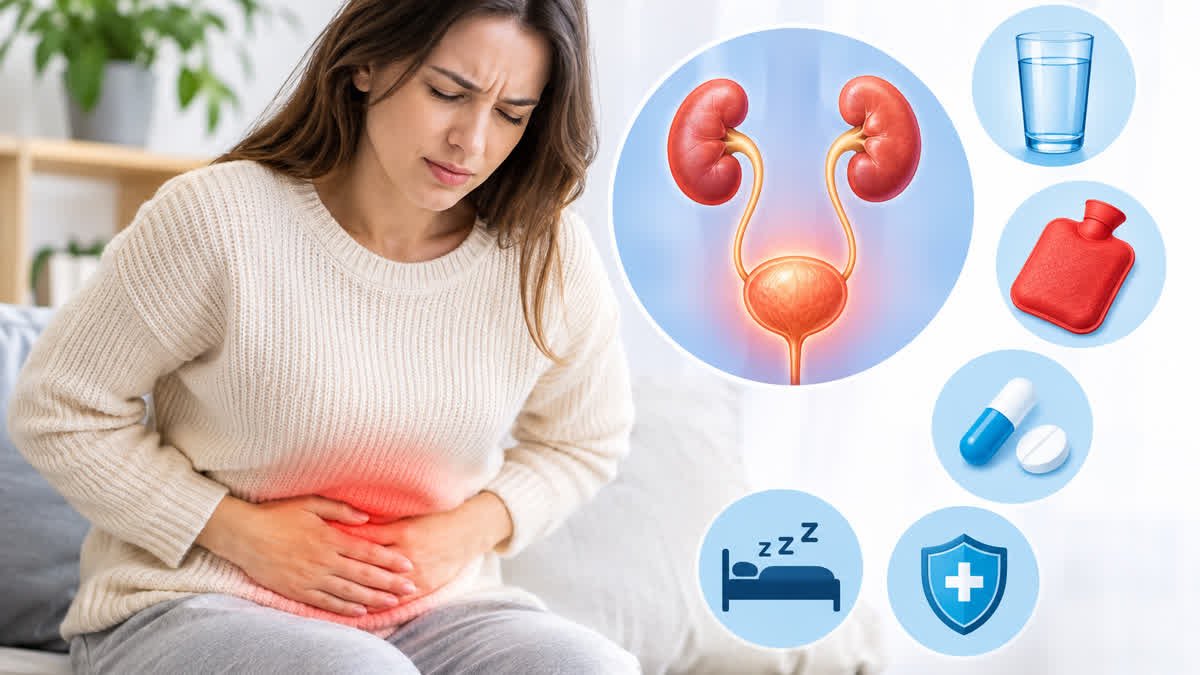

A urinary tract infection (UTI) happens when bacteria enter part of the urinary system, which includes the kidneys, ureters, bladder, and urethra. Most UTIs involve the bladder, and this type is also called cystitis. Bacteria from the digestive tract are the most common culprits, and you can read more about the causes of UTIs in our dedicated guide.
Common UTI symptoms include burning during urination, a frequent or urgent need to pee, and discomfort in the lower abdomen. Urine may look cloudy or smell strong, and sometimes it contains blood. These symptoms can be uncomfortable and disruptive, especially when they interrupt sleep, work, or daily routines. NIDDK describes these as typical signs of a bladder infection.
Learning how to manage UTIs at home can help you feel more comfortable while you arrange appropriate medical advice. Fluids, gentle heat, rest, and suitable pain relief may ease symptoms. However, home remedies do not reliably clear a bacterial infection, and some UTIs need antibiotics to prevent complications. This guide explains what helps, what does not, and when to get care.
Can You Manage a UTI at Home?
Home care may help relieve UTI symptoms, but it cannot reliably cure a bacterial infection. Drinking enough water, using gentle heat, resting, and taking appropriate pain relief may reduce discomfort. Medical advice is important because some UTIs require antibiotics to prevent complications.
Mild UTI symptoms often feel like a burning sensation when you urinate, a frequent urge to go, and a dull ache low in the belly. Some people also notice that urine looks cloudy or smells stronger than usual. These symptoms can overlap with other conditions, including some sexually transmitted infections, so a symptom check by a clinician can be valuable. The CDC notes that UTI symptoms can resemble those of an STI.
It helps to separate two ideas. Symptom relief means easing discomfort while your body and any treatment do their work. Treating the infection means removing the bacteria causing it, which often requires an antibiotic.
Some uncomplicated bladder infections may improve without antibiotics, and NHS guidance acknowledges that antibiotics are not always needed. The problem is that it is hard to know in advance which infections will clear safely. Untreated infections can spread, and NIDDK warns that a bladder infection can travel to the kidneys.
A healthcare professional may recommend a urine test or antibiotics depending on your symptoms and health history. Do not rely on home measures if symptoms persist, worsen, or come with fever or back pain. In short, managing discomfort at home is not the same as curing a UTI.
8 Ways to Manage UTI Symptoms at Home
These self-care steps focus on comfort and general well-being. They support you while you seek care, and they are not a substitute for treatment when an infection requires it.
1. Drink Enough Water
Staying well hydrated supports normal urinary function and may make urination feel more comfortable. NIDDK states that drinking more liquids can speed recovery and ease symptoms, and it names water as the best choice. The CDC also lists drinking plenty of fluids as a way to feel better.
Sip water regularly throughout the day rather than drinking large amounts at once. A practical goal is to drink enough that you do not feel thirsty and your urine is a pale color. Our guide to the benefits of hydration and tips for a hydration habit can help you stay consistent.
Water does not kill bacteria and does not replace antibiotics. Drinking excessive amounts is not helpful and can be unsafe, particularly for people on fluid restrictions.
2. Urinate When You Feel the Need
Emptying your bladder regularly is a sensible habit during a UTI. Holding urine for long periods gives bacteria more time to linger, and NIDDK lists taking the time to fully empty your bladder among its prevention tips.
Urinating after sex is also a reasonable hygiene habit, and the CDC includes it in its prevention advice. Try not to rush, and take a moment to fully empty your bladder each time.
Frequent urination is not a guaranteed way to flush out an infection. Think of it as supportive, not curative.
3. Use a Warm Compress or Heating Pad
Gentle warmth may ease cramping or pressure in the lower abdomen. Place a warm compress or heating pad over the area just above your pubic bone for short periods. For more ideas on belly discomfort, see our guide on how to relieve abdominal pain at home.
Use a comfortable temperature, and place a thin layer of cloth between the heat source and your skin to avoid burns. Do not fall asleep on a heating pad. Heat offers temporary comfort and does not treat the infection.
4. Consider Appropriate Over-the-Counter Pain Relief
Over-the-counter pain relievers may help with discomfort and, in some cases, fever. NHS guidance suggests paracetamol (known as acetaminophen in the U.S.) as one option for easing UTI symptoms. This is the most direct answer to how to relieve UTI pain at home, although it does not address the cause.
Ibuprofen and similar anti-inflammatory medicines are not suitable for everyone. People with certain kidney, stomach, heart, or bleeding conditions, and some people who take other medicines, may need to avoid them. Follow the product label, and ask a pharmacist or clinician which option is right for you.
Pain relief does not treat the bacteria behind a UTI. If you need pain medicine for more than a short time, that is a sign to get medical advice.
5. Avoid Bladder Irritants if They Worsen Symptoms
Some people find that certain drinks make bladder discomfort feel worse. Common triggers include coffee, caffeinated tea, alcohol, and very acidic drinks. Not everyone reacts the same way, so pay attention to your own pattern. If you are curious about caffeine more broadly, see our overview of black coffee benefits.
Cutting back on these drinks while you have symptoms is a low-risk step. It does not mean they cause UTIs, and avoiding them will not cure one. Choose water or other non-irritating drinks if you notice a trigger.
6. Wear Comfortable, Breathable Clothing
Loose-fitting clothes and breathable cotton underwear may feel better when the genital area is irritated. NIDDK includes wearing loose-fitting clothing in its advice for keeping the urinary tract healthy.
Change out of wet swimsuits or sweaty workout clothes promptly. Moisture can add to irritation. Clothing choices are a comfort measure and cannot clear an infection.
7. Practice Gentle Personal Hygiene
Wash the external genital area gently with plain water or a mild, unscented product. Women should wipe from front to back after using the toilet, which helps keep bacteria from the bowel away from the urethra. The NHS lists front-to-back wiping among its prevention tips.
Avoid douching, scented washes, sprays, and powders. The CDC recommends minimizing douches, sprays, and powders in the genital area. Over-washing can also irritate sensitive skin and make symptoms worse.
8. Get Enough Rest
Rest supports general recovery when you feel unwell. Give yourself permission to slow down, avoid overexertion, and aim for a decent night of sleep. If discomfort keeps you awake, our tips on how to improve sleep may help.
Rest does not replace a medical assessment or prescribed treatment. It simply helps you cope while other steps take effect.
What Home-Care Measures Can and Cannot Do
| Measure | What it may help with | What it cannot do |
|---|---|---|
| Water and fluids | Hydration, more comfortable urination | Kill bacteria or replace antibiotics |
| Warm compress | Lower belly cramping or pressure | Treat the infection |
| Over-the-counter pain relief | Pain and, in some cases, fever | Clear the bacteria |
| Avoiding irritants | Reducing flare-ups of bladder discomfort | Cure or prevent a UTI |
| Loose clothing and gentle hygiene | Comfort and less irritation | Eliminate the infection |
| Rest | General recovery and coping | Replace medical care |
Home Remedies for UTIs: What Works and What Doesn’t
Many UTI home remedies are popular online. It helps to separate three things: remedies that may support prevention, remedies that may ease symptoms, and actual treatment of an infection. Very few home remedies have strong evidence behind them for an active UTI.
The EAU guidelines on urological infections give clinicians evidence-based direction on both antibiotic and non-antibiotic approaches. They also emphasize antibiotic stewardship, which means using antibiotics carefully to limit resistance.
Cranberry Juice and Cranberry Supplements
Cranberry products may help reduce the risk of recurrent UTIs in some groups of people. A large Cochrane review of 50 studies with 8,857 participants found that cranberry juice, tablets, or capsules reduced UTIs in women with recurrent infections, in children, and in people prone to UTIs after certain bladder procedures. The review found no clear benefit in older adults living in institutions, adults with incomplete bladder emptying, or pregnant women.
Cranberry is not a proven treatment for an active infection. The NCCIH advises people who think they have a UTI to see a healthcare provider and not use cranberry in place of proven treatment. The NHS also notes that there is no evidence cranberry drinks ease symptoms once an infection has started.
Sweetened cranberry cocktails can contain a lot of added sugar. People who take warfarin should talk with a healthcare provider before using cranberry products, because they may interact with some medicines.
Probiotics
Interest in probiotics for urinary health comes from the idea that healthy bacteria in the gut and vagina may help keep harmful bacteria in check. Research is still developing, and results vary by product and population. Probiotics are not a proven treatment for an active bacterial UTI.
If you want to learn more about them in general, see our overview of probiotics. Talk with a clinician if you are considering them for recurrent infections, especially if you have a weakened immune system.
Vitamin C
Vitamin C is sometimes promoted because it may make urine more acidic. Current evidence does not establish it as a reliable UTI treatment. Eating vitamin C-rich foods is generally fine, and you can browse foods high in vitamin C for ideas.
High-dose supplements can cause stomach upset and may raise kidney stone risk in some people. Ask a clinician before taking large doses, particularly if you have a history of kidney stones.
Apple Cider Vinegar, Baking Soda, and Other Popular Remedies
Apple cider vinegar, baking soda, and similar remedies are not proven cures for UTIs. Drinking large amounts of baking soda can disturb the body’s salt and acid balance. Concentrated vinegar can irritate the mouth, throat, and stomach.
Never insert substances into the vagina or urethra, and do not apply unapproved products to the genital area. These practices can cause irritation or injury and may make an infection harder to treat. Stick with options that are well supported and safe.
What Should You Drink When You Have a UTI?
Water is the best primary choice. Adequate fluid intake supports general urinary health and can make urination more comfortable. NIDDK notes that water is best.
Unsweetened cranberry juice may be an option for some people, but it does not treat an active UTI. Its main potential role is in prevention for certain groups, as the Cochrane review describes.
Caffeine and alcohol may worsen bladder irritation in some people, so you may want to limit them while you have symptoms. Sugary drinks are not necessary for recovery, and soda or sweetened juices add calories without helping.
People with kidney disease, heart failure, or a doctor-advised fluid limit should follow their clinician’s hydration advice. For some, drinking extra fluid can be harmful. If you are unsure how much to drink, ask your healthcare professional.
Can a UTI Go Away Without Antibiotics?
Sometimes, yes. Some uncomplicated bladder infections may improve without antibiotic treatment, particularly when symptoms are mild. UK health services describe self-care and pain relief as an option for some mild cases, often with a plan to start antibiotics if symptoms do not improve or get worse.
The challenge is that no one can reliably predict which infections will resolve safely. An untreated infection can spread to the kidneys, and NIDDK notes that kidney infections can cause serious problems such as permanent kidney damage. That is why a medical assessment matters when symptoms suggest a UTI.
A clinician can help decide whether antibiotics, a delayed prescription, or another approach fits your situation. You can read more about UTI treatment options on CollectedMed. Please do not wait indefinitely for symptoms to disappear.
Take antibiotics only when they are prescribed for you. The CDC advises taking every dose as directed, not sharing antibiotics, and not saving them for later. Leftover antibiotics or someone else’s medicine may be the wrong drug or dose, and they can delay proper care.
When Should You See a Doctor for a UTI?
Contact a healthcare professional if you have symptoms of a UTI. This is especially important if symptoms are severe, getting worse, or not improving. The signs below call for prompt attention.
Symptoms That Need Prompt Medical Attention
- Fever or chills
- Pain in the back, side, or flank
- Nausea or vomiting
- Blood in the urine
- Symptoms that worsen or do not improve
- Significant pain or difficulty urinating
Fever, flank pain, and vomiting can signal a kidney infection, which needs prompt medical assessment. The CDC lists fever, chills, lower back or side pain, and nausea or vomiting as kidney infection symptoms. Flank pain can also come from other causes, such as kidney stones, so see our guide to the early signs of kidney stones and our overview of what causes back pain.
Who Should Not Rely on Home Management Alone?
Some people should seek medical advice early rather than trying home care first:
- Pregnant people
- Children with possible UTI symptoms (the CDC advises contacting a provider right away for a fever of 100.4°F (38°C) or higher in a baby under 3 months)
- Men with suspected UTIs
- Older adults with concerning urinary symptoms, since UTIs may be missed or mistaken for other conditions
- People with diabetes or a weakened immune system (see our overview of what diabetes is)
- People with kidney disease, urinary tract abnormalities, or a urinary catheter
- People with frequent or recurrent infections
The NHS lists pregnancy and diabetes among reasons to seek medical advice with UTI symptoms. You can also review UTI risk factors to understand why some groups need extra care.
When Is Emergency Care Necessary?
Seek emergency care if a suspected UTI comes with confusion, severe weakness, difficulty breathing, fainting, or signs of severe illness. These can indicate a spreading infection, including a life-threatening reaction known as sepsis. Do not try to manage these symptoms at home.
If you are unsure whether pain is serious, our guide on when abdominal pain is an emergency may help you decide. When in doubt, call your local emergency number or go to the nearest emergency department.
How to Prevent UTIs From Coming Back
No strategy prevents every UTI, but a few habits may lower your risk:
- Drink enough fluids, when medically appropriate for you.
- Avoid holding urine for long periods.
- Urinate after sexual activity if it helps you.
- Wipe from front to back after using the toilet.
- Avoid irritating products such as douches, sprays, and powders.
- Consider showers instead of baths, as the CDC suggests.
Good hygiene alone cannot prevent every UTI. Genetics, anatomy, menopause, pregnancy, and other factors all play a role, and you can explore them in our guide to UTI risk factors.
If you get repeated infections, talk with a healthcare professional. They may order a urine culture and discuss preventive options, which can include behavior changes, cranberry products for certain people, or other approaches. NHS-backed guidance for repeat UTIs also mentions that some postmenopausal women may benefit from vaginal hormone treatments, which a clinician can discuss with you.
Common Mistakes to Avoid When Managing a UTI at Home
- Assuming cranberry juice will cure an infection. It is not a proven treatment for an active UTI.
- Delaying care despite worsening symptoms. Waiting can allow an infection to spread.
- Taking leftover antibiotics. They may not suit your infection and can mask symptoms.
- Stopping prescribed antibiotics early. Take them exactly as directed, even if you feel better.
- Drinking excessive amounts of water. More is not always better, and it can be unsafe for some people.
- Using harsh intimate hygiene products. Scented washes and douches can irritate and may worsen symptoms.
- Ignoring fever, back pain, or vomiting. These can signal a kidney infection.
- Treating recurrent symptoms without finding the cause. Repeated UTIs deserve a closer look.
Frequently Asked Questions About Managing UTIs at Home
How can I relieve UTI symptoms at home?
Drinking water, using gentle heat, resting, avoiding personal bladder irritants, and taking suitable over-the-counter pain relief may ease discomfort. These steps support comfort and do not treat the infection. You may still need a medical assessment, especially if symptoms last or worsen (NIDDK).
What is the fastest way to feel better from a UTI?
How fast you feel better varies from person to person. When an infection needs antibiotics, appropriate medical treatment is the most important step for addressing the cause. Comfort measures can help in the meantime, and CDC guidance says to contact a healthcare professional if symptoms do not improve after starting antibiotics.
Can drinking water flush out a UTI?
Water supports hydration and may make urination more comfortable. It cannot reliably eliminate the bacteria causing an infection. Fluids are helpful but should be paired with medical care when it is needed.
Can cranberry juice cure a UTI?
No. Cranberry products may help reduce the risk of recurrent UTIs in some people, but they are not a proven treatment for an active infection (NCCIH, Cochrane).
How long can a UTI last without treatment?
Symptoms may improve in some cases, but the timeline is unpredictable, and untreated infections can spread to the kidneys. Rather than waiting an arbitrary number of days, get medical advice when you suspect a UTI. A clinician can tell you whether it is safe to monitor your symptoms (NIDDK).
Can I treat a UTI without antibiotics?
Some mild, uncomplicated cases may improve without antibiotics, but others require them. A healthcare professional should guide that decision based on your symptoms, health history, and risk factors (NHS).
What should I avoid when I have a UTI?
Avoid known bladder irritants, harsh or scented intimate products, unproven remedies, and delays in getting medical care. Do not use leftover antibiotics or share them with others. Avoid inserting any substance into the genital area.
When should I worry about a UTI?
Seek prompt medical care if you have fever, chills, back or side pain, vomiting, blood in the urine, or symptoms that get worse. Get emergency help for confusion, fainting, difficulty breathing, or signs of severe illness (CDC).
Final Thoughts: Managing UTIs Safely at Home
The most useful comfort measures for UTIs are staying hydrated, using gentle heat, resting, avoiding personal bladder irritants, and taking suitable pain relief. Gentle hygiene and comfortable clothing can also help you feel better.
Home care is supportive and not a guaranteed cure. Some bacterial infections need antibiotics, and the right choice depends on your symptoms and health history.
If you notice UTI symptoms, seek medical advice rather than waiting for them to pass. Early treatment can help prevent complications such as kidney infection.
Sources
- National Institute of Diabetes and Digestive and Kidney Diseases (NIDDK). Bladder Infection (Urinary Tract Infection, UTI) in Adults
- Centers for Disease Control and Prevention (CDC). Urinary Tract Infection Basics
- National Health Service (NHS). Urinary tract infections (UTIs)
- NHS. Cystitis: Treatment
- NHS. Cystitis: Prevention
- NHS Forth Valley. Urinary tract infection self-care
- NI Direct. Urinary tract infections in adults
- National Center for Complementary and Integrative Health (NCCIH). Cranberry
- Williams G, et al. Cochrane Database of Systematic Reviews, 2023. Cranberries for preventing urinary tract infections
- European Association of Urology. Guidelines on Urological Infections
Medical Disclaimer: This article is for informational purposes only and is not a substitute for professional medical advice, diagnosis, or treatment. If you think you have a UTI, consult a qualified healthcare professional, especially if symptoms are severe, worsening, or accompanied by fever or back pain.