
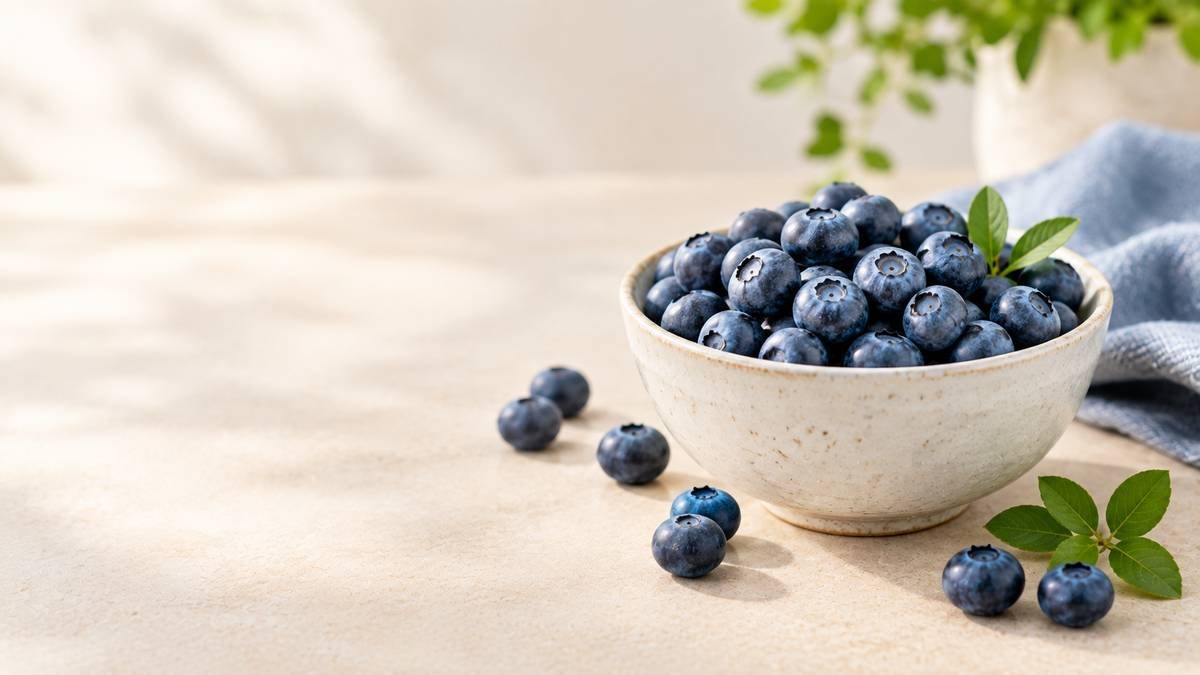

Blueberries may influence some measures of blood sugar control, but the evidence is mixed. They are not a proven treatment for high blood sugar. Whole blueberries can fit into a balanced diet for many people with diabetes, as long as portions and carbohydrates are accounted for.
Blueberries contain fiber, naturally occurring sugars, and plant pigments called anthocyanins. They differ nutritionally from sweetened drinks and desserts. Some trials report better insulin sensitivity or glucose markers, while others find no meaningful change.
This guide explains what the research shows and what it does not. It also covers portions, preparation, and safety. Blueberries should never replace prescribed diabetes medication or professional care. For a broader overview, see our guide to blueberry health benefits.
How Do Blueberries Affect Blood Sugar?
Blueberries affect blood sugar mainly through their carbohydrates. They also contain fiber and plant compounds that researchers are studying. The net effect depends on how much you eat and what else is on your plate.
Blueberries contain carbohydrates and natural sugars
Carbohydrates are digested into glucose, which raises blood sugar. Blueberries are a whole fruit, but they are not sugar-free. One cup (about 148 grams) has roughly 21 grams of carbohydrate, including about 15 grams of natural sugar.
Mayo Clinic explains that the total amount of carbohydrate in a food affects blood sugar more than the source of that carbohydrate. This is why “sweet” fruit is not automatically off limits.
Fiber may influence carbohydrate digestion
Fiber supports digestive health. It can also change how a meal is digested. One cup of blueberries has about 3.6 grams of fiber.
That does not mean blueberry fiber prevents blood sugar from rising. It is one factor among several.
Anthocyanins are being studied for metabolic effects
Anthocyanins are the blue-purple pigments in blueberries. Scientists are studying their possible effects on insulin signaling, inflammation-related pathways, and glucose metabolism. A 2024 expert review says anthocyanins may play a role in the health effects of blueberries, in part through gut bacteria.
Proposed mechanisms do not automatically mean a clinically meaningful effect in people. Lab findings and small trials need confirmation.
Blood sugar responses vary
Your response depends on portion size, the rest of the meal, and your metabolism. Medications, physical activity, sleep, and stress also matter. Two people can respond differently to the same bowl of berries.
Glycemic index values for foods vary by testing method and source. Portion size and total carbohydrate are usually more practical guides.
What Does Research Say About Blueberries and Blood Sugar?
Research has produced some promising results and some null results. Different studies measure different things, so it helps to know the terms.
| Measure | What it tells you |
|---|---|
| Fasting glucose | Blood sugar after not eating, usually overnight |
| Post-meal glucose | How high blood sugar rises after eating |
| Insulin sensitivity | How well the body responds to insulin |
| HbA1c (A1C) | Average blood sugar over about three months |
See our guides on the A1C test and blood sugar levels for more.
Studies have reported some promising results
In large cohort studies, eating at least two servings of blueberries per week was associated with a lower risk of type 2 diabetes. That is an association, not proof of cause and effect.
Several trials also gave encouraging signals:
- One six-week trial in adults with obesity and insulin resistance found improved insulin sensitivity after daily blueberries (the equivalent of about 300 g of fresh berries).
- An eight-week trial in men with type 2 diabetes found lower HbA1c and fructosamine.
- An acute study in people with metabolic syndrome found that one cup of blueberries reduced post-meal glucose and insulin responses after an energy-dense meal.
Other studies found no significant improvement
Other trials saw no clear change. Studies in people with prediabetes found no differences in insulin sensitivity at six and 24 weeks. Others found no HbA1c change, and most trials saw no change in fasting glucose or insulin.
Results can differ because of study length, participants’ health, blueberry form, dose, and preparation. Many trials used freeze-dried powder rather than fresh berries.
What do systematic reviews tell us?
A 2022 systematic review and meta-analysis pooled randomized trials of blueberry and cranberry interventions. It included 22 trials in the meta-analysis. The authors reported that results were not significant for the general population, apart from fasting glucose in one sensitivity analysis. They concluded that the fruits reduced fasting glucose and HbA1c in people with diabetes.
There is an important caution here. The review combined two different fruits and several forms, including juice, extracts, powders, and whole fruit. Its findings cannot be credited to blueberries alone. An earlier systematic review of seven trials in 270 adults with type 2 diabetes also noted large differences in form, dose, and duration.
The 2024 expert review is more cautious. It states that the evidence on glucose regulation is mixed, making definitive conclusions difficult. It also notes that blueberries contain calories and carbohydrates, which future trials should account for. That roundtable was funded by the U.S. Highbush Blueberry Council, an industry group. Read industry-funded research with extra care.
What is the practical conclusion?
The evidence is promising in some areas. It does not show that ordinary portions of blueberries consistently lower blood sugar in everyone. One small trial or one pooled analysis of different berries is not definitive proof.
Harvard Health adds that scientists cannot say for sure that blueberries are better for health than other fruits and vegetables.
Can Blueberries Help People With Type 2 Diabetes?
Blueberries can be part of an eating plan for type 2 diabetes. They are not a treatment. People with type 2 diabetes do not need to avoid blueberries just because they contain natural sugar.
Whole fruit provides fiber, vitamins, and water. The American Diabetes Association (ADA) says the best fruit choices are those that are fresh, frozen, or canned without added sugars. It also notes that fruit contains carbohydrate, so it needs to be counted in your meal plan.
Carbohydrate quantity still matters. Mayo Clinic says that a serving of fruit with about 15 grams of carbohydrate has the same effect on blood sugar whether the fruit is low-carb or high-carb. Three-quarters of a cup of blueberries has about 15 grams.
Individual glucose responses differ. Your medication, activity, regular monitoring when indicated, and an individualized eating plan remain important. The ADA’s 2026 Standards of Care emphasize individualized nutrition guidance, including eating patterns such as Mediterranean-style diets.
Blueberries do not reverse diabetes. They also do not remove the need for medication or guarantee lower readings. See our guides on type 2 diabetes and the diabetes diet.
Can Blueberries Help With Prediabetes or Insulin Resistance?
Blueberries may contribute to a nutrient-rich eating pattern for people with prediabetes. There is not enough evidence to say they prevent progression to type 2 diabetes.
Prediabetes means blood sugar is higher than normal but below the diabetes range. Insulin resistance means the body’s cells respond less well to insulin. Our guides on prediabetes and insulin resistance explain these terms in more detail.
Research on blueberries and insulin sensitivity is not uniform. One trial found improvement, and others found none. The 2024 review suggests future trials should include people with higher fasting glucose levels, since people with near-normal glucose may see only marginal improvements.
Overall diet quality, physical activity, sleep, and weight management where appropriate matter more than any single fruit. Blueberries are not a substitute for screening, medical advice, or established prevention strategies. See how to prevent diabetes and our prediabetes diet guide.
Do Blueberries Cause Blood Sugar Spikes?
Blueberries contain carbohydrates, so blood sugar will rise somewhat after eating them. That is a normal response to carbohydrate-containing food. It does not mean blueberries are harmful.
The size of the rise depends on your portion, the rest of the meal, and your own physiology. Whole blueberries also provide fiber and water. Many highly sweetened foods do not.
Eating blueberries with plain yogurt, nuts, or another suitable food can make a balanced meal. Pairing foods does not guarantee a particular glucose response, though. It also does not completely prevent a rise.
A single glucose reading cannot tell you whether blueberries are good or bad for you overall. If you monitor your blood sugar, look at patterns over time and share them with your care team. Learn the signs of high blood sugar so you know when to seek advice.
How Many Blueberries Should You Eat for Blood Sugar Management?
There is no blueberry-specific dose that guarantees blood sugar improvement. Choose a portion that fits your own eating plan.
What does one cup of blueberries provide?
Here is the approximate nutrition for one cup of raw blueberries (about 148 grams):
| Nutrient | Approximate amount |
|---|---|
| Calories | 84 |
| Total carbohydrates | 21 g |
| Dietary fiber | 3.6 g |
| Total sugars (natural) | 15 g |
| Protein | 1.1 g |
These values follow USDA data for raw blueberries and vary slightly by database entry. Verify them against USDA FoodData Central before publishing.
Is one cup suitable for everyone?
No. A cup is a reference portion, not a prescription. The ADA notes that servings of most fresh berries and melons that provide 15 grams of carbohydrate are about three-quarters to one cup.
If you count carbohydrates, a smaller portion may suit your plan. Others may be comfortable with a full cup. Your carbohydrate targets, appetite, and glucose response all matter.
Is eating more blueberries better?
No. Larger servings add more carbohydrate and calories. Two cups provide roughly 43 grams of carbohydrate.
There is no established dose that guarantees a glucose benefit. Choose a portion that fits your plan, instead of chasing a quantity for a promised effect. Our guide on eating blueberries every day covers general portions.
Fresh, Frozen, or Dried Blueberries: Which Is Best for Blood Sugar?
Fresh and plain frozen blueberries are the best everyday choices. Processed forms need closer attention to portions and labels.
Fresh blueberries
Fresh berries are convenient as a whole-fruit snack or a meal ingredient. Rinse them and eat them plain or with other foods.
Frozen blueberries
Plain frozen blueberries are a practical alternative. They work well in oatmeal, yogurt, and smoothies. The ADA lists frozen fruit without added sugar among the best choices. Check the bag for added sugar.
Dried blueberries
Dried fruit is more concentrated by weight. The ADA notes that just two tablespoons of dried fruit can contain 15 grams of carbohydrate. Many dried blueberries also contain added sugar, so portion sizes need particular care.
Blueberry juice and sweetened products
Juice generally has less fiber than whole fruit. The ADA says about one-third to one-half cup of fruit juice has 15 grams of carbohydrate. Sweetened drinks, syrups, jams, and desserts can contain large amounts of added sugar.
Recommendation: Favor fresh or plain frozen whole blueberries for everyday use. Check ingredient labels on processed products.
What Is the Best Way to Eat Blueberries for Blood Sugar Management?
There is no special ritual that guarantees lower blood sugar. Meal composition matters, though. Practical ideas include:
- Add blueberries to plain yogurt. See our article on whether Greek yogurt lowers blood sugar.
- Serve them with oatmeal or another whole-grain breakfast.
- Pair them with nuts or seeds when appropriate.
- Add whole berries to a balanced snack.
- Use frozen blueberries in smoothies without added sugar.
- Include them in meals with protein, fiber, and other nutrients.
If you use the ADA’s Diabetes Plate Method, a small portion of fruit can complement non-starchy vegetables, a small portion of starch, and protein foods. No proof exists that eating blueberries first thing in the morning, on an empty stomach, or before every meal has a glucose-lowering advantage. Choose a time that suits your routine.
For more food ideas, see our guide to high-fiber foods.
Are There Any Risks or Precautions?
Ordinary blueberry portions are generally suitable for most people. A few points deserve attention.
- Digestive comfort. Increasing fiber suddenly may cause gas or bloating. Add berries gradually.
- Allergy. Blueberry allergy is uncommon. Stop eating them and seek care for hives, swelling, or trouble breathing.
- Carbohydrate counting. If you count carbs, include blueberries in your totals.
- Extracts and supplements. These are not equivalent to whole fruit. The 2024 review says the benefits of purified anthocyanin supplements are not well established.
- Medications. If you take insulin or glucose-lowering medicine, keep following your treatment plan. Seek professional advice before making major dietary changes.
Ordinary blueberry consumption is not inherently dangerous for people with diabetes. The goal is simply to fit them into your plan.
Frequently Asked Questions
Do blueberries lower blood sugar immediately?
There is no reliable evidence that ordinary servings consistently lower blood sugar right away. Some studies have looked at short-term responses, such as one cup after a high-fat, high-sugar meal, but results vary. Blueberries should not be used to treat high blood glucose.
Are blueberries good for people with diabetes?
Whole blueberries can fit into many diabetes-friendly eating plans. Their carbohydrates still count toward your meal plan. The ADA advises counting fruit as part of your carbohydrate intake.
Can blueberries lower HbA1c?
Some studies have examined this, but findings are inconsistent. One trial in men with type 2 diabetes reported lower HbA1c, while trials in people with prediabetes found no HbA1c change. Blueberries are not a reliable standalone way to lower HbA1c.
Do frozen blueberries affect blood sugar differently from fresh ones?
Plain frozen blueberries are a convenient alternative to fresh fruit. The total portion and carbohydrate content matter most. Check the label for added sugars.
Are blueberries better than strawberries for blood sugar?
Both fruits can fit into a balanced plan. By Mayo Clinic’s examples, about three-quarters of a cup of blueberries or 1 1/4 cups of whole strawberries provide 15 grams of carbohydrate. There is no universal winner for every person.
Should you stop diabetes medication if you eat blueberries?
No. Blueberries are a food, not a replacement for prescribed treatment. Only change medication with guidance from the prescribing healthcare professional.
The Bottom Line
Blueberries contain fiber, carbohydrates, and anthocyanins. Some studies suggest possible benefits for selected measures of glucose regulation, but findings remain mixed. They are not a proven treatment for high blood sugar.
Whole blueberries can fit into many healthy eating patterns, including those for diabetes management. Portion size and overall meal composition matter. If you enjoy blueberries, include a suitable portion of fresh or plain frozen berries in a balanced meal plan, and keep your expectations realistic.
People with diabetes should keep following their individualized care plans.
Sources
- Effects of blueberry and cranberry on type 2 diabetes parameters in individuals with or without diabetes: a systematic review and meta-analysis of randomized clinical trials (2022)
- Rocha DMUP, et al. Effects of blueberry and cranberry consumption on type 2 diabetes glycemic control: a systematic review. Crit Rev Food Sci Nutr, 2018
- Stull AJ, et al. The state of the science on the health benefits of blueberries: a perspective. Frontiers in Nutrition, 2024
- American Diabetes Association: Fruit and Diabetes: Best Choices and Eating Tips
- American Diabetes Association: Standards of Care in Diabetes, 2026
- ACP Diabetes Monthly: ADA’s Standards of Care for 2026 released
- Mayo Clinic: Diabetes diet: Should I avoid sweet fruits?
- Harvard Health Publishing: Are blueberries especially healthy?
- USDA FoodData Central
Medical Disclaimer: This article is for general information only. It is not medical advice, and it does not replace care from a doctor, dietitian, diabetes educator, or other qualified health professional. Blueberries and other foods are not a treatment or cure for diabetes or high blood sugar. Do not start, stop, or change any diabetes medicine or eating plan without talking to your healthcare provider. Seek care right away for symptoms of very high or very low blood sugar, or for signs of a serious allergic reaction.
1 thought on “Do Blueberries Lower Blood Sugar? What Research Says”
Comments are closed.