
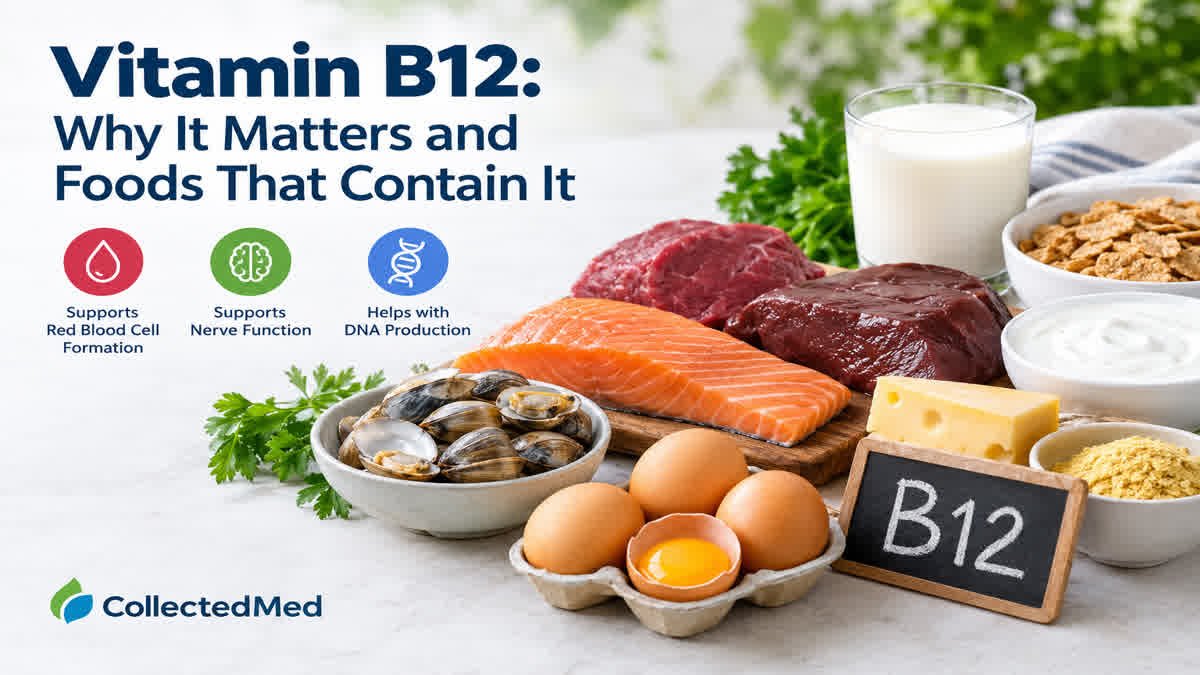

Vitamin B12 is a nutrient your body needs to form red blood cells, keep nerves working normally, and make DNA. Because it plays a part in so many basic processes, even a modest shortfall over time can affect how you feel and function. The good news is that many people get enough through everyday eating.
Vitamin B12 foods are mostly animal-derived, including fish, meat, eggs, and dairy products. Ordinary unfortified plant foods do not naturally provide dependable amounts, which is why fortified foods and supplements matter for people who avoid animal products. Absorption also changes with age and some health conditions, so diet alone does not tell the whole story.
This guide explains what vitamin B12 is, why it matters, which foods contain it, and how much you need each day. You will also learn the signs and risk factors of deficiency, when supplements may be useful, and when to speak with a healthcare professional. It is general information, not individual medical advice.
What Is Vitamin B12?
Vitamin B12, also called cobalamin, is a water-soluble vitamin that the body needs for several essential functions. According to the NIH Office of Dietary Supplements, it is needed to make red blood cells and DNA and to keep nerve cells healthy. Like other B vitamins, it helps the body turn food into usable energy, though it does this through its role in metabolism rather than by providing energy itself.
Unlike many nutrients, vitamin B12 is made by microorganisms, not by plants or animals themselves. Animals get it from bacteria in their digestive systems, which is why animal foods contain it. The body can store B12 in the liver for years, but a regular dietary supply is still needed over the long term.
Ordinary unfortified plant foods do not naturally contain vitamin B12. Some plant-based products, including certain breakfast cereals and nutritional yeast products, have B12 added through fortification.
Why Is Vitamin B12 Important for Your Health?
The functions below are well supported by evidence. Claims that B12 boosts immunity, improves memory in everyone, or prevents heart disease are not established, so this article does not make them.
Supports Red Blood Cell Formation
Vitamin B12 is needed for healthy red blood cell development. When there is not enough, the body can make fewer, larger, and less effective red blood cells, a condition called megaloblastic anemia. It may cause fatigue and weakness. The National Heart, Lung, and Blood Institute explains this form of anemia in detail.
Helps Maintain Healthy Nerve Function
Vitamin B12 helps maintain the protective coating around nerves and supports normal neurological function. Prolonged deficiency can cause neurological problems, and these can sometimes persist if treatment is delayed. This is one reason early assessment of unexplained nerve symptoms is important.
Supports DNA Production and Cell Function
B12 is needed for DNA synthesis and normal cell division. This makes it especially important for tissues that continually produce new cells, such as bone marrow and the lining of the digestive tract.
Contributes to Normal Energy Metabolism
Vitamin B12 helps the body process nutrients, which is why tiredness is a common symptom of deficiency. However, taking extra B12 does not reliably increase energy in people who already get enough. Supplements are most useful when a shortfall is present.
Important During Pregnancy and Growth
Adequate vitamin B12 matters during pregnancy, breastfeeding, infancy, and childhood because of its role in normal neurological development and cell growth. Needs are somewhat higher in pregnancy and lactation, as shown in the intake table below.
Foods High in Vitamin B12
The amount of vitamin B12 in a food depends on the type of food, serving size, preparation, and product formulation. The approximate values below come from the NIH Office of Dietary Supplements and USDA FoodData Central. Check the database or product label for the exact food you eat.
| Food | Serving | Approximate vitamin B12 |
|---|---|---|
| Clams, cooked | 3 oz | About 84 mcg |
| Beef liver, cooked | 3 oz | About 71 mcg |
| Rainbow trout, cooked | 3 oz | About 5.4 mcg |
| Sockeye salmon, cooked | 3 oz | About 4.8 mcg |
| Canned light tuna in water | 3 oz | About 2.5 mcg |
| Beef, top sirloin, cooked | 3 oz | About 1.4 mcg |
| Milk, 2% | 1 cup | About 1.3 mcg |
| Plain yogurt, nonfat | 6 oz | About 1 mcg |
| Egg, hard-boiled | 1 large | About 0.5 mcg |
| Fortified breakfast cereal | Per label serving | Varies; check the label |
| Fortified nutritional yeast | Per label serving | Varies; check the label |
The table shows examples, not a complete ranking. It separates foods that contain B12 naturally from those with added B12.
Fish and Seafood
Fish and shellfish are useful sources of vitamin B12. Clams are exceptionally rich, and salmon, trout, tuna, and sardines also contribute meaningful amounts. Content varies considerably between species. Our guide to fatty fish explains the other nutrients these foods provide.
Meat and Organ Meats
Beef and other meats provide vitamin B12, and beef liver is particularly concentrated. Organ meats are not necessary for everyone to meet their needs. People who are pregnant or may become pregnant should follow medical advice about liver, because it is very high in preformed vitamin A, which can harm fetal development in excess.
Milk and Other Dairy Products
Milk, yogurt, and cheese are accessible sources for people who eat dairy, and the B12 in dairy is generally well absorbed. Aim to include dairy as part of balanced meals instead of relying on one food. Dairy also supplies calcium, as described in our guide to calcium-rich foods.
Eggs
Eggs contain vitamin B12, mainly in the yolk, and can contribute to your daily intake. Their B12 content is lower than that of many seafood and organ-meat options, so eggs work best as one part of a varied diet.
Fortified Foods for Vegetarians and Vegans
Fortified breakfast cereals, fortified plant-based milks, and some nutritional yeast products can provide vitamin B12. Check the product label for the amount per serving and confirm the product is actually fortified. Our guide to reading Nutrition Facts labels can help. Unfortified vegetables, fruits, grains, legumes, and nuts should not be counted as reliable B12 sources.
How Much Vitamin B12 Do You Need Each Day?
Recommended amounts vary with age and life stage. The values below come from the NIH Office of Dietary Supplements.
| Life stage | Recommended daily amount |
|---|---|
| Infants, 0 to 6 months | 0.4 mcg |
| Infants, 7 to 12 months | 0.5 mcg |
| Children, 1 to 3 years | 0.9 mcg |
| Children, 4 to 8 years | 1.2 mcg |
| Children, 9 to 13 years | 1.8 mcg |
| Teens, 14 to 18 years | 2.4 mcg |
| Adults, 19 years and older | 2.4 mcg |
| Pregnancy | 2.6 mcg |
| Breastfeeding | 2.8 mcg |
Here, mcg means micrograms. The infant values are adequate intakes rather than recommended dietary allowances. These are dietary reference amounts, not individualized treatment doses.
People with absorption problems may need a different approach even if their diets seem adequate. The NIH also advises adults over 50 to get most of their B12 from fortified foods or supplements, because the form in food can be harder to absorb with age.
Signs and Symptoms of Vitamin B12 Deficiency
Vitamin B12 deficiency often develops gradually, and symptoms can overlap with other conditions. Symptoms alone cannot confirm a deficiency.
Common Symptoms
Possible symptoms include:
- Fatigue or unusual weakness
- Pale skin
- Shortness of breath associated with anemia
- Tingling or numbness in the hands and feet
- Balance difficulties or changes in walking
- Memory or concentration difficulties
- A sore or inflamed tongue
Not everyone has all of these. Neurological problems can occur even when there is no obvious anemia, so the absence of anemia does not rule out a deficiency.
When to Seek Medical Advice
See a healthcare professional about persistent or unexplained symptoms, especially nerve-related changes or signs of anemia. A clinician may use your medical history and blood tests to assess vitamin B12 status and find the cause. Some common digestive problems can affect absorption, which is one reason a proper evaluation matters.
Who Is at Risk of Vitamin B12 Deficiency?
Some groups are more likely to develop low B12. They include:
- Vegans and some vegetarians who do not eat enough fortified foods or take an appropriate supplement
- Older adults who have difficulty absorbing B12 from food
- People with pernicious anemia, which interferes with B12 absorption
- People with certain gastrointestinal disorders, including Crohn’s disease and celiac disease
- People who have had certain stomach or intestinal surgeries
- People taking medications that can affect B12 status, such as metformin or acid-suppressing medicines, especially over the long term
Risk does not mean someone has a deficiency. Dietary intake, absorption, medications, and medical history all matter. Digestive health also affects nutrient absorption, and our overview of gut health offers more background. Do not stop or change prescribed medication without talking to your clinician.
How to Get Enough Vitamin B12 Through Your Diet
Practical flexibility works better than a rigid plan. Consider these strategies:
- Include suitable B12-containing foods regularly if you eat animal products.
- Choose fortified foods and check their labels if you follow a plant-based diet.
- Vary your food choices rather than depending on one source.
- Think about nutritional needs at different life stages.
- Seek professional guidance if you have absorption problems or concerns about deficiency.
Familiar meals can do the job. You might have eggs and milk at breakfast, fish with vegetables and grains at lunch, and a dinner that includes an appropriate B12 source. Vegetarians and vegans should remember that unfortified plant foods are not reliable natural sources of B12.
Vitamin B12 fits within a balanced diet alongside plenty of leafy green vegetables and the healthiest foods to eat every day. Our guide to a healthy diet offers more ideas.
Vitamin B12 Supplements: When Might They Be Needed?
Supplements can be useful for people who cannot get enough B12 from diet or who have a diagnosed deficiency or absorption problem. The NIH notes that supplements come in several forms, most commonly cyanocobalamin and methylcobalamin.
A few points are worth keeping in mind:
- Routine supplementation to maintain intake is different from treating a confirmed deficiency.
- A healthcare professional may recommend oral supplements or injections, depending on the cause and severity.
- Higher doses are not automatically better than standard ones.
- No single form has been shown to be superior for everyone.
- Persistent symptoms deserve assessment, not self-diagnosis.
Supplements do not replace medical evaluation when a deficiency may result from an underlying condition. This article does not recommend individual doses, so talk with a clinician or pharmacist about what is appropriate for you.
Frequently Asked Questions About Vitamin B12
What foods contain the most vitamin B12?
Clams and beef liver are among the richest sources. Fish, meat, dairy products, and fortified foods also contribute meaningful amounts. Serving sizes and nutrient values vary, so see the NIH food-source table for details.
Can you get vitamin B12 from plant foods?
Ordinary unfortified plant foods do not naturally provide reliable vitamin B12. Fortified cereals, fortified plant-based milks, and some fortified nutritional yeast products can supply it.
What are the early signs of vitamin B12 deficiency?
Fatigue, weakness, and changes in sensation such as tingling can occur. Symptoms vary and are not specific to B12 deficiency, so testing may be needed for a diagnosis.
Is vitamin B12 the same as iron?
No. They are different nutrients, although both are important for healthy blood formation. A deficiency in either can contribute to anemia, but they have different functions and treatments. You can learn more in our guide to iron-rich foods.
Can you get enough vitamin B12 without eating meat?
Yes. You can get B12 from other animal products such as dairy and eggs, from fortified foods, or from appropriate supplements. People following vegan diets need a dependable source of B12.
Should everyone take a vitamin B12 supplement?
No. Whether you need one depends on your diet, absorption, medical history, and circumstances. A healthcare professional can help you decide.
Conclusion: Make Vitamin B12 Part of a Balanced Diet
Vitamin B12 supports normal red blood cell formation, nerve function, and DNA production. Fish, seafood, meat, eggs, and dairy products are natural sources, while fortified foods and appropriate supplements can help people who avoid animal products or have trouble absorbing B12.
A practical next step is to review your food choices, check the labels on fortified products, and speak with a healthcare professional if you suspect a deficiency. Do not treat persistent symptoms on your own with supplements before getting them checked.
Sources
- NIH Office of Dietary Supplements: Vitamin B12 Fact Sheet for Consumers
- NIH Office of Dietary Supplements: Vitamin B12 Fact Sheet for Health Professionals
- National Heart, Lung, and Blood Institute: Vitamin B12-Deficiency Anemia
- NIH Office of Dietary Supplements: Vitamin A Fact Sheet for Health Professionals
- USDA FoodData Central
Medical Disclaimer: This article is for educational purposes only and is not a substitute for professional medical advice, diagnosis, or treatment. Always talk with a doctor, registered dietitian, or other qualified healthcare provider before starting a supplement, changing your diet, or if you have questions about your health. If you think you are having a medical emergency, call 911 or your local emergency number right away.
1 thought on “Vitamin B12: Why It Matters and Foods That Contain It”
Comments are closed.