
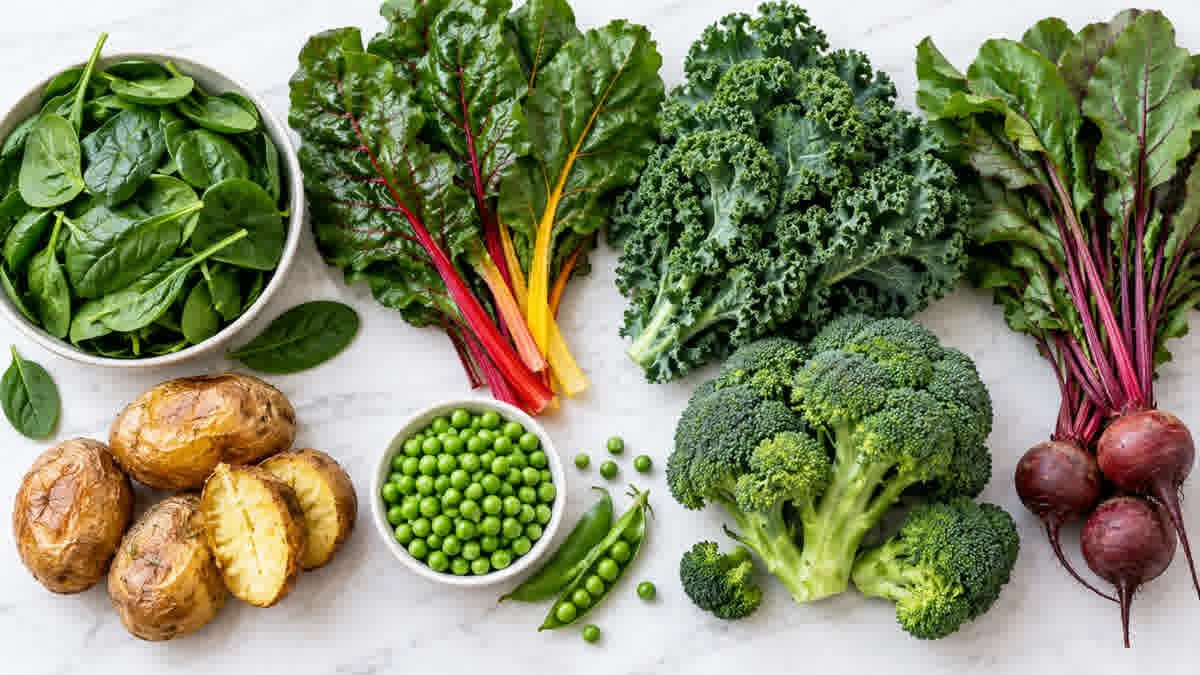

Vegetables high in iron include cooked spinach, Swiss chard, beet greens, and green peas, with smaller amounts in kale, collard greens, broccoli, and other vegetables. Cooked spinach is one of the most concentrated vegetable sources, at roughly 3 milligrams per half cup. Most vegetables provide less, so they work best as part of a varied diet.
Iron is a mineral your body needs to make hemoglobin, the protein in red blood cells that carries oxygen. Vegetables supply non-heme iron, which is absorbed less efficiently than the heme iron in meat and seafood. That makes absorption as important as the amount listed on a nutrition label.
This guide covers 10 vegetables that contribute iron, with approximate amounts, serving ideas, and tips to help your body absorb more of it. You will also find daily iron needs, other plant-based sources, and meal ideas. This article is general information, not personal medical advice, and it cannot diagnose iron deficiency.
Why Is Iron Important for Your Health?
Iron supports several basic functions in the body. Understanding them can help you see why steady intake matters.
Supports Oxygen Transport
Your body uses iron to make hemoglobin, which carries oxygen from your lungs to the rest of your body. It also helps form myoglobin, which supplies oxygen to muscles. Without enough iron, these processes slow down.
Supports Normal Energy Metabolism
Low iron can contribute to tiredness, weakness, and reduced exercise tolerance. These symptoms have many other possible causes, so they do not confirm an iron problem. Our guide on what causes fatigue explains the range of possibilities.
Supports Growth and Development
Iron is important for normal growth, brain development, and cell function, particularly in infants, children, and during pregnancy. Needs are higher at these life stages.
Helps Prevent Iron Deficiency
Eating enough iron-containing foods is one way to help prevent deficiency, but diagnosed deficiency may need medical assessment and treatment. Blood tests can show whether your iron is low. The NIH Office of Dietary Supplements explains iron’s roles and how deficiency is identified.
10 Vegetables High in Iron
The amounts below are approximate, based on USDA nutrient data and the NIH Office of Dietary Supplements, and they are for cooked vegetables unless stated. Values vary by variety, preparation, and serving size. Not every vegetable here is an especially rich source; some contribute smaller amounts that still add up across the day.
1. Spinach
Cooked spinach provides about 3 milligrams of iron per half cup, according to the NIH Office of Dietary Supplements, along with folate and other nutrients. Cooking reduces its volume, so a half cup of cooked spinach has far more iron than a half cup of raw leaves.
Spinach contains oxalates, compounds that can bind iron and limit how much your body absorbs. That means the amount on the label overstates what you actually take in. Add it to eggs, soups, curries, or pasta, and pair it with vitamin C.
2. Swiss Chard
Cooked Swiss chard provides roughly 2 milligrams of iron per half cup, plus vitamin K and other micronutrients. It also contains oxalates, though it offers a useful amount of iron. Stir it into soups, sauté it with garlic, or fold it into rice and bean dishes.
3. Beet Greens
The leafy tops of beets contribute about 2 milligrams of iron per half cup cooked, according to USDA data, and they supply other minerals too. They are often discarded, which is a missed opportunity. Wash them thoroughly and add them to soups, curries, or sautéed side dishes. Our guide to beetroot health benefits covers the root itself.
4. Green Peas
A half cup of cooked green peas provides about 1 milligram of iron, along with fiber and plant protein. Peas are easy to keep in the freezer and cook quickly. Stir them into rice dishes, soups, pasta, or vegetable curries.
5. Kale
Cooked kale contains around 0.6 milligram of iron per half cup, which is modest compared with spinach or chard. It also provides vitamin C and other nutrients that can help with iron absorption. Use it in soups, stir-fries, or mixed vegetable dishes. Our article on cruciferous vegetables explains more about kale and its relatives.
6. Collard Greens
Cooked collard greens provide about 1 milligram of iron per half cup, plus fiber and vitamin K. They are a staple in many cuisines, usually simmered until tender. Cooked preparations also make them easier to eat in larger portions.
7. Broccoli
Broccoli offers about 0.5 milligram of iron per half cup cooked, which is a small amount. Its value for iron is its vitamin C content, which can improve absorption of non-heme iron from other foods in the same meal. Serve it alongside beans, lentils, or tofu.
8. Brussels Sprouts
A half cup of cooked Brussels sprouts provides around 1 milligram of iron, plus vitamin C and fiber. Roast or steam them briefly so they stay tender but not mushy. They pair well with other plant-based iron sources.
9. Asparagus
Asparagus contributes roughly 1 milligram of iron per half cup cooked, along with folate. Its iron content is more modest than that of leafy greens, but it adds variety. Steam, grill, or roast it as a side dish.
10. Potatoes
A medium baked potato with skin provides about 2 milligrams of iron, plus potassium and carbohydrates. Amounts vary with size and preparation, and the skin contains much of the iron. A potato can contribute more iron per item than a small portion of greens, even though it has less iron by weight.
For ideas on eating more of these foods, see our guides on how to eat more vegetables and the benefits of vegetables.
Iron Content of Vegetables at a Glance
The table below lists approximate iron per serving for cooked vegetables, drawn from USDA FoodData Central and NIH Office of Dietary Supplements data. Compare only within the same serving size, since a potato and a half cup of greens are not directly comparable.
| Vegetable | Serving | Approximate iron |
|---|---|---|
| Spinach, cooked | ½ cup | About 3 mg |
| Swiss chard, cooked | ½ cup | About 2 mg |
| Beet greens, cooked | ½ cup | About 2 mg |
| Green peas, cooked | ½ cup | About 1 mg |
| Kale, cooked | ½ cup | About 0.6 mg |
| Collard greens, cooked | ½ cup | About 1 mg |
| Broccoli, cooked | ½ cup | About 0.5 mg |
| Brussels sprouts, cooked | ½ cup | About 1 mg |
| Asparagus, cooked | ½ cup | About 1 mg |
| Potato, baked with skin | 1 medium | About 2 mg |
Values are approximate and rounded. Check FoodData Central or your product label for exact figures.
How to Improve Iron Absorption From Vegetables
Most vegetable iron is non-heme iron. The NIH Office of Dietary Supplements notes that the body absorbs about 15% to 35% of heme iron but only about 2% to 20% of non-heme iron, and the exact amount depends on your iron status and what else you eat. A few habits can help.
Pair Iron-Rich Vegetables With Vitamin C
Vitamin C helps your body absorb non-heme iron when eaten in the same meal. Try spinach with tomatoes, peas with bell peppers, or leafy greens with a squeeze of lemon. Our guides to vegetables high in vitamin C and foods high in vitamin C offer more ideas.
Include a Variety of Plant-Based Iron Sources
Beans, lentils, tofu, seeds, and fortified foods can complement vegetables. Eating several of them across the day spreads your intake and does not rely on one food.
Understand Tea and Coffee Timing
Compounds in tea and coffee can reduce non-heme iron absorption when you drink them with meals. If you have low iron, ask a healthcare professional whether changing when you drink them would help. Many people simply have them between meals.
Prepare Vegetables Appropriately
Wash greens well and eat a mix of cooked and raw vegetables. Cooking reduces volume, which lets you eat more greens, and it may affect some compounds that interfere with absorption. No cooking method is a reliable way to dramatically boost iron absorption, so focus on variety. Our guide to raw vs. cooked vegetables discusses the trade-offs.
The NIH Office of Dietary Supplements consumer fact sheet offers more guidance on absorption and food sources.
Vegetables vs. Other Iron-Rich Plant Foods
Vegetables are useful, but other plant foods often provide more iron per serving. Legumes, soy foods, seeds, and fortified products are botanically and culinarily different from leafy greens, yet they belong in an iron-conscious eating pattern.
- Legumes: Lentils, beans, and chickpeas often provide 2 to 4 milligrams of iron per half cup cooked.
- Soy foods: Tofu and soybeans contribute iron and protein.
- Seeds: Pumpkin and sesame seeds can add iron to meals. Our article on pumpkin health benefits covers pumpkin seeds.
- Fortified foods: Some breakfast cereals and grain products provide substantial iron, depending on the product and country.
- Vegetables: Leafy greens and peas contribute iron along with fiber, folate, and vitamin C.
For a broader list that includes animal foods, see our guide to iron-rich foods. This article focuses on vegetables and plant sources.
How Much Iron Do You Need Each Day?
Iron needs depend on age, sex, and life stage. The table shows U.S. recommended dietary allowances from the NIH Office of Dietary Supplements. National guidelines in other countries may differ.
| Group | Recommended daily intake |
|---|---|
| Children aged 9 to 13 | 8 mg |
| Teen boys aged 14 to 18 | 11 mg |
| Teen girls aged 14 to 18 | 15 mg |
| Adult men aged 19 to 50 | 8 mg |
| Adult women aged 19 to 50 | 18 mg |
| Adults aged 51 and older | 8 mg |
| Pregnant adults | 27 mg |
These are general recommendations, not individual treatment targets. The NIH also notes that vegetarians may need up to 1.8 times the usual intake because plant iron is absorbed less efficiently. Not everyone needs the same amount or an iron supplement, and too much iron can be harmful, so talk to a healthcare professional before taking one.
Easy Ways to Add Iron-Rich Vegetables to Your Meals
Small additions across the day work better than one large serving. These ideas use common foods and fit many budgets and cuisines.
- Breakfast: An omelet or tofu scramble with spinach, with an orange on the side.
- Lunch: Lentil soup with leafy greens and tomatoes.
- Dinner: Peas and broccoli with rice and beans, or another protein source.
- Side dish: Cooked greens with lemon juice or tomatoes.
- Vegetarian meal: Tofu, leafy greens, and bell peppers served with grains.
- Snack or topping: Pumpkin seeds sprinkled over a balanced meal.
For general meal planning, our guide to what makes a balanced diet can help you tie it together.
Can Vegetables Alone Provide Enough Iron?
A well-planned plant-based diet can provide enough iron, but intake and absorption vary. Vegetables alone may not be enough for people with higher needs, so variety across vegetables, legumes, seeds, grains, and fortified foods helps. Careful planning matters more if you are vegetarian or vegan, pregnant, or have heavy periods.
No single vegetable can prevent or correct iron deficiency on its own. If you feel unusually tired, look pale, or suspect low iron, a healthcare professional can check your levels with a blood test. Do not start iron supplements without testing, since extra iron is not safe for everyone.
Frequently Asked Questions
Which vegetable is highest in iron?
Among common vegetables, cooked spinach is one of the highest, at roughly 3 milligrams per half cup. Swiss chard and beet greens are also good sources. Rankings depend on serving size and preparation, so compare values in USDA FoodData Central.
Is spinach a good source of iron?
Yes, spinach contains a meaningful amount of iron, plus folate and other nutrients. However, its oxalates can reduce how much iron your body absorbs. Pairing it with vitamin C-rich foods can help.
What vegetables are high in iron for vegetarians?
Leafy greens such as spinach, chard, and beet greens, along with peas, are useful choices. Vegetarians also benefit from legumes, soy foods, seeds, and fortified products. The NIH notes vegetarians may need more iron overall.
Does vitamin C help absorb iron from vegetables?
Yes. Vitamin C improves absorption of non-heme iron, the form found in plant foods. Eating peppers, citrus, tomatoes, or strawberries with your vegetables and legumes can help.
Can low iron cause tiredness?
Iron deficiency can cause fatigue, but tiredness has many other possible causes, so do not assume low iron. See a healthcare professional for evaluation and testing before treating yourself.
Conclusion: Make Iron-Rich Vegetables Part of a Balanced Diet
Spinach, Swiss chard, beet greens, and peas are among the most useful vegetables high in iron, and others add smaller amounts that help across the day. What matters just as much is how well you absorb that iron. Combining greens and peas with vitamin C-rich foods and other plant-based iron sources can make your meals work harder.
A practical takeaway is to build meals around a variety of vegetables, beans, lentils, and fortified grains, and add a vitamin C source each time. If you are worried about your iron levels, talk with a healthcare professional rather than relying on food alone.
For more ideas, explore our guide to the benefits of leafy green vegetables.
Sources
- National Institutes of Health, Office of Dietary Supplements: Iron Fact Sheet for Health Professionals
- National Institutes of Health, Office of Dietary Supplements: Iron Fact Sheet for Consumers
- U.S. Department of Agriculture: FoodData Central
- MedlinePlus: Iron in the Diet
Medical Disclaimer: This article is for educational purposes only and is not a substitute for professional medical advice, diagnosis, or treatment. Always talk with a doctor, registered dietitian, or other qualified healthcare provider before changing your diet, starting a supplement, or if you have questions about your health. If you think you are having a medical emergency, call 911 or your local emergency number right away.
1 thought on “10 Vegetables High in Iron: Nutrition Facts and Tips”
Comments are closed.