
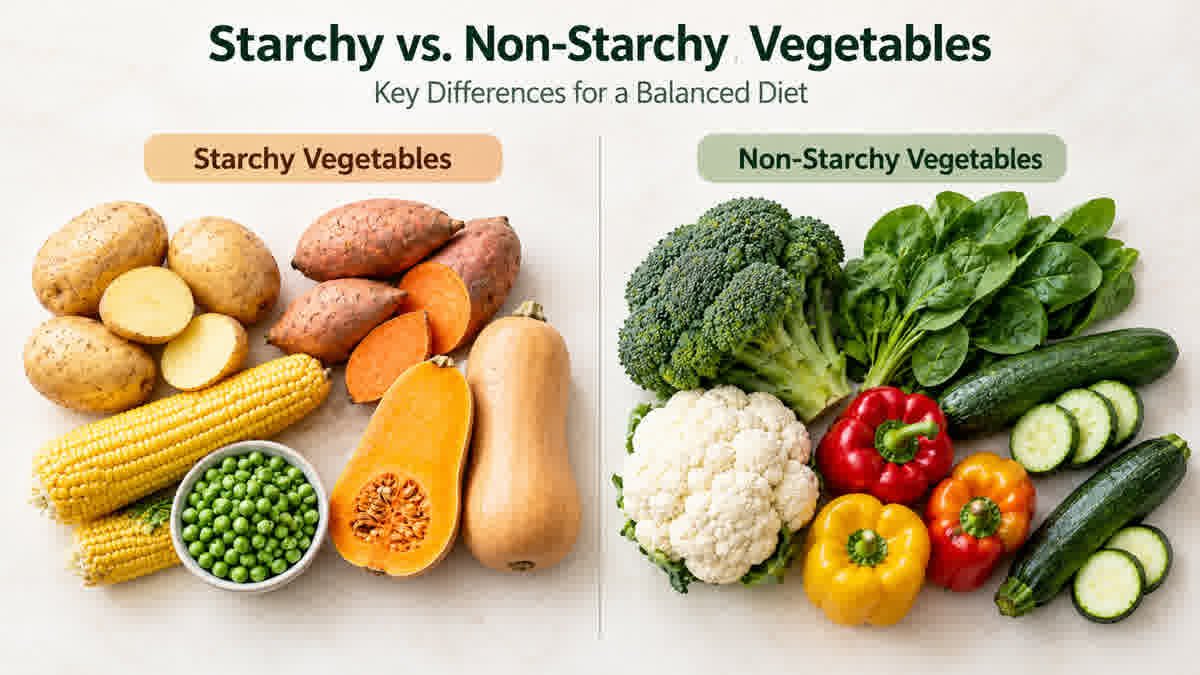

Starchy vegetables, such as potatoes, corn, and green peas, contain more carbohydrate per serving than non-starchy vegetables like spinach, broccoli, and cucumbers. Both groups provide fiber, vitamins, and minerals, and both can fit into a balanced diet. Starchy vegetables are not unhealthy or forbidden, but their carbohydrate content makes portion size worth noticing.
Starch is a type of carbohydrate that your body breaks down into glucose for energy. That is why starchy vegetables count toward your carbohydrate intake, much like grains or fruit. They also supply fiber, potassium, and other nutrients, depending on the vegetable.
This guide explains what starchy and non-starchy vegetables are, compares their nutrition, and shows how they can affect blood sugar. You will also find tips for building a balanced plate, healthy preparation ideas, and answers to common questions. This article is general information, not personal medical advice, and people with diabetes should follow the plan from their healthcare team.
What Are Starchy Vegetables?
Starchy vegetables are vegetables that contain relatively more starch than most others. Because starch is a carbohydrate, they usually provide more carbohydrate per serving than non-starchy vegetables.
What starch does. Your body digests starch into glucose, which fuels your cells. This is a normal and necessary process. It also means starchy vegetables can raise blood sugar more than non-starchy vegetables when eaten in similar portions.
Common examples. Starchy vegetables include potatoes, sweet potatoes, corn, green peas, cassava, yams, plantains, and winter squash such as butternut and acorn. The CDC’s list of starchy foods groups many of these with other carbohydrate-containing foods.
Nutritional benefits. Starchy vegetables provide energy, and many contribute fiber, potassium, vitamin C, and other nutrients. Sweet potatoes and winter squash, for example, supply carotenoids, and potatoes provide potassium. Our article on pumpkin health benefits covers one popular winter squash.
Preparation matters. Plain boiled, baked, or steamed starchy vegetables differ a lot from deep-fried versions or dishes with heavy amounts of added fat and salt. A baked potato and a serving of french fries have very different nutritional profiles, even though both start as potatoes.
Classification can vary between guides. For example, green peas are usually treated as a starchy vegetable in diabetes meal-planning resources, while green beans and sugar snap peas are generally classified as non-starchy. Beans and lentils are also often grouped with carbohydrate-containing foods, and they provide protein as well.
What Are Non-Starchy Vegetables?
Non-starchy vegetables generally contain fewer carbohydrates per typical serving. The American Diabetes Association (ADA) describes them as vegetables that are lower in carbohydrate, calories, and starch than starchy ones. This makes them a flexible way to add volume and variety to meals.
Leafy greens. Spinach, lettuce, kale, mustard greens, and amaranth leaves are examples. They are low in calories and rich in vitamins such as folate and vitamin K. See our guide to leafy green vegetables.
Cruciferous vegetables. Broccoli, cabbage, cauliflower, and Brussels sprouts fall in this group. Our article on cruciferous vegetables explains what they offer.
Other choices. Cucumbers, tomatoes, bell peppers, eggplant, okra, mushrooms, zucchini, carrots, beets, and green beans are also generally considered non-starchy.
These vegetables provide fiber, water, vitamins, and minerals. They can fill your plate without adding as many carbohydrates. Many are affordable and familiar in South Asian cooking, such as okra, eggplant, cabbage, and leafy greens used in curries, stir-fries, and soups. For more on mushrooms, see our article on the health benefits of mushrooms.
Starchy vs. Non-Starchy Vegetables: Key Nutritional Differences
The main difference is carbohydrate content, though the two groups also overlap in nutrients.
| Feature | Starchy vegetables | Non-starchy vegetables |
|---|---|---|
| Examples | Potatoes, corn, peas, sweet potatoes | Spinach, broccoli, cabbage, cucumber |
| Carbohydrates | Generally higher per serving | Generally lower per serving |
| Main nutritional role | Provides carbohydrates and energy, plus other nutrients | Provides fiber, water, vitamins, and minerals |
| Blood glucose relevance | Usually contributes more carbohydrate per serving | Usually contributes less carbohydrate per serving |
| Meal-planning role | One component of a balanced meal | Can form a substantial part of the meal |
| Preparation ideas | Boiled, baked, steamed, or roasted | Raw, steamed, roasted, or stir-fried |
Carbohydrates. Carbohydrate-counting lists often treat about half a cup of a cooked starchy vegetable as roughly 15 grams of carbohydrate. Non-starchy vegetables are usually about 5 grams per half cup cooked or one cup raw, according to the ADA’s guidance. Exact amounts vary by food.
Calories. Starchy vegetables often provide more energy per serving, though preparation and portion size change the total. Non-starchy vegetables are usually lower in calories.
Fiber. Both groups can contribute fiber. Peas, sweet potatoes, and winter squash can be good sources, and so can broccoli, spinach, and okra. Our guide to high-fiber foods shows more.
Vitamins and minerals. Each group offers useful micronutrients, and neither is better in every way. Variety helps cover more nutrients.
Satiety and meal balance. Pairing any vegetable with protein and other foods can make a meal more satisfying. Not all starchy vegetables are high in calories, and not all non-starchy vegetables have the same carbohydrate content, so look at specific foods.
Approximate Nutrition Per Half Cup, Cooked
The table below shows approximate values for a half cup of cooked vegetables, based on USDA FoodData Central. Values vary by variety and preparation.
| Vegetable (½ cup, cooked) | Calories | Carbohydrate | Fiber |
|---|---|---|---|
| Potato, boiled | About 70 | About 15 g | About 1.5 g |
| Sweet potato, baked | About 90 | About 20 g | About 3 g |
| Corn kernels | About 70 to 90 | About 15 to 20 g | About 2 to 3 g |
| Green peas | About 60 | About 12 g | About 4 g |
| Winter squash (butternut) | About 40 | About 10 g | About 2 g |
| Broccoli | About 27 | About 6 g | About 2.5 g |
| Spinach | About 21 | About 3 g | About 2 g |
| Cabbage | About 17 | About 3 g | About 1.5 g |
| Okra | About 18 | About 4 g | About 2 g |
| Carrots | About 27 | About 6 g | About 2.5 g |
How Do Starchy Vegetables Affect Blood Sugar?
When you eat carbohydrate-containing foods, your body digests them into glucose, which enters the bloodstream. This is true for starchy vegetables, grains, fruit, and dairy. Because starchy vegetables contain more carbohydrate per serving, they usually raise blood glucose more than non-starchy vegetables.
The effect depends on several things. The amount you eat matters most, but preparation also plays a role. A mashed potato may be digested faster than a baked potato with skin, for example. The rest of the meal matters too, since protein, fat, and fiber can slow how quickly glucose rises. Individual responses vary, so there is no single number that applies to everyone.
Starchy vegetables are not automatically unsuitable for people with diabetes. They can be part of a meal plan when portions fit your carbohydrate goals. Carbohydrate awareness, meaning knowing which foods contain carbohydrates and in what amount, is a common starting point. The Diabetes Plate Method, used by the CDC and ADA, helps with this by dividing your plate into sections.
If you have diabetes or take glucose-lowering medication, ask your healthcare team or a registered dietitian how starchy vegetables fit into your plan. No single vegetable controls, prevents, or treats diabetes. Our guides to the diabetes diet, blood sugar, and type 2 diabetes offer broader background.
How to Build a Balanced Plate With Both Types
You do not need strict rules to combine starchy and non-starchy vegetables. These practical ideas work for many people.
- Add non-starchy vegetables to most meals. Spinach, cabbage, broccoli, or okra can fill a large part of your plate.
- Treat starchy vegetables as a carbohydrate component. Potatoes, sweet potatoes, or corn can take the place of rice, bread, or pasta at a meal.
- Include protein. Eggs, fish, tofu, chicken, beans, or lentils round out the plate.
- Cook simply. Steam, boil, roast, or stir-fry with a moderate amount of oil.
- Use frozen or canned options when needed. Choose plain products, and check labels for excess sodium, added sugar, or rich sauces. Our article on frozen vegetables explains how they compare with fresh.
For people managing diabetes, the plate method fills half the plate with non-starchy vegetables, one quarter with protein, and one quarter with carbohydrate-containing foods such as starchy vegetables or grains. Individual plans may differ, depending on your medicines, goals, and preferences. For general balance, see our guide to what makes a balanced diet.
Healthy Ways to Prepare Starchy Vegetables
How you cook starchy vegetables affects the overall nutritional profile. These ideas keep them simple:
- Bake or boil potatoes and sweet potatoes. Leave the skin on when you can, since it adds fiber.
- Steam or boil corn and peas. Both are quick and need little added fat.
- Roast winter squash. Herbs and a modest amount of oil add flavor.
- Mix starchy and non-starchy vegetables. Combine them in soups, curries, and mixed vegetable dishes.
- Compare plain with fried. French fries, chips, and heavily sauced dishes can contain considerably more fat, sodium, or added ingredients than plain preparations.
No single cooking method makes every vegetable healthier, so choose what fits your meal and taste. For more ideas, see our article on how to eat more vegetables.
Frequently Asked Questions
What are the most common starchy vegetables?
Potatoes, sweet potatoes, corn, green peas, cassava, yams, plantains, and winter squash are the most common starchy vegetables. They contain more carbohydrate per serving than most other vegetables. The CDC lists many of them.
Are potatoes considered starchy vegetables?
Yes. Potatoes are among the best-known starchy vegetables. They provide carbohydrate, potassium, and some fiber, especially with the skin. Preparation matters, since baked or boiled potatoes differ from fries.
Are carrots starchy or non-starchy?
Carrots are generally classified as non-starchy, even though they taste sweet. The ADA includes them in its non-starchy list. A half cup of cooked carrots has about 6 grams of carbohydrate.
Can people with diabetes eat starchy vegetables?
Yes, in portions that fit an individualized meal plan. Because they contain carbohydrate, portion size and the rest of the meal matter. A healthcare professional or registered dietitian can give personalized advice.
Which vegetables are lowest in carbohydrates?
Leafy greens, cucumbers, zucchini, mushrooms, cauliflower, and cabbage are among the lowest. A half cup of most cooked non-starchy vegetables has roughly 5 grams of carbohydrate or less. Check USDA FoodData Central for specific values.
Are starchy vegetables less healthy than non-starchy vegetables?
No. They provide energy, fiber, and nutrients, and they are part of a healthy diet. They simply contain more carbohydrate per serving. Our guide to the benefits of eating vegetables covers why variety matters.
Conclusion: Both Types Can Fit Into a Balanced Diet
Starchy vegetables generally provide more carbohydrates per serving, while non-starchy vegetables generally provide fewer. Both contribute fiber, vitamins, and minerals, and both can belong in a balanced eating pattern. Learning the difference helps you plan portions, especially if you track carbohydrates.
A practical takeaway is to build meals around variety instead of eliminating a whole category of vegetables. Fill much of your plate with non-starchy vegetables, include a sensible portion of starchy ones, and add protein. For more on how vegetables compare with fruit, see our guide to vegetables vs. fruits.
Sources
- Centers for Disease Control and Prevention: Carbohydrate Lists, Starchy Foods
- American Diabetes Association: Non-Starchy Vegetables
- U.S. Department of Agriculture: FoodData Central
Medical Disclaimer: This article is for educational purposes only and is not a substitute for professional medical advice, diagnosis, or treatment. Always talk with a doctor, registered dietitian, or other qualified healthcare provider before changing your diet, starting a supplement, or if you have questions about your health. If you think you are having a medical emergency, call 911 or your local emergency number right away.