
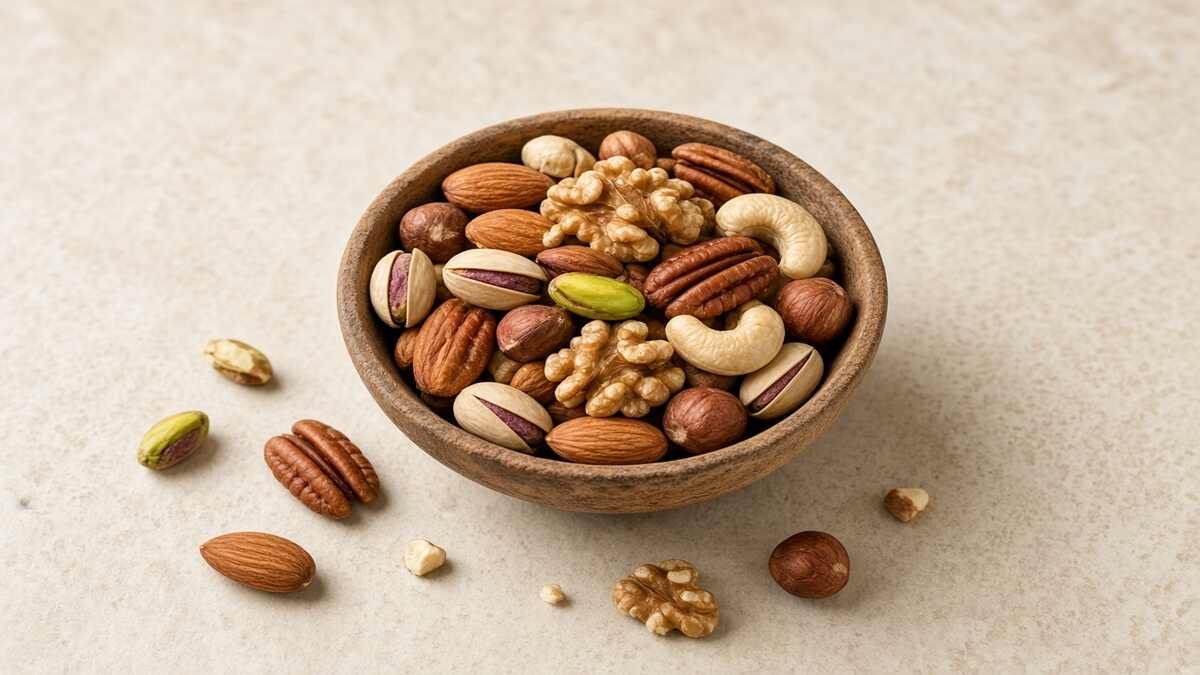

Nuts are one of the easiest nutrient-dense foods to add to your day. They provide unsaturated fats, plant-based protein, fiber, vitamins, and minerals in a form that needs no cooking. They are also energy-dense, which is why many people wonder how much is the right amount.
So, how many nuts should you eat every day? For many adults, about 1 ounce (28 to 30 grams), or a small handful, is a practical daily portion. This is a general guide, not a prescription. Your ideal amount depends on your energy needs, overall diet, and health circumstances.
In this guide, you will see exactly what one serving looks like for popular varieties, what is in a handful of nuts, and what research says about daily intake. You will also learn how to enjoy nuts without overdoing calories, sodium, or sugar. If you are new to the topic, our overview of the health benefits of nuts is a helpful companion. People with nut allergies need special precautions, which we cover below.
How Many Nuts Should You Eat Every Day?
A commonly recommended serving is about 28 to 30 grams, or roughly 1 ounce. That equals about a small handful, or around one-quarter cup of shelled nuts. This is a useful target, but you do not need to eat exactly the same amount every day.
Research supports this range. The Nordic Nutrition Recommendations 2023 advise 20 to 30 grams of nuts per day, and note there was no evidence of stronger associations beyond that amount. The scoping review behind those recommendations estimated that a 28 to 30 gram daily serving was linked with roughly a 20 percent lower relative risk of cardiovascular disease and premature death compared with eating no nuts. These are observational associations, so they do not prove that nuts cause the difference.
Some guidance is framed per week instead of per day. For example, Mayo Clinic describes about 4 to 6 servings of unsalted nuts per week as one approach for adults. Both daily and weekly targets can fit a healthy diet.
People with higher energy needs may include more, while those watching calories may prefer smaller portions. Nuts are most helpful when they replace less nutritious snacks or foods high in saturated fat, instead of simply being added to an unchanged diet.
Quick answer: For many adults, a small handful of unsalted nuts (about 28 grams) is a practical portion. Treat it as a flexible guide, not a strict rule.
What Counts as One Serving of Nuts?
Nuts differ in size, so a handful does not contain the same number of every type. The table below shows approximate counts for a 1-ounce (28-gram) serving. Counts vary with nut size and source, so they are estimates.
| Nut type | Approximate amount for 1 ounce |
|---|---|
| Almonds | About 23 nuts |
| Walnuts | 12 to 14 halves |
| Cashews | About 18 kernels |
| Pistachios | About 49 kernels (shelled) |
| Hazelnuts | About 18 to 21 nuts |
| Pecans | About 19 halves |
| Brazil nuts | About 6 kernels (see safety note below) |
| Peanuts | About 28 to 35 peanuts |
| Macadamias | About 10 to 12 nuts |
Peanuts are botanically legumes, although nutrition guidance usually groups them with nuts. The American Diabetes Association provides practical one-ounce serving examples for several common nuts.
A kitchen scale is the most accurate way to measure 28 grams. Without one, count out a portion once, notice how it looks in your palm or a small bowl, and use that as a visual guide. Pre-portioned snack bags can also help.
Nutrition Facts: What’s in a Handful of Nuts?
Nuts are best known for their fats, but they offer more than that. Here is what a typical serving provides:
- Healthy fats: Mostly unsaturated fats, although the balance varies by nut.
- Protein: Helps make snacks more satisfying and supports normal tissue maintenance.
- Fiber: Supports digestive health.
- Vitamin E: Especially abundant in almonds and hazelnuts.
- Magnesium: Found in almonds, cashews, Brazil nuts, and others.
- Plant compounds: Nuts contain polyphenols and other naturally occurring compounds.
The table compares approximate values per 1-ounce serving of plain, unsalted nuts. Values vary by source and preparation, so check the USDA FoodData Central database for exact figures.
| Nut (1 oz / 28 g) | Calories | Protein | Fiber | Total fat |
|---|---|---|---|---|
| Almonds | ~164 | ~6 g | ~3.5 g | ~14 g |
| Walnuts | ~185 | ~4 g | ~2 g | ~18.5 g |
| Cashews | ~157 | ~4 to 5 g | ~1 g | ~12.5 g |
| Pistachios | ~159 | ~6 g | ~3 g | ~13 g |
| Hazelnuts | ~178 | ~4 g | ~2.7 g | ~17 g |
| Pecans | ~196 | ~3 g | ~2.7 g | ~20 g |
| Brazil nuts | ~187 | ~4 g | ~2 g | ~19 g |
| Macadamias | ~204 | ~2 g | ~2.4 g | ~21.5 g |
| Peanuts | ~161 | ~7 g | ~2.4 g | ~14 g |
All nuts fall in a similar range of roughly 160 to 205 calories per ounce. For more protein-rich options, see our guide to high-protein foods.
Health Benefits of Eating Nuts Daily
The benefits below are the best supported by research. As with most nutrition findings, they apply to nuts as part of an overall healthy diet.
Heart Health
Nuts contain unsaturated fats, fiber, and plant compounds. A large umbrella review in Advances in Nutrition found that eating 28 grams of nuts daily, compared with none, was associated with lower cardiovascular risk. Nuts do not replace prescribed heart medication, and they work best within a heart-healthy eating pattern.
Cholesterol Support
A meta-analysis of 61 controlled trials found that tree nut intake lowers total cholesterol, LDL cholesterol, apolipoprotein B, and triglycerides. The cholesterol-lowering effect seemed to depend more on the dose than on the type of nut. Results also depend on what nuts replace in the diet. For background, see LDL vs. HDL cholesterol.
Weight Management and Fullness
Protein, fiber, and fat can make nuts satisfying. Mayo Clinic notes that these nutrients may help with weight management, but portions still matter. We expand on this below.
Blood Sugar and Metabolic Health
Nuts are relatively low in digestible carbohydrate and can fit into balanced meals and snacks. The same umbrella review found mixed results for diabetes incidence, so nuts should not be viewed as a way to prevent or treat diabetes. Our diabetes diet guide offers more context.
Healthy Aging and Overall Health
Observational research links regular nut intake with favorable long-term outcomes, including lower all-cause mortality. These are associations, since people who eat nuts often have other healthy habits. See our guide to healthy habits.
Does Eating Nuts Every Day Cause Weight Gain?
Nuts are calorie-dense because they contain substantial fat. However, calorie density does not automatically mean a food causes weight gain. The protein, fiber, and fat in nuts can improve fullness, which may help offset the extra calories.
What matters most is the context. Replacing a sugary snack with a handful of nuts is very different from adding a handful on top of everything else you eat. In the second case, total calories rise.
A practical tip is to measure your portion instead of eating directly from a large bag. A one-ounce serving of most nuts provides about 160 to 200 calories, and a few extra handfuls can add several hundred.
Key message: A moderate portion of nuts can fit into a weight-management plan, but your total diet still matters. For broader strategies, see our guide to weight management.
Which Nuts Are Best to Eat Every Day?
No single nut is the best for everyone. Each offers a different nutrient mix, so variety is a sensible approach for people who tolerate nuts and have no relevant allergy.
- Almonds: vitamin E, fiber, protein, and magnesium. See the health benefits of almonds.
- Walnuts: ALA, a plant-based omega-3 fatty acid. Learn more in our guide to the health benefits of walnuts and our overview of omega-3 fatty acids.
- Pistachios: protein and fiber, and a portion-friendly choice when bought in shells because shelling slows you down.
- Cashews: magnesium, copper, and other minerals.
- Hazelnuts: vitamin E and unsaturated fats.
- Peanuts: protein and affordability, though they are legumes.
- Brazil nuts: very rich in selenium, so portions require extra care.
Wondering how the two most popular choices compare? Read almonds vs. walnuts for a side-by-side look.
Best Ways to Include Nuts in Your Daily Diet
Small additions make nuts easy to enjoy. Here are some ideas:
- Add almonds or walnuts to oatmeal.
- Sprinkle chopped nuts over yogurt.
- Combine pistachios with fresh fruit.
- Add cashews to vegetable stir-fries.
- Spread natural nut butter on whole-grain toast.
- Toss chopped nuts into salads.
- Make small portion-controlled snack packs.
Choose plain or lightly roasted options without excessive salt, sugar, or coatings. Nuts also pair well with plant-forward meals, as discussed in our guide to eating more vegetables. For more variety, browse our list of healthy foods.
Nut butter counts too. As a rough guide, 2 tablespoons of nut butter is similar in size to a serving of whole nuts, but check the label for added sugar, salt, and oils.
Can You Eat Too Many Nuts?
Yes, eating very large amounts has downsides. More is not necessarily better, and a regular moderate portion is more practical than large quantities. Possible issues include:
- Excess calories: Portions that are not measured can add up quickly.
- Digestive discomfort: Large amounts may cause bloating or gas, especially if you are not used to the fiber and fat.
- Excess sodium: Heavily salted varieties can contribute a lot of sodium.
- Added sugar and oils: Coated and flavored products often contain them.
- Too much selenium: Eating many Brazil nuts regularly can push selenium above safe levels.
- Allergic reactions: These are a concern for people with nut allergies.
Selenium deserves a closer look. The NIH Office of Dietary Supplements reports that Brazil nuts contain about 68 to 91 micrograms of selenium per nut. The adult upper limit is 400 micrograms per day from all sources, so just a handful of Brazil nuts can exceed it. An occasional nut or two is generally considered reasonable, but a handful every day is not advised.
Who Should Limit or Avoid Certain Nuts?
Nuts are safe for most people, but some should take extra care.
- People with diagnosed tree nut or peanut allergies: Avoid the relevant nuts. Do not experiment with small portions on your own, and follow your clinician’s allergy-management advice. The umbrella review mentioned earlier reported allergy and related reactions in roughly 1 to 2 percent of adults.
- People on a specific dietary plan: If a healthcare professional has given you dietary guidance, ask how nuts fit in.
- People who get digestive discomfort: Smaller servings may be easier to tolerate.
- Young children: Whole nuts are a choking hazard. Serving recommendations for kids vary by age, so ask your child’s pediatrician.
- People eating Brazil nuts: Be mindful of their unusually high selenium content.
Raw, Roasted, Salted, or Unsalted: Which Is Best?
Raw and dry-roasted nuts can both be nutritious choices. Dry roasting changes flavor and texture, and the nutritional differences are generally small.
For everyday eating, unsalted nuts are usually the better pick, especially if you are trying to limit sodium. Honey-roasted, sugar-coated, and heavily seasoned nuts may contain added ingredients that offset some benefits. Mayo Clinic notes that adding salt or sugar to nuts may cancel out some of their heart-healthy benefits. The American Heart Association also advises paying attention to added sodium and sugars.
Read ingredient labels, and look for products with nuts as the main or only ingredient. Because nuts contain natural oils, store them in airtight containers away from heat and light. Refrigeration or freezing helps preserve freshness and slows rancidity.
Final Verdict
Around 28 to 30 grams of nuts per day is a practical serving for many adults. Different nuts offer different nutrients, so rotating varieties is a good habit. Choose unsalted or minimally processed options most often, and use nuts to replace less nutritious snacks.
Adjust your portion for your energy needs, allergies, and any dietary advice from your healthcare team. For wider context, see our guides to what a healthy diet looks like and the Mediterranean diet.
Use this quick decision guide as a starting point.
| Your question | Practical answer |
|---|---|
| How much should I eat? | Around 28 to 30 g is a useful general serving |
| How do I measure it? | Use a kitchen scale or a small handful as a rough guide |
| Can I mix different nuts? | Yes, if you tolerate them |
| Should I choose salted nuts? | Unsalted is generally a better everyday choice |
| Will nuts cause weight gain? | Not necessarily; portion size and overall diet matter |
| Should I eat Brazil nuts every day? | Be cautious because they are very high in selenium |
| Can I eat nuts daily? | Many people can, provided they have no allergy or other restriction |
Frequently Asked Questions
How many nuts should you eat every day?
About 28 to 30 grams (1 ounce), or a small handful, is a practical amount for many adults. The Nordic Nutrition Recommendations advise 20 to 30 grams daily. Your ideal amount depends on your calorie needs and health.
Is eating nuts every day healthy?
For most people without a nut allergy, yes. A daily portion is associated with lower cardiovascular risk in observational research, as summarized in a large umbrella review. Keep portions moderate and choose unsalted types.
What is one serving of nuts?
One serving is about 1 ounce (28 grams). That is roughly 23 almonds, 12 to 14 walnut halves, or about 18 cashews. Counts vary by nut size.
Can eating too many nuts cause weight gain?
It can if nuts add extra calories on top of what you already eat. A measured portion that replaces other snacks is less likely to cause problems. Total calorie intake is what matters most.
Which nuts are healthiest to eat daily?
No single nut is best. Almonds, walnuts, pistachios, hazelnuts, and peanuts all provide useful nutrients, and Mayo Clinic describes many of these as heart healthy. Rotating varieties gives you a wider range of nutrients.
Are almonds or walnuts better for everyday eating?
Both are good choices. Almonds provide more protein, fiber, and vitamin E, while walnuts provide more plant-based omega-3 ALA. Our almonds vs. walnuts comparison explains the differences.
Is it okay to eat nuts at night?
Yes, there is no proven reason to avoid nuts in the evening. Keep the portion modest, since large amounts of fatty foods close to bedtime can be uncomfortable for some people. Total daily intake matters more than timing.
Should you eat nuts raw or roasted?
Either is fine. Pick plain raw or dry-roasted nuts without added salt, sugar, or coatings, since those additions matter more than the roasting method.
Can you eat different types of nuts together?
Yes. Mixing nuts provides a broader range of nutrients. Keep the total near one serving if you are watching calories.
Are peanuts considered nuts?
Botanically, peanuts are legumes, like beans and lentils. Nutrition guidance usually groups them with nuts because their nutrients are similar, and Mayo Clinic lists them among heart-healthy choices.
Sources
- Nordic Council of Ministers. Nordic Nutrition Recommendations 2023: Nuts and seeds.
- Fadnes LT, Balakrishna R. Nuts and seeds: a scoping review for Nordic Nutrition Recommendations 2023. Food & Nutrition Research. 2024;68:10483. Full text.
- Balakrishna R, et al. Consumption of nuts and seeds and health outcomes including cardiovascular disease, diabetes and metabolic disease, cancer, and mortality: an umbrella review. Advances in Nutrition. 2022;13(6):2136-2148. Full text.
- Del Gobbo LC, et al. Effects of tree nuts on blood lipids, apolipoproteins, and blood pressure: systematic review, meta-analysis, and dose-response of 61 controlled intervention trials. American Journal of Clinical Nutrition. 2015;102(6):1347-1356. Full text.
- Mayo Clinic. Nuts and your heart: Eating nuts for heart health.
- American Heart Association. Go nuts (but just a little!).
- American Diabetes Association, Diabetes Food Hub. Nuts: a simple, healthy snack.
- National Institutes of Health, Office of Dietary Supplements. Selenium: fact sheet for consumers.
- U.S. Department of Agriculture. FoodData Central.
Medical Disclaimer: This article is for general educational purposes only and does not replace professional medical advice, diagnosis, or treatment. Nutrition needs vary from person to person. Talk with your doctor or a registered dietitian before making major changes to your diet, especially if you have a food allergy, a chronic condition, or take medication. If you think you are having a medical emergency, call your local emergency number right away.