
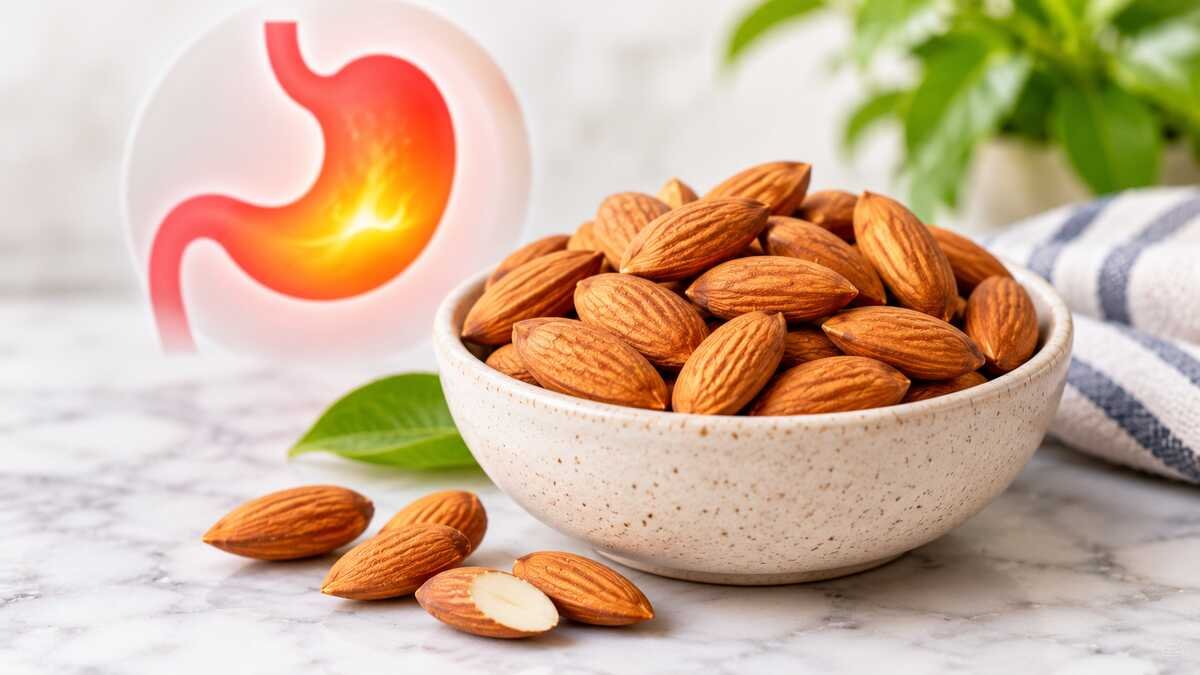

Acid reflux happens when stomach contents flow back up into the esophagus, the tube that connects your throat to your stomach. Common symptoms include heartburn (a burning feeling in the chest) and regurgitation (a sour or bitter taste in the back of the throat). When reflux happens often, it may be diagnosed as gastroesophageal reflux disease (GERD), and you can learn more in our guide to what causes acid reflux.
Many people with reflux start paying closer attention to snacks, and almonds often come up. They are a nutrient-dense food that provides healthy fats, fiber, protein, and vitamin E. Some people also pass along almonds as a simple home remedy for heartburn, which raises a fair question: do almonds actually help, or can they make symptoms worse?
This article explains what the evidence does and does not show, how portion size and preparation may matter, and how to try almonds in a reflux-conscious way. The short answer is that almonds may be tolerated by some people, but they are not a proven treatment for acid reflux.
Are Almonds Good for Acid Reflux?
Almonds may be suitable for some people with acid reflux, but they are not a proven remedy for heartburn. They contain fiber, protein, vitamin E, and unsaturated fats that contribute to a balanced diet. However, almonds are also relatively high in fat, and high-fat foods are commonly linked to reflux symptoms, according to the National Institute of Diabetes and Digestive and Kidney Diseases (NIDDK).
There is limited direct clinical evidence showing that eating almonds reduces stomach acid or prevents reflux. Whether almonds are a good choice for you depends on your individual tolerance, portion size, and how they are prepared. Many people find that a small serving of plain almonds is easier to tolerate than a large portion or a heavily flavored almond snack.
It is also worth being clear about what almonds are not. They are not a medically established reflux treatment, and they should not be thought of as an “alkaline” food that neutralizes stomach acid.
Nutritional Benefits of Almonds for Digestive and Overall Health
Even though almonds are not a reflux remedy, they can still earn a place in a balanced diet if you tolerate them. A 1-ounce serving (about 23 almonds) provides roughly 164 calories, about 14 grams of fat, around 6 grams of protein, and about 3 to 4 grams of fiber, according to USDA-based nutrition data.
For a broader overview, see our guide to almonds health benefits.
Fiber and digestive health
Almonds provide dietary fiber, which supports normal digestion and bowel regularity. Getting enough fiber from a variety of foods contributes to overall digestive health. Our article on high-fiber foods for digestive health lists other good options.
That said, there is no evidence that the fiber in almonds directly prevents or relieves acid reflux. Fiber is best viewed as one part of a healthy eating pattern.
Healthy fats and nutritional value
Most of the fat in almonds is unsaturated, which makes them a useful part of a balanced diet. Our guide to healthy fats explains why these fats are generally preferred over saturated fats.
However, healthy fats are still fats. For some people with reflux, large portions of any high-fat food can bring on symptoms, even when the fat is the unsaturated kind. This is the main reason almonds need a cautious approach.
Vitamin E and antioxidants
Almonds are a good source of vitamin E, an antioxidant that helps protect cells from oxidative damage. This supports general health, but it does not mean vitamin E treats or prevents acid reflux.
Protein and other essential nutrients
Almonds also provide plant-based protein, magnesium, some calcium, and riboflavin. These nutrients contribute to overall nutrition, but they do not make almonds a specific treatment for GERD.
What Does Scientific Research Say About Almonds and Acid Reflux?
The key point is that nutrition research on almonds is much stronger for heart-related outcomes than for reflux. For example, we cover the cholesterol evidence in our article on almonds and high cholesterol.
Is there scientific evidence that almonds relieve heartburn?
Almonds are sometimes passed along as a home remedy for heartburn. Some people report feeling better after eating a few, but anecdotes are not the same as clinical evidence.
To our knowledge, there is no strong clinical evidence demonstrating that almonds directly relieve acid reflux. A food remedy that is repeated often is not necessarily supported by medical research, and reflux symptoms can improve or flare for many reasons unrelated to any one snack.
How high-fat foods may affect acid reflux
The NIDDK lists high-fat foods among the foods and drinks commonly linked to GERD symptoms, along with chocolate, caffeine, mint, and spicy foods. Fatty meals tend to stay in the stomach longer, which may extend the window in which reflux can occur for susceptible people.
Because almonds are calorie-dense and rich in fat, this is why their fat content may matter even though their overall nutrition profile is favorable. Not everyone reacts to high-fat foods in the same way, and many people with reflux tolerate small portions of nuts without trouble.
Why almonds affect people differently
Individual responses to almonds vary. Several factors may play a role:
- Portion size
- Individual digestive sensitivity
- Total fat in the meal or snack
- Whether almonds are eaten alone or with other foods
- Existing GERD symptoms and personal trigger foods
This variability is why food diaries and gradual testing are often more useful than general rules about a single food. Our article on what makes acid reflux worse covers other common triggers.
What medical guidelines recommend
Established GERD guidance focuses on treatment plans and lifestyle measures, not on individual foods such as almonds. The American College of Gastroenterology guideline highlights lifestyle steps such as weight loss for people with overweight or obesity, avoiding meals close to bedtime, and elevating the head of the bed for nighttime symptoms.
The NIDDK similarly advises that if you have symptoms at night or when lying down, eating meals at least 3 hours before you lie down may improve symptoms. Avoiding your personal trigger foods is also a common recommendation. For more practical steps, see how to manage acid reflux at home and the available acid reflux treatment options.
To summarize, nutritional benefits, anecdotal experiences, and medically established reflux management are three different things. Almonds have documented nutritional value, but their role in reflux relief is unproven.
How Many Almonds Can You Eat With Acid Reflux?
There is no medically established almond serving size for people with GERD. What follows is practical guidance, not a clinical protocol.
What is a reasonable serving size?
A standard serving is about 1 ounce (28 grams), or roughly 23 almonds, providing about 160 to 165 calories. People with reflux may prefer to start with a smaller portion, such as 5 to 10 almonds, to see how their body responds.
This smaller portion is simply a trial suggestion. It is not a proven reflux treatment, and the right amount for you depends on your own tolerance.
Can you eat almonds every day?
If almonds do not trigger your symptoms, they can be part of a balanced daily diet in moderate portions. Pay attention to how you feel in the hours after eating them, and adjust accordingly.
If you have frequent reflux, identifying your individual food triggers is generally more helpful than adding or removing one food in isolation. For general portion guidance, see how many nuts you should eat every day.
Is eating too many almonds bad for acid reflux?
Large portions increase your total fat intake in one sitting, and large or high-fat meals may worsen reflux in some people. Smaller portions are generally a gentler approach than eating a big handful at once.
Best Ways to Eat Almonds If You Have Acid Reflux
If you want to include almonds, these steps may help you do so more comfortably.
Choose plain, unsalted almonds
Plain raw or dry-roasted almonds are practical choices. Heavily flavored varieties may contain extra oils, spices, sugar, or salt, any of which can be a trigger for some people. Check the ingredient label and choose simple products.
Try smaller portions
Start with a few almonds and increase only if you feel fine. Eating slowly and chewing thoroughly may make them easier to tolerate, and your own response should guide how much you eat.
Combine almonds with suitable foods
These pairings are meal ideas, not proven reflux treatments. If you tolerate them, you might try:
- A small amount of chopped almonds on oatmeal
- Sliced almonds over plain, low-fat yogurt (see our article on yogurt for acid reflux)
- A few almonds with a banana
- A small spoonful of unsweetened almond butter stirred into oatmeal
- A few almonds added to a mild whole-grain breakfast
Building steady healthy eating habits can matter more than any single ingredient.
Avoid eating almonds close to bedtime
Reflux is often worse when lying down, so late snacks can aggravate nighttime symptoms. The NIDDK suggests leaving at least 3 hours between eating and lying down if you have symptoms at night. Staying upright after eating can also help.
Are There Any Risks of Eating Almonds With Acid Reflux?
Almonds are safe for most people, but a few considerations apply.
High fat content may trigger symptoms
Despite their nutritional value, almonds contain considerable fat. Large servings may aggravate symptoms in sensitive individuals. If you notice a clear pattern between almonds and your reflux, reducing the portion or avoiding them for a while is reasonable.
Almond allergies and digestive sensitivity
Almonds are tree nuts and can cause allergic reactions. People with a known almond or tree nut allergy should avoid them. Severe allergic reactions, such as difficulty breathing or swelling of the face or throat, need emergency medical attention.
Some people without an allergy may also feel digestive discomfort after eating nuts, which is a separate issue from allergy.
Flavored almonds and added ingredients
Spicy, chocolate-coated, heavily salted, and sugar-coated almonds contain added ingredients that can be reflux triggers on their own. Chocolate and spicy foods, for example, are both on the NIDDK list of foods commonly linked to symptoms. Simple, minimally processed products are usually the safer choice.
When should you avoid almonds?
If you repeatedly experience heartburn after eating almonds, you may want to avoid them. Food elimination should be based on your own tolerance, not unnecessary restrictions, so avoid cutting out foods that do not bother you.
See a healthcare professional if reflux is frequent or persistent. Seek care promptly for difficulty swallowing, unexplained weight loss, or signs of bleeding, which clinical guidelines treat as warning symptoms. Our guide on when to see a doctor for acid reflux can help you decide. Chest pain can also have cardiac causes, so seek emergency care for severe chest pain.
Frequently Asked Questions About Almonds and Acid Reflux
Are almonds good for acid reflux?
Almonds may be tolerated by some people with acid reflux, but they are not a proven remedy. Their fat content may worsen symptoms in certain individuals, as high-fat foods are commonly linked to GERD symptoms according to the NIDDK.
Can almonds help relieve heartburn?
There is insufficient clinical evidence that almonds relieve heartburn. Some people report feeling better after eating them, but this should not be considered an established treatment.
Do almonds cause acid reflux?
Almonds do not cause reflux in everyone. Their relatively high fat content may trigger or worsen symptoms in people who are sensitive to high-fat foods.
How many almonds should I eat if I have acid reflux?
A standard serving is about 23 almonds, but people with reflux may want to begin with a smaller portion and monitor their symptoms. Personal tolerance matters more than a fixed number.
Are raw almonds better than roasted almonds for acid reflux?
Both raw and dry-roasted almonds may be tolerated, and there is no strong evidence that one is better for reflux. Plain varieties without added oils or spicy seasonings are practical choices.
Is almond milk good for acid reflux?
Unsweetened almond milk may be tolerated by some people because it is generally lower in fat than whole almonds and many full-fat dairy products. Nutrition varies by brand, and it is not a proven reflux treatment, so check labels and watch your symptoms.
Are soaked almonds good for acid reflux?
There is no reliable clinical evidence that soaking almonds prevents acid reflux or reduces heartburn. Soaked almonds may be easier for some people to chew, but individual tolerance still matters.
Should I eat almonds on an empty stomach for acid reflux?
There is no scientific evidence that eating almonds on an empty stomach prevents or treats reflux. Choose a portion and eating pattern that does not trigger your symptoms.
What nuts are best for acid reflux?
No particular nut is proven to prevent acid reflux. Some people tolerate small portions of almonds, walnuts, or other plain nuts, while others find their fat content triggers symptoms. Personal tolerance is the best guide.
The Bottom Line: Are Almonds Good for Acid Reflux?
Almonds provide fiber, vitamin E, protein, and healthy fats, but there is no strong clinical evidence that they directly relieve acid reflux. Their fat content may trigger symptoms in some people, and smaller portions of plain almonds are often tolerated better than large servings.
Individual tolerance and overall eating habits matter most. Persistent reflux may need medical evaluation and treatment. Almonds can fit into a reflux-conscious diet if you tolerate them, but they should not be relied on as a natural cure for heartburn. You may also find our roundup of natural home remedies for acid reflux helpful.
Sources
- National Institute of Diabetes and Digestive and Kidney Diseases. Eating, Diet, & Nutrition for GER & GERD.
- Katz PO, et al. ACG Clinical Guideline for the Diagnosis and Management of Gastroesophageal Reflux Disease. American Journal of Gastroenterology, 2022.
- University Hospitals (USDA-based data). Nutrition facts: almonds, 1 oz (23 whole kernels).
Medical Disclaimer: This article is for informational purposes only and is not a substitute for professional medical advice, diagnosis, or treatment. Consult a qualified healthcare professional if you experience frequent or persistent acid reflux, difficulty swallowing, unexplained weight loss, or ongoing digestive discomfort.