
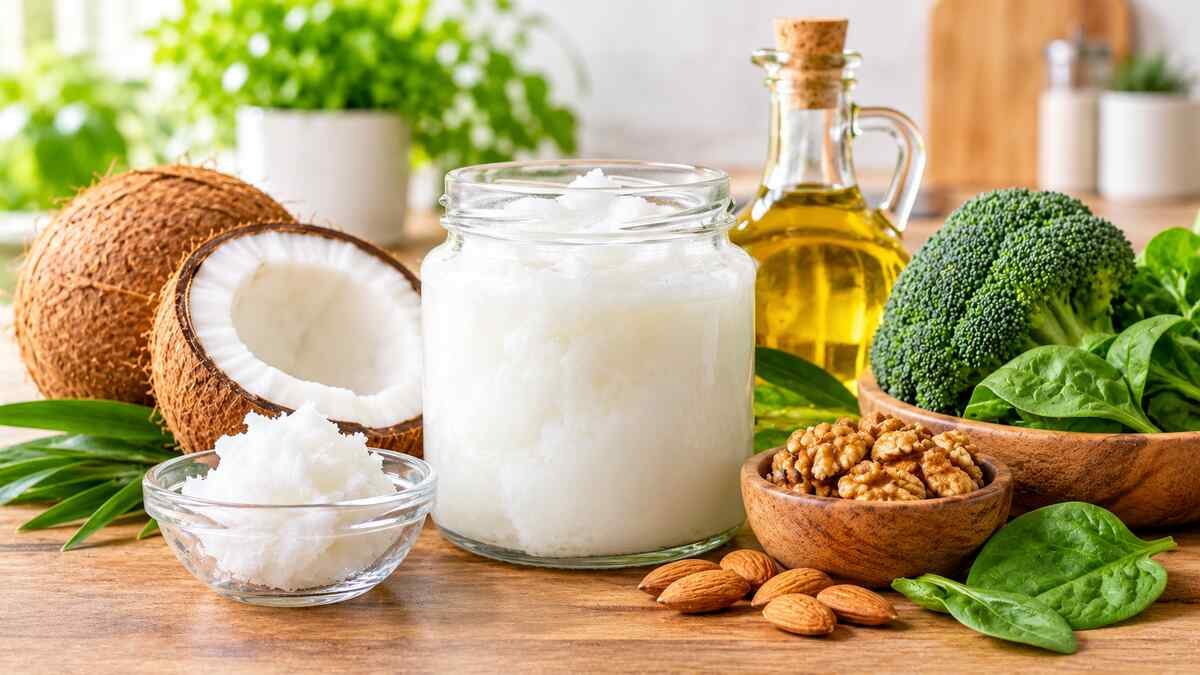

Coconut oil has moved from specialty stores into mainstream kitchens. People use it for sautéing vegetables, baking, stirring into coffee, and spooning straight from the jar. Social media and wellness marketing often describe it as a “superfood,” which leaves many people wondering whether a daily habit is a good idea.
The honest answer is more nuanced than either the hype or the warnings suggest. Coconut oil is almost entirely fat, and a large share of that fat is saturated. How much you eat, how often you eat it, and what it replaces in your diet all affect what it means for your health.
This guide explains what is in coconut oil, which potential benefits are supported by evidence, and what researchers have found about cholesterol, heart health, and weight. You will also see how coconut oil compares with olive oil and canola oil, plus practical ways to use it without relying on it.
Can You Eat Coconut Oil Every Day?
Coconut oil can be included in your diet, but eating it every day is not necessary for good health. It contains a high amount of saturated fat, which can raise LDL cholesterol compared with oils rich in unsaturated fats. For everyday cooking, olive, canola, and other unsaturated vegetable oils are generally preferred.
Using coconut oil now and then for flavor is different from making it your main cooking fat. A teaspoon in a curry once a week plays a very different role than several tablespoons a day. This article offers general food information, not a personal prescription, so your own needs may differ.
What Is in Coconut Oil?
Understanding coconut oil’s fat composition
Coconut oil is nearly 100% fat. Like all dietary fats, it provides about 9 calories per gram, and a tablespoon contains roughly 120 calories. It has no meaningful amounts of protein, carbohydrate, fiber, or most vitamins and minerals, so the label on coconut oil nutrition is short.
Dietary fats fall into three broad groups. Saturated fats are usually solid at room temperature and are found in butter, cheese, fatty meats, and tropical oils. Monounsaturated fats (found in olive oil, avocados, and many nuts) and polyunsaturated fats (found in fish, walnuts, and sunflower or soybean oil) are usually liquid at room temperature.
Coconut oil stands out because roughly 80% to 90% of its fat is saturated. An American Heart Association advisory on dietary fats reported that coconut oil is about 82% saturated fat, compared with about 63% for butter. One tablespoon contains around 11 to 12 grams of saturated fat. Its most abundant fatty acid is lauric acid, which makes up close to half of the total.
Does coconut oil contain medium-chain triglycerides?
Coconut oil is often marketed as a rich source of medium-chain triglycerides (MCTs). It does contain medium-chain fatty acids, but the picture is less simple than the marketing suggests. Much of the MCT content in coconut oil is lauric acid, which the body handles differently from the shorter caprylic and capric acids that dominate concentrated MCT oil.
Concentrated MCT oil is a separate, manufactured product. Research on MCT oil should not be applied directly to coconut oil, and the two should not be treated as nutritionally identical.
Virgin coconut oil vs. refined coconut oil
Virgin coconut oil vs refined coconut oil is one of the most common questions shoppers have. Virgin (or unrefined) coconut oil is typically made from fresh coconut meat with minimal processing. It keeps a distinct coconut aroma and flavor.
Refined coconut oil is usually made from dried coconut meat and goes through additional steps such as bleaching and deodorizing. The result has a neutral taste and smell and tolerates somewhat higher cooking temperatures. Your choice usually comes down to flavor and cooking method.
Both types are high in saturated fat. Virgin coconut oil should not automatically be considered a heart-healthier option, because the main concern, its saturated fat content, is essentially the same. For a broader look at this ingredient, see CollectedMed’s guide to coconut oil health benefits.
Potential Benefits of Eating Coconut Oil
Some benefits are real but modest, while others are popular claims that lack strong human evidence. It helps to keep culinary value separate from medical benefit.
Provides dietary energy
Fat is a concentrated source of calories, and coconut oil is no exception. Your body needs some fat for energy, to absorb fat-soluble vitamins such as A, D, E, and K, and to build cell membranes. That does not make coconut oil a necessary energy source, since many other foods and oils provide fat along with additional nutrients.
Adds flavor and texture to meals
For many cooks, the real appeal is culinary. Coconut oil adds a mild sweetness to curries, granola, roasted sweet potatoes, and baked goods. It is solid at cooler room temperatures, which gives some recipes a flaky or crisp texture. These are legitimate reasons to keep a jar in the pantry, though they are cooking benefits rather than health benefits.
Contains lauric acid
Lauric acid has attracted scientific interest because of its properties in laboratory studies. Some of that research has examined its effects on microbes in test tubes. Laboratory findings do not show that eating coconut oil prevents or treats infections in people, and human clinical evidence for those claims is lacking.
Can be part of a varied diet
No single ingredient decides whether an eating pattern is healthy. A diet built around vegetables, legumes, whole grains, fish, nuts, and unsaturated plant oils can comfortably include an occasional serving of coconut oil. Variety is a useful principle here. You can get dietary fat from nuts, seeds, fish, avocados, and plant oils, and many of those foods bring protein, fiber, or omega-3 fats along with them. You can explore more options in our guide to healthy fats.
Current clinical evidence does not establish that daily coconut oil boosts immunity, causes weight loss, prevents heart disease, or improves metabolism.
What Are the Health Concerns of Eating Coconut Oil Every Day?
The concerns center on saturated fat and its effect on blood cholesterol. They matter most when coconut oil is eaten regularly and in larger amounts.
Coconut oil is high in saturated fat
The World Health Organization (WHO) updated its guidance on saturated and trans fats in 2023. It advises that no more than 10% of total daily energy come from saturated fatty acids for adults and for children age 2 and older. It also recommends that fat intake be primarily unsaturated. WHO’s summary of the guidance lists coconut oil among the hard fats and oils that contain saturated fat, along with butter, ghee, lard, and palm oil.
This is a general population guideline, not a personal prescription. As a rough illustration, 10% of a 2,000-calorie day is about 200 calories, or around 22 grams of saturated fat. A single tablespoon of coconut oil supplies roughly half of that, before counting any other source.
Replacing saturated fats with unsaturated fats, such as those in olive oil, canola oil, nuts, and fish, is generally recommended for heart health.
It may raise LDL cholesterol
LDL cholesterol is often called “bad” cholesterol because high levels are linked to fatty buildup in artery walls. HDL cholesterol is often called “good” cholesterol. You can learn more in our explainer on LDL vs. HDL cholesterol.
A 2020 systematic review and meta-analysis in the journal Circulation pooled 16 clinical trials. It found that coconut oil raised LDL cholesterol by about 10.47 mg/dL compared with nontropical vegetable oils. It also raised HDL cholesterol, by about 4 mg/dL.
A rise in HDL does not automatically cancel out a rise in LDL. Researchers generally treat LDL as the more established target for reducing cardiovascular risk. The comparison also matters. Coconut oil raised LDL less than butter in some studies, but that does not make it better than unsaturated oils.
For more on this topic, read coconut oil and high cholesterol on CollectedMed.
It is not proven to improve heart health
Some people point to the HDL increase or to traditional diets in coconut-growing regions as evidence of heart protection. Those arguments have limits. Changes in individual cholesterol numbers are not the same as fewer heart attacks or strokes, and traditional diets differ from modern diets in many ways beyond coconut.
A 2024 WHO rapid overview of systematic reviews looked at coconut oil compared with other vegetable oils and its link with mortality and cardiovascular health. The existing research has gaps, and long-term trials that track heart attacks or deaths are limited. Strong evidence that coconut oil prevents cardiovascular disease is lacking. If you have blood pressure concerns, you can also read about coconut oil and blood pressure.
It is not a proven weight-loss food
Coconut oil is sometimes promoted as a fat-burning food. The research does not support that. A 2022 systematic review and meta-analysis of randomized trials included seven studies with 515 adults. It found no clinically relevant improvement in body composition or lipid profile compared with other oils and fats. The authors also pointed to limitations in the available trials, including small sample sizes and short follow-up in many of them.
Because coconut oil is calorie-dense, adding it to meals on top of your usual diet adds calories. If weight management is your goal, overall eating patterns and activity matter far more than any single oil. You may also want to read about coconut oil and type 2 diabetes, since research has not shown it to be a treatment for blood sugar concerns.
How Much Coconut Oil Can You Eat Every Day?
There is no universal recommended daily amount
No health authority has established a daily requirement or a recommended serving of coconut oil. A tablespoon or two is sometimes presented online as a standard “daily dose,” but that figure is not a medically approved serving. People’s needs differ based on age, health conditions, medications, calorie needs, and overall diet.
Because of this, the more useful question is how coconut oil fits into your overall saturated fat intake, not how much to eat each day.
Consider your total saturated-fat intake
Coconut oil is only one possible source of saturated fat. Others include butter, ghee, cream, cheese, fatty cuts of meat, sausage, and many baked goods and fried or packaged foods. If your day already includes several of these, adding coconut oil on top can push your total higher without you noticing.
Reading nutrition labels can help. Looking at the saturated fat line gives you a quick way to compare products and keep your overall pattern in view.
Think about what coconut oil replaces
The swap matters when interpreting research and making food choices. Replacing butter with coconut oil may make little difference to your saturated fat intake. Replacing olive or canola oil with coconut oil, however, increases it noticeably.
In contrast, using a small amount of coconut oil in place of a more heavily processed fat in a specific recipe is a different situation again. When you evaluate any cooking fat, consider what it displaces in your diet and choose according to your overall needs.
Coconut Oil vs. Other Cooking Oils
Here is a simple comparison of how common cooking oils stack up.
| Cooking oil | General fat profile | Practical consideration |
|---|---|---|
| Coconut oil | High in saturated fat | Use selectively for flavor and recipes |
| Olive oil | Rich in monounsaturated fat | Common heart-conscious cooking choice |
| Canola oil | Rich in unsaturated fats | Versatile for everyday cooking |
| Sunflower oil | Generally rich in unsaturated fats | Useful for cooking and food preparation |
| Soybean oil | Contains polyunsaturated fats | Common general-purpose cooking oil |
Coconut oil vs. olive oil
Coconut oil vs olive oil is a popular comparison. Olive oil is mostly monounsaturated fat and contains only a small amount of saturated fat per tablespoon, while coconut oil contains many times more. Olive oil is also a cornerstone of the Mediterranean diet, an eating pattern widely studied for heart health. See our guide to olive oil benefits for more detail.
Coconut oil vs. canola oil
Canola oil is low in saturated fat and rich in unsaturated fats, including some plant-based omega-3 fat. Coconut oil is the opposite in this respect. Canola also has a neutral flavor, which suits everyday cooking, baking, and roasting, and that is why it is often suggested as an alternative.
Which oil is better for everyday cooking?
No single oil is best for every recipe. Cooking method, flavor, budget, availability, and your overall dietary pattern all play a role. Even so, the general preference is clear.
The American Heart Association’s healthy cooking oils guidance recommends replacing saturated and trans fats with unsaturated fats. It lists oils such as canola, corn, olive, peanut, safflower, soybean, and sunflower as healthier choices, and suggests choosing oils with less than 4 grams of saturated fat per tablespoon. Coconut oil is well above that threshold.
Practical Ways to Include Coconut Oil in Your Diet
Use it for occasional cooking
If you enjoy coconut oil, keep it for recipes where its flavor adds something. Think Thai or Indian dishes, tropical baking, or roasted sweet potatoes. Treat it as a flavor ingredient rather than your default fat for every meal.
Use other oils for everyday variety
For daily sautéing, roasting, and dressings, rely mainly on olive, canola, or other unsaturated vegetable oils. Rotating among several oils keeps your fat intake varied. This also pairs well with other heart-healthy foods like fish, legumes, and nuts.
Avoid assuming more is better
Adding coconut oil to an already balanced meal does not automatically make it healthier. A tablespoon adds about 120 calories and a substantial amount of saturated fat. Focusing on whole foods such as vegetables, whole grains, and legumes will do more for your diet than adding any single oil. Our guide to the best vegetables for heart health is a good starting point, and raw vs. cooked vegetables can help you choose healthy ways to prepare vegetables.
Store coconut oil properly
Follow the storage directions on the product label. In general, keep the jar tightly closed in a cool, dark place away from heat and direct sunlight. Coconut oil may melt in warm weather and solidify in cool weather, which is normal. A sour, bitter, or otherwise off smell or taste can signal that the oil has spoiled, and it is best to discard it.
Who Should Be More Mindful of Daily Coconut Oil Consumption?
A small amount of coconut oil is not automatically dangerous. The points below are most relevant for people who eat it often or in larger amounts.
People monitoring their cholesterol
Saturated fat intake can influence LDL cholesterol, so it is especially relevant if you have been told your LDL is high or you are trying to lower it. A qualified healthcare professional can help you interpret your own cholesterol results and decide how much saturated fat makes sense for you.
People with cardiovascular risk factors
If you have high blood pressure, diabetes, a family history of early heart disease, or other risk factors, your overall dietary pattern matters more than any one food. Follow individualized medical and nutrition guidance, and do not rely on a single ingredient to protect your heart.
People following a medically advised eating plan
Dietary recommendations differ based on personal health needs. If a clinician or registered dietitian has given you a specific eating plan, ask how coconut oil fits into it. Do not replace prescribed treatment with coconut oil or any other food.
Frequently Asked Questions About Eating Coconut Oil Every Day
Is it healthy to eat coconut oil every day?
Coconut oil can be included in meals, but daily use is not necessary for good health. Because it is high in saturated fat, frequent or large amounts deserve consideration, especially if you are watching your cholesterol. Most health organizations favor unsaturated oils for everyday cooking, as the American Heart Association explains.
Does eating coconut oil daily raise cholesterol?
Research suggests it can. A meta-analysis of 16 trials found higher LDL cholesterol with coconut oil than with nontropical vegetable oils. Individual responses vary, so talk with your healthcare professional about your own results.
Is virgin coconut oil healthier than regular coconut oil?
Virgin coconut oil is less processed and has a stronger coconut flavor, while refined coconut oil is more neutral. Both are high in saturated fat. Virgin coconut oil has not been proven to be better for cardiovascular health.
Can coconut oil replace olive oil?
It can in some recipes, but olive oil is generally the better everyday choice for heart-health-focused eating. Olive oil is richer in monounsaturated fat and much lower in saturated fat. Coconut oil is best saved for dishes where its flavor really matters.
Is coconut oil good for weight loss?
No. A 2022 review of randomized trials found no clinically relevant improvement in body composition compared with other oils and fats. Coconut oil is not a proven weight-loss treatment or a special fat-burning food.
Final Verdict: Should You Eat Coconut Oil Every Day?
Coconut oil can be part of a varied diet, and enjoying it in the right recipes is perfectly reasonable. There is no need to eat it daily to get health benefits, and the evidence does not support the bigger claims made about it online.
Because coconut oil is high in saturated fat, it makes sense to give preference to unsaturated plant oils such as olive and canola for regular cooking. Think of coconut oil as a flavorful ingredient for occasional use, not a daily health food. Balance, variety, and evidence-based food choices will always matter more than any single oil.
Sources
- World Health Organization. Saturated fatty acid and trans-fatty acid intake for adults and children: WHO guideline. 2023.
- World Health Organization. WHO updates guidelines on fats and carbohydrates. July 17, 2023.
- World Health Organization. A rapid overview of systematic reviews on the effects of coconut oil intake compared with intake of other vegetable oils on mortality and cardiovascular health in children and adults. 2024.
- American Heart Association. Healthy Cooking Oils.
- Sacks FM, et al. Dietary Fats and Cardiovascular Disease: A Presidential Advisory From the American Heart Association. Circulation. 2017.
- Neelakantan N, Seah JYH, van Dam RM. The Effect of Coconut Oil Consumption on Cardiovascular Risk Factors: A Systematic Review and Meta-Analysis of Clinical Trials. Circulation. 2020;141(10):803-814.
- Duarte C, et al. The effects of coconut oil on the cardiometabolic profile: a systematic review and meta-analysis of randomized clinical trials. Lipids in Health and Disease. 2022;21:83.
Medical Disclaimer: This article is for general educational purposes only and is not medical advice. It does not diagnose, treat, or replace guidance from a qualified healthcare professional who knows your health history. Talk with your doctor or a registered dietitian before making changes to your diet, especially if you have high cholesterol, heart disease, diabetes, or another health condition. If you have urgent symptoms, seek medical care right away.