
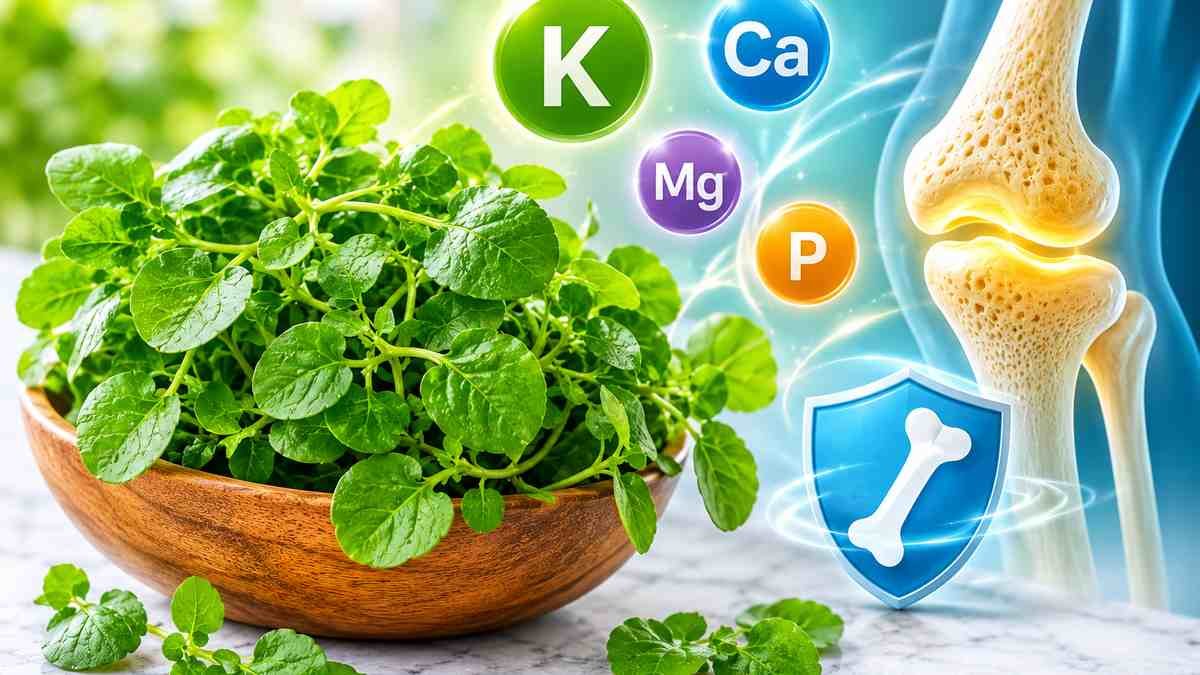

Strong bones support movement, balance, and independence at every stage of life. Bone is living tissue that is constantly being broken down and rebuilt, and nutrition plays a quiet but important role in that process. Calcium and vitamin D usually get the most attention, but other nutrients, including vitamin K, also contribute.
Watercress (Nasturtium officinale) is a peppery leafy green in the Brassicaceae family, alongside broccoli, cabbage, and kale. It stands out for its vitamin K content and also provides smaller amounts of calcium, magnesium, potassium, and phosphorus. Vitamin K helps activate proteins involved in bone metabolism, which is why this nutrient is of such interest to bone researchers.
This guide explains how vitamin K works in the skeleton, what watercress provides, and what research does and does not show. Watercress can be a useful part of a bone-supportive diet, but eating it has not been proven to prevent osteoporosis or fractures. We also cover practical ways to eat it and an important precaution for people who take warfarin.
What Is Watercress?
Watercress is a leafy aquatic or semi-aquatic plant with small, dark green leaves and a peppery, slightly bitter taste. It is a cruciferous vegetable, related to the vegetables described in our guide to cruciferous vegetables. People eat it raw in salads, sandwiches, and wraps, or add it to soups and omelets.
It is naturally very low in calories, with about 11 calories per 100 grams, according to USDA FoodData Central. For a broader overview of its nutrients and uses, read our guide to the health benefits of watercress.
Why Watercress Is Considered Nutrient-Dense
Nutrient density means a food provides many vitamins and minerals for relatively few calories. Watercress supplies vitamin K, vitamin C, calcium, potassium, magnesium, phosphorus, carotenoids, and other plant compounds. A CDC-published study ranked it first among “powerhouse” fruits and vegetables, as explained in our article on why watercress is the most nutrient-dense vegetable.
That said, watercress is a complementary food. It cannot supply every nutrient needed for healthy bones, and its mineral content per typical serving is modest.
Watercress Nutrition Profile: Key Nutrients for Bone Health
Vitamin K: The Standout Nutrient
Vitamin K is a fat-soluble vitamin with two main dietary forms. Vitamin K1 (phylloquinone) is found mainly in green leafy vegetables, while vitamin K2 (menaquinones) is found in some fermented and animal foods and is also made by gut bacteria. The NIH Office of Dietary Supplements identifies phylloquinone as the main dietary form of vitamin K, and watercress is a good source.
Vitamin K is best known for its role in normal blood clotting. It also helps activate certain proteins involved in bone metabolism, which we explain in the next section.
Here is an important accuracy point. Watercress is very high in vitamin K for its calorie content, but a single cup does not necessarily exceed the full daily requirement. One cup of chopped raw watercress (about 34 grams) provides roughly 85 micrograms of vitamin K. The adequate intake is 90 micrograms per day for adult women and 120 micrograms for adult men, so one cup supplies about 94% and 71% of those amounts.
Calcium, Magnesium, and Phosphorus
These minerals form much of the structure of bone:
- Calcium: A major structural component of bones and teeth.
- Magnesium: Contributes to normal bone structure and mineral metabolism.
- Phosphorus: Combines with calcium to form the hard mineral part of bone.
Potassium and Other Supporting Nutrients
Potassium supports normal muscle and nerve function and may be relevant to acid-base balance, which some researchers link to bone metabolism. Vitamin C supports collagen formation, and collagen provides the structural framework of bone tissue. See our list of potassium-rich vegetables for more sources.
| Nutrient | Approximate amount per 100 g raw watercress | Bone-health relevance |
|---|---|---|
| Vitamin K | 250 mcg | Activates bone-related proteins |
| Calcium | 120 mg | Supports bone structure |
| Magnesium | 21 mg | Contributes to normal bone structure |
| Potassium | 330 mg | Supports normal muscle and cellular function |
| Phosphorus | 60 mg | Helps form bone mineral |
| Vitamin C | 43 mg | Supports collagen formation |
Values are approximate and vary by growing conditions, preparation, and food database. One cup of chopped watercress (about 34 g) provides roughly one-third of these amounts.
The Vitamin K Connection: How Watercress May Support Bone Health
What Does Vitamin K Do in the Bones?
Vitamin K acts as a helper (coenzyme) for an enzyme that adds a chemical group to certain proteins, a process called gamma-carboxylation. Without enough vitamin K, these proteins cannot work as they should. Two are especially relevant:
- Osteocalcin: A protein made by bone-forming cells called osteoblasts. It requires vitamin K for activation and may be involved in bone mineralization or turnover, according to the NIH.
- Matrix Gla protein (MGP): A vitamin K-dependent protein found in bone, cartilage, and blood vessel walls. It is studied for its role in limiting abnormal calcification.
In simple terms, vitamin K helps these proteins do their normal jobs in bone and other tissues.
How Vitamin K1 in Watercress Contributes to Bone Metabolism
Watercress provides phylloquinone (vitamin K1), so it can help you reach your daily vitamin K intake. Leafy greens are useful because they are a major source of K1 in the typical diet. Note that the vitamin K in plant foods is less readily absorbed than that in oils or supplements, though eating vegetables with some fat (such as olive oil) improves absorption.
More vitamin K does not automatically mean stronger bones. The goal is adequate intake as part of a varied diet.
Vitamin K and Bone Mineral Density
Bone mineral density (BMD) is a measurement used to assess bone strength and osteoporosis risk. Researchers have studied whether vitamin K intake or supplementation affects BMD, osteocalcin activation, bone turnover markers, and fracture risk. Findings are mixed.
The NIH’s consumer fact sheet notes that a few studies found vitamin K supplements improved bone strength and lowered fracture risk, while others did not, and that more research is needed. Observational studies have also linked low vitamin K intake with a higher fracture risk, but associations do not prove cause and effect.
Does Eating More Watercress Make Bones Stronger?
Research has not established that eating watercress increases bone density or prevents fractures. It helps to separate three ideas:
- Meeting your vitamin K requirement
- Supporting normal bone metabolism
- Demonstrating improved clinical bone outcomes
Watercress can help with the first two. The third has not been shown for watercress specifically.
How Calcium, Magnesium, Potassium, and Phosphorus Support Bone Health
Calcium: The Foundation of Bone Structure
About 99% of the body’s calcium is stored in bones and teeth, according to the NIH calcium fact sheet. Adequate intake throughout life supports normal bone maintenance. A typical cup of watercress provides only about 41 milligrams, so it should complement other sources rather than serve as your main one. See our list of calcium-rich foods.
Magnesium: Supporting Bone Structure and Mineral Balance
Magnesium contributes to bone structure, mineral metabolism, and normal muscle and nerve function, as outlined in the NIH magnesium fact sheet. Watercress contains magnesium, but not in large amounts per ordinary serving.
Phosphorus: Working Alongside Calcium
Phosphorus combines with calcium to form hydroxyapatite, the mineral complex that gives bones and teeth much of their hardness. Adequate phosphorus supports normal skeletal development and maintenance. Most people get plenty from protein foods and whole grains.
Potassium: An Additional Nutritional Benefit
Potassium supports electrolyte balance and muscle function. Some research suggests potassium-rich diets, such as those high in fruits and vegetables, may support bone health through effects on acid-base balance, but this evidence is still developing.
Takeaway: Watercress contributes several bone-related minerals, but its strongest nutritional feature is vitamin K, not its mineral content per serving.
Can Watercress Help Prevent Osteoporosis?
Understanding Osteoporosis
Osteoporosis is a condition in which bones become weak and more likely to break. Bone density peaks in early adulthood and gradually declines with age, especially after menopause. The National Institute of Arthritis and Musculoskeletal and Skin Diseases provides a helpful overview.
Adequate calcium, vitamin D, vitamin K, protein, and overall nutrition all matter, along with weight-bearing exercise. Learn more about vitamin D benefits and food sources.
The Potential Role of Vitamin K in Bone Protection
Vitamin K supports osteocalcin activation, so researchers have explored whether it can influence bone turnover, BMD, and fracture risk. Results are inconsistent, and the NIH states that more research is needed before supplements can be recommended for osteoporosis prevention.
Why Watercress Should Not Be Considered an Osteoporosis Treatment
- No strong clinical evidence shows that watercress treats or prevents osteoporosis.
- Its vitamin K does not replace calcium or vitamin D needs.
- Bone health also depends on physical activity, genetics, age, hormones, and overall diet.
- People with osteoporosis or a high fracture risk need professional assessment and care.
What Does Scientific Research Say About Watercress and Bone Health?
Evidence Supporting Vitamin K and Bone Metabolism
The NIH Office of Dietary Supplements reviews the science on vitamin K. It confirms that vitamin K is required to activate osteocalcin and notes that vitamin K deficiency might reduce bone strength. Clinical trials of supplementation, however, have produced mixed results on bone density and fractures.
Evidence on Vitamin K Intake and Bone Health
Observational studies have examined links between dietary vitamin K and skeletal health, and some associate low intake with higher fracture risk. These studies cannot prove cause and effect, because people who eat more leafy greens often differ in other healthy habits.
What Research Has Not Established
- Whether eating watercress independently improves bone mineral density
- Whether eating watercress lowers osteoporosis risk
- Whether its vitamin K provides benefits beyond adequate overall intake
- Whether any specific amount of watercress improves bone outcomes
| Research question | Current evidence |
|---|---|
| Is vitamin K involved in bone metabolism? | Established biological role |
| Does vitamin K activate osteocalcin? | Established |
| Does vitamin K supplementation prevent osteoporosis? | Inconclusive |
| Does watercress improve bone density? | Not established |
| Does watercress prevent fractures? | Not established |
How to Add Watercress to a Bone-Healthy Diet
Easy Ways to Eat Watercress
- Toss fresh leaves into salads.
- Stir it into vegetable soups just before serving.
- Layer it in sandwiches and wraps.
- Fold it into omelets.
- Combine it with beans, seeds, and other nutrient-rich ingredients.
Pairing watercress with a little olive oil may help your body absorb its vitamin K. For more ideas, see our guide on how to eat more vegetables.
Combining Watercress With Other Bone-Supportive Foods
Watercress works best alongside a varied diet that includes:
- Dairy products or calcium-fortified alternatives
- Other leafy green vegetables
- Nuts and seeds
- Legumes
- Fish and other foods high in vitamin D
- Adequate protein. See our list of high-protein foods.
Does Cooking Affect Vitamin K?
Vitamin K is fairly stable during ordinary cooking, so you do not need to eat watercress raw to get it. Cooking can change other nutrients, such as heat-sensitive vitamin C. Choose whichever form you will enjoy and eat regularly. Our article on raw vs. cooked vegetables explains more.
Safety and Precautions When Eating Watercress
Watercress is generally safe as a food for most people. Keep these points in mind:
- Wash it well. Rinse under clean running water. Our guide on how to wash and store vegetables can help.
- Avoid wild harvesting from unknown water. Wild watercress can carry parasites such as liver flukes, as described by the CDC.
- Keep vitamin K consistent if you take warfarin. The NIH advises people on warfarin and similar anticoagulants to maintain steady vitamin K intake. Do not suddenly add or cut out vitamin K-rich foods, and talk with your healthcare professional about big dietary changes.
- Do not confuse food with supplements. This article does not recommend vitamin K supplements as an osteoporosis treatment.
Frequently Asked Questions About Watercress and Bone Health
Is Watercress Good for Bone Health?
Watercress provides vitamin K and smaller amounts of calcium, magnesium, potassium, and phosphorus, all involved in normal bone function. It is a helpful part of a varied diet. However, it has not been shown to prevent osteoporosis or fractures on its own.
Is Watercress High in Vitamin K?
Yes. Raw watercress contains about 250 micrograms of vitamin K per 100 grams, according to USDA FoodData Central. That is high relative to its very low calorie content.
How Much Vitamin K Is in One Cup of Watercress?
One cup of chopped raw watercress (about 34 grams) provides roughly 85 micrograms. This is about 94% of the adequate intake for adult women (90 mcg) and 71% for adult men (120 mcg), based on NIH values.
Does Vitamin K Help Strengthen Bones?
Vitamin K helps activate osteocalcin, a protein involved in bone metabolism. Whether extra vitamin K improves bone strength or lowers fracture risk is unclear, because studies have been mixed. Getting enough through food is a sensible goal.
Does Watercress Contain Calcium?
Yes, about 120 milligrams per 100 grams, or roughly 41 milligrams per cup. That is modest compared with dairy products or fortified foods, so watercress should supplement other calcium sources. See our guide to calcium-rich foods.
Can Watercress Help Prevent Osteoporosis?
There is no strong evidence that watercress prevents osteoporosis. It can contribute nutrients to a bone-supportive diet, but prevention also involves calcium, vitamin D, exercise, and medical care when needed. See the NIAMS overview.
What Other Minerals in Watercress Support Bone Health?
Watercress provides magnesium, phosphorus, and potassium, along with calcium. Magnesium and phosphorus contribute to bone structure, while potassium supports muscle function and may relate to acid-base balance. Amounts per serving are modest.
Is Raw or Cooked Watercress Better for Nutrition?
Both are nutritious. Vitamin K holds up well to cooking, while raw watercress keeps more heat-sensitive vitamin C. Pick the form you will eat regularly.
Can People Taking Blood Thinners Eat Watercress?
Often yes, but consistency matters. People taking warfarin should keep their vitamin K intake steady and discuss significant changes in leafy green intake with their healthcare professional. Other blood thinners may have different rules, so ask your clinician.
What Are the Best Foods to Combine With Watercress for Bone Health?
Pair it with calcium sources such as dairy or fortified alternatives, vitamin D sources such as fatty fish, plus beans, nuts, seeds, and adequate protein. A little healthy fat, such as olive oil, can help with vitamin K absorption. See our guide on best foods for healthy aging.
Conclusion: Is Watercress Good for Bone Health?
Watercress is a nutrient-dense vegetable and a good source of vitamin K, which helps activate osteocalcin, a protein involved in bone metabolism. It also supplies calcium, magnesium, potassium, and phosphorus, though in modest amounts per serving.
Research supports vitamin K’s biological role, but it has not shown that eating watercress prevents osteoporosis or fractures. Watercress is a simple way to add vitamin K and other nutrients to everyday meals. It works best as part of a balanced diet focused on long-term bone health, alongside calcium, vitamin D, protein, and regular physical activity.
Sources
- NIH Office of Dietary Supplements: Vitamin K Fact Sheet for Health Professionals
- USDA FoodData Central: Watercress, raw
- NIH Office of Dietary Supplements: Calcium Fact Sheet for Health Professionals
- NIH Office of Dietary Supplements: Magnesium Fact Sheet for Health Professionals
- NIH Office of Dietary Supplements: Vitamin D Fact Sheet for Health Professionals
- National Institute of Arthritis and Musculoskeletal and Skin Diseases: Osteoporosis
- CDC: Fascioliasis
Medical Disclaimer: This article is for general educational purposes only and is not medical advice. It does not diagnose, treat, or prevent any condition, and it cannot replace guidance from a doctor, registered dietitian, or other qualified healthcare professional. Do not start vitamin K or other supplements, or change how you manage osteoporosis, without talking to your healthcare provider. If you take warfarin or another blood thinner, talk with your provider before making major changes to your diet.