
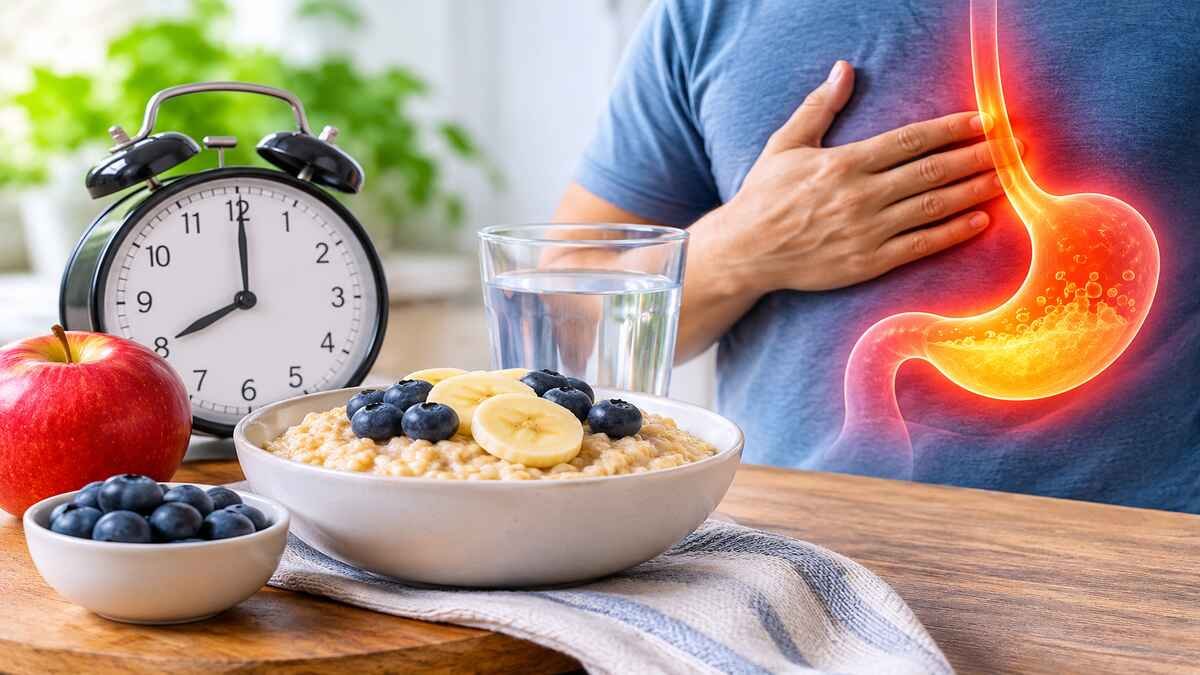

Imagine starting intermittent fasting to improve your health, only to notice a burning feeling in your chest or throat during your fasting hours. It is natural to wonder whether the fasting itself is to blame. In many cases, meal timing, portion sizes, and food choices all play a role.
Intermittent fasting is an eating pattern that alternates between periods of eating and periods without food. Acid reflux happens when stomach contents flow backward into the esophagus, the tube that carries food from your mouth to your stomach. The relationship between the two is not simple, and it does not look the same for everyone.
For some people, intermittent fasting may ease symptoms by encouraging earlier dinners and supporting weight management. For others, long fasting windows, large meals after fasting, or personal trigger foods may make heartburn worse. This guide explains what research suggests, why responses differ, and how to approach fasting more carefully if you deal with reflux.
What Is Intermittent Fasting and How Does It Work?
Intermittent fasting means limiting food intake to certain hours or days. During fasting periods, people typically have water and, depending on the plan, other calorie-free drinks. Outside those periods, they eat their usual meals.
The approach is not a single diet. It is a way of structuring when you eat, and it does not automatically dictate what you eat. You can read more in our general guide to intermittent fasting and our beginner’s guide to intermittent fasting.
Common intermittent fasting methods
Several popular schedules exist:
- 16:8 method: Fasting for 16 hours and eating within an eight-hour window.
- 14:10 method: Fasting for 14 hours and eating within a 10-hour window.
- 12:12 method: Fasting for 12 hours and eating within a 12-hour window.
- 5:2 method: Eating normally on five days and substantially reducing calories on two nonconsecutive days.
Time-restricted eating (such as 16:8) and calorie-restriction approaches (such as 5:2) are not identical. They may affect digestion differently.
Why people practice intermittent fasting
People try intermittent fasting for many reasons. Common motivations include weight management, simpler meal schedules, better eating routines, and interest in possible metabolic benefits.
Intermittent fasting is not automatically healthier than other balanced eating patterns. Whether it suits you depends on your health, nutritional needs, and lifestyle. Our guide on whether intermittent fasting is safe long term covers this in more detail.
What Is Acid Reflux and Why Does It Happen?
Acid reflux, also called gastroesophageal reflux (GER), occurs when stomach contents come back up into the esophagus. According to the National Institute of Diabetes and Digestive and Kidney Diseases (NIDDK), gastroesophageal reflux disease (GERD) is a more severe and long-lasting form in which reflux causes repeated symptoms or complications over time.
How acid reflux develops
The lower esophageal sphincter (LES) is a muscular valve between the esophagus and the stomach. It normally stays closed to keep stomach contents where they belong.
GERD may develop when the LES weakens or relaxes when it should not. Stomach acid can then reach the esophagus and irritate its lining, which often causes a burning sensation. For a deeper look at triggers, see what causes acid reflux.
Common acid reflux symptoms
Symptoms can include:
- Heartburn or burning in the chest
- A sour or bitter taste in the mouth
- Regurgitation of food or liquid
- Throat irritation
- Symptoms that worsen after meals or when lying down
Occasional reflux is common. GERD is diagnosed when symptoms are persistent or troublesome. If you are unsure which applies to you, see how acid reflux is diagnosed.
How Does Intermittent Fasting Affect Acid Reflux?
The link between intermittent fasting and acid reflux is not straightforward. Fasting changes when you eat, but it does not guarantee that reflux will improve. Several factors may work in either direction.
Reduced meal frequency may influence reflux episodes
Fewer eating occasions may mean fewer post-meal windows during which reflux can occur. This may help some people.
However, meal frequency alone does not determine how severe reflux is. Meal size, food type, and individual sensitivity matter as well.
Fasting may reduce late-night eating
An earlier eating window can help people avoid eating close to bedtime. This matters because lying down soon after a meal can make reflux more likely.
NIDDK notes that people with GERD symptoms at night or while lying down may improve by eating meals at least three hours before lying down. The American College of Gastroenterology (ACG) guideline also addresses lifestyle measures for GERD, including meal timing relative to bedtime.
Weight management may indirectly improve reflux
Excess body weight can contribute to reflux symptoms in some people. NIDDK states that doctors may suggest weight loss to reduce GERD symptoms in people who have overweight or obesity.
If intermittent fasting helps someone reach a healthy weight in a sustainable way, symptoms may improve indirectly. This is different from saying that fasting itself treats GERD. For general guidance, see our article on weight management.
Why individual responses differ
Digestive symptoms can depend on many things, including:
- Meal size
- Food composition
- Eating speed
- Body position after meals
- Individual sensitivity
- Other digestive conditions
The table below summarizes both sides of the question.
| Potential benefit | Potential drawback |
|---|---|
| May reduce late-night eating | May encourage large meals after fasting |
| May support weight management | May be difficult for some people to tolerate |
| May create a more structured eating routine | May concentrate food intake into a short window |
| May improve symptoms in some individuals | May worsen symptoms in others |
Can Intermittent Fasting Help Acid Reflux?
Intermittent fasting may help some people manage acid reflux by encouraging earlier meals, reducing late-night eating, and supporting weight management. However, it does not work for everyone. Long fasting periods and large meals after fasting may trigger or worsen symptoms in some individuals.
Fewer opportunities for overeating
Some people eat more structured meals within a set eating window. Avoiding very large or very frequent meals may reduce symptoms for certain individuals.
Earlier meals may support nighttime comfort
Finishing dinner earlier gives your stomach more time to empty before you lie down. This can be useful for people whose heartburn is worst at night. Our article on acid reflux in your 50s and our guide to managing acid reflux at home include related lifestyle tips.
Potential benefits through weight management
Sustainable weight loss, whether through fasting or another approach, may ease reflux for people with overweight or obesity. The method matters less than whether you can maintain it safely.
What does scientific research say?
A 2023 study in the Journal of Clinical Gastroenterology examined intermittent fasting in 25 people with suspected GERD. Participants underwent 96-hour pH monitoring off acid-reducing medication. They followed their usual diet for two days and then a 16:8 fasting schedule for two days.
Researchers found that heartburn and regurgitation symptom scores were lower during fasting. However, the change in objective acid exposure was small, and the statistical evidence for it was weak. Only 36% of participants fully followed the fasting plan, although 84% followed it at least partially.
These results are interesting but limited. The study was small and short, and adherence was low. It is not enough to establish intermittent fasting as a GERD treatment.
Can Intermittent Fasting Make Acid Reflux Worse?
Yes, for some people it can. The answer depends on how fasting is done and on individual triggers.
Long fasting periods may cause discomfort
Some people report upper digestive discomfort when they go a long time without eating. This does not mean an empty stomach automatically produces excess acid or causes reflux. The relationship between fasting, stomach acid, and symptoms is more complicated, and research is limited.
Large meals after fasting may trigger reflux
After a long fast, many people eat quickly or take larger portions. A big meal stretches the stomach and may make reflux more likely in people who are prone to it.
Eating close to bedtime can cancel out potential benefits
A late eating window can push meals close to sleep. This may aggravate nighttime reflux, even if you are fasting during the rest of the day.
Certain foods may trigger symptoms
Spicy, fatty, acidic, or otherwise personal trigger foods can contribute to symptoms. Triggers vary from person to person, so there is no need to assume everyone must avoid the same list. Our article on what makes acid reflux worse can help you spot common patterns.
Does an Empty Stomach Cause Acid Reflux?
An empty stomach does not automatically cause acid reflux. The stomach produces acid as part of normal digestion, but acid production is not the same as reflux. Reflux happens when stomach contents move backward through the LES into the esophagus.
Some people notice upper abdominal discomfort or a burning feeling during fasting. That does not necessarily mean they have GERD, and it can have other causes.
If symptoms keep happening, they should be evaluated rather than assumed to come from an empty stomach. Our guide on when to see a doctor for acid reflux can help you decide when to seek care.
How to Practice Intermittent Fasting Without Triggering Acid Reflux
There is no proven best fasting schedule for acid reflux. The following practical steps may help you stay comfortable. If you have ongoing reflux, discuss any changes with a healthcare professional first.
Start with a shorter fasting window
If you are new to time-restricted eating, avoid jumping straight into 16:8 or longer fasts. A shorter overnight fast, such as 12:12 or 14:10, may be easier to tolerate.
Choose an earlier eating window
Eating earlier in the day may be preferable to squeezing meals into the evening. This leaves more time between your last meal and bedtime.
Break your fast with moderate portions
Eat slowly and avoid an oversized first meal. Smaller portions put less pressure on your stomach and may be easier on reflux.
Identify personal trigger foods
Keep a simple food and symptom diary for a few weeks. Note what you ate, when you ate it, and how you felt afterward. Patterns often emerge that no general list can predict.
Stay upright after eating
Avoid lying down right after meals. NIDDK suggests leaving about two to three hours between eating and lying down when symptoms occur at night.
Stay hydrated
Drink enough fluids during fasting hours, as long as your chosen method allows water. Dry fasting is not a reflux management strategy and is not recommended here.
What Should You Eat After Fasting If You Have Acid Reflux?
No single food is guaranteed to prevent reflux. The ideas below are generally gentler options that many people tolerate, but your experience may differ.
Foods that may be easier to tolerate
Examples include:
- Oatmeal
- Bananas, if tolerated (see are bananas good for acid reflux)
- Cooked vegetables (see raw vs. cooked vegetables)
- Lean chicken or fish
- Rice and other whole grains
- Lower-fat meals
You can also explore almonds and acid reflux and eggs and acid reflux for more food-specific guidance.
Foods to limit when breaking a fast
NIDDK lists foods and drinks commonly linked to GERD symptoms. These include:
- Acidic foods, such as citrus fruits and tomatoes
- Alcoholic drinks
- Chocolate
- Coffee and other caffeinated drinks
- High-fat foods, including deep-fried dishes
- Mint
- Spicy foods
Not everyone reacts to every item. Limit the ones that bother you rather than cutting out entire food groups.
Example of a gentle first meal
A general idea might include a moderate serving of oatmeal, a banana if you tolerate it, a boiled egg or another protein source, and water. This is a general meal idea, not a medically prescribed GERD diet.
For more ideas, see our guide on what to eat on intermittent fasting and our overview of how to eat more vegetables.
Foods and Habits to Avoid During Intermittent Fasting With GERD
Some habits can undo the potential benefits of an earlier eating window. Consider avoiding or reducing the following:
- Overeating when you break your fast
- Eating right before sleeping
- Frequently eating your personal trigger foods
- Drinking large amounts of coffee on an empty stomach if it causes symptoms
- Eating too quickly
- Ignoring heartburn that keeps coming back
Focus on your own triggers instead of removing whole food groups. Overly restrictive eating can lead to nutritional gaps and may make fasting harder to sustain.
Who Should Be Careful With Intermittent Fasting?
Intermittent fasting is not suitable for everyone. Talk with a qualified healthcare professional before starting if any of these apply to you:
- You have persistent or poorly controlled GERD symptoms
- You have a history of eating disorders
- You are pregnant or breastfeeding
- You have diabetes or take medications that can cause low blood sugar (see intermittent fasting and type 2 diabetes)
- You have a medical condition that requires regular meals
- You are underweight or at risk of nutritional deficiencies
- You need to take medications with food
Fasting should never replace prescribed reflux medication or medical treatment. Do not stop a prescribed medicine without talking to your clinician.
See a healthcare professional promptly if you have difficulty swallowing, signs of gastrointestinal bleeding, unexplained weight loss, or persistent vomiting. The ACG guideline treats these as alarm symptoms that call for further evaluation.
Chest pain, especially with shortness of breath or pain spreading to the arm or jaw, needs urgent medical care. Do not assume it is heartburn. Read when chest pain is an emergency to learn more.
Frequently Asked Questions About Intermittent Fasting and Acid Reflux
Is intermittent fasting good for acid reflux?
It may help some people by encouraging earlier meals and supporting weight management, but the evidence is limited. In a small 2023 study, symptoms improved during short-term fasting, though objective acid exposure changed very little. It can also worsen symptoms in other people.
Does fasting cause heartburn?
Some people experience digestive discomfort or heartburn during fasting, but fasting does not cause reflux in everyone. Large meals after fasting, late-night eating, and trigger foods are common contributors. If heartburn keeps returning, it is worth discussing with a healthcare professional.
Can I do 16:8 intermittent fasting with GERD?
Some people tolerate it well, while others find the long fasting window or concentrated meals uncomfortable. The 2023 study used a 16:8 schedule, but only about a third of participants fully followed it. Individual medical advice is important, especially if your GERD is ongoing.
Is it better to fast in the morning or evening if I have acid reflux?
An earlier eating window that leaves several hours between your last meal and bedtime may be better for nighttime symptoms. NIDDK advises eating at least three hours before lying down if you have symptoms at night. Compressing most of your eating into the evening may work against you.
Can skipping breakfast cause acid reflux?
There is no strong evidence that skipping breakfast directly causes acid reflux. Symptoms may appear if you eat a very large meal later or if coffee or other triggers are consumed on an empty stomach. Pay attention to what and how you eat when you do break your fast.
Should I stop fasting if I experience acid reflux?
If fasting repeatedly triggers or worsens your symptoms, stop or modify the routine. Try a shorter fasting window, smaller meals, or an earlier eating window. Talk with a healthcare professional about persistent symptoms. Our guide to acid reflux treatment options offers further background.
Final Thoughts
Intermittent fasting and acid reflux have a variable relationship. Meal timing, portion sizes, food choices, and personal tolerance matter more than following a rigid schedule. If fasting makes you uncomfortable, put digestive comfort and medical guidance ahead of any eating trend.
For broader habits that support your health, see our guide to living a healthy lifestyle.
Sources
- Jiang Y, et al. The Impact of Intermittent Fasting on Patients With Suspected Gastroesophageal Reflux Disease. Journal of Clinical Gastroenterology. 2023;57(10):1001-1006.
- Katz PO, et al. ACG Clinical Guideline for the Diagnosis and Management of Gastroesophageal Reflux Disease. American Journal of Gastroenterology. 2022;117(1):27-56.
- National Institute of Diabetes and Digestive and Kidney Diseases (NIDDK). Acid Reflux (GER & GERD) in Adults.
- NIDDK. Eating, Diet, & Nutrition for GER & GERD.
Medical Disclaimer: This article is for general educational purposes only and is not medical advice. It does not diagnose, treat, or replace care from a qualified healthcare professional. Talk with your doctor before changing your eating habits, starting intermittent fasting, or stopping any medication, especially if you have GERD, diabetes, are pregnant or breastfeeding, or have a history of disordered eating. If you have chest pain, trouble swallowing, bleeding, or severe symptoms, seek medical care right away.