
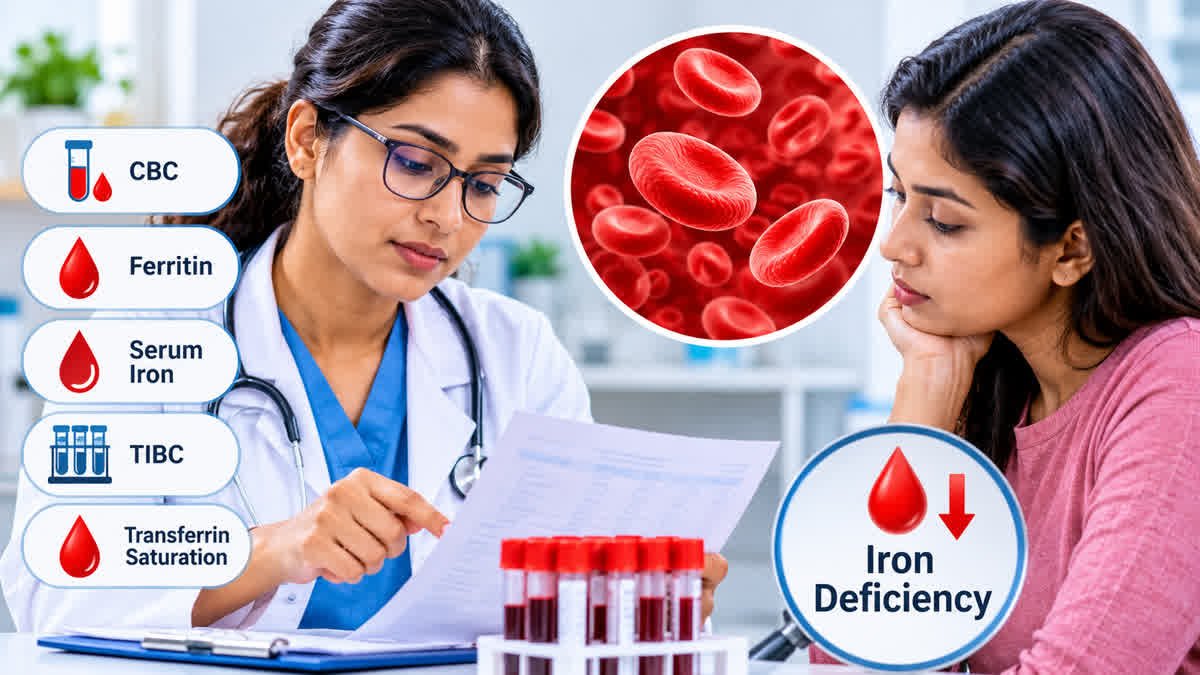

Iron helps your body build hemoglobin, the protein in red blood cells that carries oxygen from your lungs to the rest of your body. When iron runs low, you may feel tired, weak, or short of breath, but these symptoms are common and have many possible causes. That is why iron deficiency cannot be confirmed by symptoms alone.
Iron deficiency can also develop well before anemia appears. Your body’s iron stores may be depleted while your hemoglobin is still within the reference range. For this reason, doctors often rely on a combination of a medical history, a physical exam, and blood tests such as ferritin and a complete blood count (CBC).
Diagnosis does not stop at a low number. A clinician will usually also try to find out why iron is low, since blood loss, poor absorption, pregnancy, or diet can all play a role. This article explains the tests used, what the results may mean, and what typically happens next, so you can have a more informed conversation with your healthcare professional.
Understanding Iron Deficiency and Iron-Deficiency Anemia
People often use “iron deficiency” and “iron-deficiency anemia” as if they mean the same thing. They are related, but they describe different stages. Understanding iron deficiency vs. iron-deficiency anemia makes test results much easier to follow.
What Is Iron Deficiency?
Iron deficiency means the body does not have enough iron stores or available iron to meet its needs. Iron is a key building block of hemoglobin, and the body also keeps a reserve of iron in a storage protein called ferritin.
When iron intake or absorption falls short, or when iron is lost faster than it is replaced, the reserve is used up first. Hemoglobin may stay in the normal range for some time. This is why a person can have iron deficiency without anemia.
What Is Iron-Deficiency Anemia?
Iron-deficiency anemia is the stage in which low iron has reduced hemoglobin enough to cause anemia. Anemia is generally identified by hemoglobin levels, which are interpreted according to age, sex, pregnancy status, and other factors. According to the National Heart, Lung, and Blood Institute, iron-deficiency anemia is a common type of anemia.
Not everyone with iron deficiency has anemia. In other words, anemia is one possible result of iron deficiency, not a requirement for it.
Symptoms That May Lead to an Iron Deficiency Test
A healthcare professional may suggest testing when symptoms or risk factors raise the possibility of low iron. Common signs of iron deficiency include:
- Persistent fatigue
- Weakness or reduced stamina
- Pale skin
- Shortness of breath during activity
- Headaches or dizziness
- Cold hands and feet
- Brittle or spoon-shaped nails
- Restless legs
- Unusual cravings for ice or non-food substances (pica)
Symptoms can be mild or even absent, especially in early iron deficiency. They also overlap with many other conditions, including thyroid disease, sleep problems, depression, and other nutritional deficiencies. You can learn more in CollectedMed’s guide to the early signs of iron deficiency, or read about what causes fatigue, dizziness, and brittle nails.
Because these symptoms are not specific, a blood test is needed before anyone can say whether iron is the problem.
How Doctors Begin Diagnosing Iron Deficiency
Diagnosis usually starts with a conversation and a basic medical assessment. This step helps the clinician decide which tests make sense and where to look for a cause.
Reviewing Medical History
Your clinician may ask about:
- Fatigue and any other symptoms you have noticed
- Menstrual bleeding, including whether periods are heavy or prolonged
- Pregnancy or recent childbirth
- Dietary habits, including vegetarian or vegan eating patterns
- Digestive symptoms such as abdominal pain, changes in bowel habits, or black or bloody stools
- Previous anemia or iron deficiency
- Blood donation
- Medicines that may increase bleeding risk or affect absorption
- Family and medical history, where relevant
It helps to answer these questions as fully as you can. Details that seem minor, such as how often you soak through a pad or tampon, can point toward a cause.
Physical Examination
A physical exam gives additional clues. A clinician may check:
- The skin and inner eyelids for pallor
- Heart rate and blood pressure
- Signs of nutritional problems, such as changes in the nails or mouth
- The abdomen, when digestive symptoms are present
- Other findings that could point toward an underlying cause
A physical exam cannot confirm iron deficiency on its own. Blood tests are needed for that.
Blood Tests Used to Diagnose Iron Deficiency
Blood testing is the core of the diagnostic process. No single test tells the whole story, so clinicians often combine several. For background on iron physiology and laboratory assessment, the NIH Office of Dietary Supplements provides a detailed fact sheet.
Complete Blood Count (CBC)
A CBC measures the cells in your blood. For iron deficiency, the most relevant parts include:
- Hemoglobin: the oxygen-carrying protein in red blood cells
- Hematocrit: the percentage of blood made up of red blood cells
- Red blood cell count: the number of red blood cells
- Mean corpuscular volume (MCV): the average size of red blood cells
- Mean corpuscular hemoglobin (MCH): the average amount of hemoglobin in each red blood cell
- Red cell distribution width (RDW): how much red blood cells vary in size
Low hemoglobin may indicate anemia. Low MCV and MCH can occur in iron-deficiency anemia, since red blood cells tend to be smaller and paler. RDW may rise as red blood cells become more varied in size.
Early iron deficiency can occur with a completely normal CBC. For this reason, a CBC alone cannot reliably rule out iron deficiency.
Ferritin Test
Ferritin is a protein that stores iron, and the amount in your blood generally reflects your body’s iron reserves. A ferritin test is commonly used to estimate iron stores, and a low result strongly supports iron deficiency. The British Society of Gastroenterology guideline discusses ferritin interpretation in detail.
Ferritin is also an acute-phase protein, which means it can rise with inflammation, infection, liver disease, and some other conditions. In someone with one of these conditions, a ferritin result that looks normal does not always exclude iron deficiency.
There is no single ferritin cutoff that applies to every person. Interpretation depends on the clinical context, the laboratory, and the guideline being used. Different organizations have used different thresholds, and higher values are sometimes considered meaningful when inflammation is present.
Serum Iron Test
A serum iron test measures the amount of iron circulating in your blood. The result can vary during the day and can be affected by recent food intake or iron supplements.
Because of this variability, serum iron alone is not enough to diagnose iron deficiency. It is more useful as one part of a larger picture.
Total Iron-Binding Capacity (TIBC) and Transferrin Saturation
Transferrin is the protein that carries iron through the bloodstream. Total iron-binding capacity (TIBC) estimates how much iron your blood could bind, which reflects the amount of transferrin available.
Transferrin saturation (TSAT) shows what percentage of transferrin is currently carrying iron. Iron deficiency often causes a lower transferrin saturation and a higher TIBC, although patterns can vary from person to person. These measurements are often grouped together and called iron studies.
Additional Blood Tests
Depending on your situation, a clinician may also order:
- C-reactive protein (CRP) or another inflammation marker, to help interpret ferritin
- Reticulocyte count or reticulocyte hemoglobin, which look at newly made red blood cells
- Vitamin B12 or folate tests, if another nutritional cause of anemia is suspected (see our article on vitamin B12 benefits and food sources)
- Kidney or thyroid tests, when symptoms or results suggest another explanation
Iron Deficiency Blood Tests at a Glance
| Test | What it measures | Why it matters |
|---|---|---|
| CBC | Hemoglobin and red blood cell characteristics | Detects anemia and red blood cell changes |
| Ferritin | Stored iron | Helps assess iron reserves |
| Serum iron | Circulating iron | Provides additional information |
| TIBC | Iron-binding capacity | Helps assess iron transport |
| Transferrin saturation | Percentage of transferrin carrying iron | Helps identify limited iron availability |
| CRP | Inflammation | Helps interpret ferritin in context |
How to Understand Iron Deficiency Test Results
Test results are most useful when they are read together rather than one at a time. A clinician considers your symptoms, history, and the full set of results before reaching a conclusion. This section is meant to explain concepts, not to help you interpret your own numbers.
What Does Low Ferritin Mean?
Low ferritin generally indicates depleted iron stores. A person may have low ferritin even when hemoglobin is still within the reference range.
The significance of a result depends on your situation and on the clinical guidance your clinician follows. Your healthcare professional can explain what a specific value means for you.
What Do Low Hemoglobin and Low MCV Mean?
Low hemoglobin indicates anemia when it is compared against the appropriate reference threshold. Low MCV means red blood cells are smaller than usual.
These findings can support a diagnosis of iron-deficiency anemia. However, they can also occur in other conditions, such as thalassemia trait or anemia of chronic disease, so additional testing is sometimes needed.
Can Iron Deficiency Exist With Normal Hemoglobin?
Yes. Iron stores may be depleted before anemia develops. Ferritin and other iron studies can help identify this earlier stage.
Why Can Ferritin Be Misleading?
Inflammation can raise ferritin, which may hide depleted or insufficient iron stores. To work around this, clinicians may look at CRP, transferrin saturation, your medical history, and other findings.
If your results seem confusing, ask your clinician to walk you through them rather than relying on isolated values.
Finding the Underlying Cause of Iron Deficiency
Confirming low iron is only part of the job. Identifying the reason is just as important, because treating the cause helps prevent iron deficiency from returning. You can read more in our articles on what causes iron deficiency and iron deficiency risk factors.
Heavy Menstrual Bleeding and Pregnancy
Heavy or prolonged periods can cause ongoing iron loss. Pregnancy also raises iron requirements, so clinicians often ask about bleeding patterns and pregnancy status.
Digestive Tract Blood Loss
Bleeding in the gastrointestinal tract can occur without obvious symptoms. Possible sources include ulcers, inflammation, polyps, and other conditions.
This is why unexplained iron-deficiency anemia may call for a gastrointestinal evaluation, particularly in adult men and postmenopausal women. The American Gastroenterological Association offers guidance on when this kind of evaluation is appropriate.
Poor Iron Absorption
Iron is absorbed in the upper small intestine, so conditions that affect this area can lead to deficiency. Possible causes include:
- Celiac disease
- Inflammatory bowel disease
- Certain stomach or intestinal surgeries
- Other digestive conditions that affect nutrient absorption
Dietary Intake and Other Causes
Other contributors include low intake of iron-rich foods, vegetarian or vegan diets without enough iron planning, frequent blood donation, and increased needs during periods of growth.
Clinicians choose further investigations based on age, symptoms, medical history, and risk factors. The right workup differs from person to person.
Additional Tests Doctors May Recommend
When the cause is unclear, or when results point to a specific concern, a clinician may suggest more testing. Not everyone with iron deficiency needs all of these tests.
Tests for Gastrointestinal Blood Loss
Stool tests may be used in selected situations. Endoscopy or colonoscopy may be recommended depending on your age, symptoms, risk factors, and the guidelines your clinician follows.
Stool testing does not replace endoscopic evaluation when that evaluation is indicated.
Tests for Digestive Conditions
If a digestive cause is suspected, your clinician may order celiac disease blood tests. Tests or procedures for suspected inflammatory bowel disease, along with other investigations guided by your digestive symptoms, may follow.
Tests for Menstrual or Other Blood Loss
For people with heavy periods, a clinician may assess menstrual bleeding in more detail and, when appropriate, arrange a gynecological evaluation. Other suspected sources of bleeding may be investigated as well.
What Happens After an Iron Deficiency Diagnosis?
The first goal is to treat the underlying cause whenever possible. Treatment of the low iron itself may include dietary changes, oral iron supplements, or, in selected circumstances, intravenous iron.
The right approach depends on how severe the deficiency is, how well you absorb iron, how well you tolerate treatment, and what caused the deficiency. Our overview of iron deficiency treatment options covers the main choices in more detail. Food-focused readers may also find foods high in vitamin C helpful, since vitamin C can support the absorption of non-heme iron.
Follow-up blood tests are often used to check your response and confirm that iron stores are recovering. Avoid starting high-dose iron supplements without medical advice, because too much iron can be harmful and may mask other problems.
Frequently Asked Questions About Iron Deficiency Diagnosis
What is the best blood test for iron deficiency?
Ferritin is commonly a key test for assessing iron stores. A CBC and other iron studies, such as serum iron, TIBC, and transferrin saturation, add useful information. Clinicians usually interpret them together rather than relying on one result.
Can a CBC detect iron deficiency?
A CBC can identify anemia and changes in red blood cells, such as smaller cell size. However, early iron deficiency can occur with a normal CBC, so a ferritin test is often needed as well.
Can you have iron deficiency with normal hemoglobin?
Yes. Iron stores can be low before anemia develops, so hemoglobin may still be in the reference range. Ferritin and other iron studies can help detect this earlier stage, as described by the NIH Office of Dietary Supplements.
How long do iron deficiency test results take?
Timing varies by laboratory and by test. Many routine blood tests are available within a few days. Check with your laboratory or clinician for a more specific estimate.
Should I fast before an iron blood test?
Preparation depends on which tests are ordered and on the laboratory’s instructions. Serum iron, in particular, can be affected by recent meals and supplements. Follow the directions from your healthcare professional or testing facility.
Conclusion: Getting an Accurate Iron Deficiency Diagnosis
Symptoms can suggest iron deficiency, but they cannot confirm it. Ferritin, a CBC, and other iron studies help establish the diagnosis, and results need to be read together and in clinical context. Finding the underlying cause is essential. If you have persistent symptoms or suspect low iron, talk with a healthcare professional rather than diagnosing yourself.
Sources
- National Institutes of Health, Office of Dietary Supplements. Iron: Fact Sheet for Health Professionals
- British Society of Gastroenterology. Guidelines for the Management of Iron Deficiency Anaemia in Adults
- American Gastroenterological Association. Clinical Practice Guidelines on Gastrointestinal Evaluation of Iron Deficiency Anemia
- National Heart, Lung, and Blood Institute. Iron-Deficiency Anemia
- Merck Manual Professional Version. Iron Deficiency Anemia
Medical Disclaimer: This article is for general educational purposes only and is not medical advice. It cannot diagnose any condition or replace the guidance of a qualified healthcare professional. Please talk with your doctor about your symptoms, test results, and treatment options, and seek urgent care right away if you have severe symptoms such as chest pain, fainting, or heavy bleeding.