
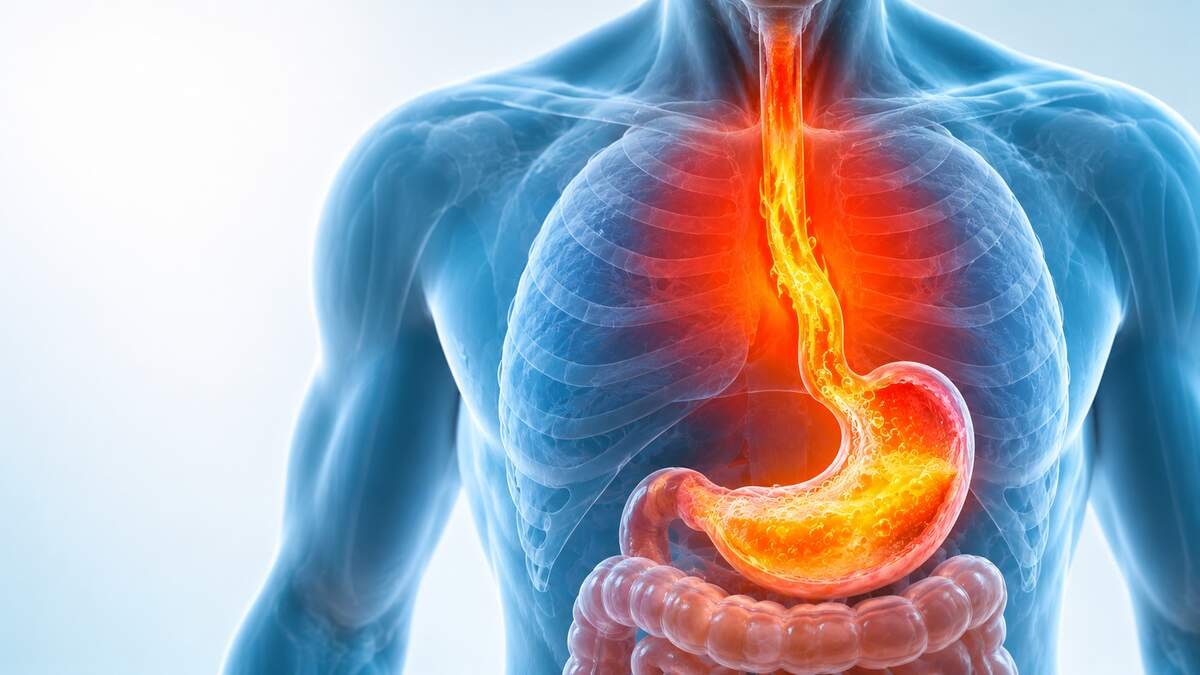

Have you ever felt a burning sensation in the middle of your chest after eating, especially when lying down? That uncomfortable feeling may be heartburn, a common symptom linked to acid reflux. Heartburn usually feels like a burning or painful sensation behind the breastbone that can travel upward toward the throat, sometimes with a sour taste in the mouth.
The sensation happens when stomach acid and other stomach contents flow backward into the esophagus, the tube that connects your mouth to your stomach. Some people notice only mild warmth after a heavy meal, while others feel a stronger burning that interrupts eating or sleep. Along with the chest burning, you may also notice regurgitation, throat irritation, or a lingering cough.
Recognizing heartburn matters, but so does knowing that not all chest pain is heartburn. Heart problems can cause discomfort that overlaps with digestive symptoms. This guide explains what heartburn feels like, where you may feel it, how it compares with other conditions, how long it can last, and when to seek medical care. It is general information and cannot replace an evaluation by a healthcare professional.
What Does Heartburn Feel Like?
The short answer: Heartburn usually feels like a burning sensation in the middle of the chest, just behind the breastbone. The discomfort may start in the upper abdomen and move upward toward the throat. Some people also notice a sour or bitter taste in the mouth, acid regurgitation, or throat irritation. Symptoms often get worse after eating, bending over, or lying down.
Mayo Clinic describes heartburn as a burning pain in the chest that usually occurs after eating and may occur at night. It also notes that the pain can worsen when you lie down or bend over. Experiences differ, and you may not have every feature described below.
A Burning Sensation in the Chest
The classic description is a warm, burning, or acidic feeling behind the breastbone. It may begin in the upper abdomen and rise toward the throat. Many people notice it most after meals.
A Painful or Uncomfortable Feeling Behind the Breastbone
Heartburn can range from mild discomfort to an intense, persistent burning. Some people feel it as a dull ache or tightness rather than a sharp burn. Bending over or lying flat can make the feeling stronger.
A Sour or Acidic Feeling in the Mouth
When stomach contents reach the back of the throat, you may notice a sour or bitter taste. Some people describe it as an unpleasant wave of liquid at the back of the mouth. This is called acid regurgitation.
A Sensation That Moves Upward
For some people, the burning begins low in the chest and seems to travel upward in a wave. It can stop at the chest or reach the throat. The path of the sensation follows the esophagus, which runs behind the breastbone.
To understand why this happens, see our guide on what causes heartburn and the early signs of acid reflux.
Where Do You Feel Heartburn?
The location of heartburn follows the path of the esophagus. Most people feel it in the center of the chest, although the sensation can shift.
Heartburn in the Middle of the Chest
Heartburn is most often felt behind the breastbone (sternum), in the center of the chest. It may feel like burning or general discomfort. Because chest pain has many possible causes, this location alone does not confirm heartburn. Our overview of what chest pain feels like can help you understand how it varies.
Heartburn in the Upper Abdomen
Some people feel burning just below the breastbone, in the upper part of the belly. The stomach and esophagus connect in this area, so discomfort can start low and travel upward. If your main symptom is stomach pain, you may find our article on acid reflux and abdominal pain helpful.
Heartburn in the Throat
When acid or stomach contents reach the throat, you may feel irritation, a sour taste, or a burning feeling. Some people also develop hoarseness or a sensation of a lump in the throat. Mayo Clinic lists a lump-in-the-throat sensation among common GERD symptoms.
Can Heartburn Be Felt in the Back?
Back pain is not a defining feature of ordinary heartburn. Digestive, muscular, and heart-related conditions can all cause overlapping discomfort in the chest and back. If you have unexplained or persistent back and chest pain, talk with a healthcare professional rather than assuming it is reflux.
Common Symptoms That Accompany Heartburn
Heartburn often appears together with other symptoms of acid reflux. The National Institute of Diabetes and Digestive and Kidney Diseases (NIDDK) lists several signs that may occur along with it. Not everyone experiences all of them.
Sour or Bitter Taste in the Mouth
This taste comes from stomach contents reaching the mouth or throat. It may appear suddenly, often after meals or when lying down.
Food or Liquid Coming Back Up
Regurgitation means food or sour liquid moves back up into the esophagus or mouth without forceful vomiting. It is a common reflux symptom and can happen with or without chest burning.
Throat Irritation
Reflux that reaches the throat may cause soreness, a scratchy feeling, or a need to clear your throat. Some people notice this more in the morning.
Frequent Burping
Belching often accompanies reflux, and swallowed air or carbonated drinks may add to it. Burping is not specific to heartburn, so it is a clue rather than proof.
Coughing or Hoarseness
In some people, reflux is associated with a lingering cough or voice changes. This is more likely when reflux occurs at night. A cough that does not go away deserves a medical check, since it has many possible causes. See our article on what causes a cough for more.
Difficulty Swallowing
Trouble swallowing should not be brushed off as ordinary heartburn. It can signal inflammation or narrowing of the esophagus, and it needs medical evaluation. Mayo Clinic lists difficulty swallowing among the reasons to make an appointment.
Symptoms also vary by person. You can read how reflux can look different in women, men, and older adults.
What Does Heartburn Feel Like in Different Situations?
The way heartburn feels can depend on timing, life stage, and severity.
What Does Heartburn Feel Like After Eating?
After a meal, you may feel burning behind the breastbone, a sour taste, or regurgitation. Large meals can increase the likelihood because a full stomach puts more pressure on the valve at the bottom of the esophagus. If you also feel stomach discomfort after meals, see our guide on abdominal pain after eating.
What Does Heartburn Feel Like at Night?
At night, heartburn often shows up as burning while lying in bed or as sour liquid rising toward the throat. It may wake you or make it hard to fall asleep. Lying flat reduces gravity’s help in keeping stomach contents down. Related reading: abdominal pain at night.
What Does Heartburn Feel Like During Pregnancy?
Pregnancy heartburn feels much like the usual kind: burning behind the breastbone, an acidic taste, and discomfort after meals. Hormonal changes and pressure from the growing uterus can contribute. The NHS lists pregnancy as a common time for heartburn. Pregnant people should ask their healthcare provider before using any heartburn medicine.
What Does Mild Heartburn Feel Like?
Mild heartburn is occasional warmth or burning in the chest, often after eating. It may fade without much trouble and does not interfere with daily life. Mayo Clinic notes that occasional heartburn is common and many people manage it with lifestyle changes and nonprescription medicines.
What Does Severe Heartburn Feel Like?
Severe heartburn involves stronger burning or discomfort that may interfere with eating or sleeping. It may also return often. Recurrent or persistent symptoms deserve medical assessment.
Important: you cannot tell from the sensation alone whether severe chest pain is heartburn. When in doubt, treat chest pain as potentially serious.
What Does Heartburn Feel Like Compared With Other Conditions?
People often search for heartburn when they are trying to explain unexplained chest discomfort. These comparisons are general. Only a healthcare professional can sort out the cause of your symptoms.
Heartburn vs. Heart Attack
Heartburn often involves burning behind the breastbone, a sour taste or regurgitation, and a link to meals or lying down. A heart attack may involve chest pressure, squeezing, fullness, or pain. It may also involve discomfort spreading to the arm, back, neck, or jaw, along with shortness of breath, cold sweat, nausea, or lightheadedness, according to the American Heart Association.
Symptoms alone cannot reliably tell the two apart. Heart attack symptoms vary, and they can sometimes feel like indigestion or heartburn. Read more in our guides on heart attack symptoms and when chest pain is an emergency.
Heartburn vs. Indigestion
Heartburn generally means burning in the chest. Indigestion (dyspepsia) more often involves upper abdominal discomfort, fullness, bloating, or nausea. The two can overlap, and some people have both at the same time. Our overview of common digestive problems explains related conditions.
Heartburn vs. Gastritis
Gastritis is inflammation of the stomach lining. It may cause upper abdominal pain, nausea, or discomfort. It does not necessarily cause the typical burning behind the breastbone, although symptoms can overlap, so a clinician may need to evaluate persistent upper abdominal pain.
Heartburn vs. Anxiety-Related Chest Discomfort
Anxiety can cause chest tightness, a racing heart, or other physical symptoms that overlap with digestive symptoms. Stress can also make reflux feel worse. However, chest pain should not be assumed to be anxiety. Learn more about anxiety and panic attacks.
Heartburn vs. Muscle-Related Chest Pain
Pain from a strained chest wall muscle often changes with movement, deep breathing, or pressing on the area. Heartburn is more tied to reflux patterns such as meals and lying down. Still, unexplained chest discomfort should be evaluated, since the patterns can blur. See our general guide to chest pain.
How Long Does Heartburn Last?
There is no single answer. An occasional episode may last from a few minutes to a few hours, and it often eases as the reflux settles. Some people find that it returns after the next meal or when they lie down.
Heartburn that comes back often may point to gastroesophageal reflux disease (GERD). Mayo Clinic notes that heartburn occurring frequently and interfering with your routine is considered GERD. Persistent symptoms deserve medical evaluation. For more detail, read how long acid reflux lasts.
What Can Make Heartburn Feel Worse?
A few common factors can intensify symptoms. For a complete explanation, see our pillar guide on what causes heartburn and our article on what makes acid reflux worse.
Eating Large Meals
A very full stomach can encourage reflux and make burning more noticeable.
Lying Down After Eating
Lying down removes gravity’s help, so acid reaches the esophagus more easily.
Certain Foods and Drinks
Fatty foods, spicy meals, chocolate, coffee, alcohol, and acidic foods are possible triggers for some people. Responses vary, so these are not universal rules.
Pregnancy and Increased Abdominal Pressure
Pregnancy and extra pressure in the abdomen can make symptoms stronger.
Smoking and Certain Medications
Smoking and some medicines, such as aspirin and other NSAIDs, can contribute to reflux. Do not stop a prescribed medication without talking to your healthcare provider.
How Can You Relieve Heartburn Discomfort?
Lifestyle steps help many people, though results differ and they may not remove symptoms completely. Mayo Clinic notes that most people can manage occasional heartburn with lifestyle changes and nonprescription medicines. Our guides on managing acid reflux at home and living with acid reflux add practical detail.
Eat Smaller Meals
Smaller portions mean less stomach fullness and less pressure on the lower esophagus.
Avoid Lying Down Immediately After Eating
Try waiting about two to three hours after a meal before lying down.
Identify Personal Food Triggers
Keep a simple food and symptom diary for a few weeks. Patterns often appear, and you can then limit only the foods that bother you.
Elevate the Head of Your Bed
For nighttime symptoms, raising the head of the bed by about 6 to 8 inches may help. Extra pillows alone often do not do the same job.
Speak With a Pharmacist or Healthcare Professional
Antacids and alginate products may give short-term relief for some people. Ask a pharmacist or healthcare professional about the right product, especially if you are pregnant, take other medicines, or have other health conditions. Persistent symptoms need professional advice.
When Should You Seek Medical Attention?
Make an appointment with a healthcare professional if you have:
- Heartburn that is frequent or persistent (Mayo Clinic suggests more than twice a week)
- Difficulty swallowing or pain when swallowing
- Repeated vomiting or persistent nausea
- Unexplained weight loss
- Symptoms that do not improve with appropriate treatment
Our guide on when to see a doctor for acid reflux explains more.
Emergency warning: New, severe, unexplained, or persistent chest pain or pressure may signal a heart problem. Call 911 or your local emergency number right away, especially if chest discomfort comes with shortness of breath, sweating, nausea, dizziness, or pain spreading to the arm, back, neck, or jaw (American Heart Association). Do not wait to see whether an antacid helps if the pain could be cardiac. Vomiting blood or passing black, tarry stools also needs urgent medical care.
Frequently Asked Questions About Heartburn
What is the first feeling of heartburn?
It usually starts as a burning sensation behind the breastbone or in the upper abdomen. It may then move upward toward the throat. Some people notice a sour taste first. (Mayo Clinic)
Where exactly does heartburn hurt?
Heartburn is typically felt in the middle of the chest, behind the breastbone. Some people also feel it in the upper abdomen or throat. How far it spreads varies from person to person.
Can heartburn feel like chest pressure?
Some people describe reflux discomfort as pressure or tightness. However, chest pressure can also signal a serious heart condition. New or unexplained chest pressure needs urgent medical assessment. (American Heart Association)
Can heartburn make your throat burn?
Yes. When reflux reaches the throat, it can cause irritation, a sour taste, or a burning feeling. Hoarseness and a lump-in-the-throat sensation can also occur. (Mayo Clinic)
How do I know if my chest pain is heartburn or something else?
Symptoms alone cannot reliably separate heartburn from a heart attack. Seek emergency help if chest pain is unexplained, severe, or could be cardiac. For ongoing symptoms, a healthcare professional can explain how acid reflux is diagnosed.
Conclusion
Heartburn usually feels like burning behind the breastbone, and the sensation may travel toward the throat. A sour taste, regurgitation, or throat irritation can come with it, and symptoms often worsen after meals or when lying down. Other conditions, including heart problems, can cause similar chest discomfort.
Understanding your symptoms helps you take sensible next steps. Occasional heartburn is common and often manageable, but frequent, severe, or unusual symptoms deserve medical care. If you are ever unsure about chest pain, treat it as urgent and get help.
To learn more about how common reflux is, read how common acid reflux is and what causes acid reflux.
Sources
- Mayo Clinic. Heartburn: Symptoms and causes
- Mayo Clinic. Gastroesophageal reflux disease (GERD): Symptoms and causes
- National Institute of Diabetes and Digestive and Kidney Diseases (NIDDK). Symptoms and causes of GER and GERD in adults
- American Heart Association. Warning signs of a heart attack
- NHS. Heartburn and acid reflux
- MedlinePlus. Heartburn
Medical Disclaimer: This article is for general educational purposes only. It does not provide medical advice, diagnosis, or treatment, and it is not a substitute for care from a qualified healthcare professional. Always talk with your doctor or another licensed provider about your symptoms, medications, and health concerns. If you think you are having a medical emergency, call 911 or your local emergency number right away.
2 thoughts on “What Does Heartburn Feel Like? Symptoms, Sensations, and Warning Signs”
Comments are closed.