
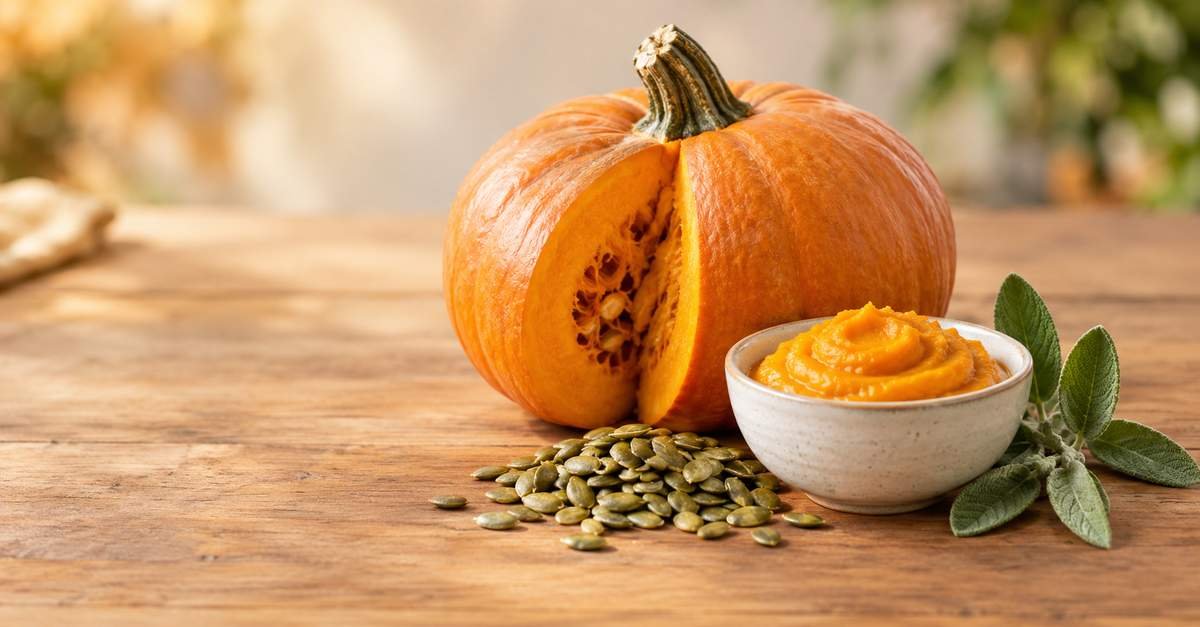

Is pumpkin healthy? Yes, for most people. Pumpkin is a nutrient-rich winter squash that provides carotenoids such as beta-carotene, which the body can convert to vitamin A. It also contributes fiber, potassium, vitamin C, and other nutrients.
Pumpkin works in both sweet and savory dishes, from roasted wedges to soups and oatmeal. Its potential health benefits come from the nutrients it provides, not from any special healing power. It is not a treatment or cure for any condition.
This guide covers pumpkin nutrition, seven potential benefits, the difference between plain pumpkin and pumpkin-flavored foods, and practical ways to eat more of it. For broader context, see our guide to what a healthy diet looks like.
What are the health benefits of pumpkin? Pumpkin provides provitamin A carotenoids, dietary fiber, potassium, vitamin C, and vitamin E. These nutrients support normal vision, immune function, digestion, and fluid balance as part of a varied eating pattern. Most claims about disease prevention come from laboratory or early research, not strong clinical evidence.
Pumpkin Nutrition at a Glance
Pumpkin’s nutrient content varies by species, cultivar, and preparation method. Fresh cooked pumpkin, canned puree, and pumpkin pie filling differ from one another, so no single profile applies to all. A PubMed-indexed review of pumpkin’s composition describes carotenoids, fiber, vitamins, minerals, and other plant compounds across its edible parts. For exact values, check USDA FoodData Central for the specific product you use. Our nutrition facts guide explains how to read labels.
| Nutrient | Why it matters |
|---|---|
| Beta-carotene (provitamin A) | Supports normal vision and immune function |
| Dietary fiber | Supports digestive health and contributes to fullness |
| Vitamin C | Supports normal immune function and antioxidant activity |
| Potassium | Important for fluid balance, nerve signaling, and muscle function |
| Vitamin E | Contributes to antioxidant protection |
| Carotenoids | Plant compounds with antioxidant functions |
7 Potential Health Benefits of Pumpkin
The pumpkin health benefits below are tied to the nutrients it contains. They describe what these nutrients do in the body, not guaranteed results from eating pumpkin.
1. Supports Eye Health
Pumpkin’s orange color comes partly from carotenoids. Beta-carotene is a provitamin A carotenoid, meaning the body can convert it to vitamin A. According to the NIH Office of Dietary Supplements, vitamin A plays an important role in normal vision.
Eating pumpkin does not improve eyesight or prevent eye disease. It can help contribute to the vitamin A your body needs. People with vision concerns should see an eye care professional.
2. Supports a Healthy Immune System
Vitamin A contributes to normal immune function, and pumpkin also provides some vitamin C. The NIH vitamin C fact sheet describes vitamin C’s role in immune defenses and protecting cells from damage. Pumpkin also contains carotenoids and other plant compounds.
This supports normal nutrition. It does not boost immunity in a guaranteed way or prevent infection. Sleep, vaccines, and overall diet all matter as well.
3. May Support Digestive Health
Pumpkin contains dietary fiber, which contributes to normal bowel function. Regularly eating fiber-rich foods can be part of a healthy digestive diet. The amount of fiber varies considerably by variety and by whether the pumpkin is fresh or processed.
If you want to add more fiber, increase it gradually and drink enough fluids. Our guide to high-fiber foods for digestive health lists other options. You may also like our article on kiwi health benefits, another other nutrient-rich fruit.
4. Provides Antioxidant Compounds
Research reviews identify carotenoids, polyphenols, and tocopherols (forms of vitamin E) among pumpkin’s bioactive compounds. Pumpkin also provides vitamin C. These compounds show antioxidant activity in laboratory settings.
Antioxidants in food do not remove toxins or directly prevent cancer. The effect of a single food on disease risk is hard to measure. Learn more in our guide to what antioxidants are.
5. Can Be Part of a Heart-Healthy Diet
Pumpkin provides potassium and fiber, and it can be prepared with little added fat or salt. The NIH potassium fact sheet explains that potassium is essential for nerve and muscle function, among other processes.
Pumpkin does not prevent heart disease on its own. The overall dietary pattern is what counts, including fruits, vegetables, whole grains, and healthy fats. See our list of heart-healthy foods for more ideas.
6. May Help With Healthy Weight Management
Plain pumpkin can add volume and nutrients to a meal without being especially energy-dense. Fiber can also contribute to fullness. This can help some people manage portions.
Pumpkin does not cause weight loss. Preparation matters a great deal: pumpkin pie, sugary pumpkin drinks, and heavily sweetened dishes are nutritionally different from roasted or pureed pumpkin. Our guide to weight management covers the bigger picture, and you can compare it with tamarind and weight loss.
7. Provides a Variety of Essential Nutrients
Research has identified a broad range of nutrients in pumpkin flesh, seeds, and other edible portions. These include:
- Potassium
- Vitamin C
- Provitamin A
- Vitamin E
- Magnesium
- Other minerals
The exact amounts depend on the part of the pumpkin, the variety, and how it is prepared. Eating a mix of colorful vegetables is a good way to cover a wider range of nutrients.
Are Pumpkin Seeds Healthy?
Pumpkin seeds have a very different nutritional profile from pumpkin flesh. They provide protein, unsaturated fats, and minerals such as magnesium and zinc. The NIH Office of Dietary Supplements describes the roles of magnesium and zinc in the body.
Seeds are also much more calorie-dense than the flesh, so portion size matters. A small handful is plenty for most people. Choose unsalted or lightly salted seeds when possible. Our guide to healthy fats explains why unsaturated fats can be part of a balanced diet.
Research on pumpkin’s edible parts suggests the seeds can be especially nutrient-dense. Pumpkin seed health benefits come from the nutrients they provide, not from any proven ability to treat disease.
Is Pumpkin Good for You Every Day?
Yes, pumpkin can be part of a healthy diet when it is eaten as part of a varied eating pattern. A few points can help:
- Portion size: A moderate serving fits easily into daily vegetable intake.
- Variety: Rotate pumpkin with other vegetables, such as leafy greens, peppers, and carrots.
- Form: Plain cooked pumpkin or unsweetened puree differs from highly processed pumpkin foods.
- Ways to include it: Add it to soups, oatmeal, smoothies, and side dishes.
The Dietary Guidelines for Americans encourage eating a variety of vegetables, including orange and red ones. MyPlate offers general vegetable targets. See our list of the healthiest foods to eat every day for more variety.
How to Eat Pumpkin for the Most Nutrition
Preparation can change the overall nutritional profile of the final dish. Simple methods that add little sugar or saturated fat generally keep the dish more nutritious.
Roasted Pumpkin
Cut pumpkin into cubes or wedges, toss with a little olive oil, and roast until tender. Season with herbs, cinnamon, or black pepper instead of sugar.
Pumpkin Soup
Blend cooked pumpkin with broth, onions, and spices. Use low-sodium broth and limit heavy cream if you want a lighter option.
Pumpkin Puree
Plain canned pumpkin puree is convenient and versatile. Check the label to make sure it contains pumpkin only, not pumpkin pie filling, which usually has added sugar and spices.
Pumpkin in Oatmeal or Yogurt
Stir a spoonful of puree into oatmeal or plain yogurt and add cinnamon and a few nuts. This adds flavor and fiber without much added sugar.
Pumpkin Seeds as a Topping
Sprinkle a small portion of seeds on salads, soups, or yogurt for crunch, protein, and minerals. Wash fresh pumpkins before cutting, following FDA produce safety guidance.
Pumpkin vs. Pumpkin-Flavored Foods
A food that contains pumpkin is not automatically nutritionally equivalent to eating pumpkin. Many pumpkin-flavored products contain more added sugar, refined flour, and fat than actual pumpkin.
- Plain pumpkin: cooked flesh with no added ingredients.
- Pumpkin puree: typically plain cooked pumpkin; check the label.
- Pumpkin soup: nutrition depends on the broth, cream, and salt used.
- Pumpkin pie: often high in added sugar and refined carbohydrates.
- Pumpkin bread: varies widely, but often includes sugar and oil.
- Pumpkin spice beverages: frequently contain added sugar and may contain little or no actual pumpkin.
Enjoy these as occasional treats if you like them. Do not assume they provide the same benefits as eating pumpkin itself.
Are There Any Downsides to Eating Pumpkin?
Pumpkin is safe for most people, and there is no reason for alarm. A few practical points are worth knowing:
- Digestive tolerance: Adding a lot of fiber quickly may cause gas or bloating for some people.
- Added sugar and calories: Pumpkin desserts and drinks can add a lot of both.
- Seed portions: Pumpkin seeds are calorie-dense, so measure portions.
- Allergies: Pumpkin allergies are possible, although uncommon.
- Medical conditions: People with specific medical conditions or dietary restrictions, such as those who must limit potassium, should consider their overall needs and talk with a healthcare professional.
How Much Pumpkin Should You Eat?
There is no universal recommended daily amount specifically for pumpkin. It can count toward your overall vegetable intake, and appropriate portions depend on your overall diet, calorie needs, preferences, and health conditions.
More is not necessarily better. Eating a variety of vegetables provides a wider range of nutrients than relying on one. You can pair pumpkin with protein-rich foods, such as fatty fish like salmon, for a balanced plate. Learn more about fatty fish if you are looking for foods rich in omega-3s.
Frequently Asked Questions About Pumpkin Health Benefits
What are the main health benefits of pumpkin?
Pumpkin provides provitamin A carotenoids, fiber, potassium, vitamin C, and vitamin E. These nutrients support normal vision, immune function, and digestion as part of a balanced diet. It is not a treatment for disease.
Is pumpkin good for your skin?
Pumpkin provides vitamin A, vitamin C, and vitamin E, which the body uses to maintain normal skin. Eating pumpkin is not a proven way to treat skin conditions, and overall diet and skin care matter. See the NIH vitamin A fact sheet for background.
Is pumpkin good for your eyes?
Pumpkin contains beta-carotene, which the body can convert to vitamin A, a nutrient needed for normal vision. Eating pumpkin does not improve eyesight or prevent eye disease.
Is pumpkin good for digestion?
Pumpkin contains dietary fiber, which contributes to normal bowel function. The amount of fiber varies by variety and preparation, and individual tolerance differs.
Is pumpkin good for weight loss?
Plain pumpkin can fit into a weight-management diet because it provides nutrients and fiber with relatively few calories. It does not cause weight loss on its own, and sweetened pumpkin foods can add many calories.
Is it healthy to eat pumpkin every day?
For most people, yes, as part of a varied diet. There is no need to eat pumpkin every day, and variety among vegetables is more helpful.
Are pumpkin seeds as healthy as pumpkin flesh?
They are healthy in different ways. Seeds provide protein, unsaturated fats, and minerals but are far more calorie-dense, while the flesh provides more carotenoids and is lower in calories.
Is pumpkin high in sugar?
Plain pumpkin contains a modest amount of naturally occurring sugar along with fiber. Sweetened pumpkin foods and drinks can contain a lot of added sugar, so check labels.
What is the healthiest way to eat pumpkin?
Roasted, steamed, pureed, or added to soups with little added sugar, salt, and saturated fat are generally the healthiest options. Using plain puree or fresh pumpkin gives you the most control over what is in the dish.
The Bottom Line
Pumpkin is a nutrient-rich vegetable. Its strongest nutritional selling points are carotenoids that provide provitamin A, fiber, potassium, and other micronutrients. It can support a healthy dietary pattern, and preparation matters.
Many disease-related claims about pumpkin come from laboratory, animal, or early research rather than strong clinical evidence. Pumpkin is not a treatment for disease and should not be presented as one. Enjoy it as one of many colorful foods in a balanced diet.
Sources
- USDA FoodData Central
- NIH Office of Dietary Supplements: Vitamin A
- NIH Office of Dietary Supplements: Vitamin C
- NIH Office of Dietary Supplements: Potassium
- NIH Office of Dietary Supplements: Magnesium
- NIH Office of Dietary Supplements: Zinc
- Dietary Guidelines for Americans
- MyPlate: Vegetables
- FDA: Selecting and Serving Produce Safely
- PubMed: pumpkin composition and bioactive compounds, review articles
Medical Disclaimer
This article is for general educational purposes and is not a substitute for individualized medical or nutrition advice. Dietary needs vary based on age, health conditions, medications, allergies, and other factors. People with food allergies, kidney disease, potassium restrictions, chronic medical conditions, or specific dietary concerns should consult a qualified healthcare professional or registered dietitian.