
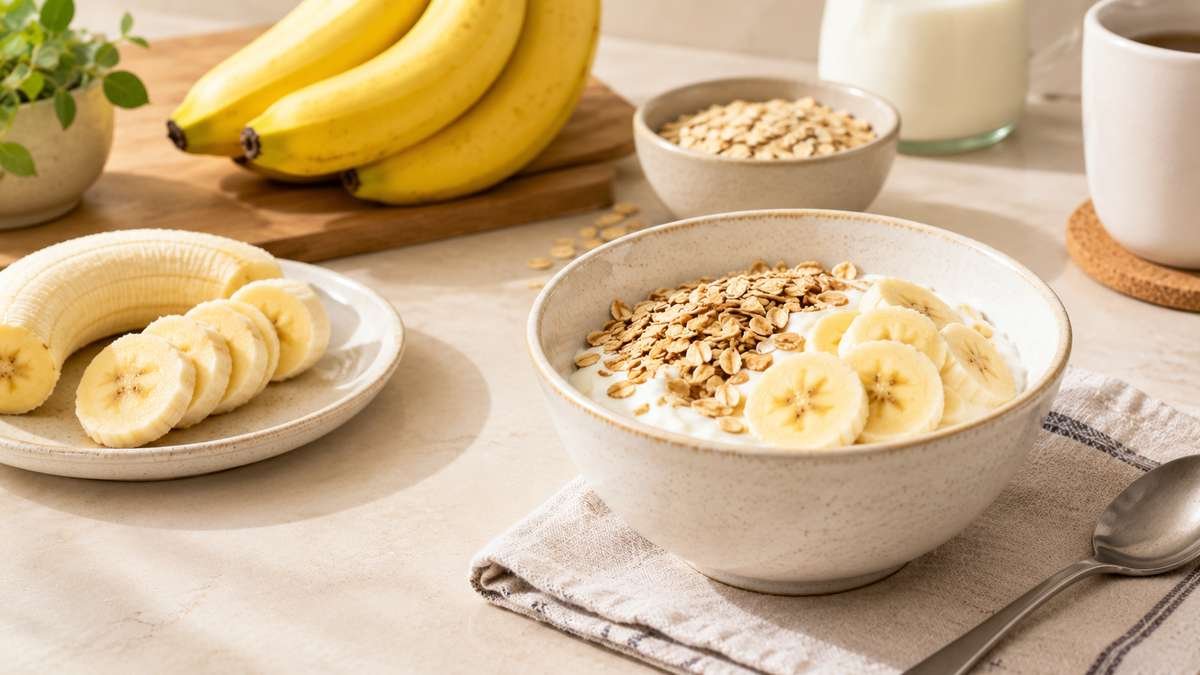

Bananas are naturally sweet and contain carbohydrate, which can raise blood sugar. Even so, people with type 2 diabetes do not automatically need to avoid them. Bananas can generally fit into a balanced eating pattern when portion size, ripeness, and the rest of the meal are taken into account.
A medium banana provides roughly 27 grams of carbohydrate, along with fiber, potassium, and vitamin B6. How the body responds depends on how much is eaten, how ripe the fruit is, what else is on the plate, and personal factors such as medication, activity level, and glucose goals. That is why advice that labels bananas simply as “good” or “bad” often misses the point.
This guide explains how bananas affect blood sugar, what is known about ripeness and portion size, and how to enjoy them in everyday meals and snacks. It also compares bananas with other fruits and clears up common myths.
Are Bananas Good for People With Type 2 Diabetes?
Yes, bananas can generally fit into a balanced eating plan for people with type 2 diabetes. The American Diabetes Association (ADA) lists banana among the common fruits that can be part of a diabetes eating plan, and it advises counting the carbohydrate in fruit as part of your meals.
Whole fruit also offers fiber and other nutrients that many highly processed sweet foods lack. That said, no single fruit is the best choice for everyone. The right amount of banana depends on your overall eating pattern, your medications, and your own glucose readings.
The ADA’s annual Standards of Care in Diabetes, most recently the 2026 edition, are built around person-centered care. The goal is not necessarily to remove bananas from your diet. It is to understand how their portion size and carbohydrate content fit your individual needs, ideally with guidance from your healthcare team.
What Nutrients Do Bananas Provide?
Bananas offer a mix of nutrients, but none of them treats diabetes. The Harvard T.H. Chan School of Public Health describes bananas as a nutritious food that supplies carbohydrate, fiber, potassium, and vitamin B6. Our guide to the health benefits of bananas covers the wider picture.
Carbohydrates and naturally occurring sugars
A medium banana contains approximately 27 to 28 grams of carbohydrate, made up of naturally occurring sugars and starch. These carbohydrates are broken down during digestion and can raise blood glucose.
Naturally occurring sugar in whole fruit is not the same as the added sugar in candy or sweetened drinks. Even so, the amount of carbohydrate still matters.
Fiber and digestive health
Whole bananas contain about 3 grams of fiber, which supports digestive health and can influence how quickly carbohydrates are absorbed. Fiber does not erase the carbohydrate in a banana, so it should not be treated as a guarantee against a rise in blood sugar.
For more fiber-rich choices, see our list of high-fiber foods for digestive health.
Potassium and vitamin B6
Bananas provide potassium, a mineral that supports normal muscle and nerve function, and vitamin B6, which contributes to many processes in the body. A medium banana supplies roughly 420 to 450 milligrams of potassium. People with kidney disease or those taking certain blood pressure medicines should ask their clinician about potassium intake.
Calories and overall nutrition
A medium banana provides about 105 calories. It can offer energy and useful nutrients within a varied diet, but its suitability depends on the whole meal plan rather than any single feature. Our nutrition facts guide explains how to read these numbers.
How Do Bananas Affect Blood Sugar?
Bananas contain carbohydrate, so they can raise blood sugar after eating. The size and timing of that rise vary from person to person. It does not make bananas unsuitable for people with type 2 diabetes, but it does mean they deserve a place in your meal planning. For background, see our guide to blood sugar.
Why carbohydrates matter
Carbohydrate-containing foods are the main dietary driver of blood glucose after a meal. People who count carbohydrates can include a banana in the meal’s total, in the same way they would account for rice, bread, or dairy. The ADA’s carbohydrate guidance is a good starting point, and a registered dietitian can tailor an approach to your needs.
The role of fiber
Fiber is part of the reason whole fruit differs from juice and many processed fruit products. It can slow digestion somewhat. However, fiber does not cancel out the carbohydrate in a banana.
Glycemic index and glycemic load
The glycemic index (GI) measures how quickly a carbohydrate-containing food raises blood glucose under standardized testing conditions. Glycemic load (GL) goes a step further by considering both the GI and the amount of carbohydrate in a serving.
According to the Harvard Nutrition Source, which cites the International Glycemic Index Database, ripe bananas have a low GI of 51 and slightly under-ripe bananas score 42. Their glycemic loads are moderate, at 13 and 11. Neither measure predicts your personal response perfectly, because banana variety, ripeness, serving size, and the rest of the meal all play a role.
Individual blood glucose responses
Two people can eat the same banana and see different readings. If your care team has advised you to check glucose around meals, they can help you interpret what you see. Our guide to blood sugar levels explains common target ranges.
The key message is simple: bananas can raise blood sugar, but that alone does not rule them out.
Does Banana Ripeness Affect Blood Sugar?
Ripeness changes the type of carbohydrate in a banana. A laboratory analysis of retail bananas found that starch, sugars, and fiber differ by ripeness stage, and that cultivar and handling also contribute. The effect on blood sugar is a factor to be aware of, not a treatment strategy.
Green or less-ripe bananas
Less-ripe bananas contain more resistant starch, which is not digested in the small intestine in the same way as ordinary starch. The Harvard Nutrition Source notes that this contributes to a lower glycemic index and slower digestion.
Still, green bananas contain carbohydrate and can affect glucose. They are not automatically the best choice for everyone with diabetes.
Yellow bananas
As bananas ripen, some starch converts to sugars. A yellow banana can remain part of a balanced diet, but its carbohydrate makeup differs from that of a greener one.
Very ripe bananas
Very ripe bananas, with brown spots, are softer and sweeter because more starch has become sugar. Their portion size and total carbohydrate remain the main considerations.
Choosing a particular ripeness alone does not guarantee better glucose control. If you notice that riper fruit raises your readings more, discuss it with your healthcare team rather than assuming one stage is right for everyone.
How Much Banana Can Someone With Type 2 Diabetes Eat?
There is no single amount that suits everyone. The figures below are practical reference points, not strict rules.
Consider the serving size
A small banana contains less carbohydrate than a large one. A medium banana provides approximately 27 to 28 grams of carbohydrate, although the exact amount varies with size and variety, according to the Harvard Nutrition Source.
The ADA notes that a small piece of whole fruit, or about half a cup of frozen or canned fruit, has about 15 grams of carbohydrate. Bananas are more carbohydrate-dense than many fruits, so even a small banana can provide more than 15 grams, and a large one noticeably more.
Fit bananas into the overall meal
The ADA explains that fruit can be eaten in exchange for other carbohydrate sources in your meal plan, such as starches, grains, or dairy. A banana may therefore replace some of the oatmeal or toast at breakfast rather than being added on top.
If you count carbohydrates, include the banana in that meal’s total. Our diabetes diet guide offers more on building balanced plates.
Is one banana a day acceptable?
There is no universal banana limit for people with type 2 diabetes. A suitable amount depends on your overall eating pattern, medications, physical activity, food preferences, and glucose response. Our article on eating bananas every day looks at this question for the general population.
A registered dietitian or diabetes care and education specialist can help you find an amount that fits.
What Are the Best Ways to Eat Bananas With Type 2 Diabetes?
You do not need complicated recipes. A banana can fit into an ordinary balanced meal or snack, and these ideas work across many food traditions.
Pair a banana with protein or healthy fats
Combining a banana with other foods changes the overall meal. Some options include:
- Banana slices over plain, unsweetened Greek yogurt
- A banana with a small serving of nuts, such as almonds
- Banana with plain yogurt and a small amount of oats
- A banana alongside a breakfast that includes eggs or another protein source
Protein, fat, and fiber-rich foods can affect digestion and the glucose response of the whole meal. This does not mean pairing will prevent a rise in blood sugar, so check how your own readings respond.
Choose whole bananas more often than sweetened drinks
A whole banana keeps its natural fiber and is easy to portion. Juices and blended drinks may be consumed more quickly and can make servings harder to judge. The ADA points out that fruit juice has a much smaller serving for the same carbohydrate, roughly one-third to one-half cup for 15 grams.
Be mindful of added ingredients
Banana bread, milkshakes, sweetened smoothies, and desserts vary widely. Their effect depends on added sugar, serving size, and the other ingredients. Reading labels and recipes helps you see where the carbohydrate comes from.
Keep meals balanced
Bananas work best within a varied eating pattern that includes vegetables, protein foods, whole grains, legumes, and whole fruit. The ADA’s healthy eating tips and our guide to a balanced diet can help you build that foundation.
Bananas Compared With Other Fruits for Diabetes
People with diabetes can enjoy a range of whole fruits rather than relying on one “best” option. The ADA’s list of common fruits includes bananas, apples, berries, and oranges, among many others.
Bananas versus apples
Apples are easy to carry and rich in fiber, much like bananas. A medium apple has roughly 19 to 20 grams of carbohydrate, which is lower than a medium banana, but the comparison changes with size. Compare similar portions or similar carbohydrate amounts rather than ranking the fruits outright.
Bananas versus berries
Berries supply fiber and other nutrients, and a larger serving of fresh berries can provide about the same carbohydrate as a smaller portion of banana. The ADA lists about three-quarters to one cup of most fresh berries as a 15-gram carbohydrate serving. Our guides on blueberries and type 2 diabetes and whether blueberries lower blood sugar go deeper.
Bananas versus oranges
Oranges are another whole-fruit option. Eaten whole, an orange provides fiber, while orange juice is a more concentrated source of carbohydrate in a smaller serving.
Is one fruit best for type 2 diabetes?
No single fruit is best for everyone. Variety, portion size, overall nutritional quality, and personal preference are more useful guides than treating certain fruits as forbidden.
Common Myths About Bananas and Type 2 Diabetes
Myth 1: People with diabetes must avoid bananas
Fact: Whole fruit can fit into a diabetes-friendly eating pattern, and the ADA includes bananas in its fruit list. Amount and overall meal composition matter.
Myth 2: Natural sugar does not affect blood glucose
Fact: Naturally occurring sugars in bananas count toward your carbohydrate intake and can raise blood glucose.
Myth 3: Green bananas cannot raise blood sugar
Fact: Less-ripe bananas contain more resistant starch, but they still contain carbohydrate and can affect glucose levels.
Myth 4: Bananas lower blood sugar
Fact: Bananas provide nutrients, but they are not a treatment for high blood glucose. The same caution applies to other foods and drinks, as our article on whether green tea lowers blood sugar explains.
Myth 5: All fruit is unsuitable for diabetes
Fact: Whole fruits are part of evidence-based diabetes nutrition guidance. A qualified healthcare professional can help you find portions and combinations that suit your needs.
Frequently Asked Questions About Bananas and Type 2 Diabetes
Can people with type 2 diabetes eat bananas every day?
Bananas may fit into a regular eating pattern, but there is no universal daily rule. Portion size and your total carbohydrate intake matter more than the fruit itself. The ADA advises counting fruit as part of your meal plan.
Do bananas raise blood sugar quickly?
Bananas contain carbohydrate, so they can raise glucose after eating. The size and timing of the response depend on ripeness, portion size, the rest of the meal, and individual factors. The Harvard Nutrition Source reports a low GI for ripe bananas (51), but GI is only one piece of the picture.
Are green bananas better than ripe bananas for diabetes?
Green bananas contain more resistant starch and score lower on the glycemic index. That does not make them a superior choice for every person with diabetes, because they still contain carbohydrate and individual responses vary.
Should people with type 2 diabetes avoid bananas at breakfast?
There is no universal reason to avoid bananas in the morning. A banana can be part of a balanced breakfast, as long as you consider its carbohydrate alongside other items such as cereal, toast, or milk.
Are bananas better than other fruits for diabetes?
No single fruit is universally best. Eating a variety of whole fruits can contribute to a balanced eating pattern, and the ADA lists many fruits as options.
Are banana smoothies suitable for people with type 2 diabetes?
It depends on the ingredients, serving size, and total carbohydrate. Smoothies made with added sugar, sweetened yogurt, juice, or several bananas can contain more carbohydrate than expected. Reading the recipe or label helps you judge the portion.
The Bottom Line
Bananas can generally be included in a balanced eating plan for people with type 2 diabetes. They provide fiber, potassium, vitamin B6, and other nutrients, but their carbohydrate can raise blood glucose.
Instead of avoiding bananas entirely, consider portion size, ripeness, and the rest of the meal. There is no universal banana limit, and individualized advice from a registered dietitian or your healthcare team can be valuable. Bananas are not inherently unsuitable; what matters most is how they fit your overall eating pattern and glucose-management plan.
For more evidence-based looks at foods and blood sugar, read our guides on green tea and type 2 diabetes and herbal teas and blood sugar.
Sources
- American Diabetes Association. Fruit and Diabetes: Best Choices and Eating Tips
- American Diabetes Association. Healthy Eating Tips
- American Diabetes Association. Understanding Carbs
- American Diabetes Association. Standards of Care in Diabetes, 2026 (press release)
- Harvard T.H. Chan School of Public Health, The Nutrition Source. Bananas
- National Library of Medicine (PMC). Dietary fiber, starch, and sugars in bananas at different stages of ripeness in the retail market
Medical Disclaimer: This article is for general information and education only. It is not medical advice and does not replace care from a doctor, registered dietitian, or other qualified health professional. Food choices for diabetes depend on your medications, health history, and goals, so talk with your healthcare team before changing your diet or diabetes plan. If you think you are having a medical emergency, call 911 or your local emergency number.